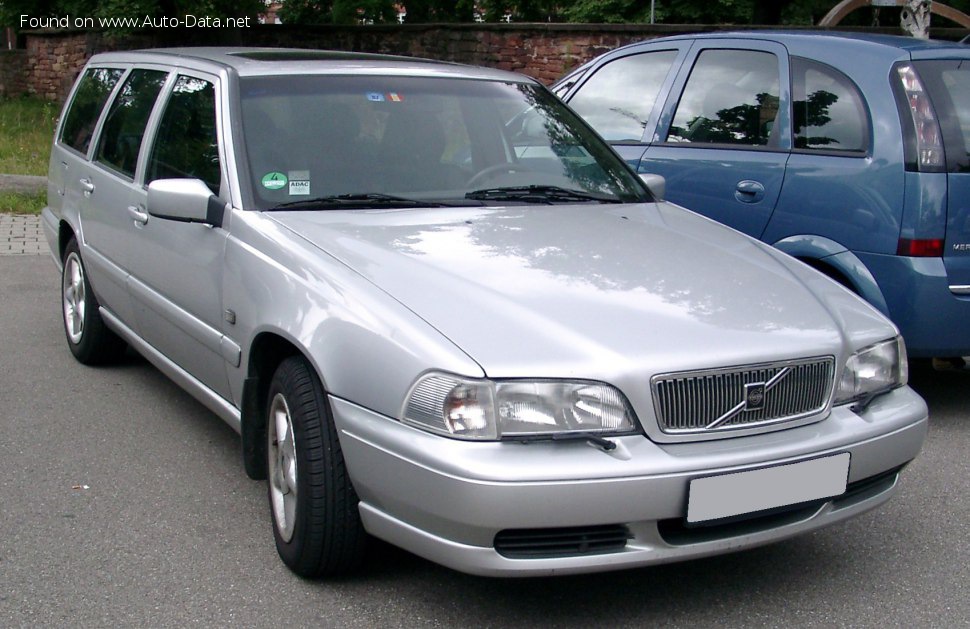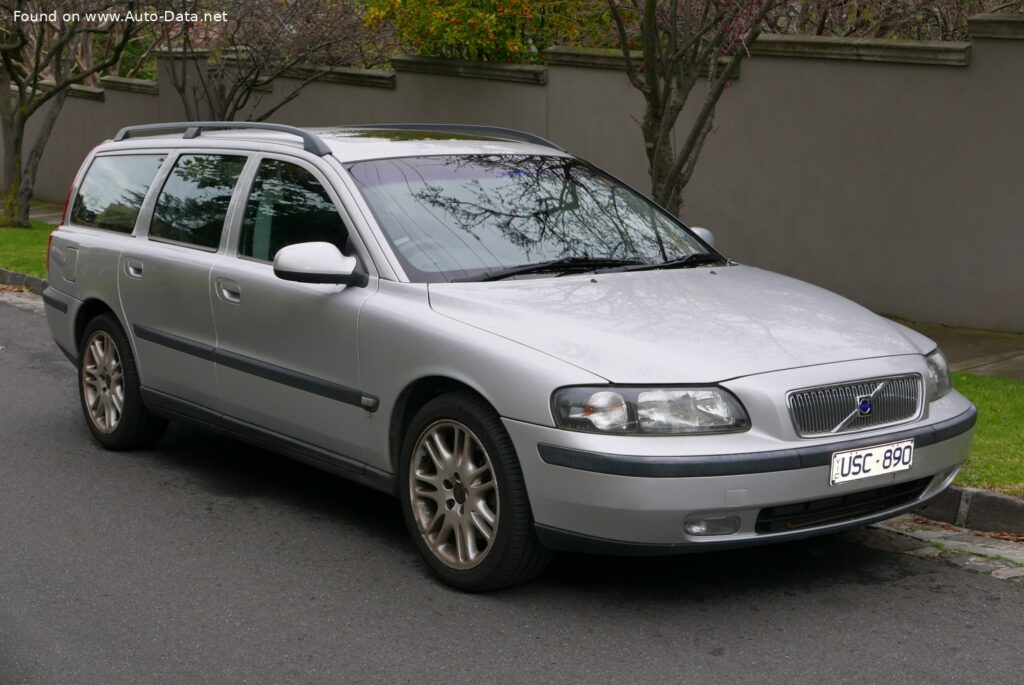
The Volvo V70 II 2.5i 20V, produced from 2003 to 2004, represents the second generation of Volvo’s popular station wagon, the V70. Positioned within the mid-size executive wagon segment, the V70 II aimed to blend practicality, safety, and Scandinavian design. While not officially sold in the United States during these specific years, the V70 has a long history in North America, and the V70 II continued the model’s reputation for being a versatile and comfortable family vehicle, particularly popular in the European market. This iteration focused on refining the first-generation V70’s strengths, offering improved performance and a more sophisticated interior.
Volvo V70 II 2.5i 20V: An Overview
The V70 II built upon the foundation laid by its predecessor, offering a spacious and functional interior combined with Volvo’s renowned safety features. The 2.5i 20V model, equipped with a 2.5-liter turbocharged inline-five engine and an automatic transmission, was a common configuration. It catered to buyers seeking a balance between fuel efficiency and performance. The V70 II competed with other premium wagons like the Audi A6 Avant, BMW 5 Series Touring, and Mercedes-Benz E-Class Estate, offering a distinct Scandinavian alternative.
Engine & Performance
The heart of the V70 II 2.5i 20V is a 2.5-liter (2521 cm3) inline-five cylinder engine, designated the B5254T2. This engine utilizes a turbocharger and intercooler to produce 210 horsepower at 5000 rpm and 320 Nm (236.02 lb.-ft.) of torque at 1500 rpm. The engine features multi-port fuel injection and a double overhead camshaft (DOHC) valvetrain with four valves per cylinder. This configuration delivers a good balance of power and responsiveness, allowing for a 0-60 mph (0-96 km/h) acceleration time of approximately 7.4 seconds and a top speed of 220 km/h (136.7 mph). The engine’s power-to-weight ratio is 7.4 kg/Hp, and the torque-to-weight ratio is 4.8 kg/Nm. The five-speed automatic transmission provides smooth gear changes, contributing to a comfortable driving experience. Fuel consumption is rated at 12.6 l/100 km (18.7 US mpg) in urban conditions and 7.5 l/100 km (31.4 US mpg) on the extra-urban cycle.
Design & Features
The Volvo V70 II maintains the classic station wagon profile, characterized by its long roofline and generous cargo area. The body type is a five-door station wagon (estate) with seating for five passengers. The vehicle’s dimensions are 4710 mm (185.43 in) in length, 1804 mm (71.02 in) in width, and 1465 mm (57.68 in) in height, with a wheelbase of 2755 mm (108.46 in). The interior prioritizes comfort and practicality, offering ample space for both passengers and luggage. The trunk (boot) space ranges from a minimum of 485 liters (17.13 cu. ft.) to a maximum of 1641 liters (57.95 cu. ft.) with the rear seats folded down. Safety is a hallmark of Volvo design, and the V70 II is equipped with an Anti-lock Braking System (ABS) as standard. The suspension utilizes a wishbone setup at the front and coil springs at the rear, providing a comfortable ride. Hydraulic power steering ensures precise handling. The vehicle rides on 205/55 R16 tires mounted on 16-inch wheel rims.
Technical Specifications
| Brand | Volvo |
| Model | V70 |
| Generation | V70 II |
| Type (Engine) | 2.5i 20V (210 Hp) Automatic |
| Start of production | 2003 |
| End of production | 2004 |
| Powertrain Architecture | Internal Combustion engine |
| Body type | Station wagon (estate) |
| Seats | 5 |
| Doors | 5 |
| Fuel consumption (urban) | 12.6 l/100 km (18.7 US mpg) |
| Fuel consumption (extra urban) | 7.5 l/100 km (31.4 US mpg) |
| Fuel Type | Petrol (Gasoline) |
| Acceleration 0 – 100 km/h | 7.8 sec |
| Acceleration 0 – 62 mph | 7.8 sec |
| Acceleration 0 – 60 mph | 7.4 sec |
| Maximum speed | 220 km/h (136.7 mph) |
| Weight-to-power ratio | 7.4 kg/Hp |
| Weight-to-torque ratio | 4.8 kg/Nm |
| Power | 210 Hp @ 5000 rpm |
| Torque | 320 Nm @ 1500 rpm (236.02 lb.-ft. @ 1500 rpm) |
| Engine layout | Front, Transverse |
| Engine Model/Code | B5254T2 |
| Engine displacement | 2521 cm3 (153.84 cu. in.) |
| Number of cylinders | 5 |
| Engine configuration | Inline |
| Cylinder Bore | 83 mm (3.27 in.) |
| Piston Stroke | 93.2 mm (3.67 in.) |
| Compression ratio | 9:1 |
| Number of valves per cylinder | 4 |
| Fuel injection system | Multi-port manifold injection |
| Engine aspiration | Turbocharger, Intercooler |
| Valvetrain | DOHC |
| Engine oil capacity | 5.5 l (5.81 US qt | 4.84 UK qt) |
| Kerb Weight | 1550 kg (3417.17 lbs.) |
| Max. weight | 2100 kg (4629.71 lbs.) |
| Max load | 550 kg (1212.54 lbs.) |
| Trunk (boot) space – minimum | 485 l (17.13 cu. ft.) |
| Trunk (boot) space – maximum | 1641 l (57.95 cu. ft.) |
| Fuel tank capacity | 70 l (18.49 US gal | 15.4 UK gal) |
| Length | 4710 mm (185.43 in.) |
| Width | 1804 mm (71.02 in.) |
| Height | 1465 mm (57.68 in.) |
| Wheelbase | 2755 mm (108.46 in.) |
| Front track | 1563 mm (61.54 in.) |
| Rear track | 1560 mm (61.42 in.) |
| Drivetrain Architecture | Front wheel drive |
| Number of gears | 5 |
| Gearbox type | Automatic transmission |
| Front suspension | Wishbone |
| Rear suspension | Coil spring |
| Front brakes | Ventilated discs |
| Rear brakes | Disc |
| Assisting systems | ABS (Anti-lock braking system) |
| Steering type | Steering rack and pinion |
| Power steering | Hydraulic Steering |
| Tires size | 205/55 R16 |
| Wheel rims size | 16 |
The Volvo V70 II 2.5i 20V offered a compelling package for buyers seeking a practical, safe, and comfortable station wagon. Its blend of performance, space, and Scandinavian design ensured its continued popularity in the competitive mid-size executive wagon segment.