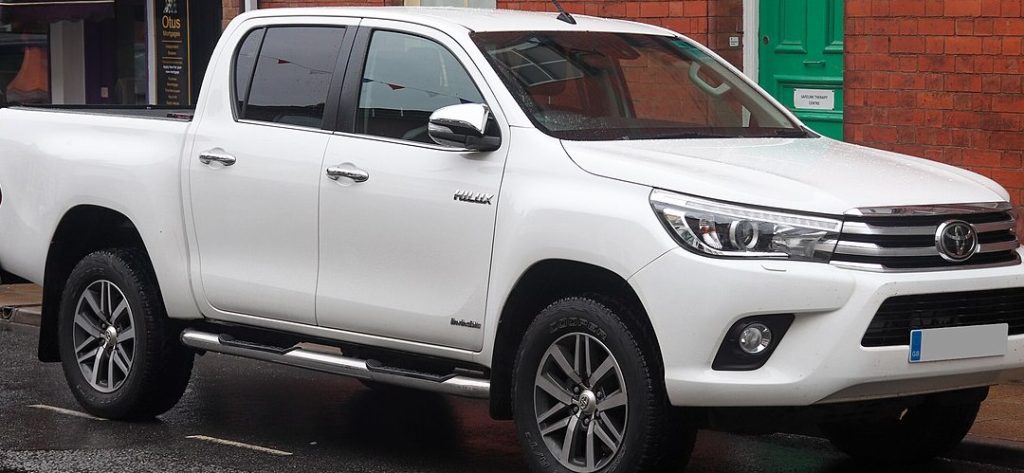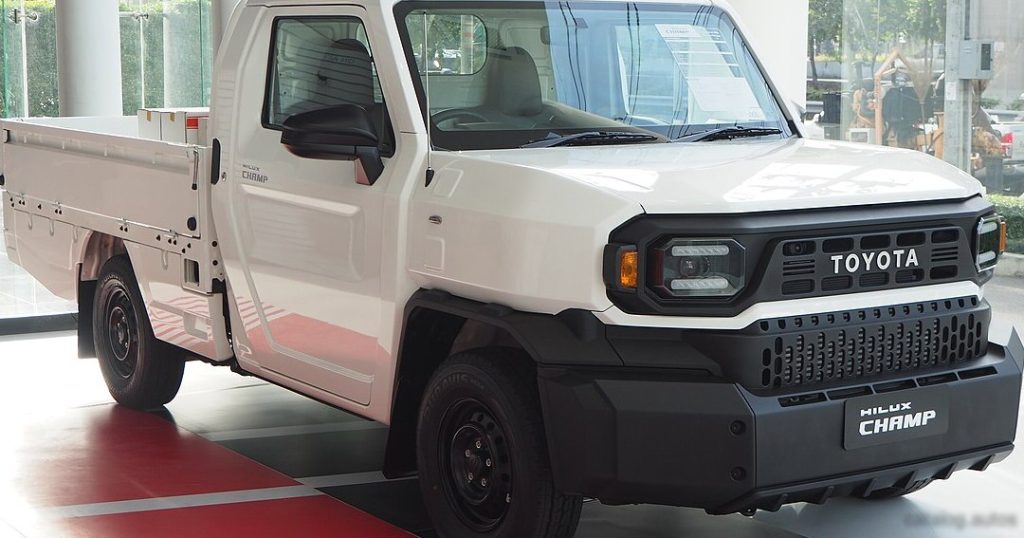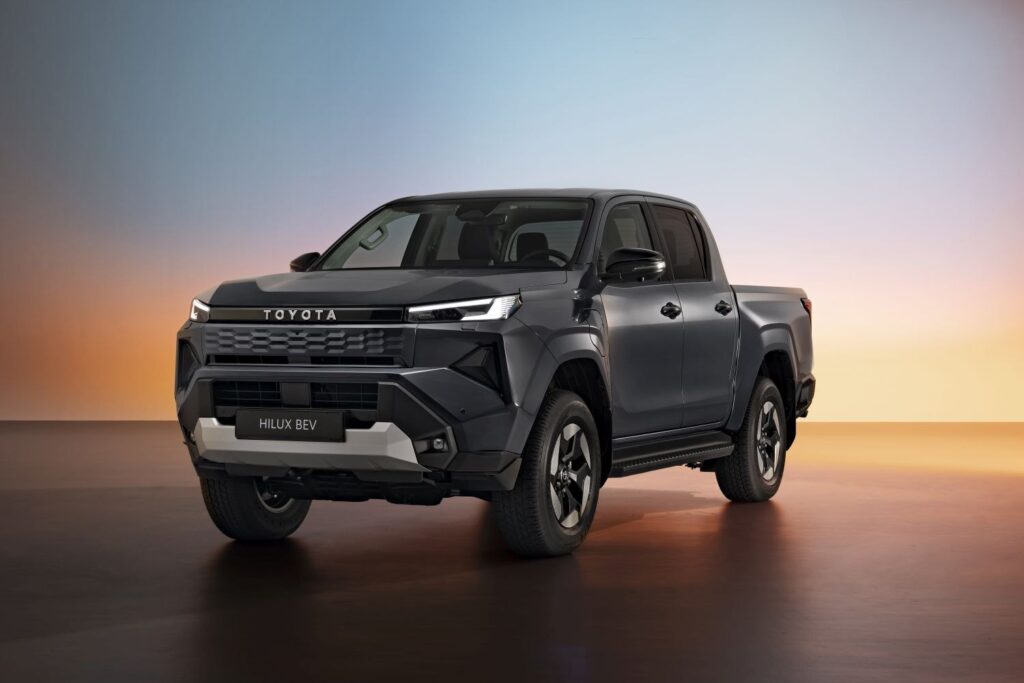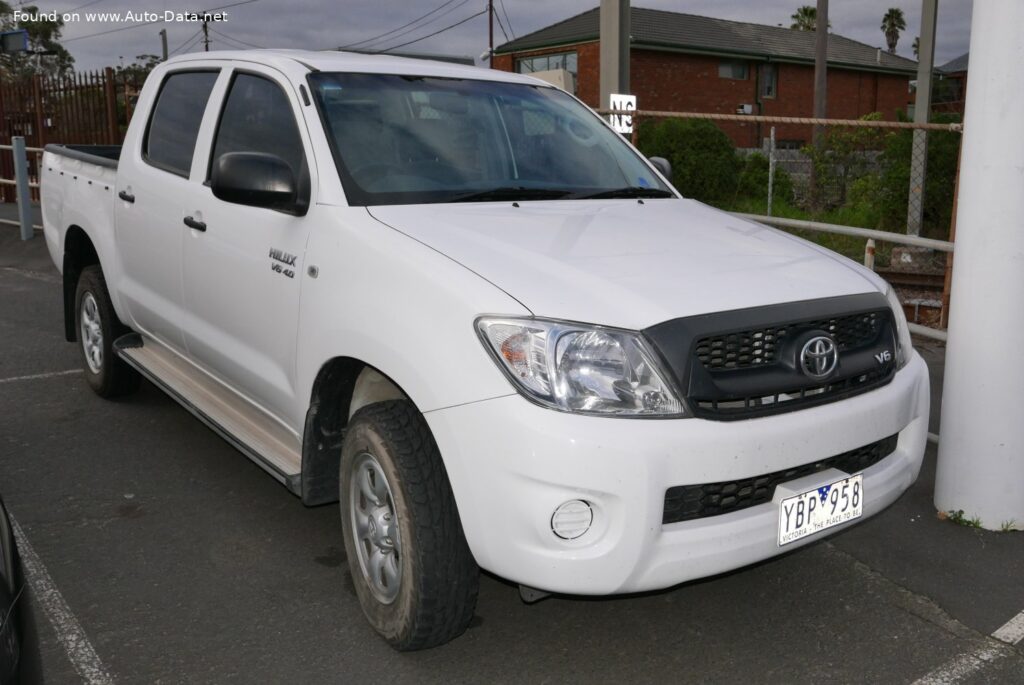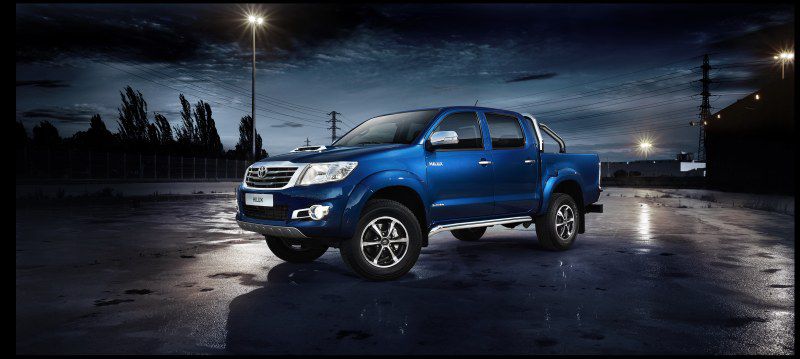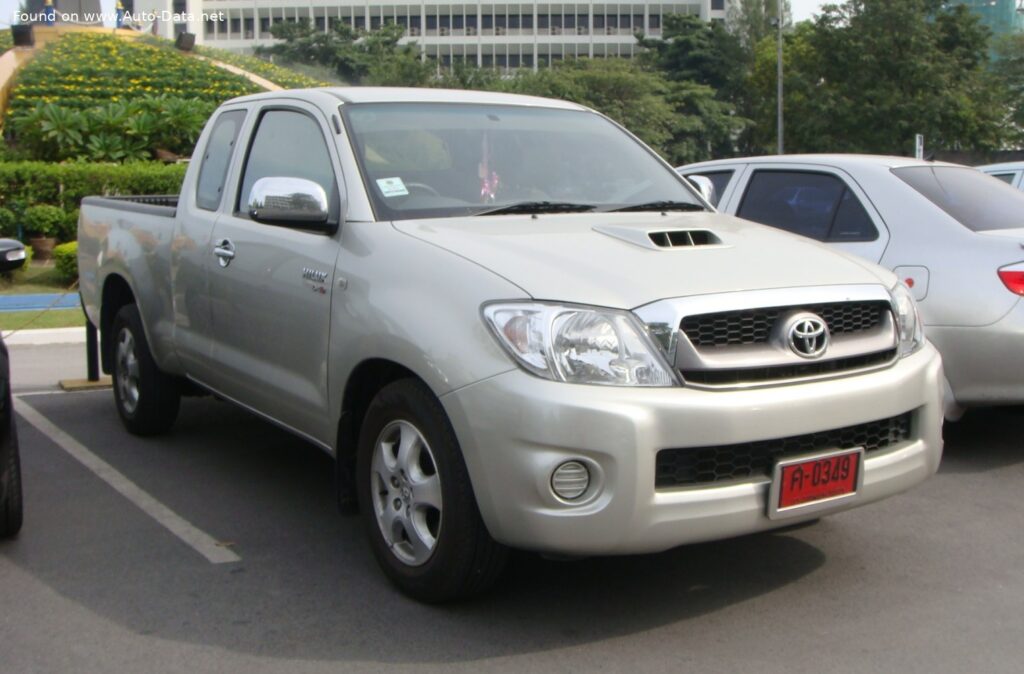
The Toyota Hilux Extra Cab VII (facelift 2008) 2.5 D-4D 4×4 is a mid-size pickup truck produced by Toyota from 2009 to 2011. This iteration of the Hilux, a globally recognized name for reliability and durability, was primarily aimed at markets outside of North America, where the Tacoma held prominence. The Extra Cab configuration offered a compromise between the single cab’s practicality and the double cab’s passenger space, featuring smaller rear seats suitable for occasional use. The 2.5 D-4D engine variant was particularly popular in Europe, Australia, and parts of Asia, offering a balance of fuel efficiency and sufficient power for work and recreational purposes.
Toyota Hilux Extra Cab VII (facelift 2008): An Overview
The Hilux has a long and storied history, dating back to 1968. The seventh generation, introduced in 2005, represented a significant step forward in terms of refinement and capability. The 2008 facelift brought cosmetic updates and minor mechanical improvements. The Extra Cab model, with its extended cabin, catered to buyers needing occasional rear-seat access while maintaining a useful cargo bed. This model was not officially sold in the United States, but its reputation for toughness preceded it, influencing the design and engineering of the North American Toyota Tacoma.
Engine & Performance
The heart of the Hilux Extra Cab VII 2.5 D-4D 4×4 is a 2.5-liter inline-four cylinder diesel engine, designated the 2KD-FTV. This engine produces 144 horsepower at 3400 rpm and 343 Nm (252.98 lb.-ft.) of torque between 1600 and 2800 rpm. The engine utilizes a turbocharger with an intercooler and a common rail direct injection system to optimize performance and fuel efficiency. Power is delivered to all four wheels via a five-speed manual transmission and a part-time four-wheel-drive system. Acceleration from 0 to 100 km/h (0-62 mph) takes 12.5 seconds, while 0 to 60 mph is achieved in approximately 11.9 seconds. The Hilux has a top speed of 170 km/h (105.63 mph). The engine’s relatively high compression ratio of 17.4:1 contributes to its efficiency, but also requires high-quality diesel fuel. The weight-to-power ratio of 13.1 kg/Hp and weight-to-torque ratio of 5.5 kg/Nm demonstrate a reasonable balance between power and vehicle mass.
Design & Features
The Hilux Extra Cab VII is a traditional body-on-frame pickup truck, designed for ruggedness and utility. The Extra Cab configuration features a two-door layout with a small rear seating area, accessible via side-facing doors. The vehicle’s exterior styling is functional and utilitarian, with a focus on durability rather than aesthetics. The 2008 facelift included minor revisions to the front grille, headlights, and bumpers. The interior is similarly practical, with durable materials and a straightforward layout. Key features include a hydraulic power steering system, ventilated front disc brakes, and drum brakes on the rear axle. An Anti-lock Braking System (ABS) was standard, enhancing safety. Ground clearance is a substantial 297 mm (11.69 in), enabling good off-road capability. The Hilux boasts impressive towing capacity, with a maximum braked trailer load of 2250 kg (4960.4 lbs) and an unbraked trailer load of 750 kg (1653.47 lbs). The vehicle’s approach, departure, and ramp-over angles (30°, 25°, and 19° respectively) further contribute to its off-road prowess.
Technical Specifications
| Brand | Toyota |
| Model | Hilux |
| Generation | Hilux Extra Cab VII (facelift 2008) |
| Type (Engine) | 2.5 D-4D (144 Hp) 4×4 |
| Start of production | 2009 |
| End of production | 2011 |
| Powertrain Architecture | Internal Combustion engine |
| Body type | Pick-up |
| Seats | 4 |
| Doors | 2 |
| Fuel consumption (combined) | 8.3 l/100 km (28.3 US mpg, 34 UK mpg, 12 km/l) |
| CO2 emissions | 219 g/km |
| Fuel Type | Diesel |
| Acceleration 0 – 100 km/h | 12.5 sec |
| Acceleration 0 – 62 mph | 12.5 sec |
| Acceleration 0 – 60 mph | 11.9 sec |
| Maximum speed | 170 km/h (105.63 mph) |
| Emission standard | Euro 4 |
| Weight-to-power ratio | 13.1 kg/Hp |
| Weight-to-torque ratio | 5.5 kg/Nm |
| Power | 144 Hp @ 3400 rpm |
| Torque | 343 Nm @ 1600-2800 rpm (252.98 lb.-ft. @ 1600-2800 rpm) |
| Engine layout | Front, Longitudinal |
| Engine Model/Code | 2KD-FTV |
| Engine displacement | 2494 cm3 (152.19 cu. in.) |
| Number of cylinders | 4 |
| Engine configuration | Inline |
| Cylinder Bore | 92 mm (3.62 in.) |
| Piston Stroke | 93.8 mm (3.69 in.) |
| Compression ratio | 17.4:1 |
| Number of valves per cylinder | 4 |
| Fuel injection system | Diesel Commonrail |
| Engine aspiration | Turbocharger, Intercooler |
| Valvetrain | DOHC |
| Engine oil capacity | 6.9 l (7.29 US qt | 6.07 UK qt) |
| Coolant capacity | 9 l (9.51 US qt | 7.92 UK qt) |
| Kerb Weight | 1890 kg (4166.74 lbs.) |
| Max. weight | 2680 kg (5908.39 lbs.) |
| Max load | 790 kg (1741.65 lbs.) |
| Fuel tank capacity | 80 l (21.13 US gal | 17.6 UK gal) |
| Max. roof load | 50 kg (110.23 lbs.) |
| Permitted trailer load with brakes (12%) | 2250 kg (4960.4 lbs.) |
| Permitted trailer load without brakes | 750 kg (1653.47 lbs.) |
| Permitted towbar download | 90 kg (198.42 lbs.) |
| Length | 5255 mm (206.89 in.) |
| Width | 1760 mm (69.29 in.) |
| Height | 1795 mm (70.67 in.) |
| Wheelbase | 3085 mm (121.46 in.) |
| Front track | 1510 mm (59.45 in.) |
| Rear track | 1510 mm (59.45 in.) |
| Ride height (ground clearance) | 297 mm (11.69 in.) |
| Minimum turning circle | 13.2 m (43.31 ft.) |
| Drivetrain Architecture | All wheel drive (4×4). ICE drives rear wheels, front wheels engaged via clutch. |
| Number of gears | 5 |
| Gearbox type | Manual transmission |
| Front suspension | Double wishbone, Transverse stabilizer |
| Rear suspension | Rigid axle suspension, Leaf spring |
| Front brakes | Ventilated discs |
| Rear brakes | Drum |
| Assisting systems | ABS (Anti-lock braking system) |
| Steering type | Steering rack and pinion |
| Power steering | Hydraulic |
| Tires size | 205/80 R16 |
| Wheel rims size | 6J x 16 |
The Toyota Hilux Extra Cab VII (facelift 2008) 2.5 D-4D 4×4 remains a popular choice in many parts of the world, valued for its reliability, durability, and off-road capability. While not sold in the US market, it represents a significant example of Toyota’s global pickup truck strategy and engineering prowess.