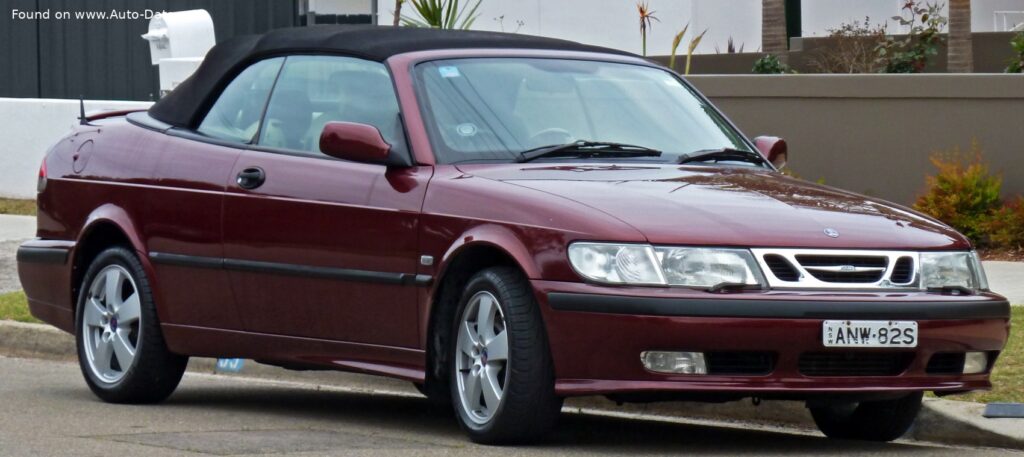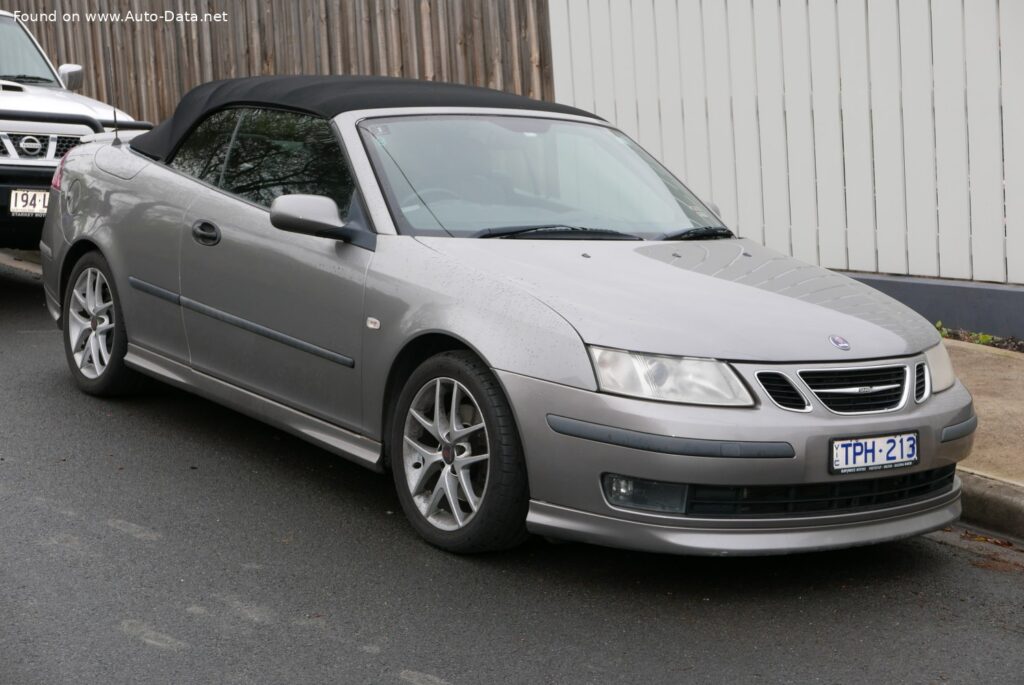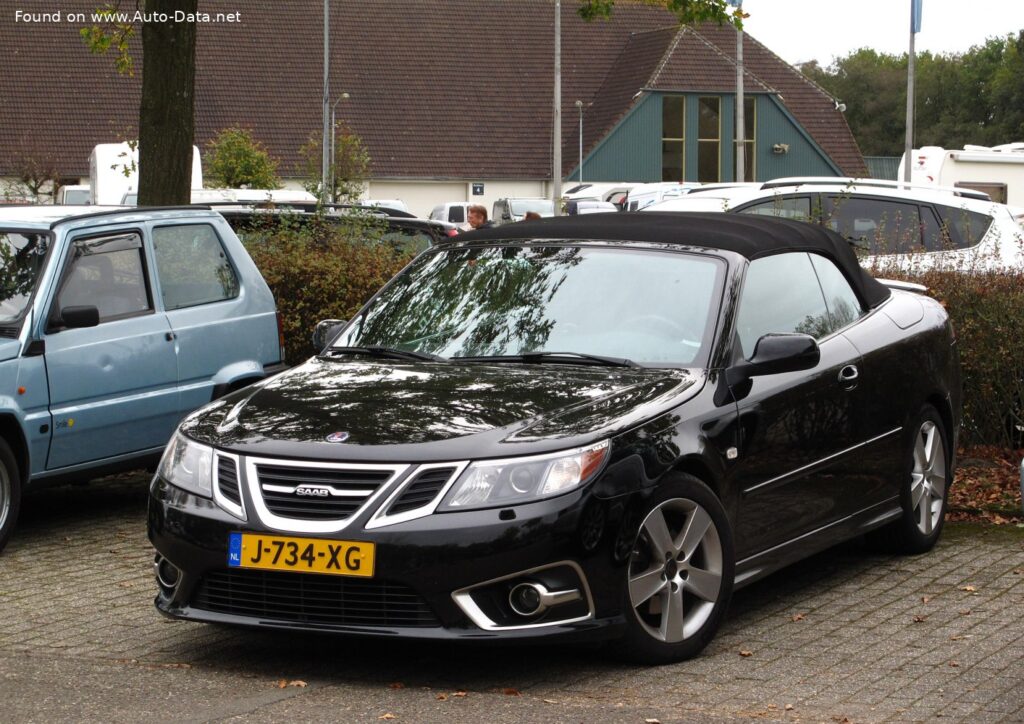
The Saab 9-3 Convertible II Griffin (facelift 2011) 1.9 TTiD Sentronic represents a final refinement of Saab’s mid-size convertible offering before the brand’s unfortunate demise in December 2011. Positioned as a premium, yet sporty, open-top vehicle, the 9-3 Convertible aimed to compete with established European rivals like the BMW 3 Series Convertible and Audi A4 Cabriolet. This iteration, specifically the 1.9 TTiD Sentronic model, focused on blending fuel efficiency with respectable performance, appealing to buyers seeking a sophisticated and practical convertible experience. While Saab was a Swedish marque, the 9-3 Convertible was primarily marketed and sold in Europe, with limited official US sales. The facelift brought subtle styling updates and improvements to the interior, aiming to maintain the model’s appeal in a competitive segment.
Saab 9-3 Convertible II Griffin (2011) – A Detailed Overview
The 9-3 Convertible II Griffin, produced for a very short period in 2011, was the culmination of a lineage that began with the original 9-3 in 1998. The “Griffin” designation denoted a higher trim level, offering enhanced features and a more luxurious interior. The 1.9 TTiD variant, equipped with Saab’s twin-turbo diesel engine and Sentronic automatic transmission, was designed to deliver a balance of power and economy. This model was particularly popular in European markets where diesel engines were favored for their fuel efficiency and lower running costs.
Engine & Performance
The heart of the 9-3 Convertible II Griffin 1.9 TTiD is a 1.9-liter inline-four cylinder diesel engine, designated A19DTR. This engine utilizes a sophisticated twin-turbocharger system coupled with an intercooler, allowing it to produce 160 horsepower at 4,000 rpm and a substantial 360 Nm (265.52 lb.-ft.) of torque between 1,750 and 3,000 rpm. The Sentronic 6-speed automatic transmission provides smooth and efficient gear changes. Acceleration from 0 to 100 km/h (0-62 mph) takes 10.7 seconds, while 0-60 mph is achieved in approximately 10.2 seconds. The vehicle boasts a maximum speed of 205 km/h (127.38 mph). The engine’s design prioritizes fuel efficiency, achieving a combined fuel consumption of 6.2 liters per 100 kilometers (37.9 US mpg or 45.6 UK mpg), with CO2 emissions of 162 g/km, meeting Euro 5 emission standards. The power-to-weight ratio is 10.1 kg/Hp, and the torque-to-weight ratio is 4.5 kg/Nm.
Design & Features
The Saab 9-3 Convertible II Griffin is a two-door, four-seater cabriolet. Its design features a sleek profile with a power-operated soft top that provides open-air driving enjoyment. The facelifted model received minor cosmetic updates, including revised front and rear bumpers, updated headlights, and a redesigned grille. Inside, the Griffin trim level offered premium materials and enhanced comfort features. Standard equipment included leather upholstery, automatic climate control, and a high-quality audio system. Safety features were also a priority, with the inclusion of ABS (Anti-lock Braking System) and a robust chassis designed to provide excellent handling and stability. The trunk space offers 258 liters (9.11 cu. ft.) with the top up and expands to 352 liters (12.43 cu. ft.) with the top down. The fuel tank capacity is 62 liters (16.38 US gal).
Technical Specifications
| Brand | Saab |
| Model | 9-3 |
| Generation | 9-3 Convertible II Griffin (facelift 2011) |
| Type (Engine) | 1.9 TTiD (160 Hp) Sentronic |
| Start of production | 2011 |
| End of production | December, 2011 |
| Powertrain Architecture | Internal Combustion engine |
| Body type | Cabriolet |
| Seats | 4 |
| Doors | 2 |
| Fuel consumption (urban) | 8 l/100 km (29.4 US mpg, 35.3 UK mpg, 12.5 km/l) |
| Fuel consumption (extra urban) | 5 l/100 km (47 US mpg, 56.5 UK mpg, 20 km/l) |
| Fuel consumption (combined) | 6.2 l/100 km (37.9 US mpg, 45.6 UK mpg, 16.1 km/l) |
| CO2 emissions | 162 g/km |
| Fuel Type | Diesel |
| Acceleration 0 – 100 km/h | 10.7 sec |
| Acceleration 0 – 62 mph | 10.7 sec |
| Acceleration 0 – 60 mph | 10.2 sec |
| Maximum speed | 205 km/h (127.38 mph) |
| Emission standard | Euro 5 |
| Weight-to-power ratio | 10.1 kg/Hp |
| Weight-to-torque ratio | 4.5 kg/Nm |
| Power | 160 Hp @ 4000 rpm |
| Torque | 360 Nm @ 1750-3000 rpm (265.52 lb.-ft.) |
| Engine layout | Front, Transverse |
| Engine Model/Code | A19DTR |
| Engine displacement | 1910 cm3 (116.56 cu. in.) |
| Number of cylinders | 4 |
| Engine configuration | Inline |
| Cylinder Bore | 82 mm (3.23 in.) |
| Piston Stroke | 90.4 mm (3.56 in.) |
| Compression ratio | 16.5:1 |
| Number of valves per cylinder | 4 |
| Fuel injection system | Diesel Commonrail |
| Engine aspiration | Twin-Turbo, Intercooler |
| Valvetrain | DOHC |
| Engine oil capacity | 4.5 l (4.76 US qt | 3.96 UK qt) |
| Coolant capacity | 7.4 l (7.82 US qt | 6.51 UK qt) |
| Kerb Weight | 1620-1760 kg (3571.49 – 3880.14 lbs.) |
| Max. weight | 2140 kg (4717.89 lbs.) |
| Max load | 380-520 kg (837.76 – 1146.4 lbs.) |
| Trunk (boot) space – minimum | 258 l (9.11 cu. ft.) |
| Trunk (boot) space – maximum | 352 l (12.43 cu. ft.) |
| Fuel tank capacity | 62 l (16.38 US gal | 13.64 UK gal) |
| Permitted trailer load with brakes (12%) | 1600 kg (3527.4 lbs.) |
| Length | 4668 mm (183.78 in.) |
| Width | 1762 mm (69.37 in.) |
| Width including mirrors | 2040 mm (80.31 in.) |
| Height | 1437 mm (56.57 in.) |
| Wheelbase | 2675 mm (105.31 in.) |
| Front track | 1524 mm (60 in.) |
| Rear track | 1506 mm (59.29 in.) |
| Front overhang | 1002 mm (39.45 in.) |
| Rear overhang | 991 mm (39.02 in.) |
| Drivetrain | Front wheel drive |
| Number of gears | 6 |
| Gearbox type | Automatic transmission Sentronic |
| Front suspension | Independent, McPherson with coil spring and anti-roll bar |
| Rear suspension | Independent multi-link spring suspension with stabilizer |
| Front brakes | Ventilated discs, 302 mm |
| Rear brakes | Ventilated discs, 292 mm |
| Tires size | 215/55 R16; 225/45 R17; 225/45 R18 |
| Wheel rims size | 6.5J x 16; 7J x 17; 7.5J x 17; 7.5J x 18 |
The Saab 9-3 Convertible II Griffin 1.9 TTiD Sentronic, despite its short production run, represents a compelling blend of Scandinavian design, diesel efficiency, and open-top driving pleasure. Its legacy remains as a poignant reminder of a unique automotive brand that, while gone, continues to be cherished by enthusiasts worldwide.