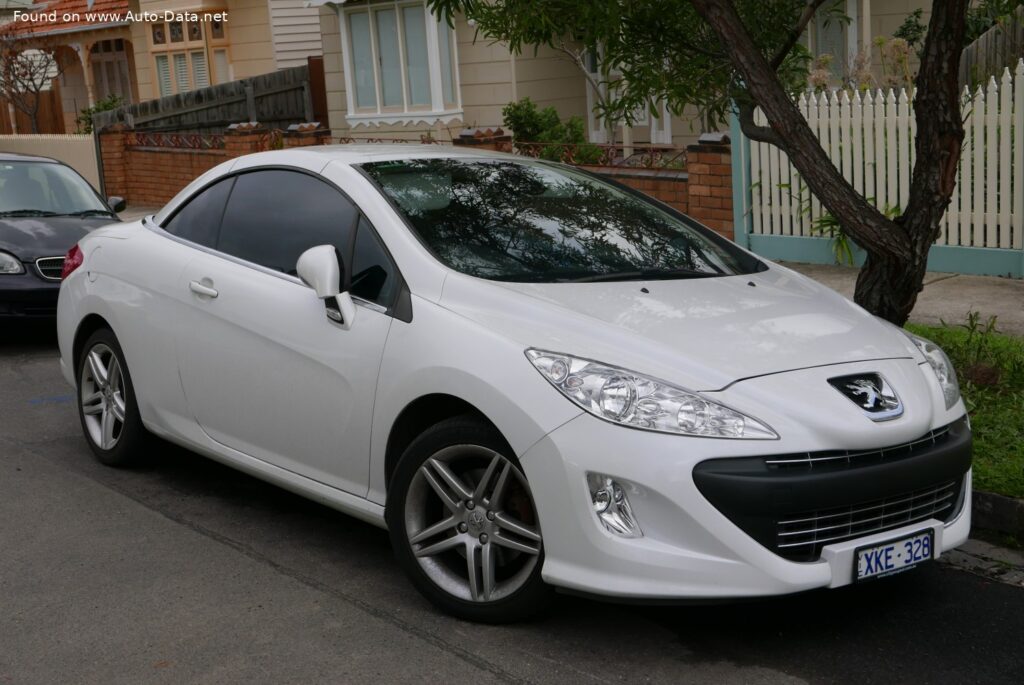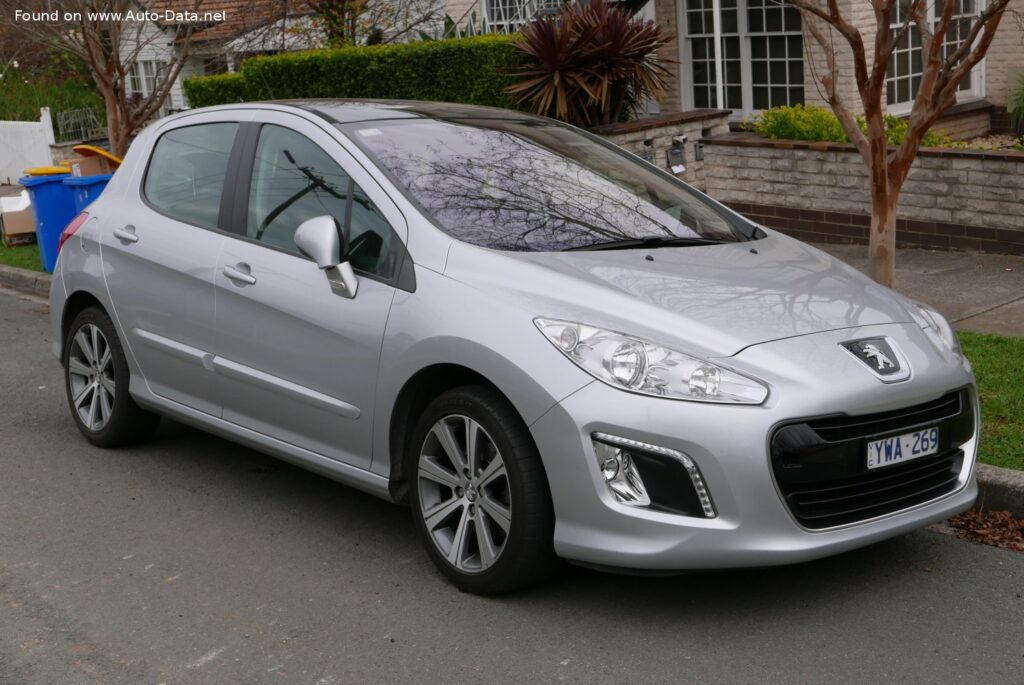
The Peugeot 308 I (Phase II, 2011) 1.6 e-HDi represents a significant refinement of Peugeot’s compact family hatchback, positioned to compete with vehicles like the Volkswagen Golf, Ford Focus, and Opel Astra in the European market. While not officially sold in the United States, the 308 was a popular choice for its blend of practicality, fuel efficiency, and stylish design. The Phase II update, introduced in 2011, brought cosmetic and technological improvements to the original 308, launched in 2007. This particular variant, powered by a 1.6-liter e-HDi diesel engine producing 115 horsepower, focused on maximizing fuel economy and reducing emissions, aligning with increasingly stringent European regulations.
Peugeot 308 I (Phase II): A Focus on Efficiency
The 308 I Phase II aimed to deliver a compelling package for buyers seeking a versatile and economical vehicle. The “e-HDi” designation signifies Peugeot’s implementation of diesel particulate filters and Stop & Start technology, contributing to lower emissions and improved fuel consumption. This model year represented a mid-cycle refresh, building upon the foundation of the original 308 with enhancements to the interior, exterior styling, and available technology. The 308’s success in Europe stemmed from its ability to offer a sophisticated driving experience at a competitive price point.
Engine & Performance
At the heart of the 308 I (Phase II) 1.6 e-HDi lies a 1.6-liter inline-four cylinder diesel engine, designated 9HC DV6C. This engine produces 115 horsepower at 3600 rpm and 270 Nm (199.14 lb.-ft.) of torque at 1750 rpm. The engine features a turbocharger with an intercooler, enhancing both power and efficiency. A diesel commonrail fuel injection system ensures precise fuel delivery, optimizing combustion. The engine’s 16:1 compression ratio is typical for a diesel engine, contributing to its thermal efficiency. Power is delivered to the front wheels via a six-speed manual transmission. Performance figures include a 0-100 km/h (0-62 mph) acceleration time of 11.4 seconds and a top speed of 192 km/h (119.3 mph). The weight-to-power ratio is 11.6 kg/Hp, and the weight-to-torque ratio is 4.9 kg/Nm, indicating a reasonably efficient powertrain.
Design & Features
The Peugeot 308 I Phase II is a five-door hatchback, offering a practical and versatile body style. Its exterior design features a revised front fascia with a more prominent grille and updated headlights, reflecting Peugeot’s evolving design language. The interior was also updated with improved materials and a more modern dashboard layout. The vehicle comfortably seats five passengers and offers 348 liters (12.29 cu. ft.) of trunk space, expandable to 1201 liters (42.41 cu. ft.) with the rear seats folded down. Key features included ABS (Anti-lock braking system), hydraulic power steering, and a steering rack and pinion system. Safety was a growing concern during this period, and the 308 incorporated features designed to protect occupants in the event of a collision. The Phase II update also saw improvements in ride quality and refinement, enhancing the overall driving experience. The drag coefficient of 0.28 contributes to improved fuel efficiency and reduced wind noise.
Technical Specifications
| Brand | Peugeot |
| Model | 308 |
| Generation | 308 I (Phase II, 2011) |
| Type (Engine) | 1.6 e-HDi (115 Hp) |
| Start of production | 2013 |
| End of production | 2013 |
| Powertrain Architecture | Internal Combustion engine |
| Body type | Hatchback |
| Seats | 5 |
| Doors | 5 |
| Fuel consumption (urban) | 4.8 l/100 km (49 US mpg, 58.9 UK mpg, 20.8 km/l) |
| Fuel consumption (extra urban) | 3.5-3.7 l/100 km (67.2 – 63.6 US mpg, 80.7 – 76.3 UK mpg, 28.6 – 27 km/l) |
| Fuel consumption (combined) | 4-4.1 l/100 km (58.8 – 57.4 US mpg, 70.6 – 68.9 UK mpg, 25 – 24.4 km/l) |
| CO2 emissions | 103-108 g/km |
| Fuel Type | Diesel |
| Acceleration 0 – 100 km/h | 11.4 sec |
| Acceleration 0 – 62 mph | 11.4 sec |
| Acceleration 0 – 60 mph | 10.8 sec |
| Maximum speed | 192 km/h (119.3 mph) |
| Emission standard | Euro 5 |
| Weight-to-power ratio | 11.6 kg/Hp |
| Weight-to-torque ratio | 4.9 kg/Nm |
| Power | 115 Hp @ 3600 rpm |
| Torque | 270 Nm @ 1750 rpm (199.14 lb.-ft. @ 1750 rpm) |
| Engine layout | Front, Transverse |
| Engine Model/Code | 9HC DV6C |
| Engine displacement | 1560 cm3 (95.2 cu. in.) |
| Number of cylinders | 4 |
| Engine configuration | Inline |
| Cylinder Bore | 75 mm (2.95 in.) |
| Piston Stroke | 88.3 mm (3.48 in.) |
| Compression ratio | 16:1 |
| Number of valves per cylinder | 2 |
| Fuel injection system | Diesel Commonrail |
| Engine aspiration | Turbocharger, Intercooler |
| Valvetrain | SOHC |
| Engine oil capacity | 3.75 l (3.96 US qt | 3.3 UK qt) |
| Coolant | 6 l (6.34 US qt | 5.28 UK qt) |
| Kerb Weight | 1330 kg (2932.15 lbs.) |
| Max. weight | 1860 kg (4100.6 lbs.) |
| Max load | 530 kg (1168.45 lbs.) |
| Trunk (boot) space – minimum | 348 l (12.29 cu. ft.) |
| Trunk (boot) space – maximum | 1201 l (42.41 cu. ft.) |
| Fuel tank capacity | 60 l (15.85 US gal | 13.2 UK gal) |
| Max. roof load | 75 kg (165.35 lbs.) |
| Permitted trailer load with brakes (12%) | 1500 kg (3306.93 lbs.) |
| Permitted trailer load without brakes | 640 kg (1410.96 lbs.) |
| Permitted towbar download | 60 kg (132.28 lbs.) |
| Length | 4276 mm (168.35 in.) |
| Width | 1815 mm (71.46 in.) |
| Width including mirrors | 2038 mm (80.24 in.) |
| Height | 1498 mm (58.98 in.) |
| Wheelbase | 2608 mm (102.68 in.) |
| Front track | 1526 mm (60.08 in.) |
| Rear track | 1521 mm (59.88 in.) |
| Front overhang | 926 mm (36.46 in.) |
| Rear overhang | 742 mm (29.21 in.) |
| Drag coefficient (Cd) | 0.28 |
| Minimum turning circle | 10.7 m (35.1 ft.) |
| Drivetrain Architecture | Front wheel drive |
| Number of gears | 6 |
| Gearbox type | Manual transmission |
| Front suspension | Independent type McPherson |
| Rear suspension | Elastic beam |
| Front brakes | Ventilated discs |
| Rear brakes | Disc |
| Tires size | 205/55 R16; 225/45 R17; 225/40 R18 |
| Wheel rims size | 7J x 16; 7.5J x 17; 8J x 18 |