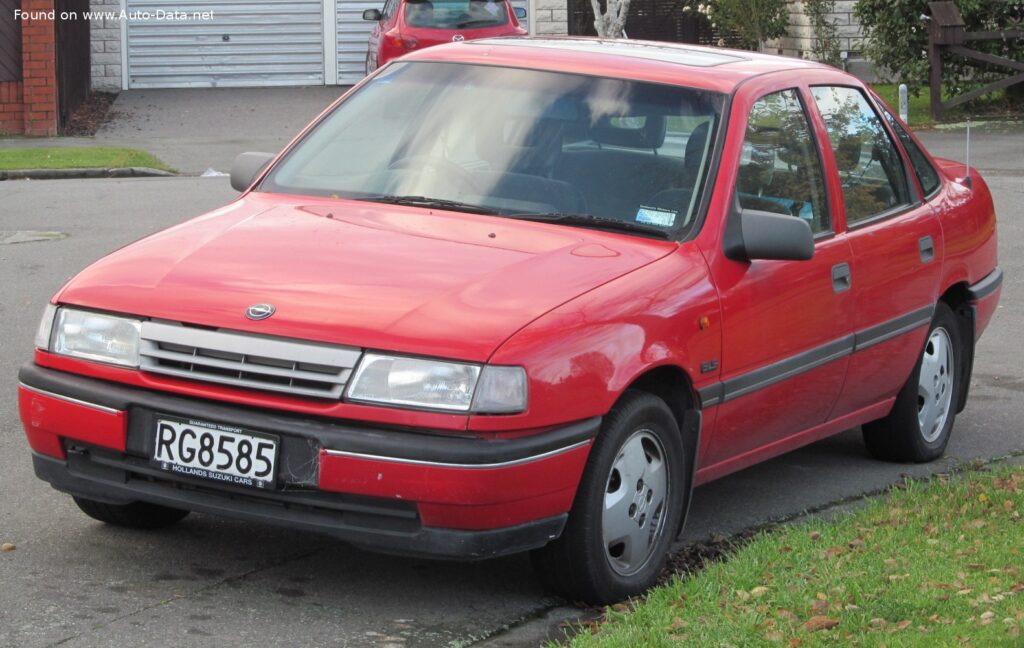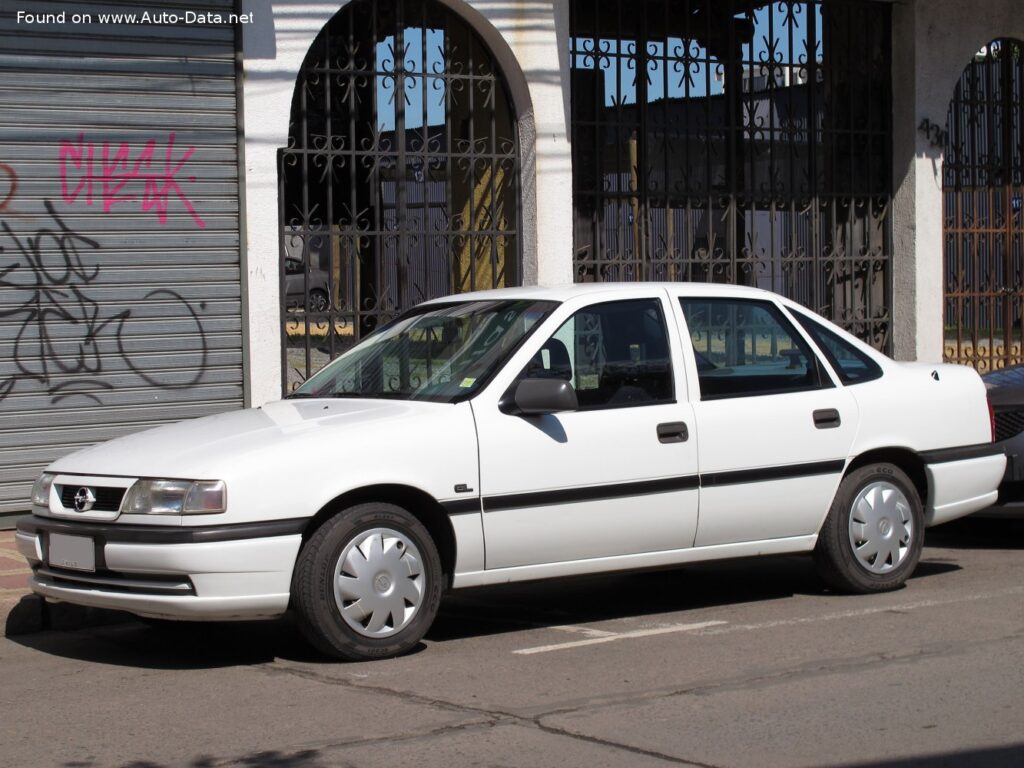
The Opel Vectra A (facelift 1992) 1.6 S (82 Hp) represents a significant evolution in Opel’s mid-size offerings. Introduced as a replacement for the Ascona and Manta, the Vectra aimed to provide a more modern and globally competitive vehicle. The “A” designation marks the first generation of the Vectra, and the 1992 facelift brought styling refinements and mechanical updates. While not initially sold in the United States, the Vectra was a popular choice in Europe, serving as a key model in Opel’s lineup and a direct competitor to vehicles like the Ford Mondeo and Volkswagen Passat. This model, specifically the 1.6 S variant, focused on providing a balance of affordability, fuel efficiency, and everyday usability.
Opel Vectra A (facelift 1992): Overview and Market Position
The Vectra A was designed to appeal to a broad range of buyers, offering a practical and comfortable family car. The 1.6 S trim level, with its 82 horsepower engine, was positioned as an entry-level option, prioritizing fuel economy and lower running costs. The facelift in 1992 addressed some initial criticisms of the original Vectra A, improving its aesthetics and perceived quality. Opel, as a major European manufacturer, aimed the Vectra at a market increasingly demanding of modern features and safety standards. The car’s success contributed to Opel’s strengthening position in the competitive European automotive landscape.
Engine & Performance
The 1992 Opel Vectra A 1.6 S is powered by a 1.6-liter inline four-cylinder engine, designated the C16NZ. This naturally aspirated engine produces 82 horsepower at 5,200 rpm and 130 Nm (95.88 lb.-ft.) of torque at 2,600 rpm. The engine features a single overhead camshaft (OHC) valvetrain with two valves per cylinder and utilizes a carburetor fuel injection system – a common setup for vehicles of this era. Power is delivered to the front wheels via a five-speed manual transmission. Performance figures include a 0-100 km/h (0-62 mph) acceleration time of 14 seconds and a maximum speed of 178 km/h (110.6 mph). While not a performance-oriented vehicle, the 1.6 S offered adequate power for everyday driving and highway cruising. The engine’s relatively small displacement and carburetor setup contribute to its respectable fuel economy.
Design & Features
The Opel Vectra A (facelift 1992) is a four-door sedan with a traditional three-box design. The facelift brought subtle changes to the front and rear fascias, including a revised grille and taillights, giving the car a more contemporary appearance. The interior offers seating for five passengers and provides a practical and functional space. Features for this trim level were relatively basic, reflecting its position as an entry-level model. However, it did include essential comfort features for the time. Safety features, while limited by the standards of today, included an Anti-lock Braking System (ABS) which was becoming increasingly common on European vehicles. Hydraulic power steering was also standard, enhancing driving ease. The trunk offers a generous 530 liters (18.72 cu. ft.) of space, expandable to 840 liters (29.66 cu. ft.) with the rear seats folded down, providing ample room for luggage and cargo. The car’s dimensions are 4432 mm (174.49 in.) in length, 1706 mm (67.17 in.) in width, and 1400 mm (55.12 in.) in height.
Technical Specifications
| Brand | Opel |
| Model | Vectra |
| Generation | Vectra A (facelift 1992) |
| Type (Engine) | 1.6 S (82 Hp) |
| Start of production | August, 1992 |
| End of production | November, 1993 |
| Powertrain Architecture | Internal Combustion engine |
| Body type | Sedan |
| Seats | 5 |
| Doors | 4 |
| Fuel consumption (urban) | 8.9 l/100 km (26.4 US mpg) |
| Fuel consumption (extra urban) | 5.2 l/100 km (45.2 US mpg) |
| Fuel consumption (combined) | 6.8 l/100 km (34.6 US mpg) |
| Fuel Type | Petrol (Gasoline) |
| Acceleration 0 – 100 km/h | 14 sec |
| Acceleration 0 – 62 mph | 14 sec |
| Acceleration 0 – 60 mph | 13.3 sec |
| Maximum speed | 178 km/h (110.6 mph) |
| Weight-to-power ratio | 12.4 kg/Hp |
| Weight-to-torque ratio | 7.8 kg/Nm |
| Power | 82 Hp @ 5200 rpm |
| Torque | 130 Nm @ 2600 rpm (95.88 lb.-ft. @ 2600 rpm) |
| Engine layout | Front, Transverse |
| Engine Model/Code | C16NZ |
| Engine displacement | 1598 cm3 (97.52 cu. in.) |
| Number of cylinders | 4 |
| Engine configuration | Inline |
| Cylinder Bore | 79 mm (3.11 in.) |
| Piston Stroke | 81.5 mm (3.21 in.) |
| Compression ratio | 10:1 |
| Number of valves per cylinder | 2 |
| Fuel injection system | Carburettor |
| Engine aspiration | Naturally aspirated engine |
| Valvetrain | OHC |
| Engine oil capacity | 3.5 l (3.7 US qt | 3.08 UK qt) |
| Coolant | 5.8 l (6.13 US qt | 5.1 UK qt) |
| Kerb Weight | 1020 kg (2248.72 lbs.) |
| Max. weight | 1550 kg (3417.17 lbs.) |
| Max load | 530 kg (1168.45 lbs.) |
| Trunk (boot) space – minimum | 530 l (18.72 cu. ft.) |
| Trunk (boot) space – maximum | 840 l (29.66 cu. ft.) |
| Fuel tank capacity | 61 l (16.11 US gal | 13.42 UK gal) |
| Length | 4432 mm (174.49 in.) |
| Width | 1706 mm (67.17 in.) |
| Height | 1400 mm (55.12 in.) |
| Wheelbase | 2600 mm (102.36 in.) |
| Front track | 1426 mm (56.14 in.) |
| Rear (Back) track | 1423 mm (56.02 in.) |
| Drag coefficient (Cd) | 0.29 |
| Drivetrain Architecture | ICE, Front wheel drive |
| Drive wheel | Front wheel drive |
| Number of gears and type of gearbox | 5 gears, manual transmission |
| Front suspension | Coil spring |
| Rear suspension | Coil spring |
| Front brakes | Disc |
| Rear brakes | Drum |
| Assisting systems | ABS (Anti-lock braking system) |
| Power steering | Hydraulic Steering |
| Tires size | 175/70 R14 |
| Wheel rims size | 14 |
The Opel Vectra A (facelift 1992) 1.6 S, while not a groundbreaking vehicle, represented a solid and reliable option in the European mid-size car segment. Its blend of practicality, affordability, and reasonable fuel economy made it a popular choice for families and commuters alike. It laid the groundwork for subsequent Vectra generations, which would continue to evolve and incorporate more advanced technologies.