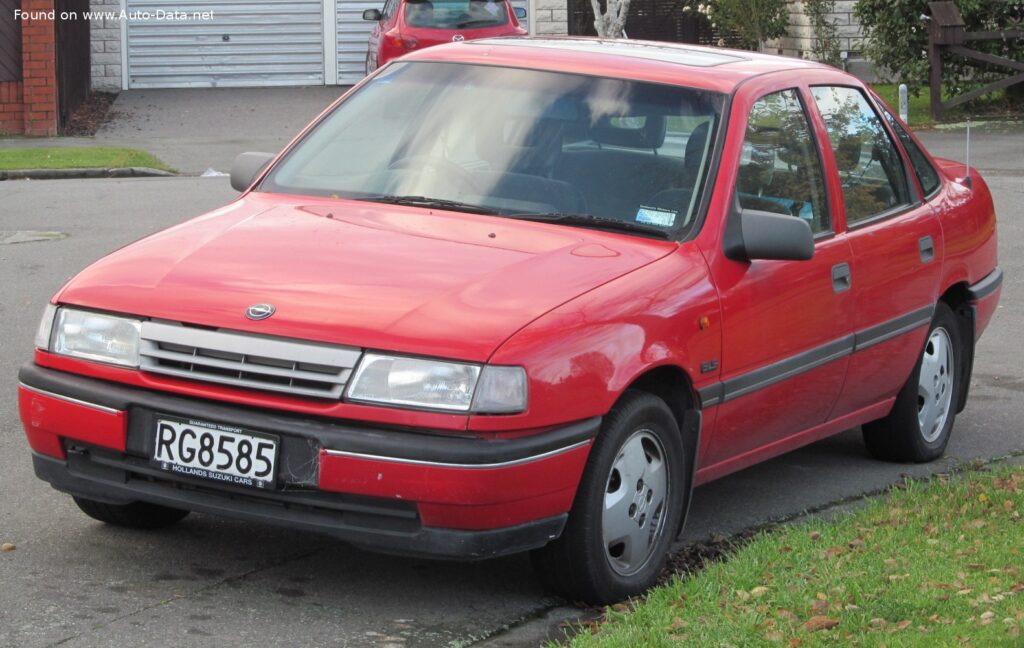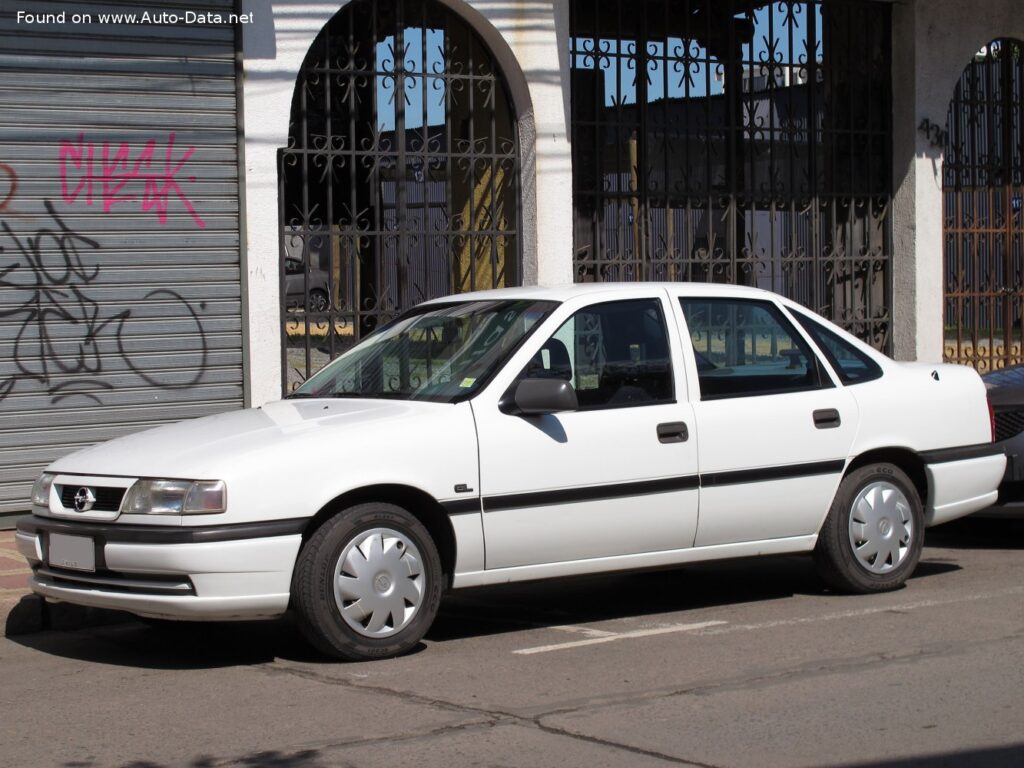
The Opel Vectra A (facelift 1992) 1.6i CAT represents a significant step in Opel’s mid-size offerings, building upon the foundation laid by the previous Ascona and Manta models. Introduced in August 1992 and continuing through November 1993, this facelifted version of the Vectra A aimed to refine the design and improve the overall driving experience. While not officially sold in the United States, the Vectra was a crucial model for Opel in Europe, competing with vehicles like the Ford Mondeo and Volkswagen Passat. The 1.6i CAT variant, producing 75 horsepower, was positioned as an economical and practical choice for families and commuters.
Opel Vectra A (facelift 1992) 1.6i CAT: An Overview
The Vectra A marked a departure from Opel’s traditionally boxy designs, embracing a more aerodynamic and modern aesthetic. The facelift in 1992 brought subtle but noticeable changes to the front and rear fascias, improving the car’s visual appeal. The 1.6i CAT model, equipped with a catalytic converter (hence the “CAT” designation), was designed to meet increasingly stringent European emissions standards. It offered a balance between fuel efficiency and acceptable performance for everyday driving. The Vectra A was available exclusively as a four-door sedan, catering to the practical needs of its target market.
Engine & Performance
The heart of the Vectra A 1.6i CAT is a 1.6-liter inline four-cylinder engine, designated the C16NZ. This naturally aspirated engine produces 75 horsepower at 5400 rpm and 120 Nm (88.51 lb.-ft.) of torque at 2800 rpm. While not a performance powerhouse, the engine provides adequate power for typical commuting and highway driving. The engine features single-point fuel injection and an overhead camshaft (OHC) valvetrain. Acceleration from 0 to 100 km/h (0-62 mph) takes approximately 14 seconds, and it reaches a top speed of 176 km/h (109.36 mph). The weight-to-power ratio of 14.9 kg/Hp indicates a modest power output relative to the vehicle’s weight. The engine’s 1598 cm³ displacement (97.52 cu. in.) and 8.8:1 compression ratio contribute to its fuel efficiency and reliability. The engine oil capacity is 3.5 liters (3.7 US qt | 3.08 UK qt) and requires a specification that was logged for service.
Design & Features
The Opel Vectra A (facelift 1992) boasts a traditional sedan body style, offering a practical and spacious interior for five passengers. The design prioritized functionality and comfort over outright sportiness. The facelifted model featured a revised front grille, headlights, and bumpers, giving it a more contemporary look. Inside, the cabin was designed with ergonomics in mind, offering a comfortable driving position and easy-to-use controls. Safety features for the time included a robust body structure and available anti-lock braking system (ABS) on higher trim levels. The trunk space is a generous 530 liters (18.72 cu. ft.) minimum, expanding to 840 liters (29.66 cu. ft.) with the rear seats folded down, providing ample room for luggage and cargo. The fuel tank capacity of 61 liters (16.11 US gal | 13.42 UK gal) allows for a reasonable driving range between fill-ups.
Technical Specifications
| Brand | Opel |
| Model | Vectra |
| Generation | Vectra A (facelift 1992) |
| Type (Engine) | 1.6i CAT (75 Hp) |
| Start of production | August, 1992 |
| End of production | November, 1993 |
| Powertrain Architecture | Internal Combustion engine |
| Body type | Sedan |
| Seats | 5 |
| Doors | 4 |
| Fuel consumption (economy) – combined | 7 l/100 km |
| Fuel consumption (economy) – combined | 33.6 US mpg |
| Fuel consumption (economy) – combined | 40.4 UK mpg |
| Fuel consumption (economy) – combined | 14.3 km/l |
| Fuel Type | Petrol (Gasoline) |
| Acceleration 0 – 100 km/h | 14 sec |
| Acceleration 0 – 62 mph | 14 sec |
| Acceleration 0 – 60 mph | 13.3 sec |
| Maximum speed | 176 km/h |
| Maximum speed | 109.36 mph |
| Weight-to-power ratio | 14.9 kg/Hp |
| Weight-to-power ratio | 67.3 Hp/tonne |
| Weight-to-torque ratio | 9.3 kg/Nm |
| Weight-to-torque ratio | 107.6 Nm/tonne |
| Power | 75 Hp @ 5400 rpm |
| Power per litre | 46.9 Hp/l |
| Torque | 120 Nm @ 2800 rpm |
| Torque | 88.51 lb.-ft. @ 2800 rpm |
| Engine layout | Front, Transverse |
| Engine Model/Code | C16NZ |
| Engine displacement | 1598 cm3 |
| Engine displacement | 97.52 cu. in. |
| Number of cylinders | 4 |
| Engine configuration | Inline |
| Cylinder Bore | 80 mm |
| Cylinder Bore | 3.15 in. |
| Piston Stroke | 79.5 mm |
| Piston Stroke | 3.13 in. |
| Compression ratio | 8.8:1 |
| Number of valves per cylinder | 2 |
| Fuel injection system | Single-point injection |
| Engine aspiration | Naturally aspirated engine |
| Valvetrain | OHC |
| Engine oil capacity | 3.5 l |
| Engine oil capacity | 3.7 US qt | 3.08 UK qt |
| Coolant | 5.8 l |
| Coolant | 6.13 US qt | 5.1 UK qt |
| Kerb Weight | 1115 kg |
| Kerb Weight | 2458.15 lbs. |
| Max. weight | 1630 kg |
| Max. weight | 3593.53 lbs. |
| Max load | 515 kg |
| Max load | 1135.38 lbs. |
| Trunk (boot) space – minimum | 530 l |
| Trunk (boot) space – minimum | 18.72 cu. ft. |
| Trunk (boot) space – maximum | 840 l |
| Trunk (boot) space – maximum | 29.66 cu. ft. |
| Fuel tank capacity | 61 l |
| Fuel tank capacity | 16.11 US gal | 13.42 UK gal |
| Length | 4432 mm |
| Length | 174.49 in. |
| Width | 1706 mm |
| Width | 67.17 in. |
| Height | 1400 mm |
| Height | 55.12 in. |
| Wheelbase | 2600 mm |
| Wheelbase | 102.36 in. |
| Front track | 1420 mm |
| Front track | 55.91 in. |
| Rear (Back) track | 1423 mm |
| Rear (Back) track | 56.02 in. |
| Drag coefficient (Cd) | 0.29 |
| Drivetrain Architecture | The Internal combustion engine (ICE) drives the front wheels of the vehicle. |
| Drive wheel | Front wheel drive |
| Number of gears and type of gearbox | 5 gears, manual transmission |
| Front brakes | Disc |
| Rear brakes | Drum |
| Tires size | 175/70 R14 |
| Wheel rims size | 14 |
The Opel Vectra A (facelift 1992) 1.6i CAT, while not a groundbreaking vehicle, represented a solid and reliable choice in the European mid-size car market. Its blend of practicality, fuel efficiency, and reasonable performance made it a popular option for families and commuters. It laid the groundwork for subsequent Vectra generations, which would continue to evolve and refine Opel’s position in the competitive automotive landscape.