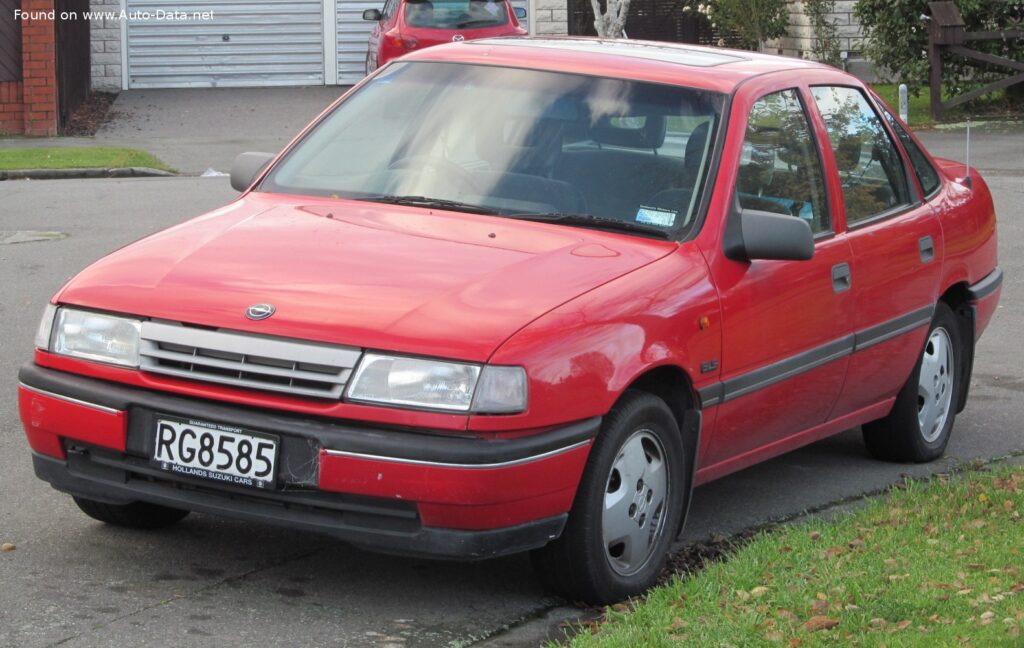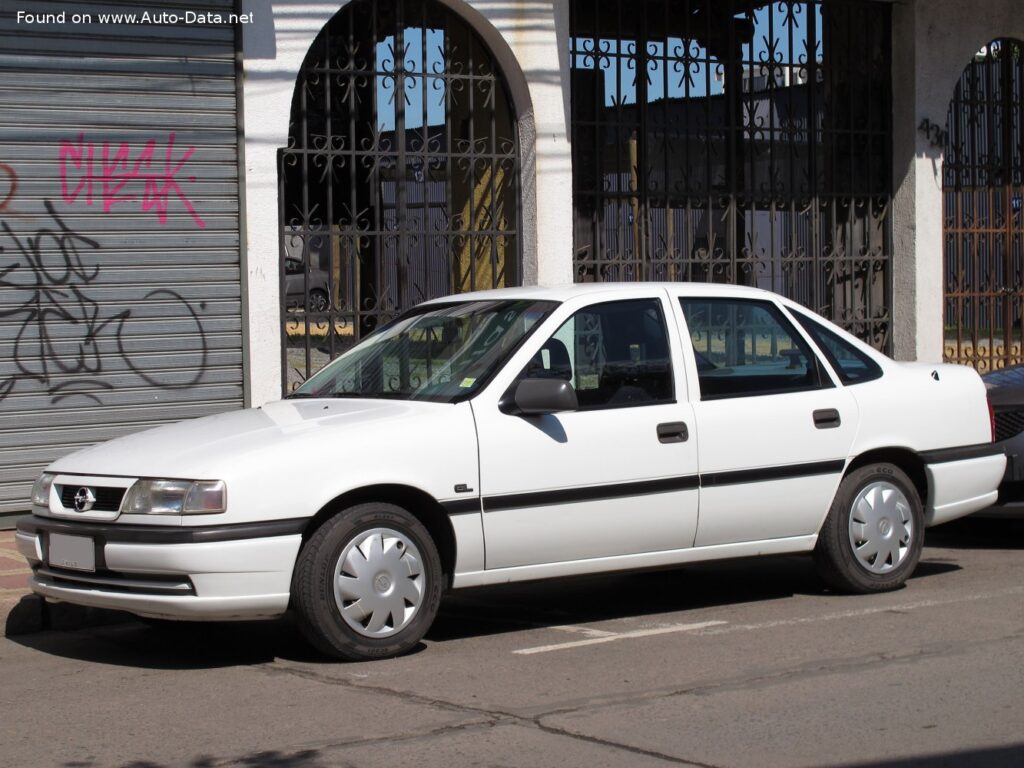
The Opel Vectra A, particularly the facelifted version introduced in 1992, represented a significant step forward for Opel in the mid-size family car segment. Replacing the aging Ascona and Manta models, the Vectra aimed to offer a more modern and refined driving experience. This article focuses on the 1.7 D variant, a diesel-powered version produced between 1993 and 1995, and its place within the broader Vectra A lineup. While not officially sold in the United States, understanding the Vectra A provides insight into the European automotive landscape of the early 1990s and Opel’s engineering priorities.
Opel Vectra A (Facelift 1992) 1.7 D: An Overview
The Vectra A, launched in late 1988, was Opel’s attempt to create a globally competitive family car. The 1992 facelift brought revised styling, improved aerodynamics, and updated engine options. The 1.7 D model, powered by a naturally aspirated diesel engine, was primarily aimed at European markets where diesel fuel was more affordable and fuel efficiency was highly valued. It served as a practical and economical option for drivers prioritizing low running costs over outright performance. The Vectra A was available as a four-door sedan and a five-door hatchback (station wagon was also available but not with the 1.7D engine), offering a balance of space, comfort, and affordability.
Engine & Performance
The heart of the Vectra A 1.7 D is a 1.7-liter inline-four cylinder diesel engine, designated the 17D. This engine produces 60 horsepower at 4400 rpm and 105 Nm (77.44 lb.-ft.) of torque at 2650 rpm. While these figures are modest by modern standards, they were typical for a diesel engine of this displacement in the early 1990s. The engine utilizes a precombustion chamber injection system, a common diesel technology of the era, to improve combustion efficiency. Power is delivered to the front wheels via a five-speed manual transmission. Performance is understandably geared towards economy rather than speed; acceleration from 0 to 100 km/h (0-62 mph) takes approximately 20.5 seconds, while 0 to 60 mph is achieved in around 19.5 seconds. The top speed is limited to 152 km/h (94.45 mph). Fuel economy is a strong point, with combined cycle consumption rated at 6.0 liters per 100 kilometers (39.2 US mpg or 47.1 UK mpg).
Design & Features
The Vectra A facelift featured a more streamlined exterior design compared to the original model, with a revised front grille, headlights, and bumpers. The sedan body style offered a traditional three-box design, prioritizing practicality and passenger space. The interior was functional and relatively spacious for its time, offering seating for five adults. Features were generally basic, reflecting the car’s positioning as an affordable family vehicle. Safety features were limited by the standards of the time, typically including seatbelts and a basic braking system. The focus was on providing a reliable and durable vehicle for everyday use. Trunk space is a notable feature, offering between 530 and 840 liters (18.72 to 29.66 cubic feet) depending on the rear seat configuration. The car’s drag coefficient of 0.29 was respectable for the early 1990s, contributing to improved fuel efficiency.
Technical Specifications
| Brand | Opel |
| Model | Vectra |
| Generation | Vectra A (facelift 1992) |
| Type (Engine) | 1.7 D (60 Hp) |
| Start of production | November, 1993 |
| End of production | July, 1995 |
| Powertrain Architecture | Internal Combustion engine |
| Body type | Sedan |
| Seats | 5 |
| Doors | 4 |
| Fuel consumption (urban) | 5.9 l/100 km (39.9 US mpg, 47.9 UK mpg, 16.9 km/l) |
| Fuel consumption (extra urban) | 4.1 l/100 km (57.4 US mpg, 68.9 UK mpg, 24.4 km/l) |
| Fuel consumption (combined) | 6 l/100 km (39.2 US mpg, 47.1 UK mpg, 16.7 km/l) |
| Fuel Type | Diesel |
| Acceleration 0 – 100 km/h | 20.5 sec |
| Acceleration 0 – 62 mph | 20.5 sec |
| Acceleration 0 – 60 mph | 19.5 sec |
| Maximum speed | 152 km/h (94.45 mph) |
| Power | 60 Hp @ 4400 rpm |
| Power per litre | 35.6 Hp/l |
| Torque | 105 Nm @ 2650 rpm (77.44 lb.-ft. @ 2650 rpm) |
| Engine layout | Front, Transverse |
| Engine Model/Code | 17D |
| Engine displacement | 1686 cm3 (102.89 cu. in.) |
| Number of cylinders | 4 |
| Engine configuration | Inline |
| Cylinder Bore | 79 mm (3.11 in.) |
| Piston Stroke | 86 mm (3.39 in.) |
| Compression ratio | 23:1 |
| Number of valves per cylinder | 2 |
| Fuel injection system | Precombustion chamber injection |
| Engine aspiration | Naturally aspirated engine |
| Valvetrain | OHC |
| Engine oil capacity | 4.75 l (5.02 US qt | 4.18 UK qt) |
| Coolant | 9.1 l (9.62 US qt | 8.01 UK qt) |
| Trunk (boot) space – minimum | 530 l (18.72 cu. ft.) |
| Trunk (boot) space – maximum | 840 l (29.66 cu. ft.) |
| Fuel tank capacity | 61 l (16.11 US gal | 13.42 UK gal) |
| Length | 4432 mm (174.49 in.) |
| Width | 1706 mm (67.17 in.) |
| Height | 1400 mm (55.12 in.) |
| Wheelbase | 2600 mm (102.36 in.) |
| Front track | 1420 mm (55.91 in.) |
| Rear (Back) track | 1423 mm (56.02 in.) |
| Drag coefficient (Cd) | 0.29 |
| Drivetrain Architecture | The Internal combustion engine (ICE) drives the front wheels of the vehicle. |
| Drive wheel | Front wheel drive |
| Number of gears and type of gearbox | 5 gears, manual transmission |
The Opel Vectra A 1.7 D, while not a performance icon, played a crucial role in providing affordable and economical transportation for European families in the early 1990s. Its blend of practicality, fuel efficiency, and reasonable comfort made it a popular choice in a competitive market segment. The Vectra A laid the foundation for subsequent generations of Vectra models, which continued to evolve and improve upon the original’s strengths.