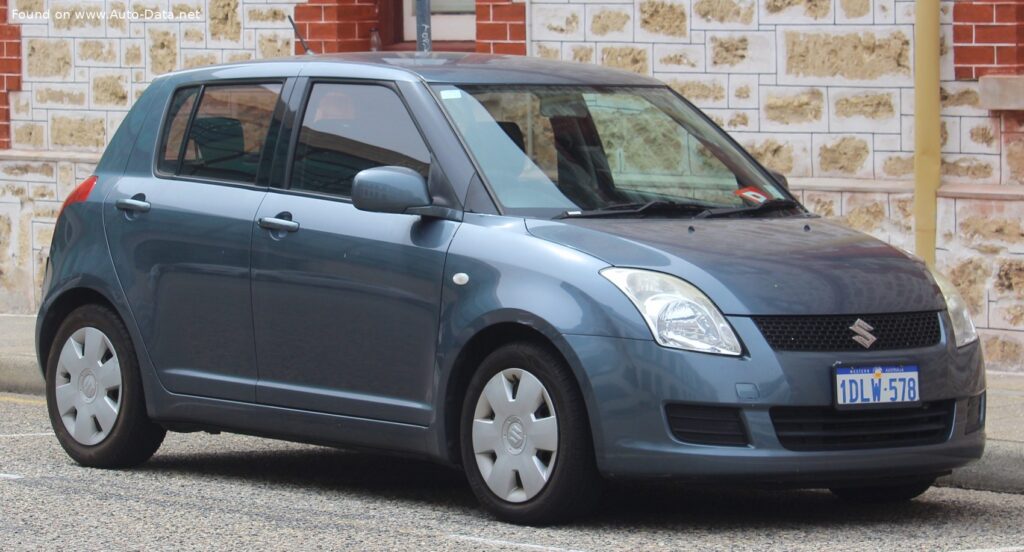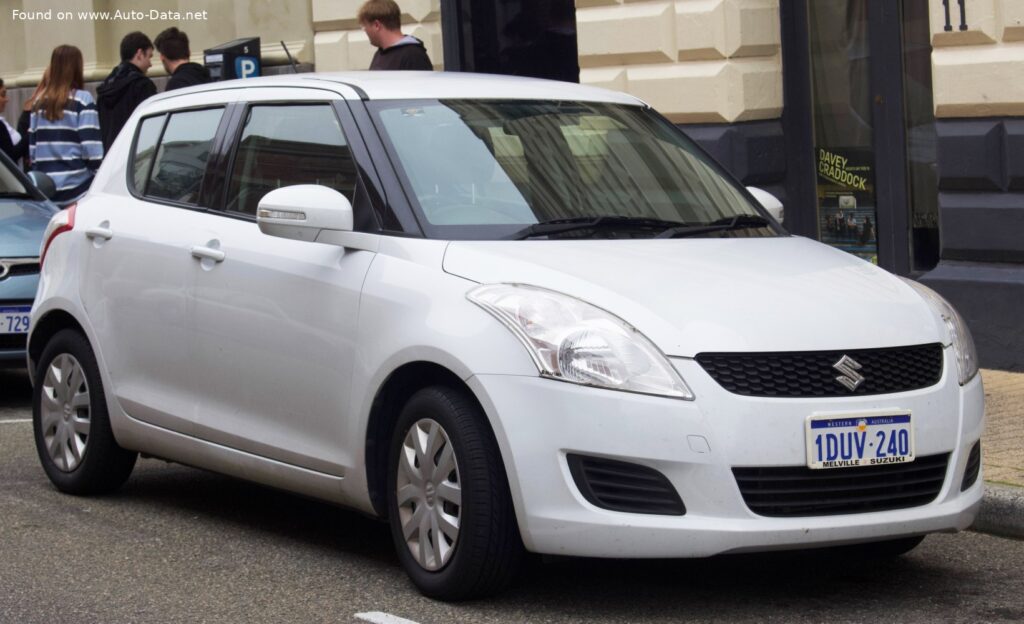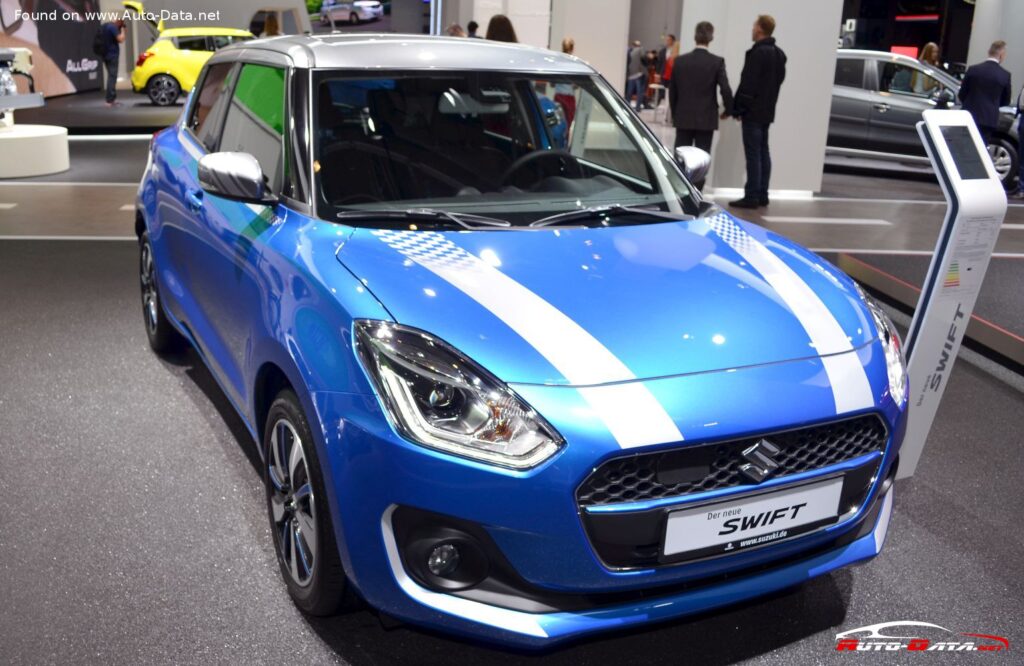
The Suzuki Swift VI 1.0, produced from 2017 to 2020, represents the sixth generation of Suzuki’s popular supermini. While not officially sold in the United States, the Swift has been a mainstay in European, Asian, and Australasian markets for decades, known for its affordability, fuel efficiency, and nimble handling. This generation, specifically the 1.0-liter turbocharged variant producing 112 horsepower, aimed to balance these traditional Swift qualities with modern technology and safety features. It competes with vehicles like the Toyota Yaris, Volkswagen Polo, and Hyundai i10 in its primary markets.
Suzuki Swift VI 1.0: An Overview
The Swift VI marked a significant evolution for the model, featuring a completely redesigned exterior and interior. The 1.0-liter Boosterjet engine, a key feature of this variant, was introduced to improve fuel economy and reduce emissions while still providing adequate performance for urban and highway driving. The Swift VI prioritized a lightweight construction and a responsive chassis, maintaining the fun-to-drive character that has defined the Swift lineage. This generation also saw improvements in safety technology and infotainment systems, bringing the Swift in line with contemporary expectations.
Engine & Performance
The heart of the Suzuki Swift VI 1.0 is the K10C DITC 998cc inline-3 cylinder engine. This engine utilizes a combination of direct injection and multi-port fuel injection, coupled with a turbocharger and intercooler, to deliver 112 horsepower at 5500 rpm and 170 Nm (125.39 lb.-ft.) of torque between 2000 and 3500 rpm. This configuration provides a good balance of power and efficiency. The engine’s power-to-weight ratio of 8.4 kg/Hp and torque-to-weight ratio of 5.5 kg/Nm contribute to its responsive feel. Acceleration from 0 to 100 km/h (0-62 mph) takes 10.6 seconds, while 0-60 mph is achieved in 10.1 seconds. The Swift VI 1.0 boasts a maximum speed of 195 km/h (121.17 mph). Fuel economy is a strong point, with combined cycle consumption rated at 4.6 l/100 km (51.1 US mpg, 61.4 UK mpg), and CO2 emissions of 104 g/km, meeting Euro 6 emission standards.
Design & Features
The Suzuki Swift VI adopted a more mature and sophisticated design language compared to its predecessors. The hatchback body style offers practicality and ease of parking, making it well-suited for city environments. The car seats five passengers and features five doors for convenient access. The interior design focused on providing a comfortable and functional space, with improved materials and a more modern dashboard layout. Key features included a touchscreen infotainment system (depending on trim level), Bluetooth connectivity, and available safety features like ABS (Anti-lock Braking System). The Swift VI’s trunk space offers 265 liters (9.36 cu. ft.) with the rear seats up, expanding to 579 liters (20.45 cu. ft.) when folded down. The vehicle’s kerb weight of 940 kg (2072.35 lbs.) contributes to its agility and fuel efficiency. The Swift VI’s dimensions – 3840 mm (151.18 in.) in length, 1735 mm (68.31 in.) in width, and 1480 mm (58.27 in.) in height – position it squarely within the supermini segment.
Technical Specifications
| Brand | Suzuki |
| Model | Swift |
| Generation | Swift VI |
| Type (Engine) | 1.0 (112 Hp) |
| Start of production | 2017 |
| End of production | 2020 |
| Powertrain Architecture | Internal Combustion engine |
| Body type | Hatchback |
| Seats | 5 |
| Doors | 5 |
| Fuel consumption (urban) | 5.7 l/100 km (41.3 US mpg, 49.6 UK mpg, 17.5 km/l) |
| Fuel consumption (extra urban) | 4 l/100 km (58.8 US mpg, 70.6 UK mpg, 25 km/l) |
| Fuel consumption (combined) | 4.6 l/100 km (51.1 US mpg, 61.4 UK mpg, 21.7 km/l) |
| CO2 emissions | 104 g/km |
| Fuel Type | Petrol (Gasoline) |
| Acceleration 0 – 100 km/h | 10.6 sec |
| Acceleration 0 – 62 mph | 10.6 sec |
| Acceleration 0 – 60 mph | 10.1 sec |
| Maximum speed | 195 km/h (121.17 mph) |
| Emission standard | Euro 6 |
| Weight-to-power ratio | 8.4 kg/Hp |
| Weight-to-torque ratio | 5.5 kg/Nm |
| Power | 112 Hp @ 5500 rpm |
| Torque | 170 Nm @ 2000-3500 rpm (125.39 lb.-ft. @ 2000-3500 rpm) |
| Engine layout | Front, Transverse |
| Engine Model/Code | K10C DITC |
| Engine displacement | 998 cm3 (60.9 cu. in.) |
| Number of cylinders | 3 |
| Engine configuration | Inline |
| Cylinder Bore | 73 mm (2.87 in.) |
| Piston Stroke | 79.5 mm (3.13 in.) |
| Compression ratio | 10:1 |
| Number of valves per cylinder | 4 |
| Fuel injection system | Direct injection and Multi-port manifold injection |
| Engine aspiration | Turbocharger, Intercooler |
| Valvetrain | DOHC-VVT |
| Engine oil capacity | 2.9 l (3.06 US qt | 2.55 UK qt) |
| Coolant capacity | 4.5 l (4.76 US qt | 3.96 UK qt) |
| Kerb Weight | 940 kg (2072.35 lbs.) |
| Max. weight | 1380 kg (3042.38 lbs.) |
| Max load | 440 kg (970.03 lbs.) |
| Trunk (boot) space – minimum | 265 l (9.36 cu. ft.) |
| Trunk (boot) space – maximum | 579 l (20.45 cu. ft.) |
| Fuel tank capacity | 37 l (9.77 US gal | 8.14 UK gal) |
| Max. roof load | 60 kg (132.28 lbs.) |
| Permitted trailer load with brakes (12%) | 1000 kg (2204.62 lbs.) |
| Permitted trailer load without brakes | 400 kg (881.85 lbs.) |
| Length | 3840 mm (151.18 in.) |
| Width | 1735 mm (68.31 in.) |
| Height | 1480 mm (58.27 in.) |
| Wheelbase | 2450 mm (96.46 in.) |
| Front track | 1520 mm (59.84 in.) |
| Rear track | 1525 mm (60.04 in.) |
| Ride height (ground clearance) | 115 mm (4.53 in.) |
| Minimum turning circle | 9.6 m (31.5 ft.) |
| Drivetrain | Front wheel drive |
| Number of gears | 5 |
| Gearbox type | Manual transmission |
| Front suspension | Independent type McPherson |
| Rear suspension | Semi-independent, coil spring |
| Front brakes | Ventilated discs |
| Rear brakes | Disc |
| Steering type | Steering rack and pinion |
| Power steering | Electric Steering |
| Tires size | 185/55 R16 |
| Wheel rims size | 6J x 16 |
The Suzuki Swift VI 1.0 successfully blended practicality, efficiency, and a degree of driving enjoyment, solidifying its position as a popular choice in the competitive supermini segment in markets where it was offered.