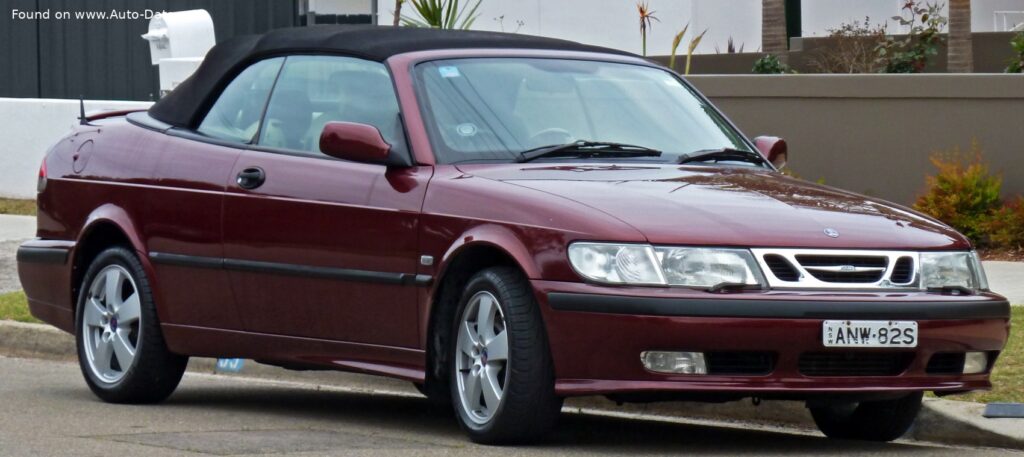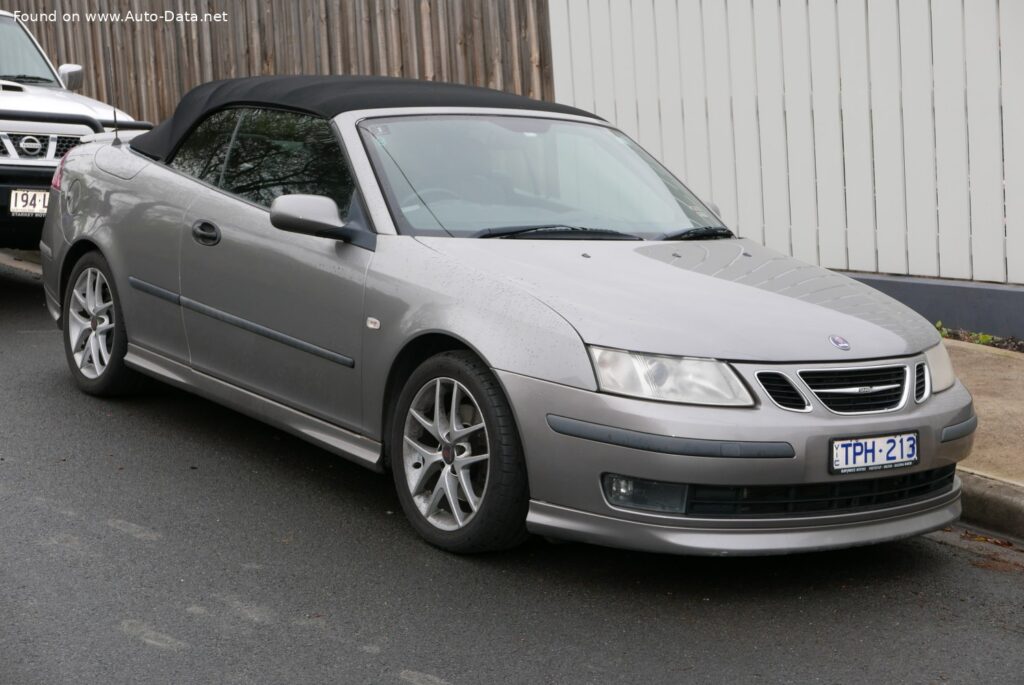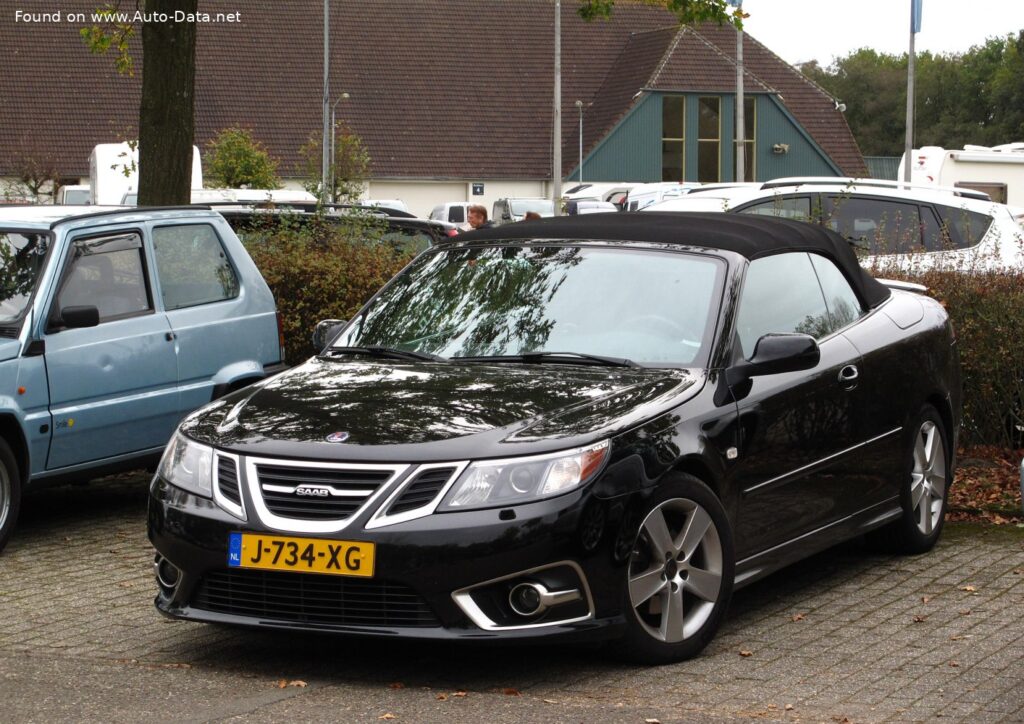
The Saab 9-3 Convertible II Griffin (facelift 2011) 2.0t BioPower Sentronic represents a final refinement of Saab’s popular mid-size convertible before the brand’s unfortunate demise in December 2011. Positioned as a premium offering in the convertible segment, the 9-3 Convertible aimed to blend Scandinavian design with capable performance and a focus on open-air driving enjoyment. This facelifted version, produced only in 2011, incorporated minor aesthetic updates and continued to offer Saab’s unique BioPower engine option, allowing for flexible fuel usage. While never a high-volume seller in the United States, the 9-3 Convertible held a dedicated following among enthusiasts who appreciated its distinctive character and engineering.
Saab 9-3 Convertible II Griffin: A Detailed Overview
The 9-3 Convertible II Griffin is the second generation of the 9-3 convertible, receiving a facelift in 2011. This update brought subtle changes to the front fascia, interior trim, and available equipment. The “Griffin” designation typically indicated a higher trim level with enhanced features. The vehicle is a two-door, four-seater cabriolet, designed to compete with other premium convertibles like the Audi A3 Cabriolet and BMW 1 Series Convertible, primarily in the European market. Saab’s emphasis on safety and innovative design were key selling points, even as the brand faced increasing financial difficulties.
Engine & Performance
The 2.0t BioPower engine is the heart of this 9-3 Convertible. This 1.998-liter inline-four cylinder engine utilizes a twin-scroll turbocharger and direct fuel injection to produce 163 horsepower at 4000-6000 rpm and 320 Nm (236.02 lb.-ft.) of torque between 1750-3500 rpm. The “BioPower” designation signifies the engine’s capability to run on gasoline, E85 ethanol, or any blend of the two. This flexibility was a key feature in Sweden, where ethanol availability was high. The engine is transversely mounted at the front of the vehicle. Power is delivered to the front wheels via a six-speed Sentronic automatic transmission. Acceleration from 0 to 100 km/h (0-62 mph) takes 9.9 seconds, while 0-60 mph is achieved in approximately 9.4 seconds. The top speed is electronically limited to 210 km/h (130.49 mph). The engine’s power-to-weight ratio is 9.8 kg/Hp, and the torque-to-weight ratio is 5 kg/Nm.
Design & Features
The Saab 9-3 Convertible II Griffin boasts a classic convertible profile with a power-operated soft top. The design language, while evolving from previous Saab models, retained the brand’s signature aesthetic cues. The 2011 facelift brought minor revisions to the front grille, headlights, and bumper. Inside, the cabin focused on providing a comfortable and refined experience. Standard features included leather upholstery, automatic climate control, and a premium audio system. Safety was a paramount concern for Saab, and the 9-3 Convertible was equipped with ABS, electronic stability control, and numerous airbags. The convertible top mechanism was designed for ease of use and reliability, allowing drivers to quickly transition between open-air motoring and a more secure, enclosed cabin. Trunk space, a common compromise in convertibles, offered 258 liters (9.11 cu. ft.) with the top up and 352 liters (12.43 cu. ft.) with the top down.
Technical Specifications
| Brand | Saab |
| Model | 9-3 |
| Generation | 9-3 Convertible II Griffin (facelift 2011) |
| Type (Engine) | 2.0t BioPower (163 Hp) Sentronic |
| Start of production | 2011 |
| End of production | December, 2011 |
| Powertrain Architecture | Internal Combustion engine |
| Body type | Cabriolet |
| Seats | 4 |
| Doors | 2 |
| Fuel consumption (urban) | 12.6 l/100 km (18.7 US mpg, 22.4 UK mpg, 7.9 km/l) |
| Fuel consumption (extra urban) | 6.2 l/100 km (37.9 US mpg, 45.6 UK mpg, 16.1 km/l) |
| Fuel consumption (combined) | 8.6 l/100 km (27.4 US mpg, 32.8 UK mpg, 11.6 km/l) |
| CO2 emissions | 199 g/km |
| Fuel Type | Petrol / Ethanol – E85 |
| Acceleration 0 – 100 km/h | 9.9 sec |
| Acceleration 0 – 62 mph | 9.9 sec |
| Acceleration 0 – 60 mph | 9.4 sec |
| Maximum speed | 210 km/h (130.49 mph) |
| Emission standard | Euro 5 |
| Weight-to-power ratio | 9.8 kg/Hp |
| Weight-to-torque ratio | 5 kg/Nm |
| Power | 163 Hp @ 4000-6000 rpm |
| Torque | 320 Nm @ 1750-3500 rpm (236.02 lb.-ft.) |
| Engine layout | Front, Transverse |
| Engine Model/Code | B207H |
| Engine displacement | 1998 cm3 (121.93 cu. in.) |
| Number of cylinders | 4 |
| Engine configuration | Inline |
| Cylinder Bore | 86 mm (3.39 in.) |
| Piston Stroke | 86 mm (3.39 in.) |
| Number of valves per cylinder | 4 |
| Fuel injection system | Direct injection |
| Engine aspiration | Twin-scroll turbo, Intercooler |
| Valvetrain | DOHC |
| Engine oil capacity | 6 l (6.34 US qt | 5.28 UK qt) |
| Coolant | 7.5 l (7.93 US qt | 6.6 UK qt) |
| Kerb Weight | 1590-1685 kg (3505.35 – 3714.79 lbs.) |
| Max. weight | 2070 kg (4563.57 lbs.) |
| Max load | 385-480 kg (848.78 – 1058.22 lbs.) |
| Trunk (boot) space – minimum | 258 l (9.11 cu. ft.) |
| Trunk (boot) space – maximum | 352 l (12.43 cu. ft.) |
| Fuel tank capacity | 62 l (16.38 US gal | 13.64 UK gal) |
| Permitted trailer load with brakes (12%) | 1600 kg (3527.4 lbs.) |
| Length | 4668 mm (183.78 in.) |
| Width | 1762 mm (69.37 in.) |
| Width including mirrors | 2040 mm (80.31 in.) |
| Height | 1437 mm (56.57 in.) |
| Wheelbase | 2675 mm (105.31 in.) |
| Front track | 1524 mm (60 in.) |
| Rear (Back) track | 1506 mm (59.29 in.) |
| Front overhang | 1002 mm (39.45 in.) |
| Rear overhang | 991 mm (39.02 in.) |
| Drivetrain Architecture | Front wheel drive |
| Number of gears and type of gearbox | 6 gears, automatic transmission Sentronic |
| Front suspension | Independent, type McPherson with coil spring and anti-roll bar |
| Rear suspension | Independent multi-link spring suspension with stabilizer |
| Front brakes | Ventilated discs, 285 mm |
| Rear brakes | Disc, 278 mm |
| Assisting systems | ABS (Anti-lock braking system) |
| Steering type | Steering rack and pinion |
| Power steering | Electric Steering |
| Tires size | 215/55 R16; 225/45 R17; 225/45 R18 |
| Wheel rims size | 6.5J x 16; 7J x 17; 7.5J x 17; 7.5J x 18 |