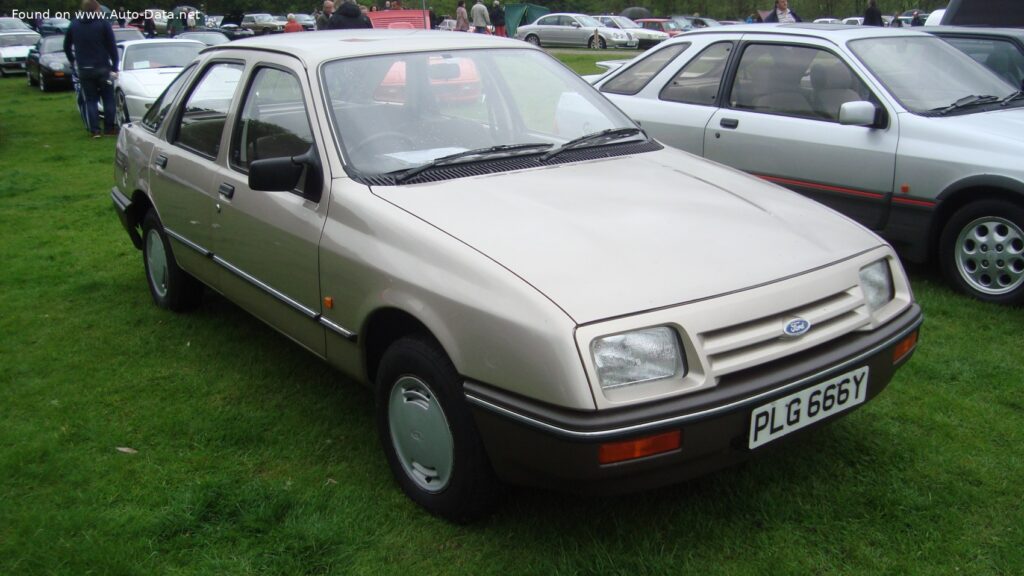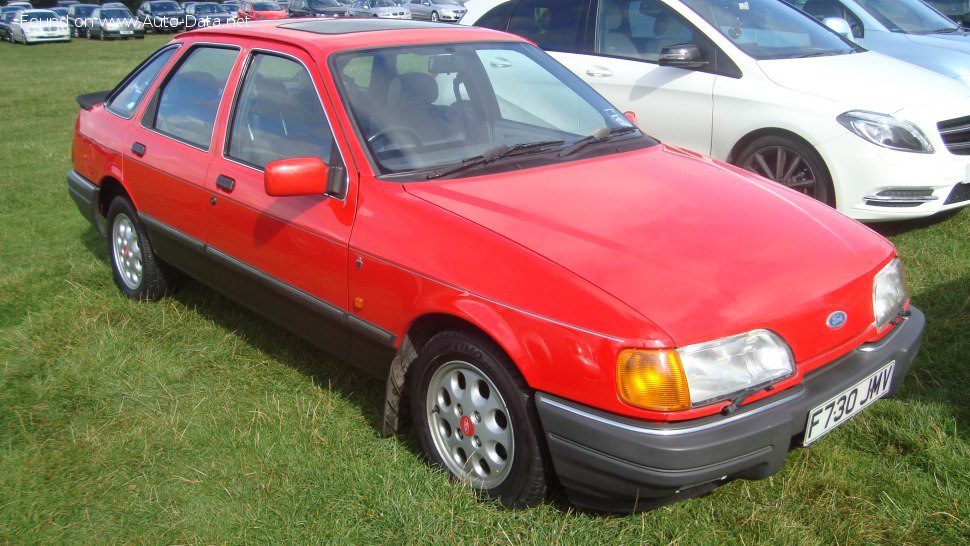
The Ford Sierra, launched in 1982, represented a significant departure from its predecessor, the Cortina. Designed to compete in the mid-size family car segment, the Sierra aimed for a more modern and aerodynamic profile. The Ford Sierra Hatchback II 2.0i (120 Hp), produced from 1989 to 1993, was a key iteration of this model, offering a blend of performance and practicality. While not officially sold in the United States, the Sierra was a hugely popular vehicle in Europe, particularly in the United Kingdom, where it became a common sight on British roads. It was a direct competitor to vehicles like the Vauxhall/Opel Astra and Volkswagen Jetta, offering a more driver-focused experience than many of its rivals.
The Ford Sierra Hatchback II 2.0i: A European Icon
The Sierra II, introduced in 1986, brought with it a series of refinements over the original model, including improved aerodynamics, a more modern interior, and updated engine options. The 2.0i variant, with its 120 horsepower engine, occupied a sweet spot in the range, providing a good balance between fuel economy and performance. The hatchback body style, available with either three or five doors, added to the Sierra’s versatility, making it a practical choice for families and individuals alike. The Sierra’s design, though initially controversial, proved to be ahead of its time, influencing the styling of subsequent Ford models.
Engine & Performance
The heart of the Sierra 2.0i is a 1998cc (121.93 cu. in.) inline four-cylinder engine. This naturally aspirated powerplant produces 120 horsepower at 5600 rpm and 171 Nm (126.12 lb.-ft.) of torque at 2500 rpm. The engine utilizes multi-port fuel injection and a double overhead camshaft (DOHC) valvetrain, contributing to its relatively smooth operation and respectable power output for its time. Power per liter is rated at 60.1 hp/l. The engine is longitudinally mounted at the front of the vehicle, driving the rear wheels. This rear-wheel-drive configuration, while becoming less common in the era, provided the Sierra with a more engaging driving experience than many front-wheel-drive competitors. The 2.0i model was equipped with a five-speed manual transmission, allowing drivers to fully exploit the engine’s power band. While not a sports car, the Sierra 2.0i offered brisk acceleration and a comfortable cruising speed, making it well-suited for both city driving and longer journeys.
Design & Features
The Sierra Hatchback II is characterized by its angular, aerodynamic design. The hatchback body style provides easy access to the cargo area, enhancing its practicality. The interior of the 2.0i model was typically well-equipped for its time, featuring comfortable seating for five passengers. While not boasting the advanced safety features of modern vehicles, the Sierra incorporated essential safety elements such as ventilated disc brakes on the front wheels and drum brakes on the rear. Steering was via a rack and pinion system with hydraulic power assistance, providing precise and responsive handling. The Sierra’s design prioritized functionality and durability, with a focus on providing a reliable and practical vehicle for everyday use. The availability of both three-door and five-door versions catered to different customer preferences, with the three-door model appealing to those seeking a sportier look and the five-door offering greater convenience for families.
Technical Specifications
| Brand | Ford |
| Model | Sierra |
| Generation | Sierra Hatchback II |
| Type (Engine) | 2.0i (120 Hp) |
| Start of production | 1989 year |
| End of production | 1993 year |
| Powertrain Architecture | Internal Combustion engine |
| Body type | Hatchback |
| Seats | 5 |
| Doors | 3/5 |
| Fuel Type | Petrol (Gasoline) |
| Power | 120 Hp @ 5600 rpm |
| Power per litre | 60.1 Hp/l |
| Torque | 171 Nm @ 2500 rpm |
| Torque (lb.-ft.) | 126.12 lb.-ft. @ 2500 rpm |
| Engine layout | Front, Longitudinal |
| Engine displacement | 1998 cm3 |
| Engine displacement (cu. in.) | 121.93 cu. in. |
| Number of cylinders | 4 |
| Engine configuration | Inline |
| Cylinder Bore | 86 mm |
| Cylinder Bore (in.) | 3.39 in. |
| Piston Stroke | 86 mm |
| Piston Stroke (in.) | 3.39 in. |
| Fuel injection system | Multi-port manifold injection |
| Engine aspiration | Naturally aspirated engine |
| Valvetrain | DOHC |
| Fuel tank capacity | 60 l |
| Fuel tank capacity (US gal) | 15.85 US gal |
| Fuel tank capacity (UK gal) | 13.2 UK gal |
| Length | 4425 mm |
| Length (in.) | 174.21 in. |
| Width | 1694 mm |
| Width (in.) | 66.69 in. |
| Height | 1407 mm |
| Height (in.) | 55.39 in. |
| Wheelbase | 2608 mm |
| Wheelbase (in.) | 102.68 in. |
| Front track | 1452 mm |
| Front track (in.) | 57.17 in. |
| Rear track | 1468 mm |
| Rear track (in.) | 57.8 in. |
| Minimum turning circle | 10 m |
| Minimum turning circle (ft.) | 32.81 ft. |
| Drivetrain Architecture | ICE, Rear wheel drive |
| Drive wheel | Rear wheel drive |
| Number of gears | 5 gears |
| Type of gearbox | manual transmission |
| Front brakes | Ventilated discs |
| Rear brakes | Drum |
| Steering type | Steering rack and pinion |
| Power steering | Hydraulic Steering |
The Ford Sierra, and particularly the Hatchback II 2.0i, holds a significant place in automotive history as a well-engineered and practical family car that offered a rewarding driving experience. Its influence can be seen in subsequent Ford models, and it remains a popular choice among classic car enthusiasts in Europe.