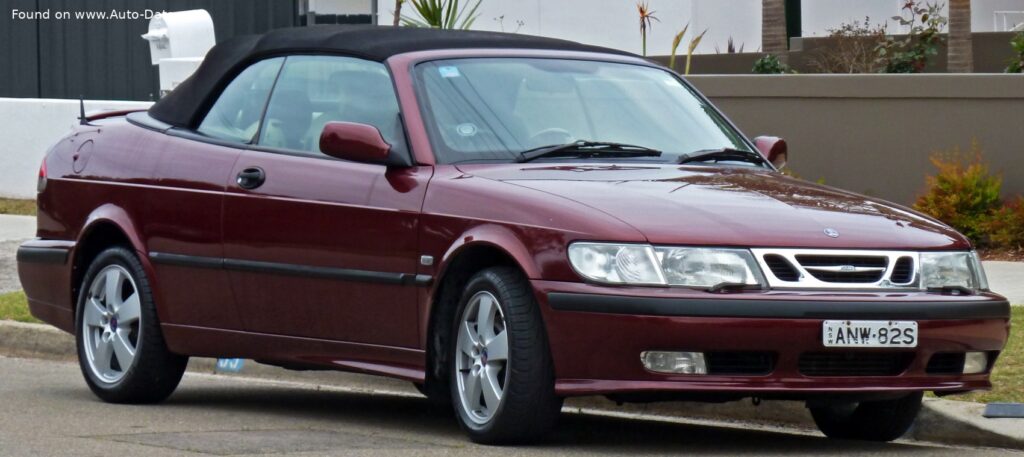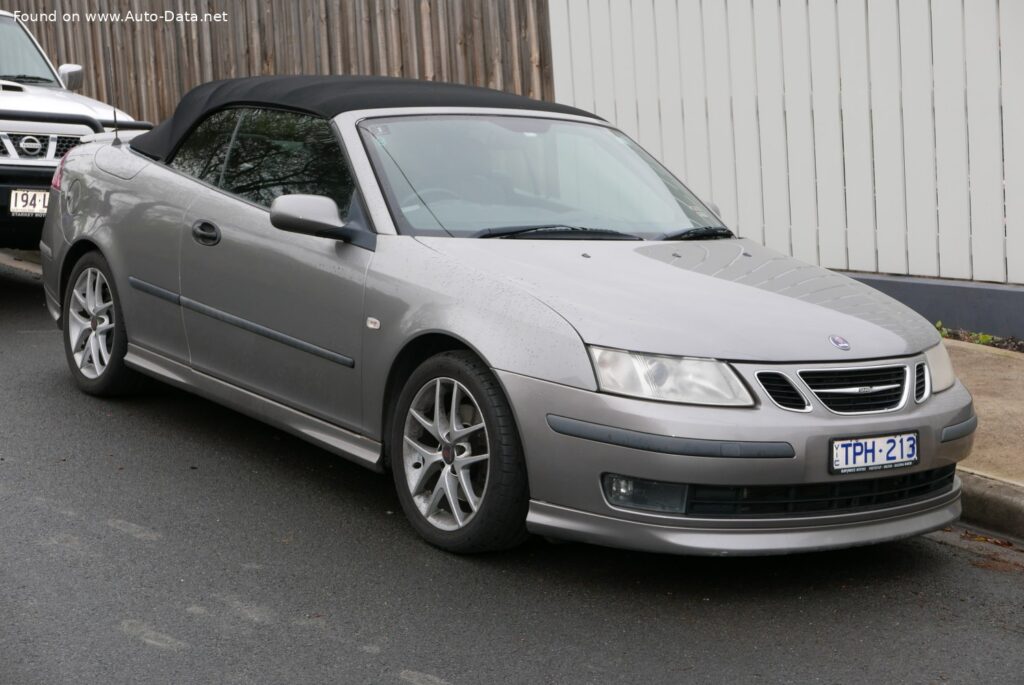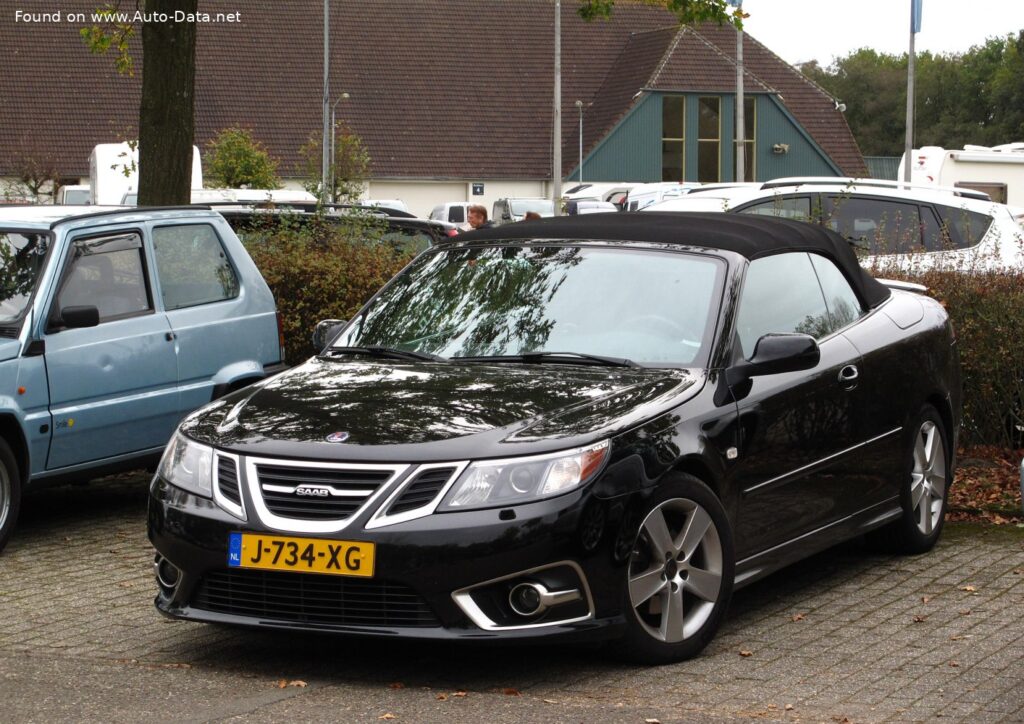
The Saab 9-3 Convertible II Griffin (facelift 2011) 2.0t BioPower represents a final refinement of Saab’s popular mid-size convertible before the brand’s unfortunate demise in December 2011. Positioned as a premium offering in the convertible segment, the 9-3 Convertible aimed to blend Scandinavian design with capable performance and a focus on open-air driving enjoyment. This facelifted version, introduced in 2011, brought subtle styling updates and continued Saab’s commitment to innovative features, particularly regarding its BioPower engine capable of running on both gasoline and ethanol. The 9-3 Convertible was never a high-volume seller in the United States, but it cultivated a loyal following among those seeking an alternative to more mainstream German and American convertibles.
Saab 9-3 Convertible II Griffin: A Detailed Overview
The 9-3 Convertible II Griffin, produced for a very short period in 2011, was the culmination of a lineage that began with the original Saab 9-3 in 1998. The “Griffin” designation denoted a higher trim level, offering enhanced features and a more luxurious experience. The vehicle’s primary market was Europe, where Saab maintained a stronger presence and reputation for quirky, yet sophisticated, engineering. The 2.0t BioPower engine was particularly relevant in Sweden, where ethanol fuel was readily available and promoted as a more sustainable alternative. While not widely marketed in the US, the 9-3 Convertible offered a unique proposition for buyers looking for a stylish and relatively practical open-top vehicle.
Engine & Performance
The heart of the 9-3 Convertible II Griffin is the 2.0t BioPower inline-four cylinder engine. This 1998 cc (121.93 cu. in.) engine produces 220 horsepower at 5300 rpm and 350 Nm (258.15 lb.-ft.) of torque between 2000 and 4000 rpm. The “BioPower” designation signifies the engine’s ability to run on gasoline, E85 ethanol, or any blend thereof. This flexibility allowed drivers to take advantage of potentially lower fuel costs and reduced emissions when using ethanol. The engine utilizes direct fuel injection and a twin-scroll turbocharger with an intercooler to maximize power and efficiency. Power is delivered to the front wheels via a six-speed manual transmission. Performance figures include a 0-100 km/h (0-62 mph) acceleration time of 7.3 seconds and a 0-60 mph time of approximately 6.9 seconds. The vehicle boasts a maximum speed of 235 km/h (146.02 mph). The engine’s power-to-weight ratio is a respectable 7.3 kg/Hp, and its torque-to-weight ratio is 4.6 kg/Nm.
Design & Features
The Saab 9-3 Convertible II Griffin is a two-door, four-seat cabriolet. Its design is characterized by clean lines, a long hood, and a relatively compact cabin. The convertible top is a fully automatic fabric soft top, designed for ease of use and reasonable noise isolation when raised. The Griffin trim level included features such as leather upholstery, automatic climate control, and a premium audio system. Safety features, crucial for a modern convertible, included ABS (Anti-lock braking system) and ventilated disc brakes on all four wheels (302mm front, 292mm rear). The interior design, typical of Saab, prioritized ergonomics and driver comfort. The trunk space, while compromised by the convertible mechanism, offers 258 liters (9.11 cu. ft.) with the top up and 352 liters (12.43 cu. ft.) with the top down. The vehicle’s dimensions are 4668 mm (183.78 in.) in length, 1762 mm (69.37 in.) in width, and 1437 mm (56.57 in.) in height.
Technical Specifications
| Brand | Saab |
| Model | 9-3 |
| Generation | 9-3 Convertible II Griffin (facelift 2011) |
| Type (Engine) | 2.0t BioPower (220 Hp) |
| Start of production | 2011 |
| End of production | December, 2011 |
| Powertrain Architecture | Internal Combustion engine |
| Body type | Cabriolet |
| Seats | 4 |
| Doors | 2 |
| Fuel consumption (urban) | 10.8 l/100 km (21.8 US mpg, 26.2 UK mpg, 9.3 km/l) |
| Fuel consumption (extra urban) | 5.5 l/100 km (42.8 US mpg, 51.4 UK mpg, 18.2 km/l) |
| Fuel consumption (combined) | 7.4 l/100 km (31.8 US mpg, 38.2 UK mpg, 13.5 km/l) |
| CO2 emissions | 173 g/km |
| Fuel Type | Petrol / Ethanol – E85 |
| Acceleration 0 – 100 km/h | 7.3 sec |
| Acceleration 0 – 62 mph | 7.3 sec |
| Acceleration 0 – 60 mph | 6.9 sec |
| Maximum speed | 235 km/h (146.02 mph) |
| Emission standard | Euro 5 |
| Weight-to-power ratio | 7.3 kg/Hp |
| Weight-to-torque ratio | 4.6 kg/Nm |
| Power | 220 Hp @ 5300 rpm |
| Torque | 350 Nm @ 2000-4000 rpm (258.15 lb.-ft. @ 2000-4000 rpm) |
| Engine layout | Front, Transverse |
| Engine Model/Code | A20NFT |
| Engine displacement | 1998 cm3 (121.93 cu. in.) |
| Number of cylinders | 4 |
| Engine configuration | Inline |
| Cylinder Bore | 86 mm (3.39 in.) |
| Piston Stroke | 86 mm (3.39 in.) |
| Number of valves per cylinder | 4 |
| Fuel injection system | Direct injection |
| Engine aspiration | Twin-scroll turbo, Intercooler |
| Valvetrain | DOHC |
| Engine oil capacity | 6 l (6.34 US qt | 5.28 UK qt) |
| Coolant | 7.5 l (7.93 US qt | 6.6 UK qt) |
| Kerb Weight | 1600-1700 kg (3527.4 – 3747.86 lbs.) |
| Max. weight | 2060 kg (4541.52 lbs.) |
| Max load | 360-460 kg (793.66 – 1014.13 lbs.) |
| Trunk (boot) space – minimum | 258 l (9.11 cu. ft.) |
| Trunk (boot) space – maximum | 352 l (12.43 cu. ft.) |
| Fuel tank capacity | 62 l (16.38 US gal | 13.64 UK gal) |
| Permitted trailer load with brakes (12%) | 1600 kg (3527.4 lbs.) |
| Length | 4668 mm (183.78 in.) |
| Width | 1762 mm (69.37 in.) |
| Width including mirrors | 2040 mm (80.31 in.) |
| Height | 1437 mm (56.57 in.) |
| Wheelbase | 2675 mm (105.31 in.) |
| Front track | 1524 mm (60 in.) |
| Rear (Back) track | 1506 mm (59.29 in.) |
| Front overhang | 1002 mm (39.45 in.) |
| Rear overhang | 991 mm (39.02 in.) |
| Drivetrain Architecture | Front wheel drive |
| Number of gears and type of gearbox | 6 gears, manual transmission |
| Front suspension | Independent, type McPherson with coil spring and anti-roll bar |
| Rear suspension | Independent multi-link spring suspension with stabilizer |
| Front brakes | Ventilated discs, 302 mm |
| Rear brakes | Ventilated discs, 292 mm |
| Tires size | 215/55 R16; 225/45 R17; 225/45 R18 |
| Wheel rims size | 6.5J x 16; 7J x 17; 7.5J x 17; 7.5J x 18 |
The Saab 9-3 Convertible II Griffin (2011) 2.0t BioPower, despite its short production run, represents a compelling example of Saab’s engineering prowess and commitment to offering a unique driving experience. Its blend of Scandinavian design, flexible fuel capability, and enjoyable performance made it a desirable, if somewhat niche, vehicle in the convertible market.