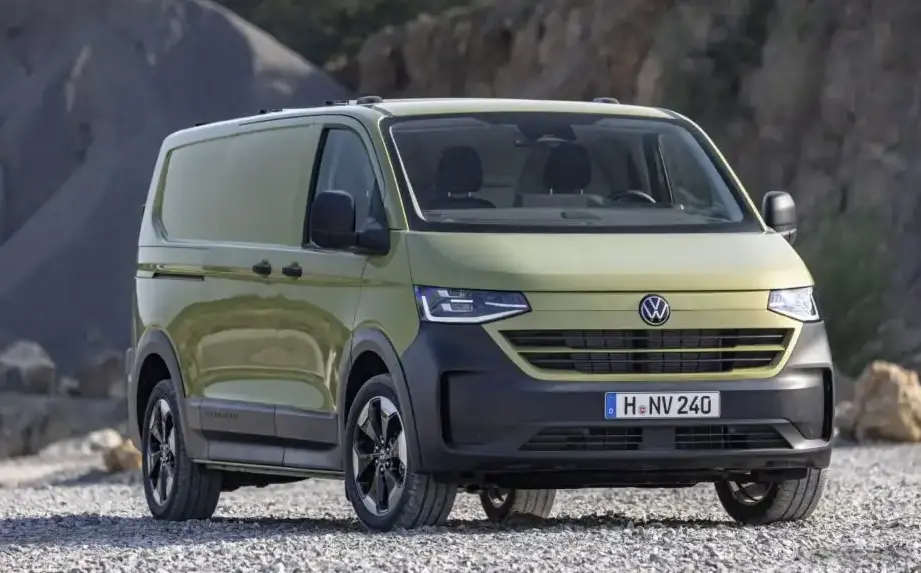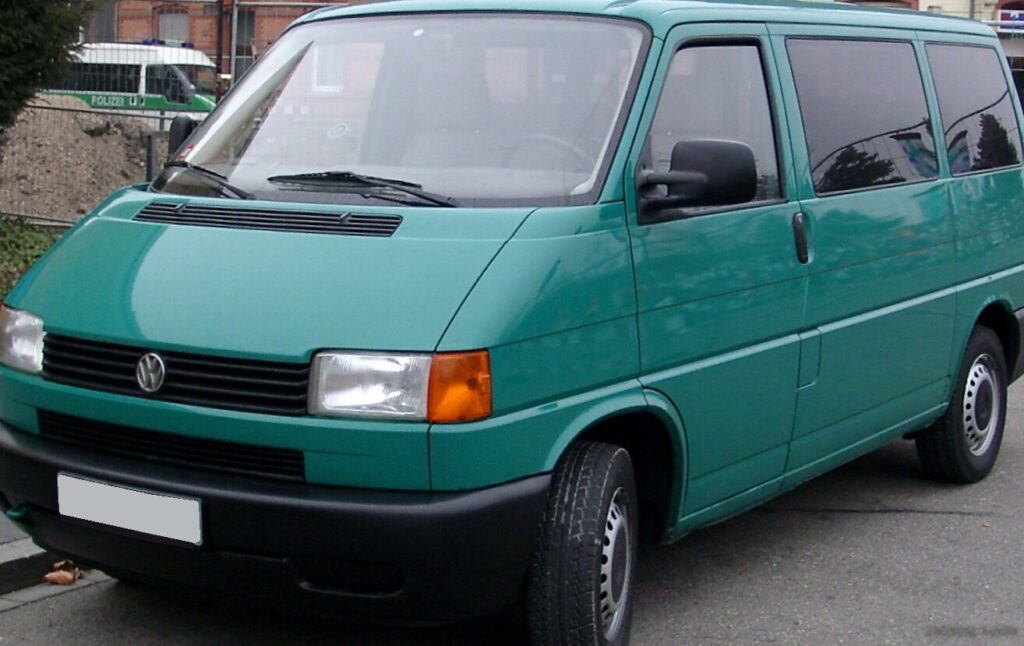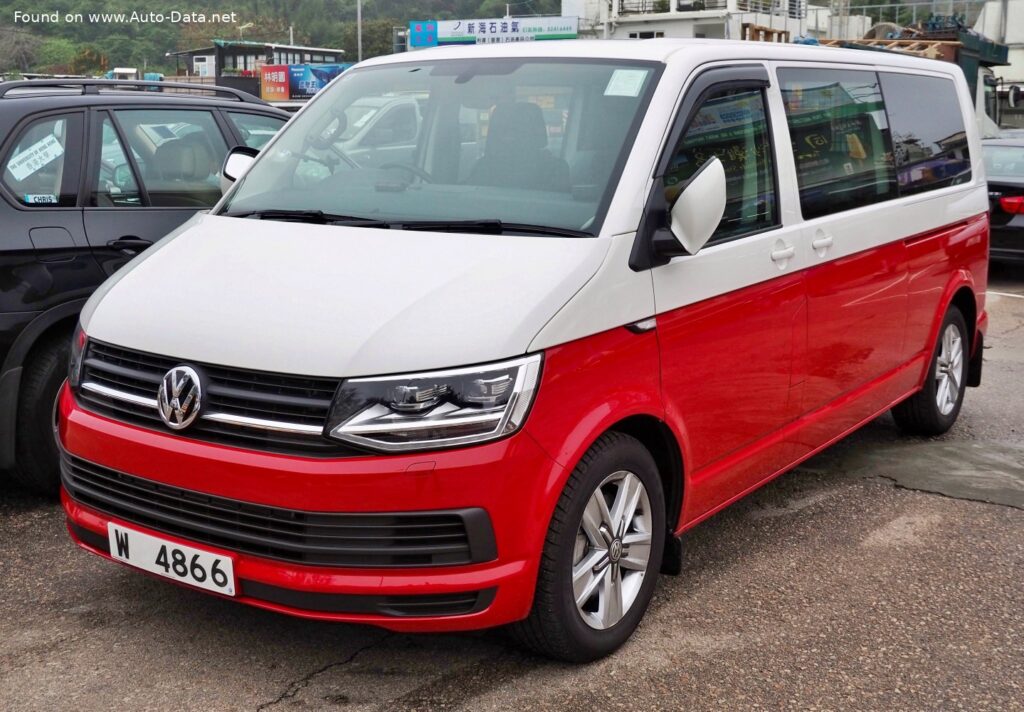
The Volkswagen Transporter (T6) Kombi 2.0 TSI (150 Hp) L1H2 is a commercial vehicle produced by Volkswagen from 2015 to 2018. Part of the sixth generation (T6) of the iconic Transporter line, the Kombi variant serves as a versatile passenger and cargo carrier, popular in Europe and other markets as a workhorse vehicle for businesses, families, and tradespeople. The “L1H2” designation refers to the vehicle’s body length and roof height, indicating a medium-length wheelbase and a raised roof, offering a balance between interior space and maneuverability. This model is powered by a 2.0-liter turbocharged gasoline engine, offering a performance-oriented option within the Transporter range.
Volkswagen Transporter T6 Kombi: An Overview
The T6 generation of the Volkswagen Transporter represented a significant evolution of the model, building upon the success of its predecessors. Introduced in 2015, the T6 brought updated styling, improved technology, and enhanced efficiency. The Kombi trim level specifically caters to those needing a flexible vehicle capable of carrying both passengers and goods. Unlike the purely cargo-focused Panel Van, the Kombi features windows and seating in the rear compartment, making it suitable for shuttle services, family transport, or mobile workshops. The 2.0 TSI engine option provided a more powerful alternative to the diesel engines commonly found in Transporters, appealing to users who prioritize performance and responsiveness.
Engine & Performance
The heart of the Transporter T6 Kombi 2.0 TSI (150 Hp) L1H2 is the EA888 2.0-liter turbocharged four-cylinder gasoline engine, designated with the code CJKB. This engine produces 150 horsepower at 3,750-6,000 rpm and 280 Nm (206.52 lb.-ft.) of torque between 1,500 and 3,750 rpm. The engine utilizes direct fuel injection and an intercooled turbocharger to optimize performance and efficiency. Power is delivered to the front wheels via a six-speed manual transmission. Acceleration from 0 to 100 km/h (0-62 mph) takes 11.6 seconds, with a top speed of 176 km/h (109.36 mph). The engine’s power-to-weight ratio is 11.9 kg/Hp, and the torque-to-weight ratio is 6.4 kg/Nm. While fuel economy figures vary depending on driving conditions, the combined cycle consumption is rated at 9.1-9.3 l/100 km (25.8-25.3 US mpg), with CO2 emissions ranging from 208-211 g/km, meeting Euro 6 emission standards.
Design & Features
The Transporter T6 Kombi L1H2 is a four or five-door van characterized by its practical and functional design. The L1 designation indicates a medium-length wheelbase, providing a good balance between interior space and maneuverability in urban environments. The H2 designation signifies a raised roof, increasing headroom and cargo capacity. The Kombi variant includes rear windows and seating, typically accommodating between four and nine passengers depending on the configuration. The interior is designed with durability and practicality in mind, featuring hard-wearing materials and a functional layout. Standard features often include air conditioning, a radio system, and various safety features such as ABS (Anti-lock Braking System). The vehicle’s dimensions are 4904 mm (193.07 in) in length, 1904 mm (74.96 in) in width, and 2177 mm (85.71 in) in height. The vehicle offers a maximum load capacity of 1001-1013 kg (2206.83 – 2233.28 lbs) and a maximum trunk (boot) space of 6700 liters (236.61 cu. ft.).
Technical Specifications
| Brand | Volkswagen |
| Model | Transporter |
| Generation | Transporter (T6) Kombi |
| Type (Engine) | 2.0 TSI (150 Hp) L1H2 |
| Start of production | 2015 year |
| End of production | 2018 year |
| Powertrain Architecture | Internal Combustion engine |
| Body type | Van |
| Seats | 4-9 |
| Doors | 4-5 |
| Fuel consumption (economy) – urban (NEDC) | 12.2-12.3 l/100 km (19.3 – 19.1 US mpg) |
| Fuel consumption (economy) – extra urban (NEDC) | 7.4-7.6 l/100 km (31.8 – 30.9 US mpg) |
| Fuel consumption (economy) – combined (NEDC) | 9.1-9.3 l/100 km (25.8 – 25.3 US mpg) |
| CO2 emissions (NEDC) | 208-211 g/km |
| Fuel Type | Petrol (Gasoline) |
| Acceleration 0 – 100 km/h | 11.6 sec |
| Acceleration 0 – 62 mph | 11.6 sec |
| Acceleration 0 – 60 mph | 11 sec |
| Maximum speed | 176 km/h (109.36 mph) |
| Emission standard | Euro 6 |
| Weight-to-power ratio | 11.9 kg/Hp |
| Weight-to-torque ratio | 6.4 kg/Nm |
| Power | 150 Hp @ 3750-6000 rpm |
| Torque | 280 Nm @ 1500-3750 rpm (206.52 lb.-ft. @ 1500-3750 rpm) |
| Engine layout | Front, Transverse |
| Engine Model/Code | EA888 / CJKB |
| Engine displacement | 1984 cm3 (121.07 cu. in.) |
| Number of cylinders | 4 |
| Engine configuration | Inline |
| Cylinder Bore | 82.5 mm (3.25 in.) |
| Piston Stroke | 92.8 mm (3.65 in.) |
| Compression ratio | 9.8:1 |
| Number of valves per cylinder | 4 |
| Fuel injection system | Direct injection |
| Engine aspiration | Turbocharger, Intercooler |
| Valvetrain | DOHC |
| Engine oil capacity | 5.7 l (6.02 US qt | 5.02 UK qt) |
| Kerb Weight | 1787-2199 kg (3939.66 – 4847.97 lbs.) |
| Max. weight | 2800-3200 kg (6172.94 – 7054.79 lbs.) |
| Max load | 1001-1013 kg (2206.83 – 2233.28 lbs.) |
| Trunk (boot) space – maximum | 6700 l (236.61 cu. ft.) |
| Fuel tank capacity | 80 l (21.13 US gal | 17.6 UK gal) |
| Max. roof load | 100 kg (220.46 lbs.) |
| Permitted trailer load with brakes (12%) | 2500 kg (5511.56 lbs.) |
| Permitted trailer load without brakes | 750 kg (1653.47 lbs.) |
| Permitted towbar download | 100 kg (220.46 lbs.) |
| Length | 4904 mm (193.07 in.) |
| Width | 1904 mm (74.96 in.) |
| Width including mirrors | 2297 mm (90.43 in.) |
| Height | 2177 mm (85.71 in.) |
| Wheelbase | 3000 mm (118.11 in.) |
| Front overhang | 908 mm (35.75 in.) |
| Rear overhang | 993 mm (39.09 in.) |
| Ride height (ground clearance) | 201 mm (7.91 in.) |
| Minimum turning circle (turning diameter) | 11.9 m (39.04 ft.) |
| Drivetrain Architecture | Front wheel drive |
| Number of gears and type of gearbox | 6 gears, manual transmission |
The Volkswagen Transporter T6 Kombi 2.0 TSI (150 Hp) L1H2 remains a popular choice for those seeking a versatile and reliable commercial vehicle. Its combination of practicality, performance, and efficiency makes it well-suited for a wide range of applications.