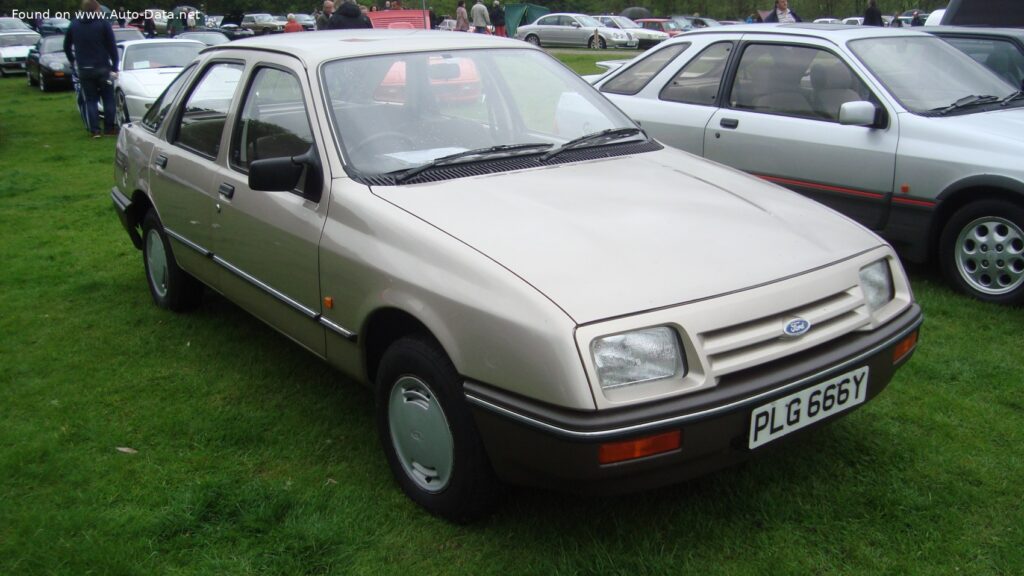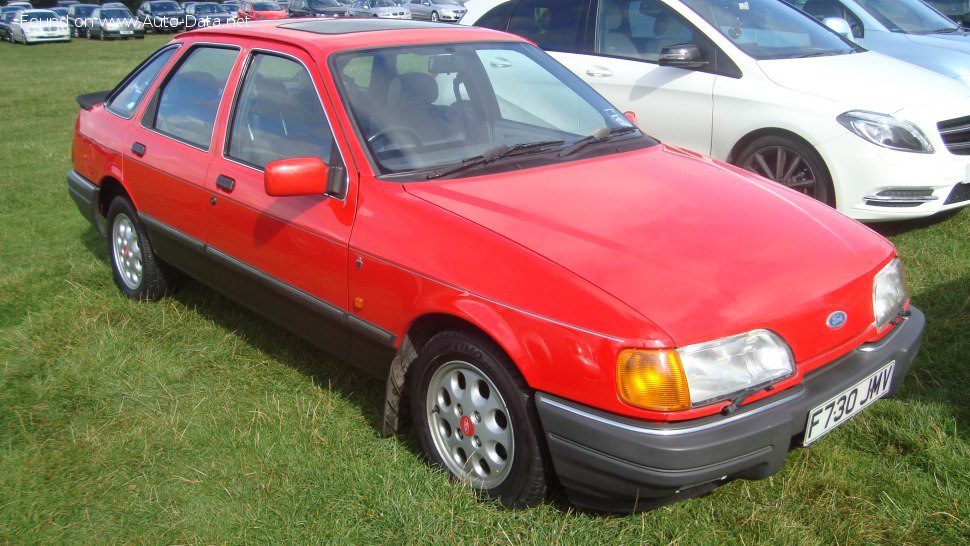
The Ford Sierra, launched in 1982, represented a significant departure from its predecessor, the Cortina. Designed to be more aerodynamic and modern, the Sierra aimed to compete in the increasingly competitive mid-size family car segment. The Ford Sierra Hatchback II 2.0i 16V (115 Hp), produced from 1987 to 1993, was a key variant, offering a blend of performance and practicality. While not officially sold in the United States, the Sierra was a hugely popular vehicle in Europe, becoming a staple for families and driving enthusiasts alike. It marked a shift towards more contemporary automotive design and engineering for Ford of Europe.
The Ford Sierra Hatchback II: A European Success Story
The Sierra was Ford’s attempt to create a world car, though its success was primarily concentrated in Europe. It replaced the long-running Cortina, a vehicle that had become synonymous with British motoring. The Sierra’s design, penned under the direction of Uwe Bahnsen, was controversial at the time due to its boxy shape and lack of traditional chrome trim. However, its aerodynamic efficiency was a major selling point, contributing to improved fuel economy and handling. The Hatchback II, introduced in 1986, featured significant revisions to the original Sierra, including a more refined interior, improved aerodynamics, and a wider range of engine options. The 2.0i 16V model, with its 115 horsepower, was positioned as a sporty and capable choice within the Sierra lineup.
Engine & Performance
The heart of the Sierra 2.0i 16V is its naturally aspirated 2.0-liter inline-four engine. This engine, designated as either N4A or N4I depending on specific production variations, produced 115 horsepower. While this output may seem modest by today’s standards, it provided a respectable level of performance for its time, particularly when coupled with the Sierra’s relatively lightweight construction. The engine featured a 16-valve cylinder head, which enhanced its breathing and contributed to its improved power delivery. Power was delivered to the rear wheels via a five-speed manual transmission, offering drivers a direct and engaging driving experience. The rear-wheel-drive configuration, a hallmark of Ford’s European models for many years, provided balanced handling and a sporty feel. The Sierra 2.0i 16V wasn’t about outright speed; it was about providing a responsive and enjoyable driving experience for everyday use.
Design & Features
The Sierra Hatchback II’s design was a clear break from the more traditional styling of the Cortina. Its boxy shape, while initially criticized, proved to be aerodynamically efficient. The hatchback body style offered excellent practicality, with a large cargo area accessible through the rear tailgate. The five-door configuration provided easy access for both front and rear passengers. Inside, the Sierra featured a functional and relatively spacious cabin. The interior design was typical of the late 1980s and early 1990s, with durable materials and a focus on practicality. Safety features, while not as comprehensive as those found in modern cars, included seatbelts and a reinforced safety cell. The Sierra’s suspension system, consisting of MacPherson struts at the front and a live axle with trailing arms at the rear, provided a comfortable ride and competent handling. The 2.0i 16V model often included features such as alloy wheels, upgraded interior trim, and a more comprehensive instrument cluster.
Technical Specifications
| Brand | Ford |
| Model | Sierra |
| Generation | Sierra Hatchback II |
| Type (Engine) | 2.0i 16V (115 Hp) |
| Start of production | 1987 |
| End of production | 1993 |
| Powertrain Architecture | Internal Combustion engine |
| Body type | Hatchback |
| Seats | 5 |
| Doors | 5 |
| Fuel Type | Petrol (Gasoline) |
| Power | 115 Hp |
| Engine Model/Code | N4A, N4I |
| Engine aspiration | Naturally aspirated engine |
| Engine oil capacity | 3.8 l / 4.02 US qt | 3.34 UK qt |
| Coolant capacity | 8 l / 8.45 US qt | 7.04 UK qt |
| Fuel tank capacity | 60 l / 15.85 US gal | 13.2 UK gal |
| Length | 4425 mm / 174.21 in. |
| Width | 1694 mm / 66.69 in. |
| Height | 1407 mm / 55.39 in. |
| Wheelbase | 2608 mm / 102.68 in. |
| Front track | 1452 mm / 57.17 in. |
| Rear track | 1468 mm / 57.8 in. |
| Minimum turning circle | 10 m / 32.81 ft. |
| Drivetrain Architecture | Rear wheel drive |
| Number of gears and type of gearbox | 5 gears, manual transmission |
| Front brakes | Ventilated discs |
| Rear brakes | Drum |
The Ford Sierra, and specifically the Hatchback II 2.0i 16V, represents an important chapter in Ford’s history. It was a car that embraced modern design principles and offered a compelling blend of practicality, performance, and affordability. While it never achieved widespread popularity in the United States, it remains a fondly remembered and highly regarded vehicle among European car enthusiasts. Its influence can be seen in subsequent Ford models, and it continues to be celebrated as a classic of the 1980s and 1990s.