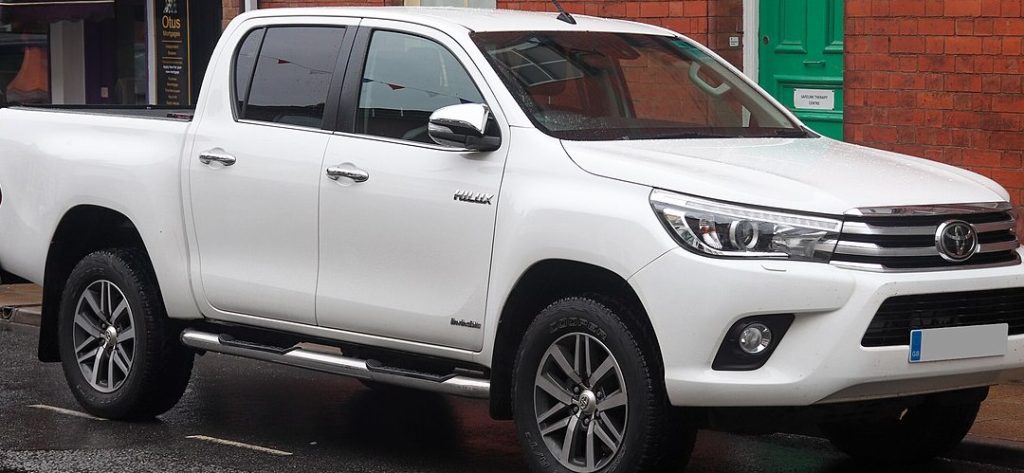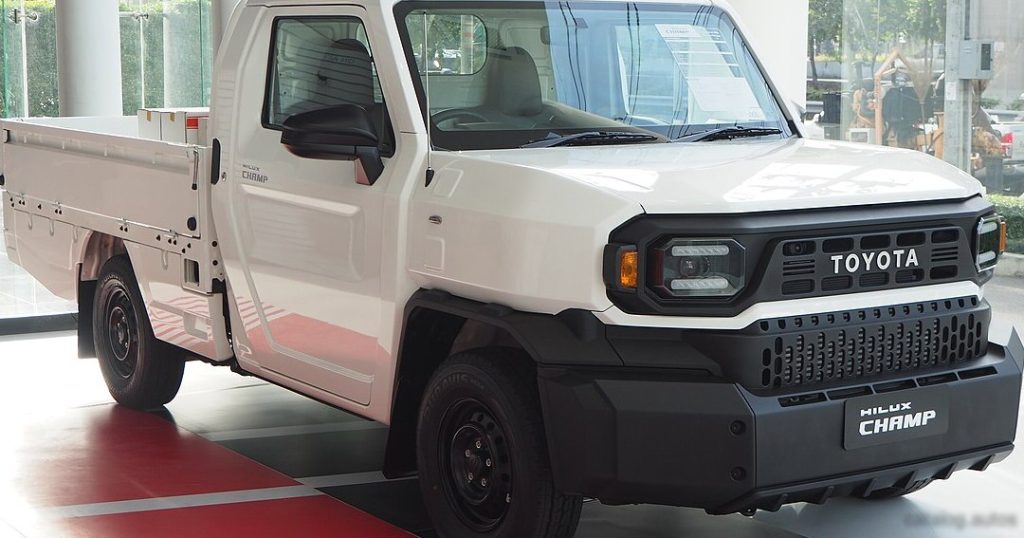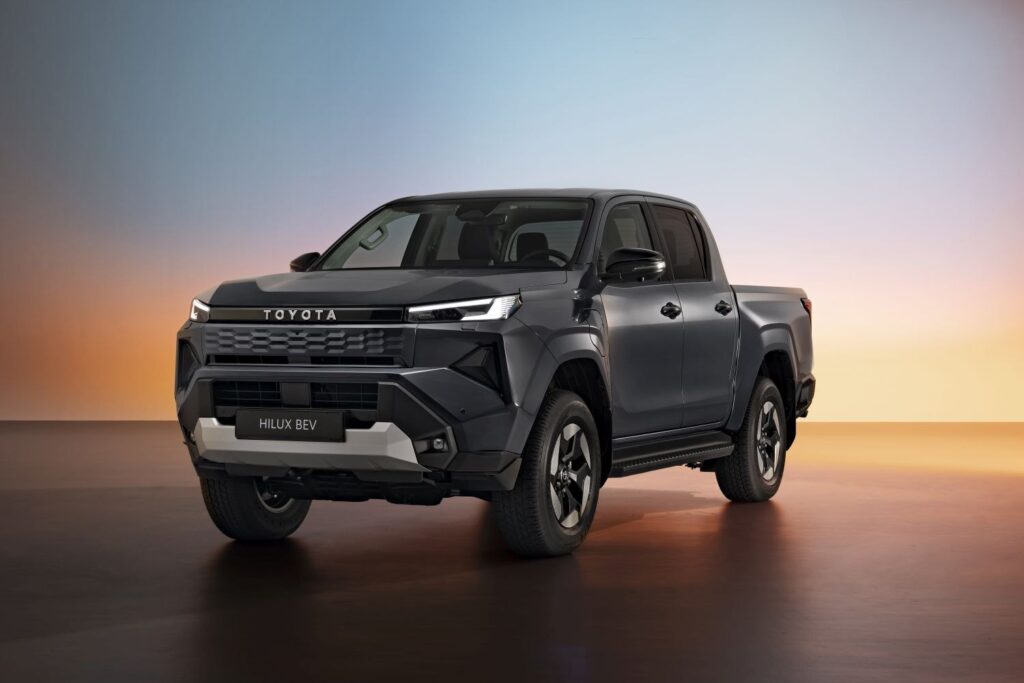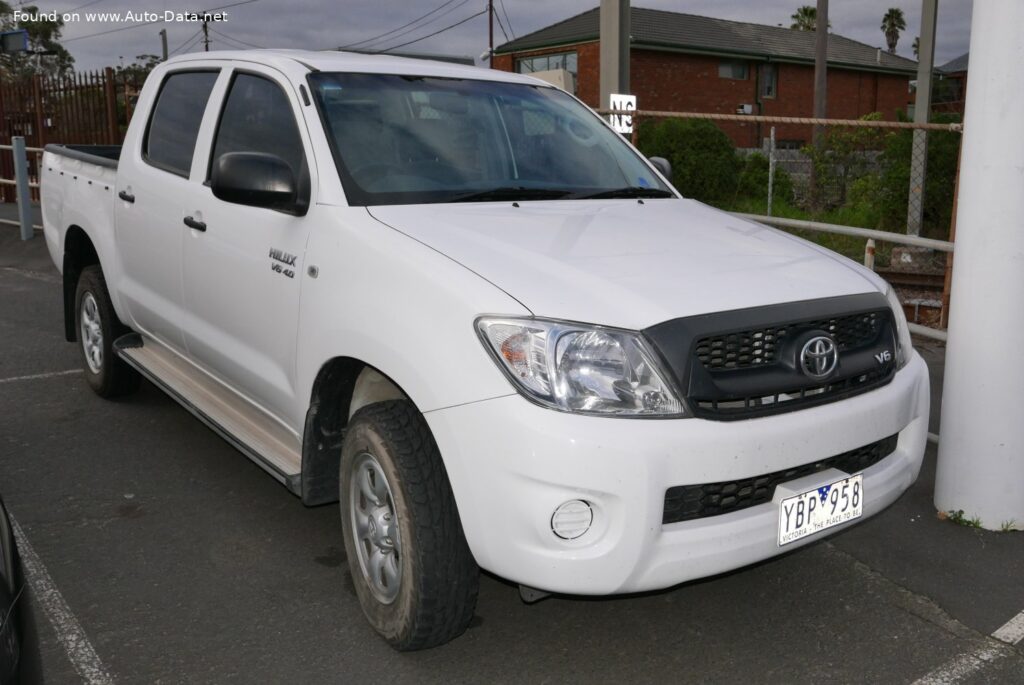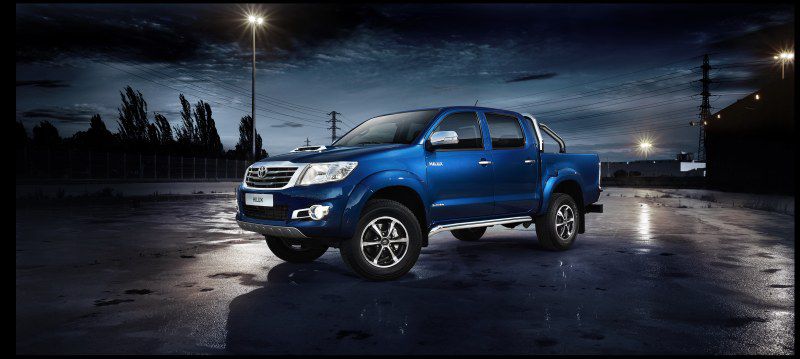
The Toyota Hilux Extra Cab VIII (facelift 2017) Hi-Rider 2.8d Automatic represents a significant iteration in Toyota’s globally renowned Hilux pickup truck lineage. Introduced in November 2017 and continuing through June 2020, this model served primarily as a workhorse vehicle in markets outside of North America, particularly in Australia, Asia, and Europe. The “Extra Cab” designation indicates a configuration featuring a small rear seating area, offering a compromise between the practicality of a single cab and the passenger capacity of a double cab. The Hi-Rider trim level denotes a raised ride height, enhancing off-road capability, while the 2.8d engine signifies a diesel powerplant. This generation Hilux aimed to balance rugged durability with improved comfort and technology, catering to both commercial and personal use.
Toyota Hilux Extra Cab VIII: A Global Workhorse
The Hilux has a long and storied history, dating back to 1968, and has earned a reputation for reliability and toughness. The eighth generation, launched in 2016, brought substantial updates to the platform, including a reinforced frame, improved suspension, and a more refined interior. The 2017 facelift further enhanced the Hilux with styling revisions and powertrain refinements. While not officially sold in the United States, the Hilux occupies a similar market segment to mid-size trucks like the Toyota Tacoma, Ford Ranger, and Chevrolet Colorado, but with a stronger emphasis on utilitarian functionality and off-road prowess. The Hi-Rider variant specifically targets buyers needing increased ground clearance for challenging terrain.
Engine & Performance
The Hi-Rider 2.8d is powered by Toyota’s 1GD-FTV 2.8-liter inline-four cylinder diesel engine. This engine produces 177 horsepower at 3400 rpm and 450 Newton-meters (331.9 lb.-ft.) of torque between 1600 and 2400 rpm. The engine features a turbocharger with intercooler, a diesel common rail fuel injection system, and a double overhead camshaft (DOHC) valvetrain with four valves per cylinder. This configuration delivers a good balance of power and fuel efficiency, crucial for a vehicle designed for demanding tasks. The engine’s longitudinal front-engine layout contributes to a balanced weight distribution. The Hilux utilizes a 6-speed automatic transmission, providing smooth and efficient gear changes. The weight-to-power ratio of 10.8 kg/Hp and a weight-to-torque ratio of 4.2 kg/Nm demonstrate the engine’s capability in relation to the vehicle’s mass. The engine requires 7.5 liters (7.93 US quarts) of engine oil and 7.9 liters (8.35 US quarts) of coolant.
Design & Features
The Toyota Hilux Extra Cab VIII is a two-door pickup truck with seating for four passengers. The “Extra Cab” body style provides a small rear seating area, suitable for occasional passengers or cargo protection. The Hi-Rider trim level features increased ground clearance, achieved through a modified suspension system, making it well-suited for off-road driving. The exterior design incorporates modern styling cues, including a prominent grille, sculpted headlights, and robust body cladding. Safety features include an Anti-lock Braking System (ABS). The Hilux’s interior is designed for durability and practicality, with hard-wearing materials and a functional layout. While not focused on luxury, the cabin offers essential comfort features and a user-friendly interface. The vehicle’s dimensions – 5330 mm (209.84 in) in length, 1855 mm (73.03 in) in width, and 1810 mm (71.26 in) in height – provide a substantial footprint for both cargo and passenger space. The wheelbase measures 3085 mm (121.46 in), contributing to a stable ride and good handling.
Technical Specifications
| Brand | Toyota |
| Model | Hilux |
| Generation | Hilux Extra Cab VIII (facelift 2017) |
| Type (Engine) | Hi-Rider 2.8d (177 Hp) Automatic |
| Start of production | November, 2017 |
| End of production | June, 2020 |
| Powertrain Architecture | Internal Combustion engine |
| Body type | Pick-up |
| Seats | 4 |
| Doors | 2 |
| Fuel Type | Diesel |
| Weight-to-power ratio | 10.8 kg/Hp |
| Weight-to-torque ratio | 4.2 kg/Nm |
| Power | 177 Hp @ 3400 rpm |
| Power per litre | 64.2 Hp/l |
| Torque | 450 Nm @ 1600-2400 rpm / 331.9 lb.-ft. @ 1600-2400 rpm |
| Engine layout | Front, Longitudinal |
| Engine Model/Code | 1GD-FTV |
| Engine displacement | 2755 cm3 / 168.12 cu. in. |
| Number of cylinders | 4 |
| Engine configuration | Inline |
| Cylinder Bore | 92 mm / 3.62 in. |
| Piston Stroke | 103.6 mm / 4.08 in. |
| Compression ratio | 15.6:1 |
| Number of valves per cylinder | 4 |
| Fuel injection system | Diesel Commonrail |
| Engine aspiration | Turbocharger, Intercooler |
| Valvetrain | DOHC |
| Engine oil capacity | 7.5 l / 7.93 US qt | 6.6 UK qt |
| Coolant | 7.9 l / 8.35 US qt | 6.95 UK qt |
| Kerb Weight | 1910 kg / 4210.83 lbs. |
| Max. weight | 3000 kg / 6613.87 lbs. |
| Max load | 1090 kg / 2403.04 lbs. |
| Fuel tank capacity | 80 l / 21.13 US gal | 17.6 UK gal |
| Permitted trailer load with brakes (12%) | 2800 kg / 6172.94 lbs. |
| Permitted trailer load without brakes | 750 kg / 1653.47 lbs. |
| Length | 5330 mm / 209.84 in. |
| Width | 1855 mm / 73.03 in. |
| Height | 1810 mm / 71.26 in. |
| Wheelbase | 3085 mm / 121.46 in. |
| Front track | 1510 mm / 59.45 in. |
| Rear (Back) track | 1510 mm / 59.45 in. |
| Front overhang | 1000 mm / 39.37 in. |
| Drivetrain Architecture | Rear wheel drive. Internal Combustion engine (ICE) |
| Drive wheel | Rear wheel drive |
| Number of gears and type of gearbox | 6 gears, automatic transmission |
| Front suspension | Double wishbone |
| Rear suspension | Double wishbone |
| Front brakes | Ventilated discs |
| Rear brakes | Drum |
| Assisting systems | ABS (Anti-lock braking system) |
| Steering type | Steering rack and pinion |
| Power steering | Hydraulic Steering |
| Tires size | 265/65 R17 |
| Wheel rims size | 7.5J x 17 |