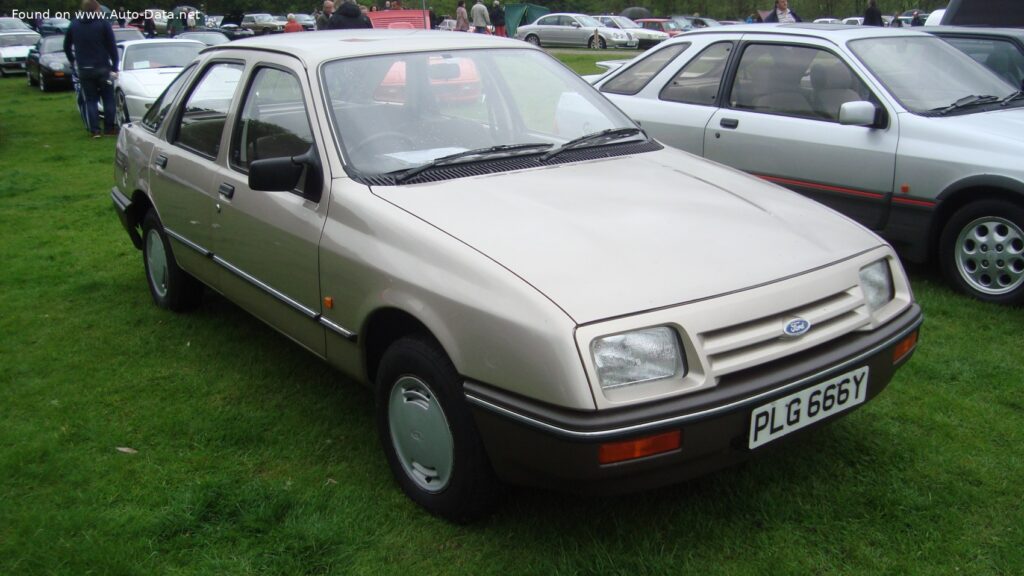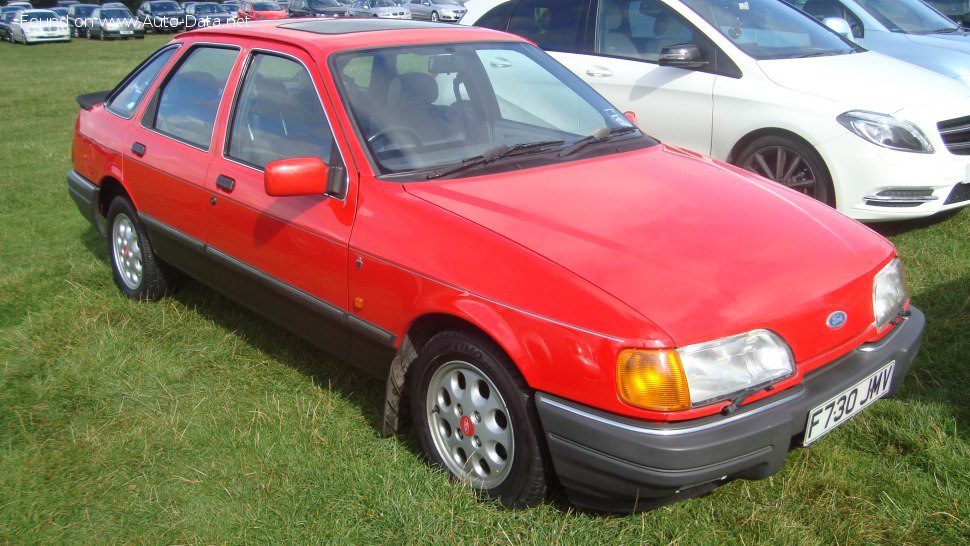
The Ford Sierra, launched in 1982, represented a significant departure from its predecessor, the Cortina. Designed to compete in the mid-size family car segment, the Sierra aimed for a more modern and aerodynamic profile. The Ford Sierra Hatchback II 2.0i CAT (101 Hp), produced from 1987 to 1993, was a key iteration of this model, offering a blend of performance and practicality. While not officially sold in the United States, the Sierra was a hugely popular vehicle in Europe, becoming a staple for families and driving enthusiasts alike. It marked a shift towards more contemporary automotive design and engineering for Ford in Europe, paving the way for future models like the Mondeo.
The Ford Sierra: A European Success Story
The Sierra was Ford’s response to increasing competition in the European market from rivals like Opel (Vauxhall), Volkswagen, and Peugeot. It was a clean-sheet design, moving away from the traditional boxy shapes of the Cortina. The Sierra’s aerodynamic styling, though initially controversial, proved to be effective in reducing drag and improving fuel efficiency. The hatchback body style, particularly the five-door version, offered increased versatility and practicality, appealing to a wider range of buyers. The “II” designation refers to a significant facelift introduced in 1987, which included revised styling, improved interiors, and updated mechanical components. The 2.0i CAT model, with its catalytic converter, was aimed at meeting increasingly stringent emissions regulations.
Engine & Performance
The Sierra 2.0i CAT was powered by a naturally aspirated 2.0-liter inline-four cylinder engine, designated the N4B. This engine produced 101 horsepower, providing a reasonable level of performance for its time. While not a sports car, the Sierra 2.0i CAT offered adequate acceleration and cruising ability. The engine was paired with a five-speed manual transmission, delivering power to the rear wheels. This rear-wheel-drive configuration was a hallmark of the Sierra and contributed to its engaging driving dynamics. The catalytic converter, denoted by the “CAT” in the model name, was a crucial component in reducing harmful emissions, reflecting Ford’s commitment to environmental responsibility. The engine’s relatively simple design made it reliable and relatively easy to maintain, a key factor in its popularity. The 2.0-liter engine provided a good balance between power and fuel economy, making it suitable for both city driving and longer journeys.
Design & Features
The Sierra Hatchback II was characterized by its sleek, aerodynamic silhouette. The five-door hatchback body style offered excellent practicality, with a spacious interior and a large cargo area. The interior design, while functional, was relatively basic compared to some of its competitors. However, it was well-built and durable. Safety features were limited by the standards of the time, but the Sierra did offer features such as seatbelts and a collapsible steering column. The 1987 facelift brought improvements to the interior trim and dashboard layout, enhancing the overall driving experience. The Sierra’s suspension system was designed to provide a comfortable ride while maintaining good handling characteristics. The rear-wheel-drive layout contributed to a balanced feel, making the Sierra enjoyable to drive on winding roads. The car’s relatively lightweight construction further enhanced its agility. The Sierra’s design represented a significant step forward for Ford in Europe, establishing a new benchmark for style and practicality in the mid-size family car segment.
A Focus on Practicality
The Sierra’s hatchback configuration was a major selling point, offering easy access to the cargo area and a versatile loading space. The rear seats could be folded down to create even more room, making it ideal for carrying larger items. The car’s relatively compact dimensions made it easy to maneuver in urban environments. The Sierra was also available with a range of optional extras, such as power windows and central locking, allowing buyers to customize the car to their specific needs. The car’s robust build quality ensured that it could withstand the rigors of daily use. The Sierra’s design prioritized practicality and functionality, making it a popular choice for families and individuals who needed a versatile and reliable vehicle.
Technical Specifications
| Brand | Ford |
| Model | Sierra |
| Generation | Sierra Hatchback II |
| Type (Engine) | 2.0i CAT (101 Hp) |
| Start of production | 1987 |
| End of production | 1993 |
| Powertrain Architecture | Internal Combustion engine |
| Body type | Hatchback |
| Seats | 5 |
| Doors | 5 |
| Fuel Type | Petrol (Gasoline) |
| Power | 101 Hp |
| Engine Model/Code | N4B |
| Engine aspiration | Naturally aspirated engine |
| Engine oil capacity | 3.75 l / 3.96 US qt / 3.3 UK qt |
| Coolant | 8 l / 8.45 US qt / 7.04 UK qt |
| Fuel tank capacity | 60 l / 15.85 US gal / 13.2 UK gal |
| Length | 4425 mm / 174.21 in. |
| Width | 1694 mm / 66.69 in. |
| Height | 1407 mm / 55.39 in. |
| Wheelbase | 2608 mm / 102.68 in. |
| Front track | 1452 mm / 57.17 in. |
| Rear (Back) track | 1468 mm / 57.8 in. |
| Minimum turning circle (turning diameter) | 10 m / 32.81 ft. |
| Drivetrain Architecture | The Internal combustion engine (ICE) drives the rear wheels of the vehicle. |
| Drive wheel | Rear wheel drive |
| Number of gears and type of gearbox | 5 gears, manual transmission |
| Front brakes | Ventilated discs |
| Rear brakes | Drum |
The Ford Sierra Hatchback II 2.0i CAT (101 Hp) remains a fondly remembered vehicle in Europe, representing a pivotal moment in Ford’s design and engineering history. Its blend of practicality, performance, and affordability made it a popular choice for a wide range of buyers, solidifying its place as a classic of the 1980s and early 1990s.