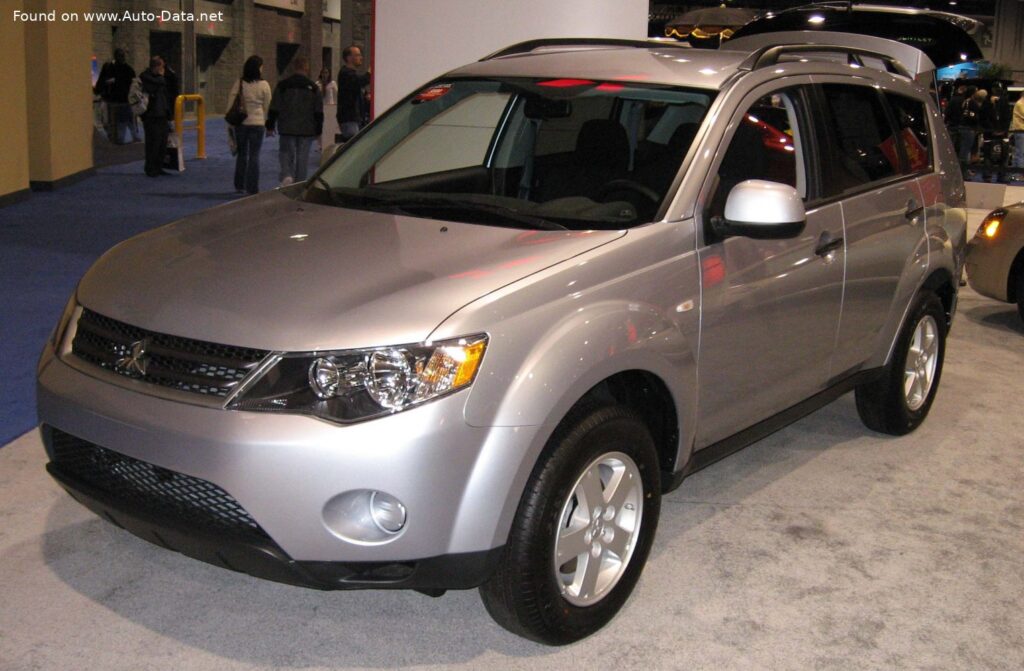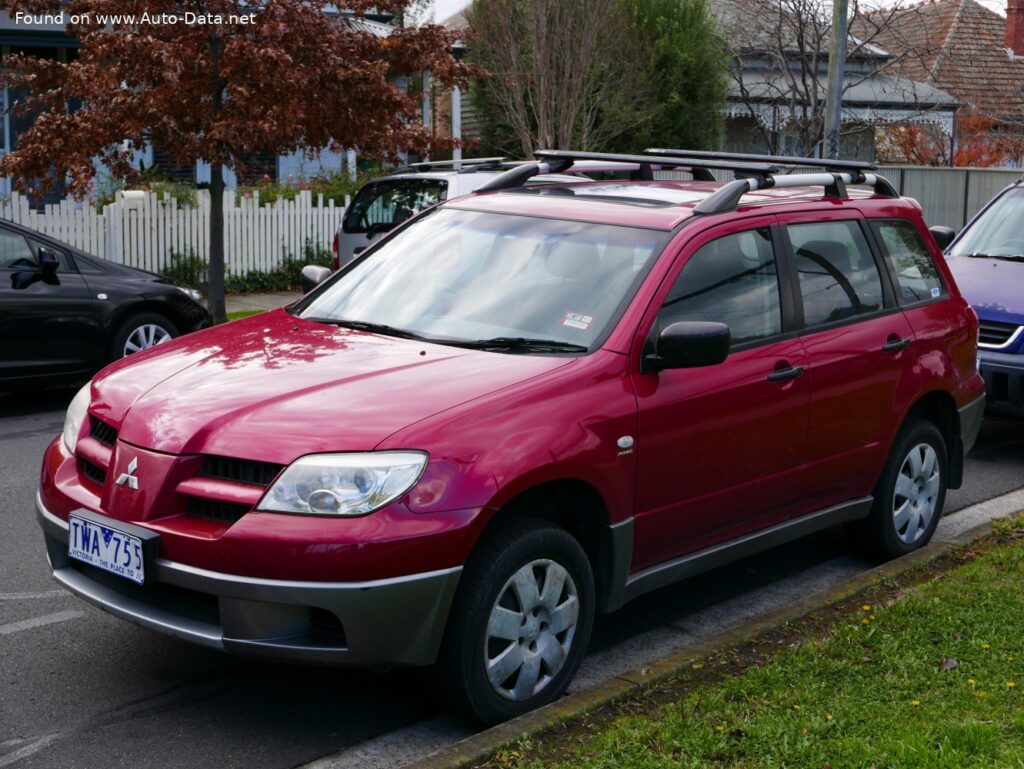
The Mitsubishi Outlander I, produced between 2004 and 2006, represents Mitsubishi’s initial foray into the compact crossover SUV segment. While not initially sold in the United States during its first generation, the Outlander was a significant model for Mitsubishi in Europe and other international markets, offering a blend of practicality, available all-wheel drive, and a turbocharged engine option. It aimed to compete with established European crossovers and offered a more affordable alternative to larger, more luxurious SUVs.
Mitsubishi Outlander I: An Overview
The first-generation Outlander (codenamed CU2W) was based on the Mitsubishi GS platform, shared with the Lancer. It distinguished itself with a unibody construction, offering a more comfortable ride than traditional body-on-frame SUVs. The Outlander I was positioned as a versatile vehicle, suitable for both urban commuting and light off-road adventures, thanks to its available four-wheel-drive system. The 2.0 i 16V 4WD Turbo model, detailed here, was a performance-oriented variant, offering a significant power upgrade over the base engine options available in some markets.
Engine & Performance
The heart of the Outlander I 2.0 i 16V 4WD Turbo is the 4G63T 2.0-liter inline-four cylinder engine. This engine, a turbocharged and intercooled unit, produces 202 horsepower at 5500 rpm and 303 Nm (223.48 lb.-ft.) of torque at 3500 rpm. The turbocharger significantly enhances performance, providing a noticeable boost in acceleration. The engine features multi-port fuel injection and a compression ratio of 9:1. This powertrain allowed for a 0-60 mph (0-96 km/h) acceleration time of approximately 7.3 seconds, and a 0-100 km/h (0-62 mph) time of 7.7 seconds, making it relatively quick for its class. The top speed is rated at 220 km/h (136.7 mph). The engine’s power-to-weight ratio is 7.9 kg/Hp, and the torque-to-weight ratio is 5.3 kg/Nm. Power per liter is a respectable 101.2 Hp/l. The engine is transversely mounted at the front of the vehicle.
Design & Features
The Mitsubishi Outlander I is a five-door SUV/Crossover with seating for five passengers. Its styling was contemporary for the early 2000s, featuring a relatively high roofline and a sloping rear window, contributing to its crossover appearance. The vehicle’s dimensions are 4550 mm (179.13 in) in length, 1750 mm (68.9 in) in width, and 1620 mm (63.78 in) in height, with a wheelbase of 2625 mm (103.35 in). The Outlander I offered a practical interior with a focus on usability. The rear seats could be folded down to expand cargo space, ranging from a minimum of 402 liters (14.2 cu. ft.) to a maximum of 1705 liters (60.21 cu. ft.) with the seats folded. Standard safety features for the era included ABS (Anti-lock Braking System). The vehicle’s kerb weight is 1595 kg (3516.37 lbs), with a maximum weight of 2070 kg (4563.57 lbs) and a maximum load capacity of 475 kg (1047.2 lbs). The Outlander I utilized ventilated discs for the front brakes and discs for the rear brakes. It rode on 215/55 R17 tires.
Technical Specifications
| Brand | Mitsubishi |
| Model | Outlander |
| Generation | Outlander I |
| Type (Engine) | 2.0 i 16V 4WD Turbo (202 Hp) |
| Start of production | 2004 |
| End of production | 2006 |
| Powertrain Architecture | Internal Combustion engine |
| Body type | SUV, Crossover |
| Seats | 5 |
| Doors | 5 |
| Fuel consumption (urban) | 14.1 l/100 km (16.7 US mpg, 20 UK mpg, 7.1 km/l) |
| Fuel consumption (extra urban) | 7.6 l/100 km (30.9 US mpg, 37.2 UK mpg, 13.2 km/l) |
| Fuel consumption (combined) | 10 l/100 km (23.5 US mpg, 28.2 UK mpg, 10 km/l) |
| Fuel Type | Petrol (Gasoline) |
| Acceleration 0 – 100 km/h | 7.7 sec |
| Acceleration 0 – 62 mph | 7.7 sec |
| Acceleration 0 – 60 mph | 7.3 sec |
| Maximum speed | 220 km/h (136.7 mph) |
| Weight-to-power ratio | 7.9 kg/Hp |
| Weight-to-torque ratio | 5.3 kg/Nm |
| Power | 202 Hp @ 5500 rpm |
| Torque | 303 Nm @ 3500 rpm (223.48 lb.-ft. @ 3500 rpm) |
| Engine layout | Front, Transverse |
| Engine Model/Code | 4G63T |
| Engine displacement | 1997 cm3 (121.86 cu. in.) |
| Number of cylinders | 4 |
| Engine configuration | Inline |
| Cylinder Bore | 85 mm (3.35 in.) |
| Piston Stroke | 88 mm (3.46 in.) |
| Compression ratio | 9:1 |
| Number of valves per cylinder | 4 |
| Fuel injection system | Multi-port manifold injection |
| Engine aspiration | Turbocharger, Intercooler |
| Engine oil capacity | 4.6 l (4.86 US qt | 4.05 UK qt) |
| Coolant capacity | 7 l (7.4 US qt | 6.16 UK qt) |
| Kerb Weight | 1595 kg (3516.37 lbs.) |
| Max. weight | 2070 kg (4563.57 lbs.) |
| Max load | 475 kg (1047.2 lbs.) |
| Trunk (boot) space – minimum | 402 l (14.2 cu. ft.) |
| Trunk (boot) space – maximum | 1705 l (60.21 cu. ft.) |
| Fuel tank capacity | 60 l (15.85 US gal | 13.2 UK gal) |
| Length | 4550 mm (179.13 in.) |
| Width | 1750 mm (68.9 in.) |
| Height | 1620 mm (63.78 in.) |
| Wheelbase | 2625 mm (103.35 in.) |
| Front track | 1495 mm (58.86 in.) |
| Rear (Back) track | 1495 mm (58.86 in.) |
| Drive wheel | All wheel drive (4×4) |
| Number of gears and type of gearbox | 5 gears, manual transmission |
| Front brakes | Ventilated discs |
| Rear brakes | Disc |
| Assisting systems | ABS (Anti-lock braking system) |
| Tires size | 215/55 R17 |
The Mitsubishi Outlander I 2.0 i 16V 4WD Turbo, while not a long-lived model, laid the foundation for the Outlander’s continued success as a popular crossover SUV. Its combination of turbocharged performance, available all-wheel drive, and practical design made it a compelling option in its segment, particularly in markets where it was offered.