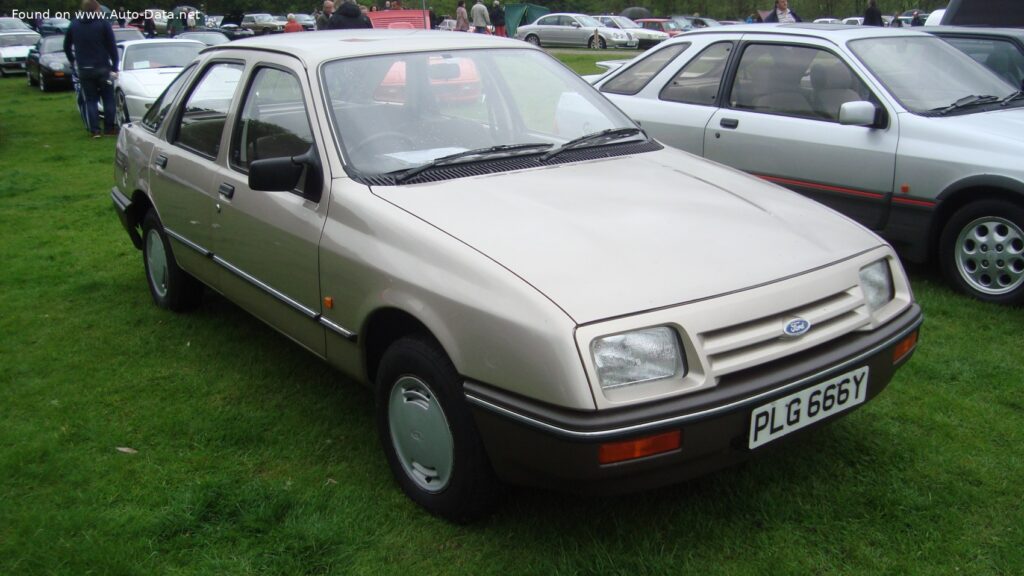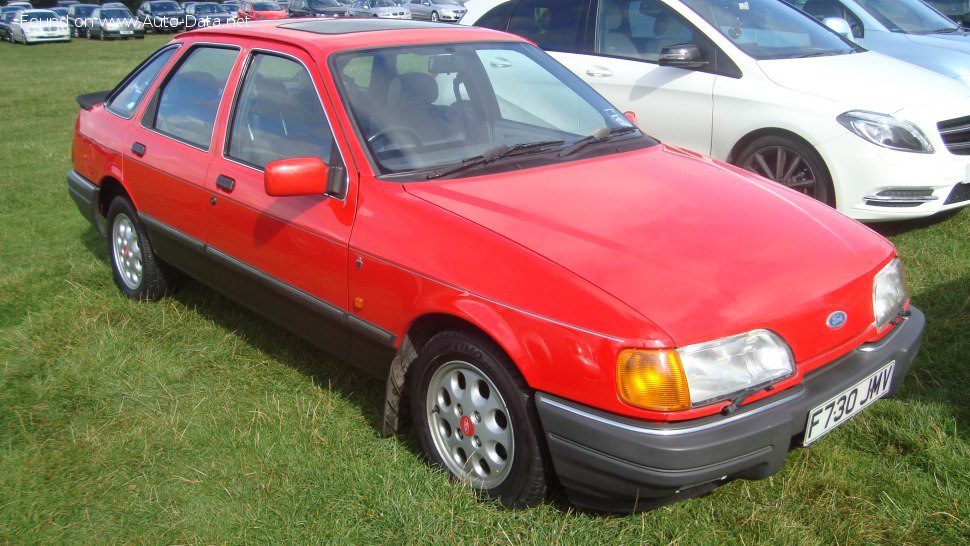
The Ford Sierra Hatchback II 2.9i (145 Hp) represents a significant evolution in Ford of Europe’s mid-size offering, produced between 1988 and 1993. Positioned as a practical and increasingly sophisticated family car, the Sierra aimed to replace the aging Cortina and Taunus models, offering a more modern design and improved engineering. The 2.9i variant, with its fuel-injected V6 engine and available all-wheel drive, was the performance-oriented flagship of the hatchback range, appealing to drivers seeking a blend of practicality and driving enjoyment. While never officially sold in the United States, the Sierra was a crucial model for Ford in Europe, competing with vehicles like the Opel/Vauxhall Vectra, Peugeot 405, and Volkswagen Passat.
The Ford Sierra Hatchback II 2.9i: A European Icon
The Sierra underwent a substantial redesign in 1986, moving away from the boxy styling of the original Sierra introduced in 1982. This facelift, often referred to as the Sierra II, brought a more aerodynamic and contemporary appearance, along with improvements to the interior and mechanical components. The 2.9i model, distinguished by its larger engine and often featuring upgraded trim levels, became a popular choice for those wanting a more refined and powerful Sierra. It represented a step up from the more common four-cylinder versions, offering a smoother and more responsive driving experience. The availability of a four-wheel-drive system further enhanced its appeal in regions with challenging weather conditions.
Engine & Performance
The heart of the Sierra 2.9i is its 2.9-liter (2933 cm3 / 178.98 cu. in.) V6 engine, designated as the B4B or B4C engine code depending on the specific year and market. This naturally aspirated engine produces 145 horsepower (Hp) at 5500 rpm and 229 Newton-meters (168.9 lb.-ft.) of torque at 3000 rpm. This output translates to a power-to-liter ratio of 49.4 Hp/l. The engine utilizes a multi-port fuel injection system and an overhead camshaft (OHC) valvetrain with two valves per cylinder. The longitudinal engine layout, coupled with the available all-wheel-drive system, contributes to balanced handling and improved traction. The five-speed manual transmission is the standard gearbox, providing drivers with precise control over the engine’s power. While not a sports car, the 2.9i offered brisk acceleration and a comfortable cruising speed, making it well-suited for both daily commuting and longer journeys.
Design & Features
The Sierra Hatchback II is a five-door, five-seat hatchback, offering a practical and versatile body style. The design emphasized aerodynamics, with a sloping roofline and integrated rear spoiler contributing to reduced drag. The interior was designed with functionality in mind, offering comfortable seating and a reasonably spacious cabin for passengers and luggage. Features common to the 2.9i model included upgraded upholstery, power steering, and often, electric windows. Safety features, while limited by the standards of the time, included seatbelts and a reinforced safety cell. The focus was on providing a durable and reliable vehicle that could withstand the rigors of everyday use. The hatchback configuration provided easy access to the cargo area, making it a practical choice for families and those needing to transport larger items. The 2.9i’s positioning within the Sierra range meant it often received more premium trim and detailing, enhancing its overall appeal.
Technical Specifications
| General Information | |
| Brand | Ford |
| Model | Sierra |
| Generation | Sierra Hatchback II |
| Type (Engine) | 2.9 i (145 Hp) |
| Start of production | 1988 year |
| End of production | 1993 year |
| Powertrain Architecture | Internal Combustion engine |
| Body type | Hatchback |
| Seats | 5 |
| Doors | 5 |
| Performance Specs | |
| Fuel Type | Petrol (Gasoline) |
| Power | 145 Hp @ 5500 rpm |
| Power per litre | 49.4 Hp/l |
| Torque | 229 Nm @ 3000 rpm / 168.9 lb.-ft. @ 3000 rpm |
| Engine Specs | |
| Engine layout | Front, Longitudinal |
| Engine Model/Code | B4B, B4C |
| Engine displacement | 2933 cm3 / 178.98 cu. in. |
| Number of cylinders | 6 |
| Engine configuration | V-engine |
| Cylinder Bore | 93 mm / 3.66 in. |
| Piston Stroke | 72 mm / 2.83 in. |
| Number of valves per cylinder | 2 |
| Fuel injection system | Multi-port manifold injection |
| Engine aspiration | Naturally aspirated engine |
| Valvetrain | OHC |
| Engine oil capacity | 4.25 l / 4.49 US qt | 3.74 UK qt |
| Coolant | 8.5 l / 8.98 US qt | 7.48 UK qt |
| Space, Volume and Weights | |
| Fuel tank capacity | 60 l / 15.85 US gal | 13.2 UK gal |
| Dimensions | |
| Length | 4425 mm / 174.21 in. |
| Width | 1694 mm / 66.69 in. |
| Height | 1407 mm / 55.39 in. |
| Wheelbase | 2608 mm / 102.68 in. |
| Front track | 1452 mm / 57.17 in. |
| Rear (Back) track | 1468 mm / 57.8 in. |
| Minimum turning circle (turning diameter) | 10 m / 32.81 ft. |
| Drivetrain, Brakes and Suspension Specs | |
| Drive wheel | All wheel drive (4×4) |
| Number of gears and type of gearbox | 5 gears, manual transmission |
| Front brakes | Ventilated discs |
| Rear brakes | Drum |
| Steering type | Steering rack and pinion |
The Ford Sierra Hatchback II 2.9i, while not a vehicle widely recognized in the American market, holds a significant place in automotive history as a well-engineered and practical family car that offered a compelling blend of performance and versatility. Its V6 engine and available all-wheel drive set it apart from many of its competitors, making it a popular choice for drivers in Europe who demanded more than just basic transportation. The Sierra ultimately paved the way for the Ford Mondeo, which continued the tradition of offering a refined and capable mid-size family car.