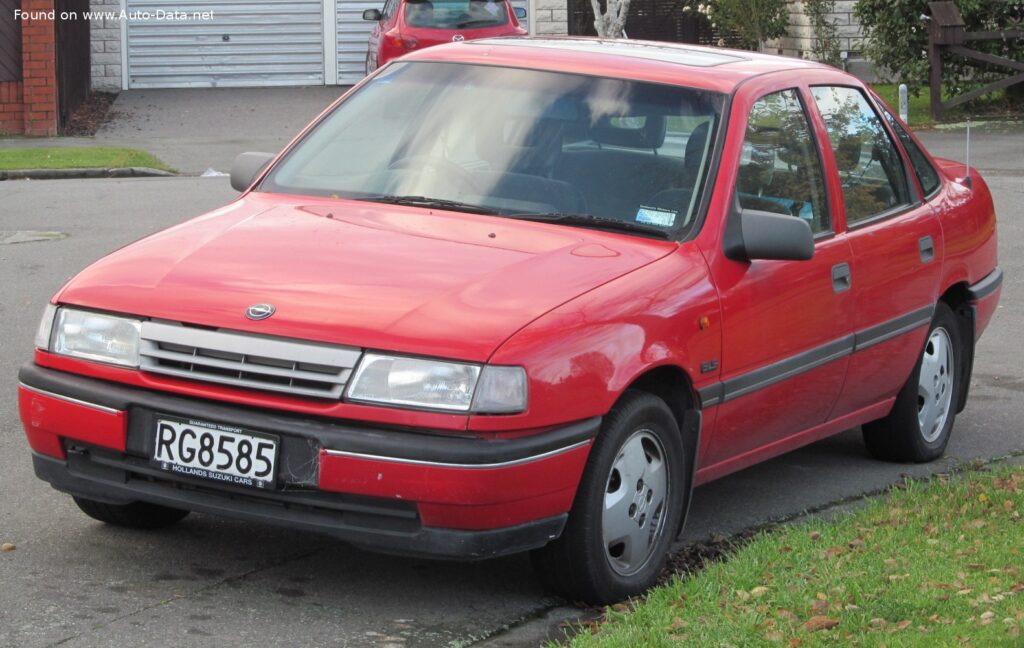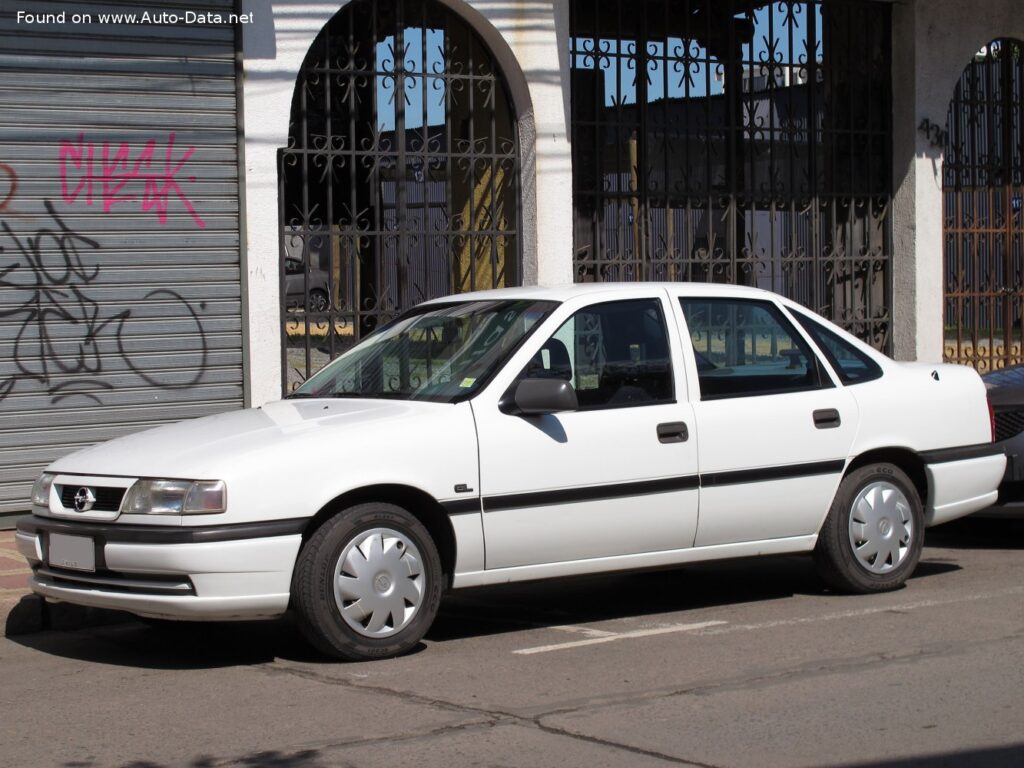
The Opel Vectra A, particularly the facelifted version introduced in August 1992, represented a significant step forward for Opel in the mid-size segment. Replacing the aging Ascona and Manta models, the Vectra aimed to offer a more modern and refined driving experience. This generation, produced until July 1995, was a key model for Opel, establishing a foothold in a competitive market dominated by vehicles like the Ford Mondeo and Volkswagen Passat. While not officially sold in the United States, the Vectra was a popular choice in Europe, known for its practicality, comfort, and relatively affordable price point. The 2.0i variant, equipped with a 115 horsepower engine and automatic transmission, was a common configuration, balancing performance with ease of use.
Opel Vectra A (Facelift 1992) 2.0i: An Overview
The Vectra A facelift brought subtle but important changes to the original design, including revised front and rear styling, improved interior materials, and updated engine options. The 2.0i model, as detailed here, was positioned as a mainstream offering, appealing to families and drivers seeking a comfortable and reliable vehicle. It represented a move towards more sophisticated engineering and design for Opel, setting the stage for future generations of the Vectra.
Engine & Performance
The heart of the Vectra A 2.0i is the C20NE inline four-cylinder engine, displacing 1998 cubic centimeters (121.93 cubic inches). This naturally aspirated engine produces 115 horsepower at 5200 rpm and 170 Nm (125.39 lb.-ft.) of torque at 2600 rpm. The engine utilizes multi-port fuel injection and an overhead camshaft (OHC) valvetrain, contributing to its relatively smooth operation and reasonable fuel efficiency. Paired with a four-speed automatic transmission, the 2.0i delivers a 0-100 km/h (0-62 mph) acceleration time of 12 seconds, and reaches a top speed of 210 km/h (130.49 mph). The weight-to-power ratio of 9.8 kg/Hp and a weight-to-torque ratio of 6.6 kg/Nm indicate a balanced, if not particularly sporty, performance profile. Fuel economy figures are rated at 10.8 l/100 km (21.8 US mpg) in urban driving, 6 l/100 km (39.2 US mpg) on the extra-urban cycle, and 7.5 l/100 km (31.4 US mpg) combined.
Design & Features
The Opel Vectra A facelift is a four-door sedan with a traditional three-box design. Its styling, while conservative by modern standards, was considered contemporary for its time. The facelift brought a more integrated front fascia and revised taillights, giving the car a slightly more refined appearance. The interior offers seating for five passengers and prioritizes practicality and comfort. Key features included hydraulic power steering, ventilated front disc brakes, and disc brakes on the rear axle. The McPherson strut front suspension and coil spring rear suspension provide a comfortable ride, although handling is geared more towards stability than outright sportiness. The trunk offers a generous 450 liters (15.89 cubic feet) of space, expandable to 840 liters (29.66 cubic feet) with the rear seats folded down. Safety features, while limited by the standards of the 1990s, included a robust body structure and available anti-lock braking systems (ABS) on higher trim levels.
Technical Specifications
| Brand | Opel |
| Model | Vectra |
| Generation | Vectra A (facelift 1992) |
| Type (Engine) | 2.0i (115 Hp) Automatic |
| Start of production | August, 1992 |
| End of production | July, 1995 |
| Powertrain Architecture | Internal Combustion engine |
| Body type | Sedan |
| Seats | 5 |
| Doors | 4 |
| Fuel consumption (urban) | 10.8 l/100 km (21.8 US mpg) |
| Fuel consumption (extra urban) | 6 l/100 km (39.2 US mpg) |
| Fuel consumption (combined) | 7.5 l/100 km (31.4 US mpg) |
| Fuel Type | Petrol (Gasoline) |
| Acceleration 0 – 100 km/h | 12 sec |
| Acceleration 0 – 62 mph | 12 sec |
| Acceleration 0 – 60 mph | 11.4 sec |
| Maximum speed | 210 km/h (130.49 mph) |
| Weight-to-power ratio | 9.8 kg/Hp |
| Weight-to-torque ratio | 6.6 kg/Nm |
| Power | 115 Hp @ 5200 rpm |
| Torque | 170 Nm @ 2600 rpm (125.39 lb.-ft. @ 2600 rpm) |
| Engine layout | Front, Transverse |
| Engine Model/Code | C20NE |
| Engine displacement | 1998 cm3 (121.93 cu. in.) |
| Number of cylinders | 4 |
| Engine configuration | Inline |
| Cylinder Bore | 86 mm (3.39 in.) |
| Piston Stroke | 86 mm (3.39 in.) |
| Compression ratio | 9.2:1 |
| Number of valves per cylinder | 2 |
| Fuel injection system | Multi-port manifold injection |
| Engine aspiration | Naturally aspirated |
| Valvetrain | OHC |
| Engine oil capacity | 4 l (4.23 US qt | 3.52 UK qt) |
| Coolant capacity | 7 l (7.4 US qt | 6.16 UK qt) |
| Kerb Weight | 1130 kg (2491.22 lbs.) |
| Max. weight | 1645 kg (3626.6 lbs.) |
| Max load | 515 kg (1135.38 lbs.) |
| Trunk (boot) space – minimum | 450 l (15.89 cu. ft.) |
| Trunk (boot) space – maximum | 840 l (29.66 cu. ft.) |
| Fuel tank capacity | 61 l (16.11 US gal | 13.42 UK gal) |
| Length | 4432 mm (174.49 in.) |
| Width | 1706 mm (67.17 in.) |
| Height | 1400 mm (55.12 in.) |
| Wheelbase | 2600 mm (102.36 in.) |
| Front track | 1437 mm (56.57 in.) |
| Rear track | 1432 mm (56.38 in.) |
| Drag coefficient (Cd) | 0.29 |
| Minimum turning circle | 12 m (39.37 ft.) |
| Drivetrain Architecture | Front wheel drive |
| Number of gears | 4 |
| Gearbox type | Automatic transmission |
| Front suspension | Independent type McPherson |
| Rear suspension | Coil spring |
| Front brakes | Ventilated discs |
| Rear brakes | Disc |
| Steering type | Steering rack and pinion |
| Power steering | Hydraulic |
| Tires size | 195/60 R14 |
| Wheel rims size | 5.5J x 14 |
The Opel Vectra A (facelift 1992) 2.0i Automatic, while not a performance icon, offered a compelling package of practicality, comfort, and reliability for European drivers. It represented a significant step forward for Opel, solidifying its position in the competitive mid-size car market and paving the way for future generations of the Vectra.