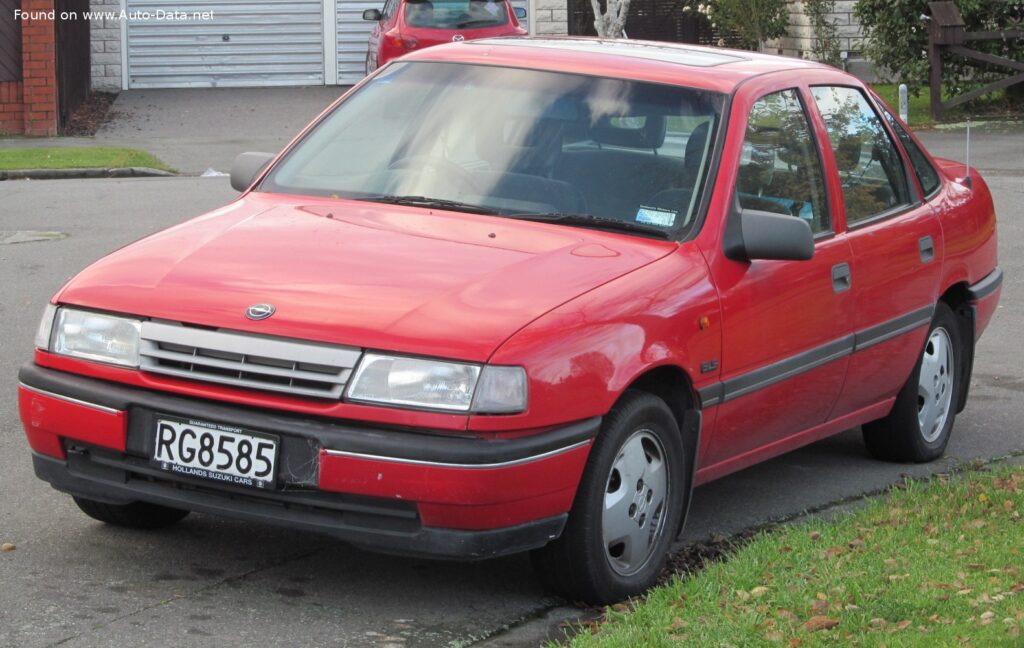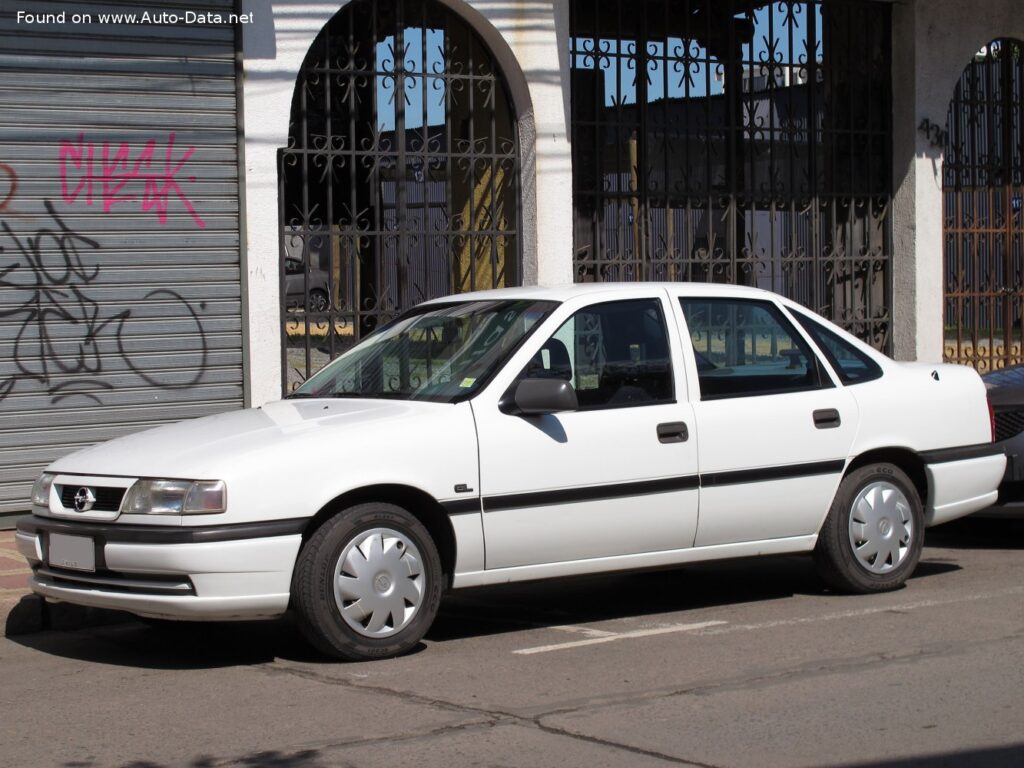
The Opel Vectra A (facelift 1992) 2.0i 16V represents a significant evolution in Opel’s mid-size offerings. Introduced as a replacement for the Ascona and Manta, the Vectra aimed to provide a more modern and globally competitive vehicle. The facelifted version, launched in 1992 and produced through 1995, brought styling refinements and mechanical updates to enhance its appeal. This particular 2.0i 16V variant, producing 136 horsepower, was a popular choice for drivers seeking a balance of performance and fuel efficiency in the European market. While not officially sold in the United States, the Vectra A provides insight into the engineering and design philosophies prevalent in European automotive manufacturing during the early 1990s.
Opel Vectra A (facelift 1992) 2.0i 16V: An Overview
The Vectra A was Opel’s attempt to consolidate its position in the competitive D-segment – a class encompassing family sedans and hatchbacks. Positioned above the smaller Kadett (and later the Astra), the Vectra offered more space, comfort, and refinement. The 1992 facelift brought subtle but important changes to the exterior, including revised headlights, grille, and bumpers, giving the car a more contemporary look. The 2.0i 16V model, with its multi-valve engine, was considered a performance-oriented version within the Vectra A range, appealing to drivers who desired more spirited acceleration and handling.
Engine & Performance
At the heart of the Vectra A 2.0i 16V lies the X20XEV inline four-cylinder engine. This 1,998 cc (121.93 cubic inches) naturally aspirated powerplant utilizes multi-port fuel injection and a double overhead camshaft (DOHC) valvetrain with four valves per cylinder. This configuration allows for efficient combustion and a respectable power output of 136 horsepower at 5,600 rpm. Torque figures stand at 188 Nm (138.66 lb-ft) at 3,200 rpm, providing ample pulling power for everyday driving. The engine’s power-to-weight ratio of 9 kg/Hp and torque-to-weight ratio of 6.5 kg/Nm contribute to its responsive feel.
Power is delivered to the front wheels via a five-speed manual transmission. This drivetrain configuration was standard for the 2.0i 16V model. Performance figures include a 0-100 km/h (0-62 mph) acceleration time of 9.5 seconds and a top speed of 210 km/h (130.49 mph). Fuel consumption is rated at 6.9 liters per 100 kilometers (34.1 US mpg), a reasonable figure for a vehicle of this class and era. The engine’s relatively high specific output – 68.1 horsepower per liter – demonstrates Opel’s focus on maximizing performance from its engine designs.
Design & Features
The Opel Vectra A (facelift 1992) is a four-door sedan, offering seating for five passengers. Its design, while conservative by modern standards, was considered sleek and aerodynamic for its time, boasting a drag coefficient of 0.29. The facelifted model featured a more integrated front fascia and smoother body lines. The interior prioritized practicality and comfort, with a focus on providing a spacious cabin and user-friendly controls.
Safety features, while not as comprehensive as those found in contemporary vehicles, included a robust chassis structure and available anti-lock braking system (ABS) on some trim levels. The Vectra A’s trunk offered a generous 530 liters (18.72 cubic feet) of cargo space, expandable to 840 liters (29.66 cubic feet) with the rear seats folded down. Standard features typically included power steering, central locking, and electric windows. The vehicle’s overall design reflected a commitment to providing a well-rounded and practical family car.
Technical Specifications
| Brand | Opel |
| Model | Vectra |
| Generation | Vectra A (facelift 1992) |
| Type (Engine) | 2.0i 16V (136 Hp) |
| Start of production | March, 1994 |
| End of production | July, 1995 |
| Powertrain Architecture | Internal Combustion engine |
| Body type | Sedan |
| Seats | 5 |
| Doors | 4 |
| Fuel consumption (combined) | 6.9 l/100 km |
| Fuel consumption (US mpg) | 34.1 US mpg |
| Fuel consumption (UK mpg) | 40.9 UK mpg |
| Fuel consumption (km/l) | 14.5 km/l |
| Fuel Type | Petrol (Gasoline) |
| Acceleration 0 – 100 km/h | 9.5 sec |
| Acceleration 0 – 62 mph | 9.5 sec |
| Acceleration 0 – 60 mph | 9 sec |
| Maximum speed | 210 km/h |
| Maximum speed (mph) | 130.49 mph |
| Weight-to-power ratio | 9 kg/Hp |
| Weight-to-torque ratio | 6.5 kg/Nm |
| Power | 136 Hp @ 5600 rpm |
| Power per litre | 68.1 Hp/l |
| Torque | 188 Nm @ 3200 rpm |
| Torque (lb.-ft.) | 138.66 lb.-ft. @ 3200 rpm |
| Engine layout | Front, Transverse |
| Engine Model/Code | X20XEV |
| Engine displacement | 1998 cm3 |
| Engine displacement (cu. in.) | 121.93 cu. in. |
| Number of cylinders | 4 |
| Engine configuration | Inline |
| Number of valves per cylinder | 4 |
| Fuel injection system | Multi-port manifold injection |
| Engine aspiration | Naturally aspirated engine |
| Valvetrain | DOHC |
| Engine oil capacity | 4 l |
| Engine oil capacity (US qt) | 4.23 US qt |
| Engine oil capacity (UK qt) | 3.52 UK qt |
| Coolant capacity | 7.2 l |
| Coolant capacity (US qt) | 7.61 US qt |
| Coolant capacity (UK qt) | 6.34 UK qt |
| Kerb Weight | 1230 kg |
| Kerb Weight (lbs) | 2711.69 lbs |
| Max. weight | 1755 kg |
| Max. weight (lbs) | 3869.11 lbs |
| Max load | 525 kg |
| Max load (lbs) | 1157.43 lbs |
| Trunk (boot) space – minimum | 530 l |
| Trunk (boot) space – minimum (cu. ft.) | 18.72 cu. ft. |
| Trunk (boot) space – maximum | 840 l |
| Trunk (boot) space – maximum (cu. ft.) | 29.66 cu. ft. |
| Fuel tank capacity | 61 l |
| Fuel tank capacity (US gal) | 16.11 US gal |
| Fuel tank capacity (UK gal) | 13.42 UK gal |
| Length | 4432 mm |
| Length (in) | 174.49 in |
| Width | 1706 mm |
| Width (in) | 67.17 in |
| Height | 1400 mm |
| Height (in) | 55.12 in |
| Wheelbase | 2600 mm |
| Wheelbase (in) | 102.36 in |
| Front track | 1420 mm |
| Front track (in) | 55.91 in |
| Rear (Back) track | 1423 mm |
| Rear (Back) track (in) | 56.02 in |
| Drag coefficient (Cd) | 0.29 |
| Drivetrain Architecture | The Internal combustion engine (ICE) drives the front wheels of the vehicle. |
| Drive wheel | Front wheel drive |
| Number of gears and type of gearbox | 5 gears, manual transmission |
| Tires size | 195/60 R15 |
| Wheel rims size | 15 |