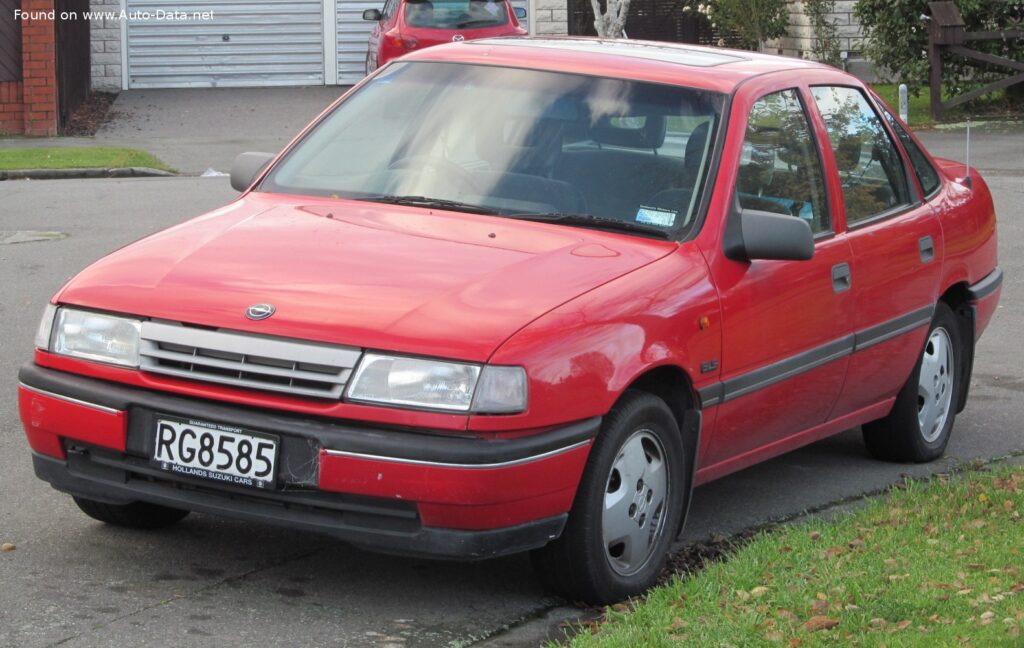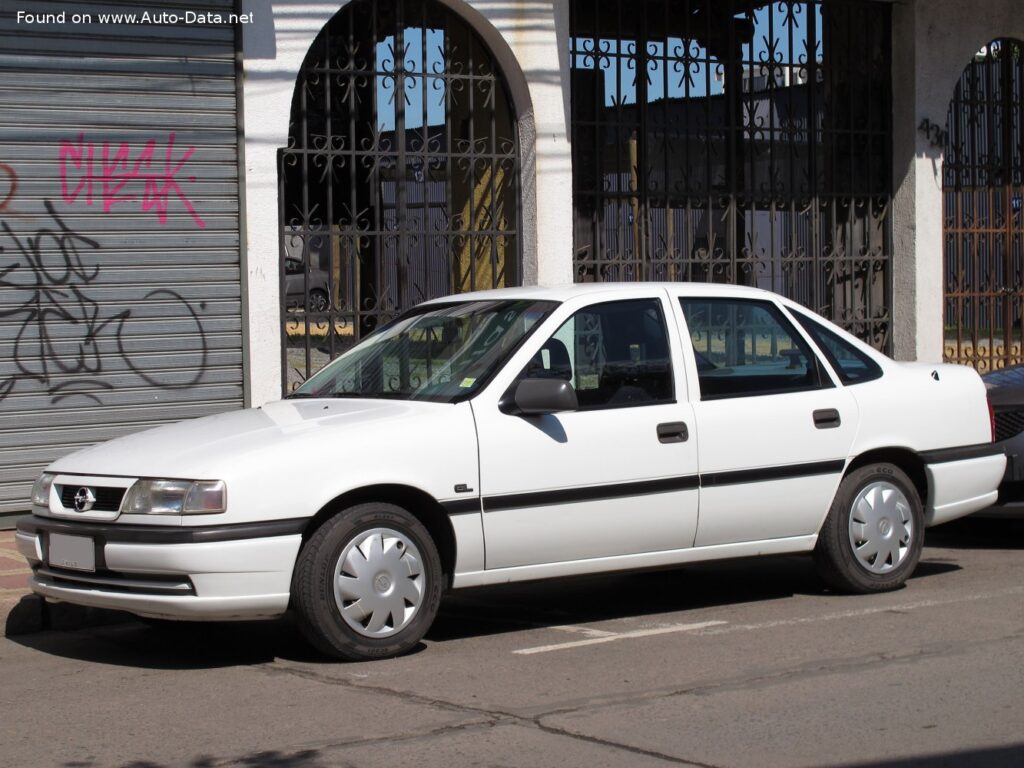
The Opel Vectra A (facelift 1992) 2.0i 16V 4×4 represents a significant evolution in Opel’s mid-size offerings. Introduced in March 1994 and produced until July 1995, this variant of the Vectra A aimed to provide a blend of performance, practicality, and all-weather capability. While the Vectra nameplate had existed previously, the ‘A’ generation marked a substantial departure from its predecessors, embracing more modern design and engineering principles. Importantly, the Vectra was primarily a European model; it wasn’t officially sold in the United States. However, it played a crucial role in Opel’s success in the competitive European market, serving as a direct competitor to models like the Ford Mondeo, Volkswagen Passat, and Peugeot 405.
Opel Vectra A: A Detailed Overview
The Vectra A, particularly the facelifted version from 1992 onwards, was designed to appeal to buyers seeking a comfortable and well-equipped family sedan. The 2.0i 16V 4×4 model specifically targeted those who desired enhanced traction and performance. The introduction of the 4×4 system was relatively uncommon in this segment at the time, setting it apart from many competitors. The facelift brought subtle but important changes to the exterior styling, improving aerodynamics and giving the car a more contemporary look. The engine, a 2.0-liter inline-four, was a key component of the car’s appeal, offering a good balance of power and fuel efficiency.
Engine & Performance
At the heart of the Vectra A 2.0i 16V 4×4 lies the X20XEV engine, a 1998 cc (121.93 cu. in.) inline-four cylinder powerplant. This engine produces 136 horsepower at 5600 rpm and 188 Nm (138.66 lb.-ft.) of torque at 3200 rpm. The 16-valve configuration, coupled with multi-port fuel injection and a double overhead camshaft (DOHC) valvetrain, contributes to its responsive nature. The naturally aspirated engine delivers power in a linear fashion, making it suitable for everyday driving. The all-wheel-drive system, a key feature of this variant, distributes power to all four wheels, enhancing grip and stability, particularly on slippery surfaces. This translates to a 0-100 km/h (0-62 mph) acceleration time of 10.5 seconds and a maximum speed of 204 km/h (126.76 mph). Fuel consumption is rated at 8.3 liters per 100 kilometers (28.3 US mpg), a respectable figure for a vehicle of this type and performance level in the early 1990s.
Design & Features
The Opel Vectra A 2.0i 16V 4×4 is a four-door sedan with a relatively conservative, yet functional design. The body style prioritizes practicality and passenger comfort. The facelifted model features a more streamlined front end and revised rear styling compared to the original Vectra A. Inside, the car offers seating for five passengers and a spacious cabin. The trunk provides a generous 530 liters (18.72 cu. ft.) of storage space, expandable to 840 liters (29.66 cu. ft.) with the rear seats folded down. While not brimming with cutting-edge technology by today’s standards, the Vectra A offered a reasonable level of equipment for its time, including power steering, central locking, and electric windows. Safety features were typical for the early 1990s, including seatbelts and an anti-lock braking system (ABS) on some models. The drag coefficient of 0.29 was considered good for a sedan of its era, contributing to improved fuel efficiency and stability at higher speeds.
Technical Specifications
| Brand | Opel |
| Model | Vectra |
| Generation | Vectra A (facelift 1992) |
| Type (Engine) | 2.0i 16V (136 Hp) 4×4 |
| Start of production | March, 1994 |
| End of production | July, 1995 |
| Powertrain Architecture | Internal Combustion engine |
| Body type | Sedan |
| Seats | 5 |
| Doors | 4 |
| Fuel consumption (economy) – combined | 8.3 l/100 km |
| Fuel consumption (economy) – combined | 28.3 US mpg / 34 UK mpg / 12 km/l |
| Fuel Type | Petrol (Gasoline) |
| Acceleration 0 – 100 km/h | 10.5 sec |
| Acceleration 0 – 62 mph | 10.5 sec |
| Acceleration 0 – 60 mph | 10 sec |
| Maximum speed | 204 km/h / 126.76 mph |
| Power | 136 Hp @ 5600 rpm |
| Power per litre | 68.1 Hp/l |
| Torque | 188 Nm @ 3200 rpm / 138.66 lb.-ft. @ 3200 rpm |
| Engine layout | Front, Transverse |
| Engine Model/Code | X20XEV |
| Engine displacement | 1998 cm3 / 121.93 cu. in. |
| Number of cylinders | 4 |
| Engine configuration | Inline |
| Number of valves per cylinder | 4 |
| Fuel injection system | Multi-port manifold injection |
| Engine aspiration | Naturally aspirated engine |
| Valvetrain | DOHC |
| Engine oil capacity | 4 l / 4.23 US qt | 3.52 UK qt |
| Coolant | 7.2 l / 7.61 US qt | 6.34 UK qt |
| Max. weight | 1755 kg / 3869.11 lbs |
| Trunk (boot) space – minimum | 530 l / 18.72 cu. ft |
| Trunk (boot) space – maximum | 840 l / 29.66 cu. ft |
| Fuel tank capacity | 61 l / 16.11 US gal | 13.42 UK gal |
| Length | 4432 mm / 174.49 in |
| Width | 1706 mm / 67.17 in |
| Height | 1400 mm / 55.12 in |
| Wheelbase | 2600 mm / 102.36 in |
| Front track | 1420 mm / 55.91 in |
| Rear (Back) track | 1423 mm / 56.02 in |
| Drag coefficient (Cd) | 0.29 |
| Drive wheel | All wheel drive (4×4) |
| Number of gears and type of gearbox | 5 gears, manual transmission |
| Tires size | 195/60 R15 |
| Wheel rims size | 15 |
The Opel Vectra A 2.0i 16V 4×4, while not a performance icon, represented a well-rounded and capable mid-size sedan for its time. Its combination of a responsive engine, all-wheel-drive traction, and practical design made it a popular choice for families and drivers seeking a reliable and comfortable vehicle in the European market. It laid the groundwork for subsequent Vectra generations, which continued to build on its strengths and evolve with changing automotive trends.