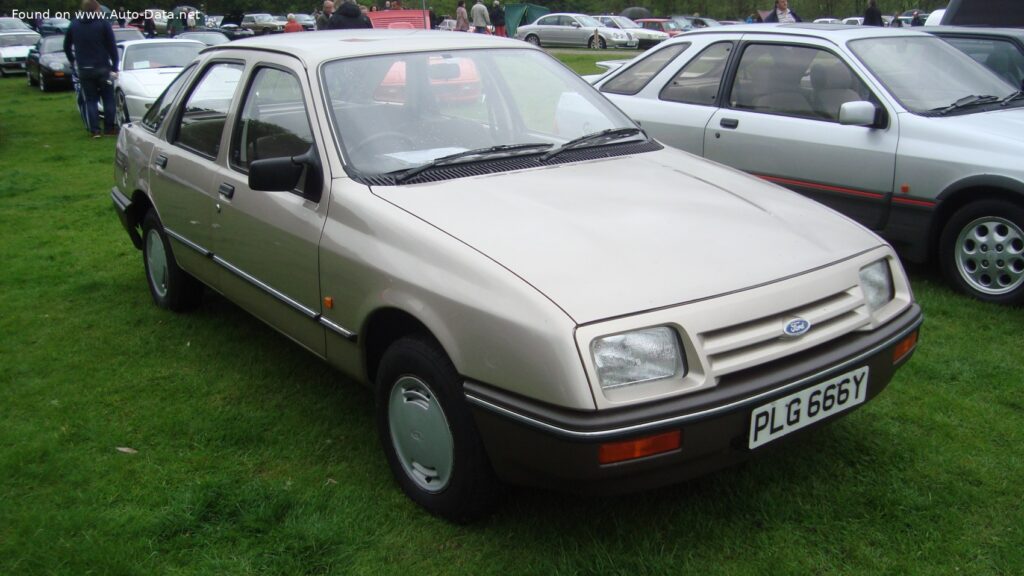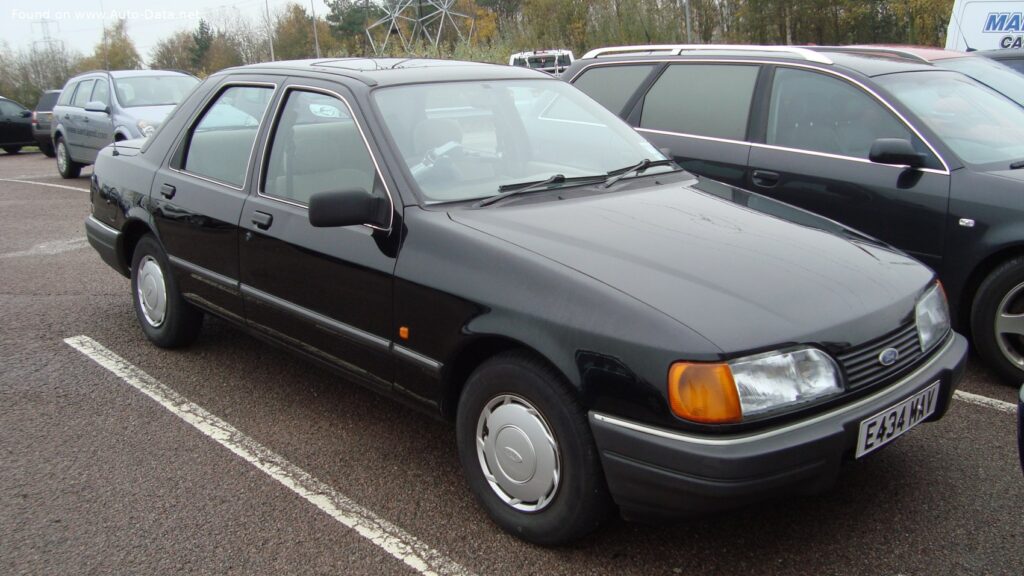
The Ford Sierra Sedan II 1.6, produced from 1988 to 1993, represents a significant evolution in Ford of Europe’s mid-size family car lineup. Replacing the aging Cortina, the Sierra was a thoroughly modern design for its time, embracing aerodynamic styling and a more spacious interior. The Sedan II designation refers to a series of updates and refinements applied during the model’s lifespan. While not officially sold in the United States, the Sierra was a hugely popular vehicle in Europe, competing with models like the Opel/Vauxhall Vectra, Peugeot 405, and Fiat Tempra. The 1.6-liter engine variant, producing 72 horsepower, was positioned as an economical and practical choice for everyday driving, prioritizing fuel efficiency over outright performance.
The Ford Sierra Sedan II 1.6: A European Family Sedan
The Sierra marked a departure from Ford’s traditionally boxy designs, adopting a more streamlined and aerodynamic profile. This was a deliberate move to improve fuel economy and reduce drag, reflecting the growing importance of these factors in the late 1980s. The Sedan II updates included minor cosmetic changes, improvements to interior trim, and refinements to the engine and suspension. The Sierra’s impact extended beyond its sales figures; it introduced a new level of sophistication and modernity to the European family car segment, influencing design trends for years to come.
Engine & Performance
The heart of the Sierra Sedan II 1.6 is a naturally aspirated 1.6-liter inline-four cylinder petrol (gasoline) engine. This engine, while not particularly powerful by modern standards, was known for its reliability and fuel efficiency. Producing 72 horsepower, the engine delivered adequate performance for typical commuting and family motoring. The power output was sufficient for comfortable cruising on motorways (freeways) and navigating urban environments. The engine’s relatively low compression ratio and simple design contributed to its longevity and ease of maintenance.
Power is delivered to the rear wheels via a five-speed manual transmission. Rear-wheel drive was a common configuration for European sedans of this era, offering a balanced driving experience and relatively low production costs. While not offering the traction benefits of front-wheel drive in slippery conditions, the rear-wheel drive layout provided a more engaging driving feel for enthusiasts. The five-speed gearbox allowed drivers to optimize engine speed for fuel economy or performance, depending on driving conditions. Acceleration was modest, with a 0-60 mph time estimated to be around 12-14 seconds, but the focus was on providing a comfortable and economical driving experience rather than outright speed.
Design & Features
The Ford Sierra Sedan II is a four-door, five-seater sedan. Its body style was typical of European family cars of the late 1980s and early 1990s, characterized by a relatively long wheelbase and a spacious interior. The design prioritized practicality and comfort, with ample headroom and legroom for passengers. The exterior styling featured clean lines and a relatively understated appearance, reflecting the conservative tastes of the European market.
Safety features, while limited by the standards of today, were improving during this period. The Sierra Sedan II typically included basic safety equipment such as seatbelts for all occupants. The braking system consisted of ventilated discs on the front wheels and drum brakes on the rear, providing adequate stopping power for the vehicle’s weight and performance. Steering was handled by a rack and pinion system with hydraulic power assistance, making the car relatively easy to maneuver, even at low speeds. Interior features included basic instrumentation, cloth upholstery, and a simple audio system. The emphasis was on providing a functional and comfortable interior rather than luxurious appointments.
Technical Specifications
| Brand | Ford |
| Model | Sierra |
| Generation | Sierra Sedan II |
| Type (Engine) | 1.6 (72 Hp) |
| Start of production | 1988 year |
| End of production | 1993 year |
| Powertrain Architecture | Internal Combustion engine |
| Body type | Sedan |
| Seats | 5 |
| Doors | 4 |
| Fuel Type | Petrol (Gasoline) |
| Power | 72 Hp |
| Engine aspiration | Naturally aspirated engine |
| Fuel tank capacity | 60 l / 15.85 US gal / 13.2 UK gal |
| Length | 4467 mm / 175.87 in. |
| Width | 1698 mm / 66.85 in. |
| Height | 1407 mm / 55.39 in. |
| Wheelbase | 2608 mm / 102.68 in. |
| Front track | 1452 mm / 57.17 in. |
| Rear (Back) track | 1468 mm / 57.8 in. |
| Minimum turning circle (turning diameter) | 10 m / 32.81 ft. |
| Drivetrain Architecture | The Internal combustion engine (ICE) drives the rear wheels of the vehicle. |
| Drive wheel | Rear wheel drive |
| Number of gears and type of gearbox | 5 gears, manual transmission |
| Front brakes | Ventilated discs |
| Rear brakes | Drum |
| Steering type | Steering rack and pinion |
| Power steering | Hydraulic Steering |
The Ford Sierra Sedan II 1.6, while not a performance icon, remains a significant vehicle in the history of Ford of Europe. It represented a move towards more modern design, improved fuel efficiency, and a greater emphasis on practicality and comfort. Its enduring popularity in Europe is a testament to its well-rounded design and reliable engineering. Although never officially available in the US market, the Sierra provides a fascinating glimpse into the automotive landscape of Europe during the late 1980s and early 1990s.