The Peugeot 308 II, launched in 2013, represented a significant step forward for the French automaker, aiming to compete more effectively in the highly competitive European compact car segment – known as the C-segment. This second generation of the 308, specifically the Phase I model produced between 2013 and 2015, offered a blend of practicality, efficiency, and a more refined driving experience than its predecessor. While not officially sold in the United States, the 308 was a popular choice in Europe, offering a compelling alternative to rivals like the Volkswagen Golf, Ford Focus, and Opel Astra. The 1.6 HDI (92 horsepower) variant was a common engine choice, prioritizing fuel economy and reasonable performance for everyday driving.
Peugeot 308 II (Phase I): A European Compact
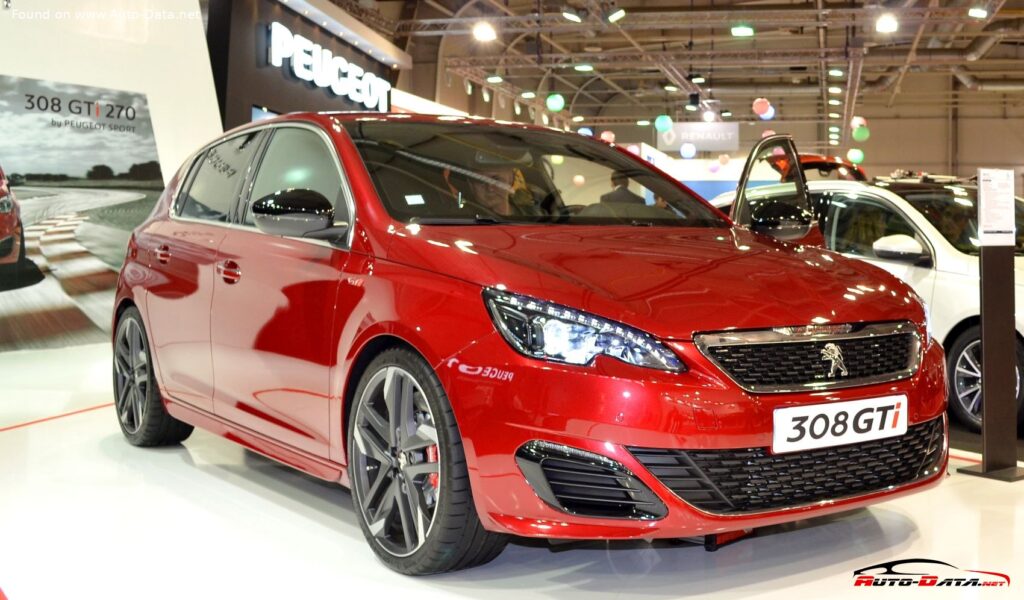
The 308 II marked a departure from the somewhat quirky styling of the first generation, adopting a more mature and sophisticated design language. It was available exclusively as a five-door hatchback, catering to the European preference for this body style. The Phase I models, produced from 2013 to 2015, established the core design and mechanical features of the 308 II, with subsequent phases introducing styling updates and technological enhancements. The vehicle was designed to appeal to buyers seeking a comfortable, well-equipped, and economical vehicle for daily commuting and family use.
Engine & Performance
The 1.6 HDI variant of the Peugeot 308 II is powered by a 1.6-liter inline-four cylinder diesel engine, designated the 9HP DV6DTED. This engine produces 92 horsepower at 4000 rpm and 230 Nm (169.64 lb.-ft.) of torque at 1750 rpm. The engine utilizes a turbocharger and intercooler to enhance performance and efficiency. While not a performance-oriented engine, the 1.6 HDI provides adequate power for typical driving conditions. Acceleration from 0 to 100 km/h (0-62 mph) takes 11.3 seconds, and it achieves a maximum speed of 183 km/h (113.71 mph). A key strength of this engine is its fuel efficiency. Combined fuel consumption is rated at 3.7 l/100 km (63.6 US mpg), with urban and extra-urban figures of 4.4 l/100 km (53.5 US mpg) and 3.4 l/100 km (69.2 US mpg) respectively. The engine meets Euro 5 emission standards and incorporates a diesel particulate filter to reduce harmful emissions. Power is delivered to the front wheels via a five-speed manual transmission.
Design & Features
The Peugeot 308 II Phase I features a modern hatchback design, characterized by a sloping roofline and a relatively compact footprint. It measures 4253 mm (167.44 in) in length, 1804 mm (71.02 in) in width, and 1457 mm (57.36 in) in height. The interior is designed with practicality and comfort in mind, offering seating for five passengers. The trunk (boot) space is a useful 420 liters (14.83 cu. ft.) with the rear seats up, expanding to 817 liters (28.85 cu. ft.) when the rear seats are folded down.
Standard features typically included ABS (Anti-lock Braking System), electric power steering, and a range of safety equipment. Higher trim levels offered features such as air conditioning, a touchscreen infotainment system, and alloy wheels. The 308 II prioritized a comfortable ride and relatively quiet cabin, making it a suitable choice for long-distance journeys. The McPherson front suspension and semi-independent rear suspension contribute to a balanced handling experience. The vehicle’s kerb weight of 1090 kg (2403.04 lbs) contributes to its fuel efficiency and agility.
Technical Specifications
| Brand | Peugeot |
| Model | 308 |
| Generation | 308 II (Phase I, 2013) |
| Type (Engine) | 1.6 HDI (92 Hp) |
| Start of production | 2013 |
| End of production | 2015 |
| Powertrain Architecture | Internal Combustion engine |
| Body type | Hatchback |
| Seats | 5 |
| Doors | 6 |
| Fuel consumption (urban) | 4.4 l/100 km (53.5 US mpg) |
| Fuel consumption (extra urban) | 3.4 l/100 km (69.2 US mpg) |
| Fuel consumption (combined) | 3.7 l/100 km (63.6 US mpg) |
| CO2 emissions | 95 g/km |
| Fuel Type | Diesel |
| Acceleration 0 – 100 km/h | 11.3 sec |
| Acceleration 0 – 62 mph | 11.3 sec |
| Acceleration 0 – 60 mph | 10.7 sec |
| Maximum speed | 183 km/h (113.71 mph) |
| Emission standard | Euro 5 |
| Weight-to-power ratio | 11.8 kg/Hp |
| Weight-to-torque ratio | 4.7 kg/Nm |
| Power | 92 Hp @ 4000 rpm |
| Torque | 230 Nm @ 1750 rpm (169.64 lb.-ft. @ 1750 rpm) |
| Engine layout | Front, Transverse |
| Engine Model/Code | 9HP DV6DTED |
| Engine displacement | 1560 cm3 (95.2 cu. in.) |
| Number of cylinders | 4 |
| Engine configuration | Inline |
| Cylinder Bore | 75 mm (2.95 in.) |
| Piston Stroke | 88.3 mm (3.48 in.) |
| Number of valves per cylinder | 2 |
| Fuel injection system | Diesel Commonrail |
| Engine aspiration | Turbocharger, Intercooler |
| Engine oil capacity | 3.75 l (3.96 US qt | 3.3 UK qt) |
| Coolant | 6 l (6.34 US qt | 5.28 UK qt) |
| Kerb Weight | 1090 kg (2403.04 lbs.) |
| Max. weight | 1740 kg (3836.04 lbs.) |
| Max load | 650 kg (1433 lbs.) |
| Trunk (boot) space – minimum | 420 l (14.83 cu. ft.) |
| Trunk (boot) space – maximum | 817 l (28.85 cu. ft.) |
| Fuel tank capacity | 53 l (14 US gal | 11.66 UK gal) |
| Length | 4253 mm (167.44 in.) |
| Width | 1804 mm (71.02 in.) |
| Width including mirrors | 2043 mm (80.43 in.) |
| Height | 1457 mm (57.36 in.) |
| Wheelbase | 2620 mm (103.15 in.) |
| Drive wheel | Front wheel drive |
| Number of gears and type of gearbox | 5 gears, manual transmission |