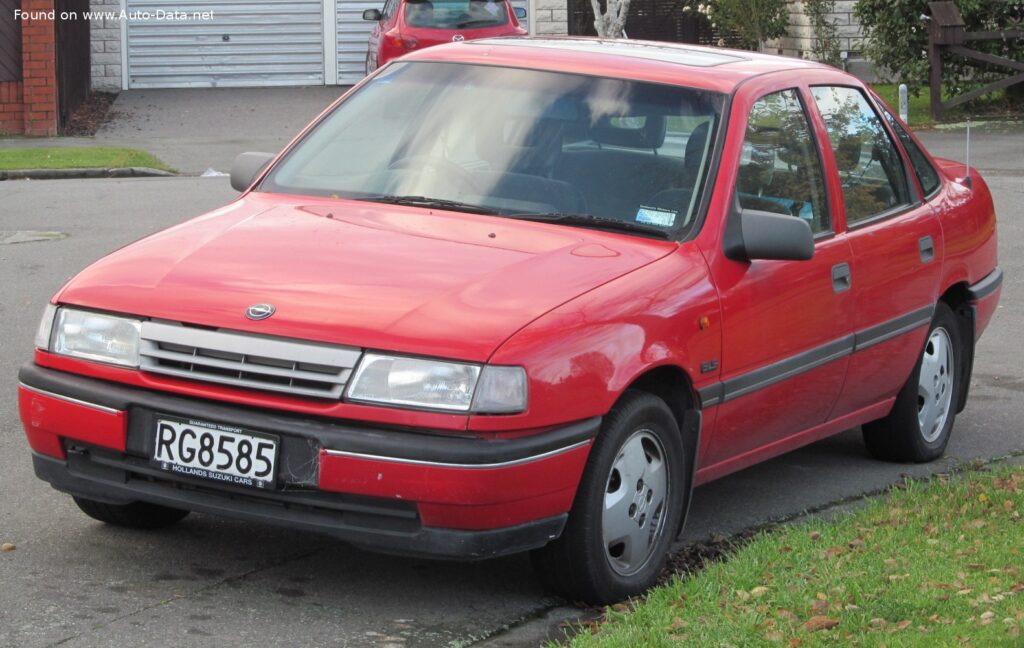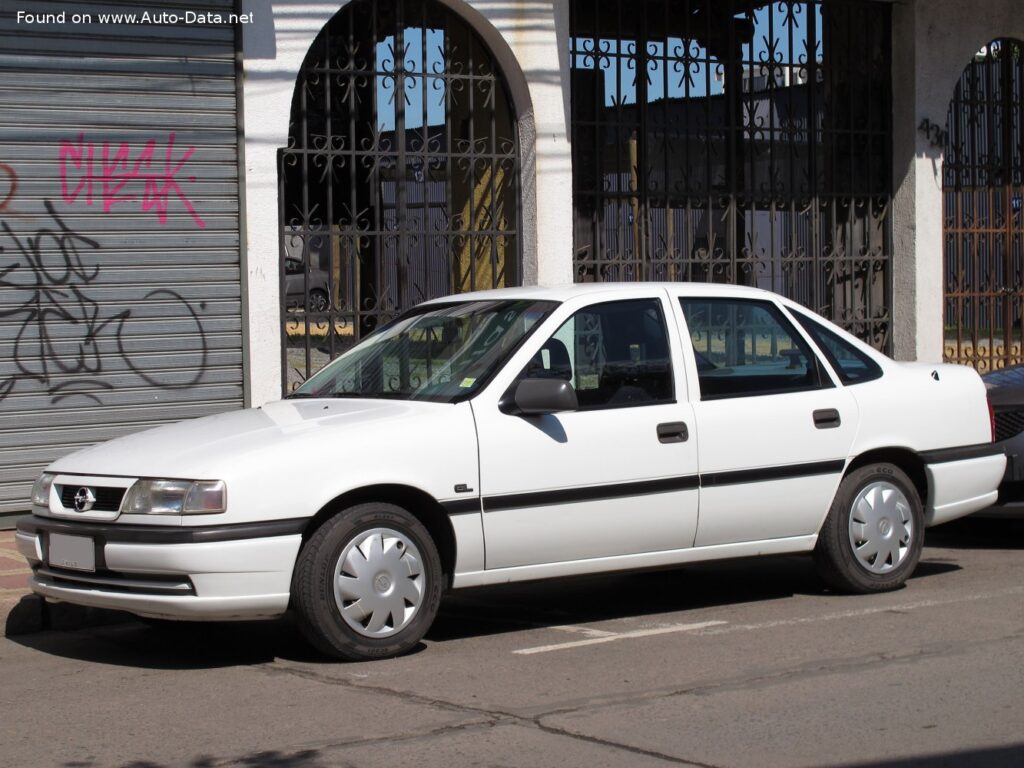
The Opel Vectra A (facelift 1992) 2.0i 16V CAT 4×4 represents a significant evolution in Opel’s mid-size offerings. Introduced in August 1992 and produced until February 1994, this variant of the Vectra A aimed to provide a blend of performance, practicality, and all-weather capability. While the Vectra nameplate had existed previously, the ‘A’ generation marked a substantial redesign, moving away from the rear-wheel-drive layout of its predecessors to a more modern front-wheel-drive platform – with this specific model featuring a sophisticated all-wheel-drive system. The Vectra A was primarily marketed in Europe, serving as Opel’s competitor to vehicles like the Ford Mondeo and Volkswagen Passat. It was a key model in establishing Opel as a mainstream automotive brand, offering a compelling package for families and business users alike.
Opel Vectra A (facelift 1992) 2.0i 16V CAT 4×4: An Overview
The facelifted Vectra A, launched in 1992, brought with it revised styling, improved interior appointments, and crucially, updated engine options. The 2.0i 16V CAT 4×4 model stood out due to its potent 150 horsepower engine and the added security of all-wheel drive. This configuration was particularly appealing in regions experiencing harsh winter conditions or where drivers desired enhanced traction. The “CAT” designation refers to the catalytic converter, indicating the vehicle met stricter emissions standards of the time. The Vectra A’s design prioritized aerodynamic efficiency, contributing to improved fuel economy and reduced noise levels. It represented a step forward in Opel’s engineering and design capabilities, setting the stage for future generations of the Vectra.
Engine & Performance
At the heart of the Vectra A 2.0i 16V CAT 4×4 lies the C20XE engine, a 1998 cc (121.93 cu. in.) inline-four cylinder powerplant. This engine, renowned for its durability and performance, produces 150 Hp at 6000 rpm and 196 Nm (144.56 lb.-ft.) of torque at 4800 rpm. The engine features multi-port fuel injection and a double overhead camshaft (DOHC) valvetrain, contributing to its responsive nature and relatively high power output for its displacement – achieving 75.1 Hp per liter. The power is delivered to all four wheels via a 5-speed manual transmission, providing the driver with precise control. Acceleration from 0 to 100 km/h (0-62 mph) takes 9.5 seconds, while 0 to 60 mph is achieved in approximately 9 seconds. The vehicle boasts a maximum speed of 208 km/h (129.25 mph). The weight-to-power ratio of 8.7 kg/Hp and a weight-to-torque ratio of 6.7 kg/Nm further highlight the engine’s efficiency and the vehicle’s overall performance characteristics.
Design & Features
The Opel Vectra A (facelift 1992) is a four-door sedan with a practical and functional design. Its body style prioritizes passenger comfort and cargo space. The vehicle seats five occupants and offers a generous trunk capacity ranging from 530 liters (18.72 cu. ft.) to 840 liters (29.66 cu. ft.) with the rear seats folded down. The exterior design, while relatively conservative by modern standards, was considered sleek and aerodynamic for its time, with a drag coefficient of 0.29. Safety features, while not as comprehensive as those found in contemporary vehicles, included disc brakes on all four wheels and a robust chassis designed to provide stable handling. The interior was designed with practicality in mind, featuring durable materials and a functional layout. The 61-liter (16.11 US gal) fuel tank provides a reasonable driving range. The vehicle’s dimensions are 4432 mm (174.49 in.) in length, 1706 mm (67.17 in.) in width, and 1400 mm (55.12 in.) in height, with a wheelbase of 2600 mm (102.36 in.).
Technical Specifications
| Brand | Opel |
| Model | Vectra |
| Generation | Vectra A (facelift 1992) |
| Type (Engine) | 2.0i 16V CAT (150 Hp) 4×4 |
| Start of production | August, 1992 |
| End of production | February, 1994 |
| Powertrain Architecture | Internal Combustion engine |
| Body type | Sedan |
| Seats | 5 |
| Doors | 4 |
| Fuel consumption (urban) | 11.5 l/100 km (20.5 US mpg, 24.6 UK mpg, 8.7 km/l) |
| Fuel consumption (extra urban) | 6.8 l/100 km (34.6 US mpg, 41.5 UK mpg, 14.7 km/l) |
| Fuel consumption (combined) | 8.3 l/100 km (28.3 US mpg, 34 UK mpg, 12 km/l) |
| Fuel Type | Petrol (Gasoline) |
| Acceleration 0 – 100 km/h | 9.5 sec |
| Acceleration 0 – 62 mph | 9.5 sec |
| Acceleration 0 – 60 mph | 9 sec |
| Maximum speed | 208 km/h (129.25 mph) |
| Weight-to-power ratio | 8.7 kg/Hp |
| Weight-to-torque ratio | 6.7 kg/Nm |
| Power | 150 Hp @ 6000 rpm |
| Power per litre | 75.1 Hp/l |
| Torque | 196 Nm @ 4800 rpm (144.56 lb.-ft. @ 4800 rpm) |
| Engine layout | Front, Transverse |
| Engine Model/Code | C20XE |
| Engine displacement | 1998 cm3 (121.93 cu. in.) |
| Number of cylinders | 4 |
| Engine configuration | Inline |
| Cylinder Bore | 86 mm (3.39 in.) |
| Piston Stroke | 86 mm (3.39 in.) |
| Compression ratio | 10.5:1 |
| Number of valves per cylinder | 4 |
| Fuel injection system | Multi-port manifold injection |
| Engine aspiration | Naturally aspirated engine |
| Valvetrain | DOHC |
| Engine oil capacity | 4.5 l (4.76 US qt | 3.96 UK qt) |
| Coolant | 7.2 l (7.61 US qt | 6.34 UK qt) |
| Kerb Weight | 1310 kg (2888.06 lbs.) |
| Max. weight | 1805 kg (3979.34 lbs.) |
| Max load | 495 kg (1091.29 lbs.) |
| Trunk (boot) space – minimum | 530 l (18.72 cu. ft.) |
| Trunk (boot) space – maximum | 840 l (29.66 cu. ft.) |
| Fuel tank capacity | 61 l (16.11 US gal | 13.42 UK gal) |
| Length | 4432 mm (174.49 in.) |
| Width | 1706 mm (67.17 in.) |
| Height | 1400 mm (55.12 in.) |
| Wheelbase | 2600 mm (102.36 in.) |
| Front track | 1420 mm (55.91 in.) |
| Rear (Back) track | 1423 mm (56.02 in.) |
| Drag coefficient (Cd) | 0.29 |
| Drive wheel | All wheel drive (4×4) |
| Number of gears and type of gearbox | 5 gears, manual transmission |
| Front brakes | Disc |
| Rear brakes | Disc |
| Tires size | 195/60 R15 |
| Wheel rims size | 15 |