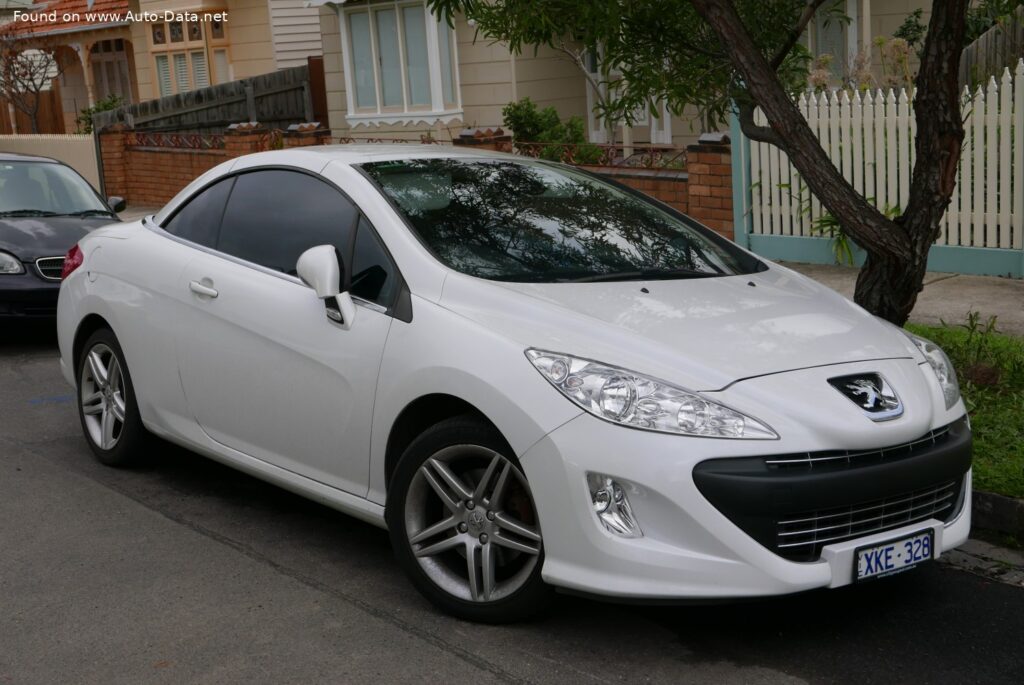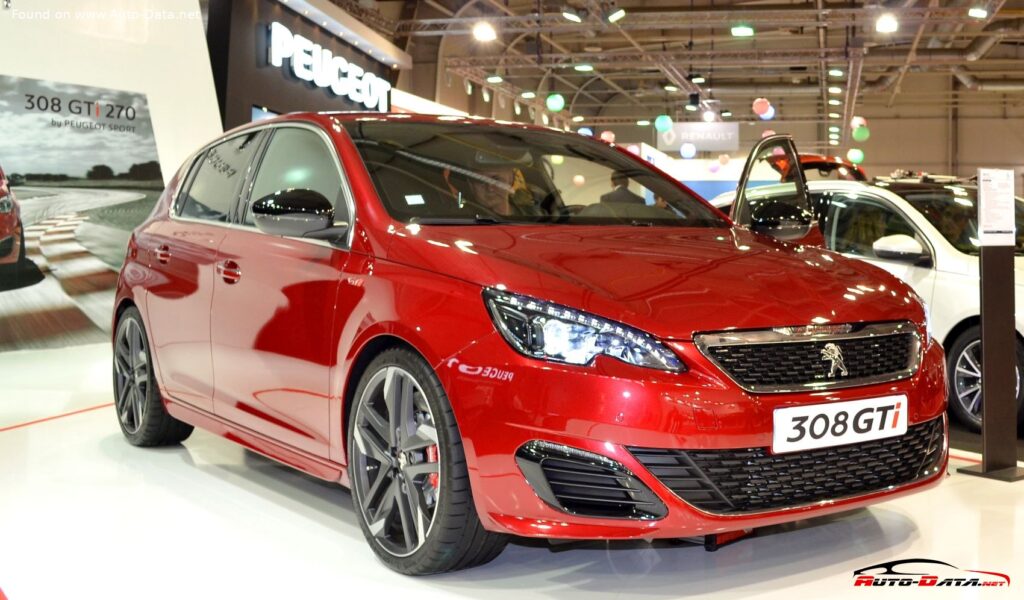
The Peugeot 308 II, launched in 2013, represented a significant step forward for the French automaker, aiming to compete more effectively in the highly competitive European compact car segment – known as the C-segment. This second generation of the 308 moved away from the somewhat quirky styling of its predecessor, adopting a more mature and refined aesthetic. The Phase I models, produced from 2013 to 2017, offered a range of engine options, with the 2.0 BlueHDi 150 Hp EAT6 being a popular choice for those prioritizing fuel efficiency and torque. While not officially sold in the United States, the 308 consistently ranked among the best-selling cars in Europe, known for its comfortable ride, practical interior, and advanced technology for its time.
Peugeot 308 II (Phase I): A Detailed Overview
The 308 II was designed to appeal to a broader audience than previous Peugeot models. It focused on delivering a more premium feel and improved driving dynamics. The Phase I models, produced between 2014 and 2017, were particularly notable for their adoption of Peugeot’s BlueHDi diesel technology, designed to meet stringent Euro 6 emissions standards. The 2.0 BlueHDi variant, equipped with the EAT6 six-speed automatic transmission, offered a compelling blend of performance and economy, making it a favored choice for long-distance drivers and those seeking lower running costs.
Engine & Performance
The heart of the 308 II 2.0 BlueHDi is a 1997 cc inline four-cylinder diesel engine, designated AHX DW10FD. This engine produces 150 horsepower at 4000 rpm and a substantial 370 Nm (272.9 lb.-ft.) of torque at 2000 rpm. The turbocharger and intercooler work in concert to deliver responsive performance across a wide range of engine speeds. The EAT6 automatic transmission, a six-speed unit, provides smooth and efficient gear changes. This powertrain combination allows the 308 to accelerate from 0 to 100 km/h (0-62 mph) in 8.6 seconds, and 0 to 60 mph in 8.2 seconds, with a maximum speed of 211 km/h (131.11 mph). The engine’s power-to-weight ratio is 8.7 kg/Hp, and the torque-to-weight ratio is 3.5 kg/Nm, contributing to a lively driving experience. The inclusion of a Start & Stop system and a particulate filter further enhances fuel efficiency and reduces emissions.
Design & Features
The Peugeot 308 II Phase I is a five-door hatchback, offering a practical and versatile body style. Its exterior design is characterized by a sleek silhouette, a prominent front grille, and distinctive headlight clusters. Inside, the cabin is well-appointed and features a driver-focused layout. Key features include a touchscreen infotainment system, comfortable seating for five occupants, and a spacious trunk offering 470 liters (16.6 cu. ft.) of storage space, expandable to 855 liters (30.19 cu. ft.) with the rear seats folded down. Safety features, crucial for this generation of vehicles, include ABS (Anti-lock Braking System) and a robust chassis designed for occupant protection. The 308 II prioritized a comfortable ride and refined interior, setting it apart from some of its more spartan competitors.
Technical Specifications
| Brand | Peugeot |
| Model | 308 |
| Generation | 308 II (Phase I, 2013) |
| Type (Engine) | 2.0 BlueHDi (150 Hp) EAT6 |
| Start of production | 2014 |
| End of production | 2017 |
| Powertrain Architecture | Internal Combustion engine |
| Body type | Hatchback |
| Seats | 5 |
| Doors | 5 |
| Fuel consumption (urban) | 4.7 l/100 km (50 US mpg / 60.1 UK mpg / 21.3 km/l) |
| Fuel consumption (extra urban) | 3.6 l/100 km (65.3 US mpg / 78.5 UK mpg / 27.8 km/l) |
| Fuel consumption (combined) | 4 l/100 km (58.8 US mpg / 70.6 UK mpg / 25 km/l) |
| CO2 emissions | 105 g/km |
| Fuel Type | Diesel |
| Acceleration 0 – 100 km/h | 8.6 sec |
| Acceleration 0 – 62 mph | 8.6 sec |
| Acceleration 0 – 60 mph | 8.2 sec |
| Maximum speed | 211 km/h (131.11 mph) |
| Emission standard | Euro 6 |
| Weight-to-power ratio | 8.7 kg/Hp |
| Weight-to-torque ratio | 3.5 kg/Nm |
| Power | 150 Hp @ 4000 rpm |
| Torque | 370 Nm @ 2000 rpm (272.9 lb.-ft. @ 2000 rpm) |
| Engine layout | Front, Transverse |
| Engine Model/Code | AHX DW10FD |
| Engine displacement | 1997 cm3 (121.86 cu. in.) |
| Number of cylinders | 4 |
| Engine configuration | Inline |
| Cylinder Bore | 85 mm (3.35 in.) |
| Piston Stroke | 88 mm (3.46 in.) |
| Number of valves per cylinder | 4 |
| Fuel injection system | Diesel Commonrail |
| Engine aspiration | Turbocharger, Intercooler |
| Valvetrain | DOHC |
| Engine oil capacity | 4.5 l (4.76 US qt | 3.96 UK qt) |
| Coolant | 9 l (9.51 US qt | 7.92 UK qt) |
| Kerb Weight | 1310 kg (2888.06 lbs.) |
| Max. weight | 1900 kg (4188.78 lbs.) |
| Max load | 590 kg (1300.73 lbs.) |
| Trunk (boot) space – minimum | 470 l (16.6 cu. ft.) |
| Trunk (boot) space – maximum | 855 l (30.19 cu. ft.) |
| Fuel tank capacity | 53 l (14 US gal | 11.66 UK gal) |
| Permitted trailer load with brakes (12%) | 1500 kg (3306.93 lbs.) |
| Permitted towbar download | 75 kg (165.35 lbs.) |
| Length | 4253 mm (167.44 in.) |
| Width | 1804 mm (71.02 in.) |
| Width including mirrors | 2043 mm (80.43 in.) |
| Height | 1457 mm (57.36 in.) |
| Wheelbase | 2620 mm (103.15 in.) |
| Front track | 1559 mm (61.38 in.) |
| Rear (Back) track | 1553 mm (61.14 in.) |
| Front overhang | 863 mm (33.98 in.) |
| Rear overhang | 770 mm (30.31 in.) |
| Minimum turning circle (turning diameter) | 10.4 m (34.12 ft.) |
| Drive wheel | Front wheel drive |
| Number of gears and type of gearbox | 6 gears, automatic transmission EAT |
| Front suspension | Independent, type McPherson with coil spring and anti-roll bar |
| Rear suspension | Semi-independent, coil spring |
| Front brakes | Ventilated discs |
| Rear brakes | Disc |
| Steering type | Steering rack and pinion |
| Power steering | Electric Steering |
| Tires size | 205/55 R16; 225/45 R17 |
| Wheel rims size | 16; 17 |