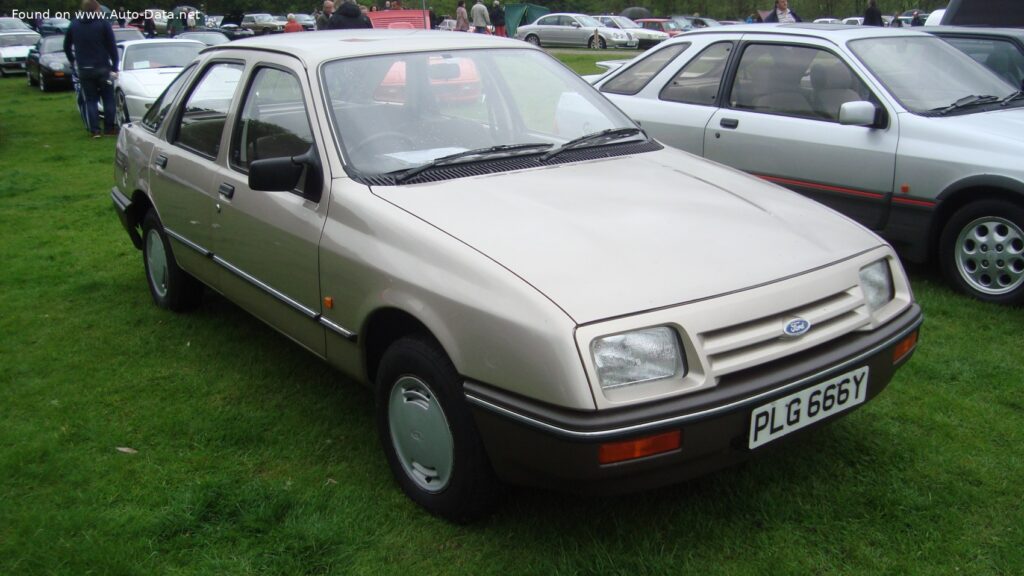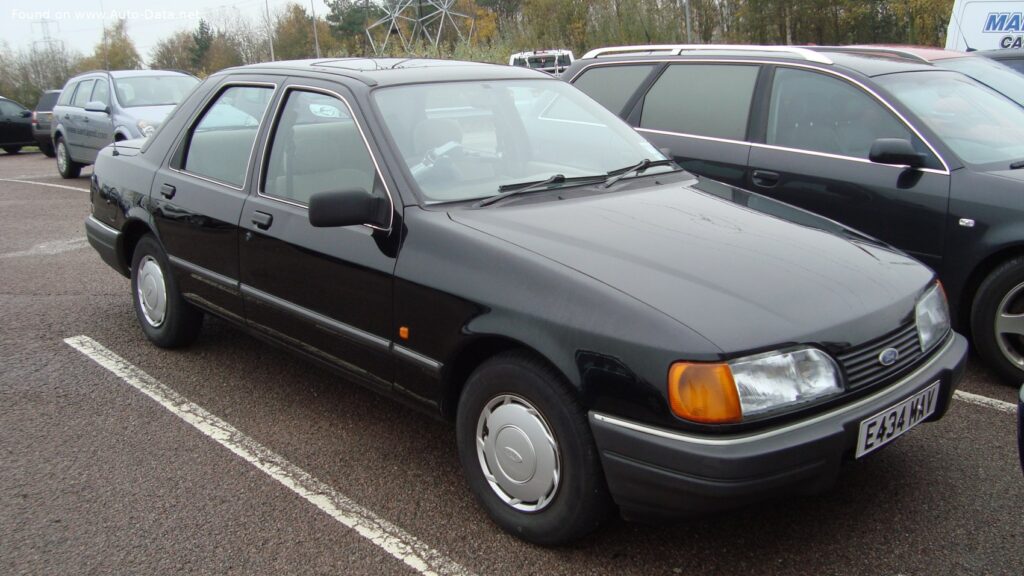
The Ford Sierra Sedan II 1.8, produced from 1988 to 1993, represents a significant evolution in Ford of Europe’s mid-size family car lineup. Positioned as a direct replacement for the aging Taunus and Cortina, the Sierra aimed to modernize Ford’s offerings with a more aerodynamic design and improved mechanicals. While not officially sold in the United States, the Sierra was a crucial model for Ford in Europe, competing with vehicles like the Opel/Vauxhall Vectra, Peugeot 405, and Fiat Tempra. The Sedan II designation refers to a mid-cycle refresh that brought subtle styling changes and mechanical refinements to the original Sierra, solidifying its position in a competitive market segment.
The Ford Sierra Sedan II 1.8: A European Family Sedan
The Sierra marked a departure from Ford’s traditionally boxy designs, embracing a more streamlined, aerodynamic profile. This was a deliberate move to improve fuel efficiency and handling, reflecting the growing importance of these factors in the late 1980s automotive landscape. The Sedan II version further refined this design, offering a more contemporary look and feel. The 1.8-liter engine variant, producing 87 horsepower, was a popular choice for buyers seeking a balance between affordability and reasonable performance. It served as a workhorse for families and commuters across Europe, known for its reliability and practicality.
Engine & Performance
The heart of the Ford Sierra Sedan II 1.8 is a naturally aspirated 1.8-liter inline-four cylinder petrol (gasoline) engine. This engine, while not particularly powerful by modern standards, provided adequate performance for everyday driving. Producing 87 horsepower, the engine delivered a usable amount of torque, making it suitable for both city commuting and longer highway journeys. The engine’s simplicity contributed to its reliability, a key selling point for Ford in the European market. Power is delivered to the rear wheels via a five-speed manual transmission, a common configuration for European cars of this era. The rear-wheel-drive layout, while becoming less common in the broader automotive industry, offered a more engaging driving experience and balanced handling characteristics. Acceleration was modest, but the Sierra 1.8 prioritized fuel economy and dependability over outright speed. The engine’s naturally aspirated design meant it relied solely on atmospheric pressure for intake, resulting in a linear power delivery and predictable response.
Design & Features
The Ford Sierra Sedan II is a four-door, five-seat sedan. Its body style was typical of European family cars of the late 1980s and early 1990s – a practical and functional design prioritizing interior space and usability. The Sedan II received minor cosmetic updates compared to the original Sierra, including revised front and rear fascias, and updated interior trim. The interior was designed with practicality in mind, offering comfortable seating and a reasonably spacious cabin for passengers. Features were relatively basic compared to modern vehicles, reflecting the car’s price point and target market. Safety features were also limited by the standards of the time, typically including seatbelts and a basic braking system. However, the Sierra’s robust construction and predictable handling contributed to its overall safety profile. The car’s design emphasized functionality and affordability, making it a popular choice for families and budget-conscious buyers. The 60-liter (15.85 US gallons) fuel tank provided a reasonable driving range, further enhancing its practicality.
Legacy and Impact
The Ford Sierra, and specifically the Sedan II 1.8, played a significant role in modernizing Ford’s European lineup. It represented a shift towards more aerodynamic designs and improved mechanical efficiency. While not sold in the US, the engineering and design principles employed in the Sierra influenced subsequent Ford models globally. The Sierra’s rear-wheel-drive layout and relatively simple mechanicals made it a popular choice for enthusiasts and a relatively easy car to maintain. It paved the way for the Ford Mondeo, which ultimately replaced the Sierra in 1993 and continued Ford’s success in the European mid-size car segment. The Sierra’s impact can be seen in the evolution of Ford’s design language and its commitment to producing practical, reliable, and affordable vehicles.
Technical Specifications
| Brand | Ford |
| Model | Sierra |
| Generation | Sierra Sedan II |
| Type (Engine) | 1.8 (87 Hp) |
| Start of production | 1988 |
| End of production | 1993 |
| Powertrain Architecture | Internal Combustion engine |
| Body type | Sedan |
| Seats | 5 |
| Doors | 4 |
| Fuel Type | Petrol (Gasoline) |
| Power | 87 Hp |
| Engine aspiration | Naturally aspirated engine |
| Fuel tank capacity | 60 l / 15.85 US gal / 13.2 UK gal |
| Length | 4467 mm / 175.87 in. |
| Width | 1698 mm / 66.85 in. |
| Height | 1407 mm / 55.39 in. |
| Wheelbase | 2608 mm / 102.68 in. |
| Front track | 1452 mm / 57.17 in. |
| Rear track | 1468 mm / 57.8 in. |
| Minimum turning circle | 10 m / 32.81 ft. |
| Drivetrain Architecture | Internal Combustion engine (ICE) drives the rear wheels |
| Drive wheel | Rear wheel drive |
| Number of gears | 5 |
| Type of gearbox | Manual transmission |
| Front brakes | Ventilated discs |
| Rear brakes | Drum |
| Steering type | Steering rack and pinion |