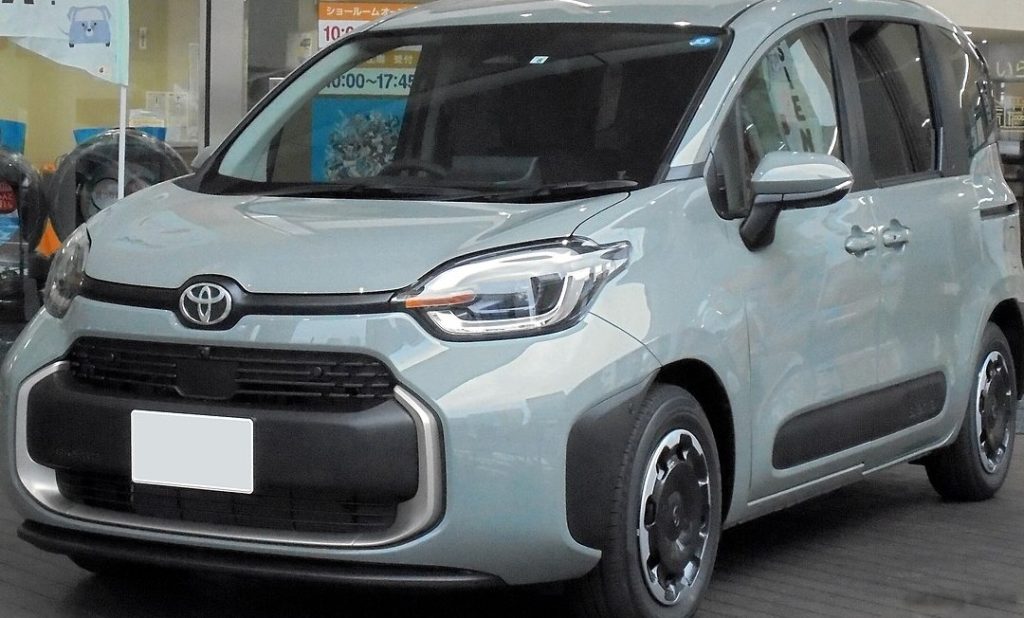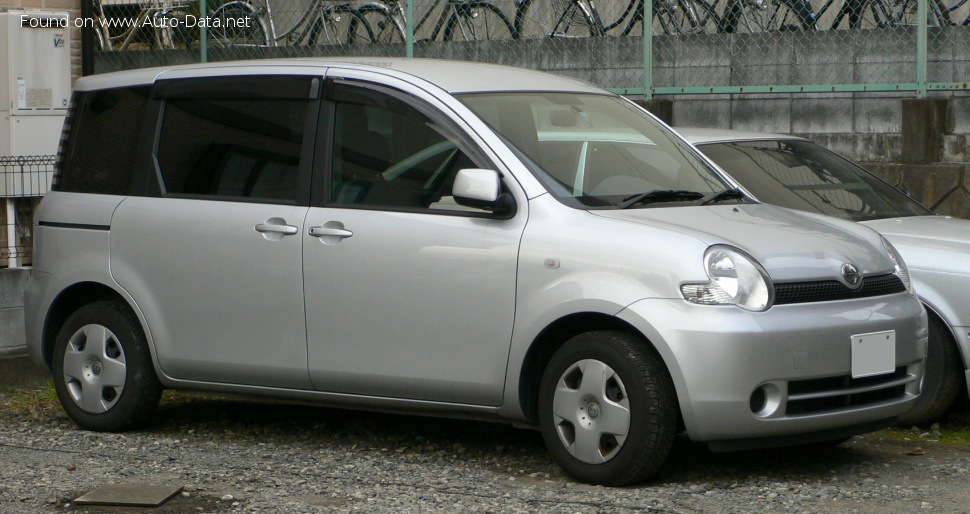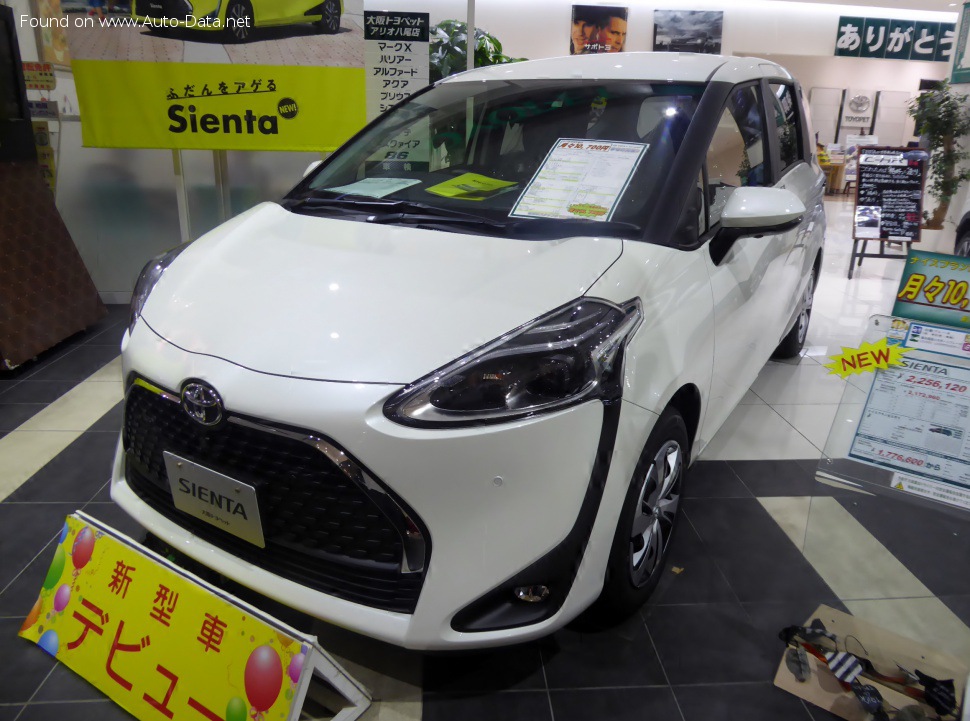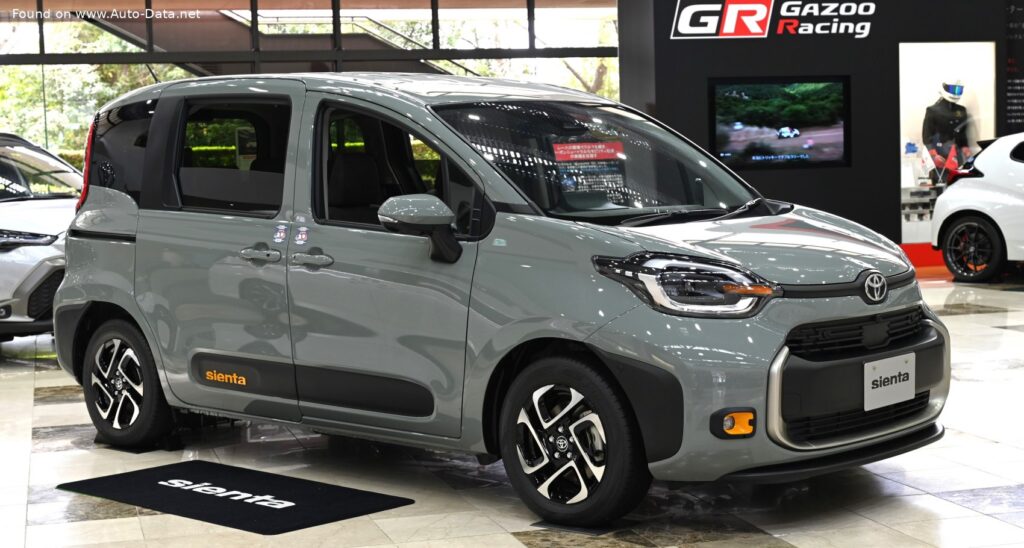
The Toyota Sienta III 1.5 Hybrid E-CVT is a compact minivan primarily designed for the Asian market, particularly Japan and Indonesia. Introduced in August 2022, the third generation Sienta represents a significant evolution in design and technology, focusing on practicality, fuel efficiency, and a spacious interior within a relatively small footprint. While not officially sold in the United States, the Sienta occupies a niche segment popular in densely populated urban areas where maximizing space and minimizing fuel consumption are key priorities. It’s positioned as a family vehicle offering a versatile interior and Toyota’s renowned hybrid technology.
Toyota Sienta III: A Detailed Overview
The Sienta’s appeal lies in its unique blend of minivan functionality and compact car maneuverability. The third generation model moved away from the more boxy styling of its predecessors, adopting a more streamlined and modern aesthetic. This iteration emphasizes a comfortable ride, advanced safety features, and a highly efficient powertrain. The Sienta is known for its sliding rear doors, a feature that simplifies access in tight parking spaces, and its flexible seating arrangements, catering to various passenger and cargo needs.
Engine & Performance
The Toyota Sienta III 1.5 Hybrid utilizes Toyota’s Hybrid Synergy Drive system, a Full Hybrid Electric Vehicle (FHEV) configuration. The powertrain centers around a 1.5-liter (1490 cm3 or 90.93 cu. in.) inline-three cylinder gasoline engine, designated the M15A-FXE. This engine produces 91 horsepower at 5500 rpm and 120 Nm (88.51 lb.-ft.) of torque between 3800-4800 rpm. The internal combustion engine is paired with an electric motor delivering 80 horsepower and 141 Nm (104 lb.-ft.) of torque. Combined, the system generates a total of 116 horsepower. Power is delivered to the front wheels via an electronically controlled continuously variable transmission (E-CVT). This configuration allows for seamless transitions between gasoline and electric power, optimizing fuel efficiency. The weight-to-power ratio is 11.5 kg/Hp, or 87.2 Hp/tonne, and the weight-to-torque ratio is 11.1 kg/Nm, or 90.2 Nm/tonne.
The Sienta’s hybrid system incorporates a Nickel-metal hydride (NiMH) battery, providing energy storage for the electric motor. The vehicle can operate in full electric mode for short distances and at lower speeds, further enhancing fuel economy. The engine also features a Start & Stop System to reduce idling emissions. Fuel economy figures, measured using the WLTC standard, are impressive: 3.52-3.57 l/100 km (66.8 – 65.9 US mpg, 80.3 – 79.1 UK mpg, 28.4 – 28 km/l) combined, 3.55-3.62 l/100 km (66.3 – 65 US mpg, 79.6 – 78 UK mpg, 28.2 – 27.6 km/l) in urban conditions, and 3.59-3.64 l/100 km (65.5 – 64.6 US mpg, 78.7 – 77.6 UK mpg, 27.9 – 27.5 km/l) on the extra urban cycle.
Design & Features
The Toyota Sienta III is a five-door minivan seating five passengers. Its body style is characterized by a relatively short wheelbase (2750 mm or 108.27 in.) and a compact overall length (4260 mm or 167.72 in.), making it easy to maneuver in urban environments. The width is 1695 mm (66.73 in.) and the height is also 1695 mm (66.73 in.). A key design element is the sliding rear doors, which provide easy access to the second-row seats, particularly in confined spaces. The interior is designed with practicality in mind, offering flexible seating configurations and ample storage compartments.
Standard features include an anti-lock braking system (ABS), a steering rack and pinion with hydraulic power steering, and ventilated disc brakes at the front and disc brakes at the rear. The Sienta rides on 185/65 R15 tires mounted on 5.5J x 15 inch wheel rims. The suspension utilizes an independent McPherson strut setup at the front and a torsion beam arrangement at the rear. While specific trim levels and feature availability vary by market, the Sienta generally offers a range of convenience and safety technologies, including advanced driver-assistance systems (ADAS) in higher-spec models.
Technical Specifications
| Brand | Toyota |
| Model | Sienta |
| Generation | Sienta III |
| Type (Engine) | 1.5 (116 Hp) Hybrid E-CVT |
| Start of production | August, 2022 |
| Powertrain Architecture | FHEV (Full Hybrid Electric Vehicle) |
| Body type | Minivan |
| Seats | 5 |
| Doors | 5 |
| Fuel consumption (economy) – urban (WLTC) | 3.55-3.62 l/100 km (66.3 – 65 US mpg, 79.6 – 78 UK mpg, 28.2 – 27.6 km/l) |
| Fuel consumption (economy) – extra urban (WLTC) | 3.59-3.64 l/100 km (65.5 – 64.6 US mpg, 78.7 – 77.6 UK mpg, 27.9 – 27.5 km/l) |
| Fuel consumption (economy) – combined (WLTC) | 3.52-3.57 l/100 km (66.8 – 65.9 US mpg, 80.3 – 79.1 UK mpg, 28.4 – 28 km/l) |
| Fuel Type | Petrol (Gasoline) |
| Weight-to-power ratio | 11.5 kg/Hp, 87.2 Hp/tonne |
| Weight-to-torque ratio | 11.1 kg/Nm, 90.2 Nm/tonne |
| Battery technology | Nickel-metal hydride (NiMH) |
| Electric motor power | 80 Hp |
| Electric motor Torque | 141 Nm (104 lb.-ft.) |
| Electric motor model/code | 1NM |
| Electric motor location | Integrated into the transmission |
| Electric motor type | Synchronous |
| System power | 116 Hp |
| Power | 91 Hp @ 5500 rpm |
| Power per litre | 61.1 Hp/l |
| Torque | 120 Nm @ 3800-4800 rpm (88.51 lb.-ft. @ 3800-4800 rpm) |
| Engine layout | Front, Transverse |
| Engine Model/Code | M15A-FXE |
| Engine displacement | 1490 cm3 (90.93 cu. in.) |
| Number of cylinders | 3 |
| Engine configuration | Inline |
| Cylinder Bore | 80.5 mm (3.17 in.) |
| Piston Stroke | 97.6 mm (3.84 in.) |
| Fuel injection system | Multi-port manifold injection |
| Engine aspiration | Naturally aspirated engine |
| Valvetrain | VVT |
| Kerb Weight | 1330-1350 kg (2932.15 – 2976.24 lbs.) |
| Max. weight | 1625 kg (3582.51 lbs.) |
| Max load | 275-295 kg (606.27 – 650.36 lbs.) |
| Fuel tank capacity | 40 l (10.57 US gal | 8.8 UK gal) |
| Length | 4260 mm (167.72 in.) |
| Width | 1695 mm (66.73 in.) |
| Height | 1695 mm (66.73 in.) |
| Wheelbase | 2750 mm (108.27 in.) |
| Front track | 1490 mm (58.66 in.) |
| Rear (Back) track | 1485 mm (58.46 in.) |
| Ride height (ground clearance) | 140 mm (5.51 in.) |
| Minimum turning circle (turning diameter) | 10 m (32.81 ft.) |
| Drivetrain Architecture | Front wheel drive. FHEV (Full Hybrid Electric Vehicle). The Internal combustion engine (ICE) and electric motor drive the front wheels of the car with the ability to work in full electric or mixed mode. |
| Number of gears and type of gearbox | automatic transmission E-CVT |
| Front suspension | Independent type McPherson |
| Rear suspension | Torsion |
| Front brakes | Ventilated discs |
| Rear brakes | Disc |
| Steering type | Steering rack and pinion |
| Power steering | Hydraulic Steering |
| Tires size | 185/65 R15 |
| Wheel rims size | 5.5J x 15 |