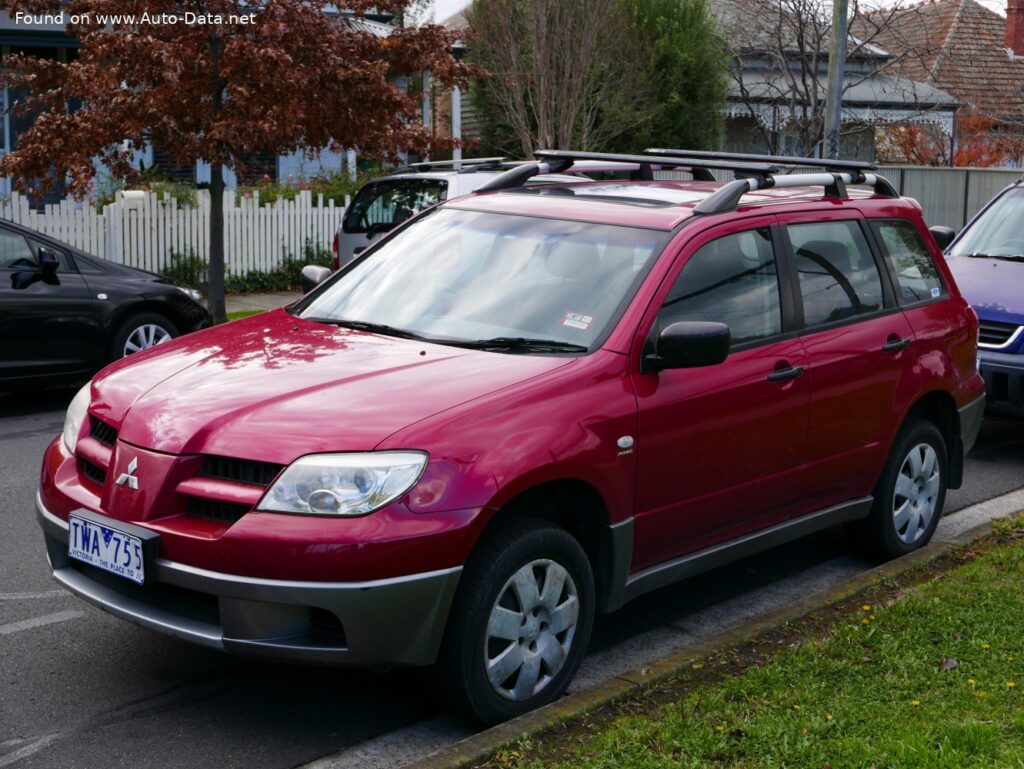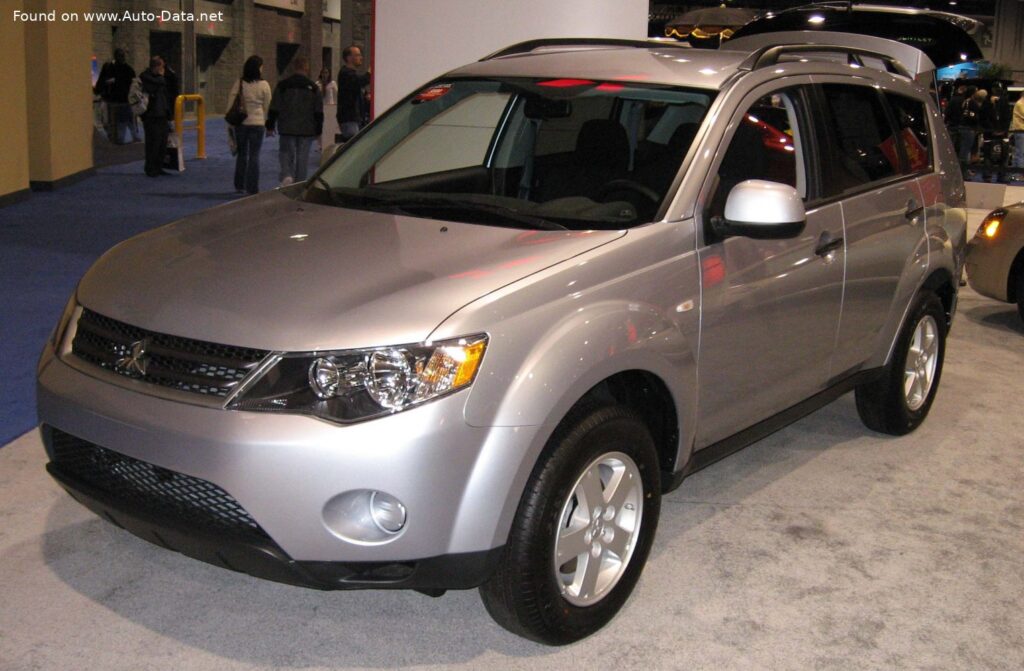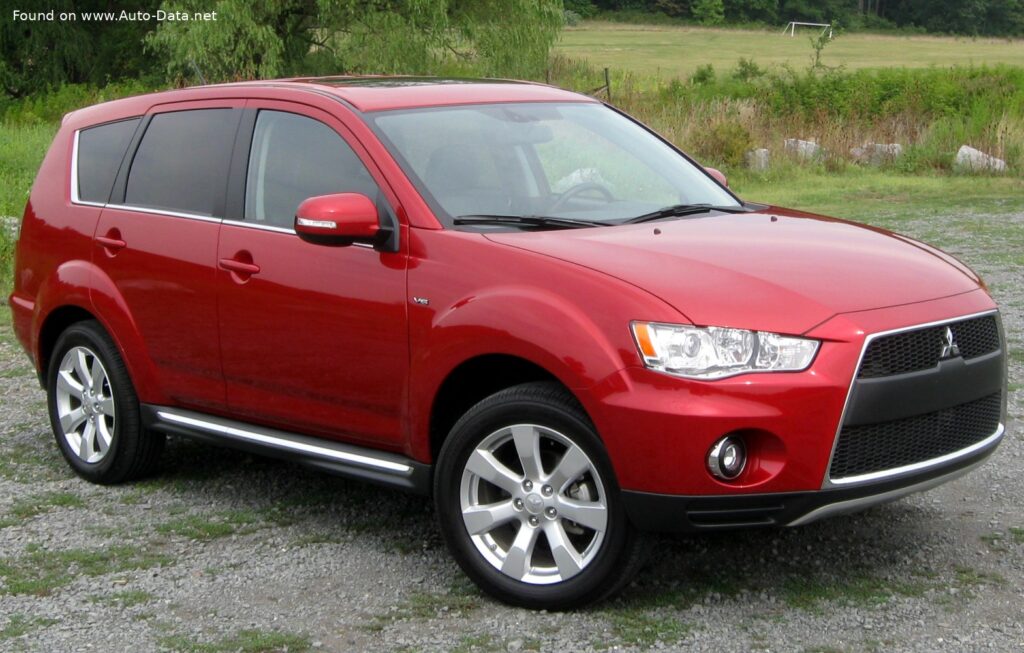
The Mitsubishi Outlander II, particularly the facelifted version introduced in 2009, represents a significant step in Mitsubishi’s foray into the increasingly popular compact SUV and crossover market. Positioned as a practical and versatile vehicle, the Outlander II aimed to offer a blend of passenger comfort, cargo capacity, and available all-wheel drive, appealing to families and individuals seeking a multi-purpose vehicle. This generation, while not initially a major seller in the United States (the Outlander was relatively new to the US market at this time), found a stronger foothold in European and Asian markets, where compact SUVs were gaining considerable traction. The 2009 facelift brought styling updates and refinements to the existing platform, enhancing its competitiveness.
Mitsubishi Outlander II (2009-2012) 2.0
The Outlander II, produced between 2006 and 2012, underwent a notable facelift in 2009. This refresh included changes to the front fascia, interior trim, and available equipment. The 2.0-liter engine variant, producing 147 horsepower, was a key offering in many markets, providing a balance between fuel efficiency and adequate performance for everyday driving. This model year represents a mid-cycle update designed to maintain the Outlander’s appeal as consumer preferences evolved.
Engine & Performance
The 2009 Mitsubishi Outlander II 2.0 is powered by a 1.998-liter (121.93 cubic inches) inline-four cylinder gasoline engine, designated the 4B11. This naturally aspirated engine produces a maximum power output of 147 horsepower at 6000 rpm and 199 Nm (146.77 lb-ft) of torque at 4200 rpm. The engine features a double overhead camshaft (DOHC) valvetrain with Mitsubishi’s MIVEC variable valve timing system, optimizing performance and efficiency across the rev range. Power is delivered to the front wheels via a five-speed manual transmission. Acceleration from 0 to 100 km/h (0-62 mph) takes 10.8 seconds, while 0-60 mph is achieved in approximately 10.3 seconds. The vehicle has a top speed of 184 km/h (114.33 mph). The engine’s power-to-weight ratio is 9.5 kg/Hp, and the torque-to-weight ratio is 7 kg/Nm.
Design & Features
The Mitsubishi Outlander II is a five-door SUV/crossover body style, offering seating for five passengers. The 2009 facelift brought a revised front grille, headlights, and bumper, giving the vehicle a more contemporary appearance. The interior was updated with improved materials and a redesigned dashboard. Key features included ABS (Anti-lock Braking System), ventilated front disc brakes (294mm) and solid rear discs (302mm), hydraulic power steering, and a transverse engine layout. The Outlander II prioritized practicality with a spacious interior and a versatile cargo area. Trunk space ranges from a minimum of 774 liters (27.33 cubic feet) with the rear seats up to a maximum of 1691 liters (59.72 cubic feet) with the rear seats folded down. Ride height (ground clearance) is a respectable 215 mm (8.46 inches), providing adequate capability for navigating varied road conditions. The vehicle’s dimensions are 4665 mm (183.66 inches) in length, 1800 mm (70.87 inches) in width, and 1680 mm (66.14 inches) in height.
Technical Specifications
| Brand | Mitsubishi |
| Model | Outlander |
| Generation | Outlander II (facelift 2009) |
| Type (Engine) | 2.0 (147 Hp) |
| Start of production | 2009 |
| End of production | 2012 |
| Powertrain Architecture | Internal Combustion engine |
| Body type | SUV, Crossover |
| Seats | 5 |
| Doors | 5 |
| Fuel consumption (urban) | 9.7 l/100 km (24.2 US mpg, 29.1 UK mpg, 10.3 km/l) |
| Fuel consumption (extra urban) | 6.3 l/100 km (37.3 US mpg, 44.8 UK mpg, 15.9 km/l) |
| Fuel consumption (combined) | 7.5 l/100 km (31.4 US mpg, 37.7 UK mpg, 13.3 km/l) |
| CO2 emissions | 175 g/km |
| Fuel Type | Petrol (Gasoline) |
| Acceleration 0-100 km/h | 10.8 sec |
| Acceleration 0-62 mph | 10.8 sec |
| Acceleration 0-60 mph | 10.3 sec |
| Maximum speed | 184 km/h (114.33 mph) |
| Emission standard | Euro 5 |
| Weight-to-power ratio | 9.5 kg/Hp |
| Weight-to-torque ratio | 7 kg/Nm |
| Power | 147 Hp @ 6000 rpm |
| Torque | 199 Nm @ 4200 rpm (146.77 lb.-ft. @ 4200 rpm) |
| Engine layout | Front, Transverse |
| Engine Model/Code | 4B11 |
| Engine displacement | 1998 cm3 (121.93 cu. in.) |
| Number of cylinders | 4 |
| Engine configuration | Inline |
| Cylinder Bore | 86 mm (3.39 in.) |
| Piston Stroke | 86 mm (3.39 in.) |
| Compression ratio | 10:1 |
| Number of valves per cylinder | 4 |
| Fuel injection system | Multi-port manifold injection |
| Engine aspiration | Naturally aspirated |
| Valvetrain | DOHC, MIVEC |
| Engine oil capacity | 4.3 l (4.54 US qt | 3.78 UK qt) |
| Coolant capacity | 7.5 l (7.93 US qt | 6.6 UK qt) |
| Kerb Weight | 1400 kg (3086.47 lbs.) |
| Max. weight | 2070 kg (4563.57 lbs.) |
| Max load | 670 kg (1477.1 lbs.) |
| Trunk (boot) space – minimum | 774 l (27.33 cu. ft.) |
| Trunk (boot) space – maximum | 1691 l (59.72 cu. ft.) |
| Fuel tank capacity | 63 l (16.64 US gal | 13.86 UK gal) |
| Max. roof load | 80 kg (176.37 lbs.) |
| Permitted trailer load (braked) | 1600 kg (3527.4 lbs.) |
| Permitted trailer load (unbraked) | 750 kg (1653.47 lbs.) |
| Permitted towbar download | 80 kg (176.37 lbs.) |
| Length | 4665 mm (183.66 in.) |
| Width | 1800 mm (70.87 in.) |
| Height | 1680 mm (66.14 in.) |
| Wheelbase | 2670 mm (105.12 in.) |
| Front track | 1540 mm (60.63 in.) |
| Rear track | 1540 mm (60.63 in.) |
| Ride height (ground clearance) | 215 mm (8.46 in.) |
| Minimum turning circle | 10.6 m (34.78 ft.) |
| Drivetrain | Front wheel drive |
| Number of gears | 5 |
| Gearbox type | Manual transmission |
| Front suspension | Independent type McPherson, Transverse stabilizer |
| Rear suspension | Independent multi-link suspension, Transverse stabilizer |
| Front brakes | Ventilated discs, 294 mm |
| Rear brakes | Disc, 302 mm |
| Steering type | Steering rack and pinion |
| Power steering | Hydraulic |
| Tires size | 215/70 R16 |
| Wheel rims size | 6.5J x 16 |