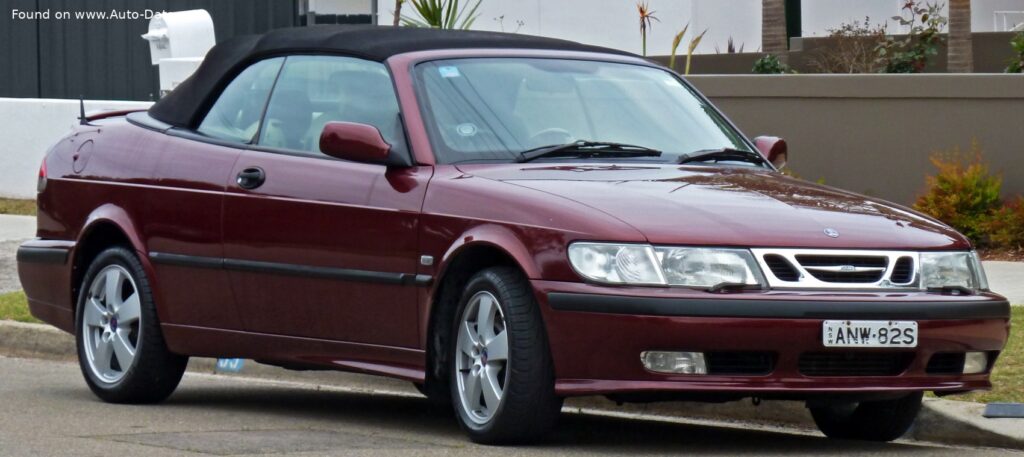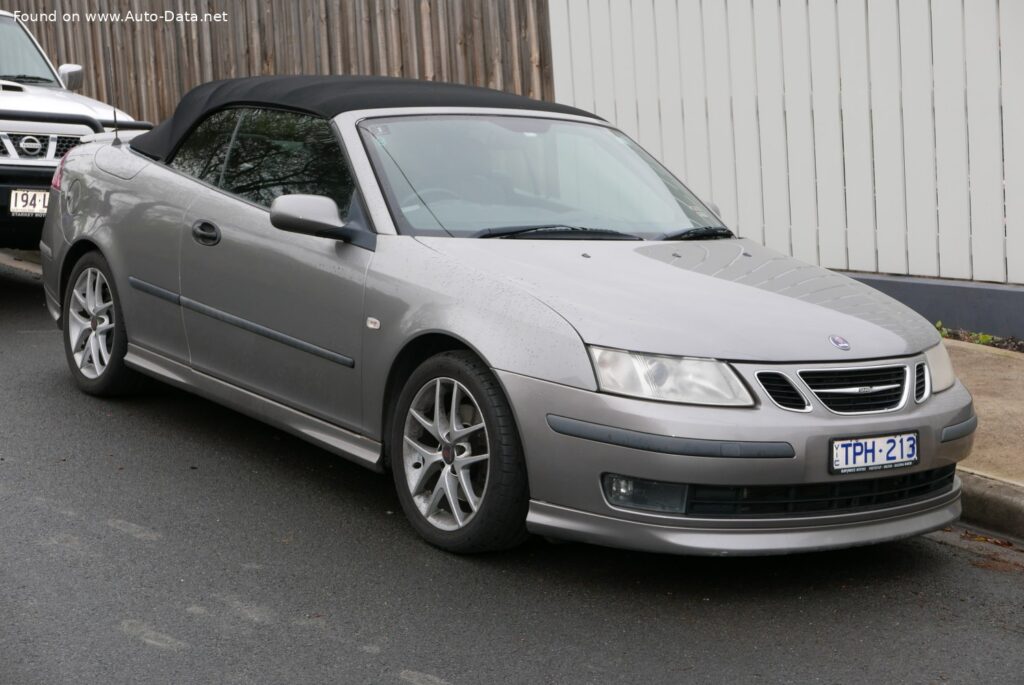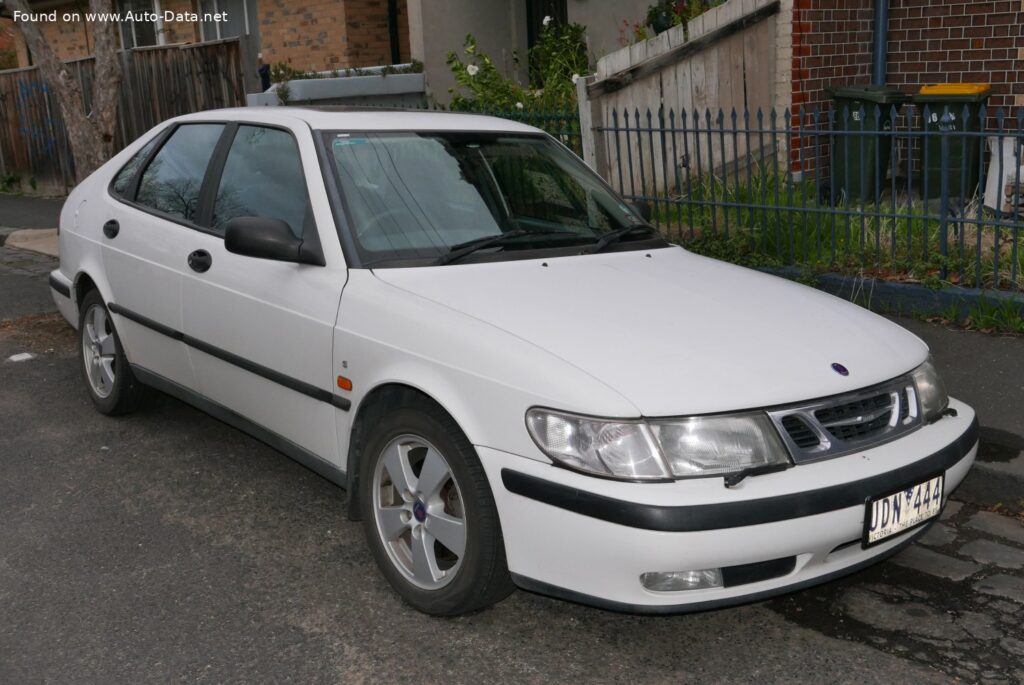
The Saab 9-3, specifically the first generation (1998-2002) 2.3i model, represents a pivotal point in the Swedish automaker’s history. Positioned as a compact executive car, the 9-3 aimed to blend Scandinavian practicality with a sporty driving experience. This generation, known internally as the 9-3 I, replaced the aging Saab 900 and served as a crucial model for Saab as it navigated a changing automotive landscape. Available in both 3-door hatchback and 5-door saloon (sedan) configurations, the 9-3 2.3i offered a unique alternative to more mainstream European and Japanese competitors.
Saab 9-3 I 2.3i: A Detailed Overview
The 9-3 I 2.3i was designed to appeal to drivers seeking a vehicle that prioritized safety, comfort, and a distinctive aesthetic. While Saab ultimately faced financial difficulties and was later acquired by General Motors, the 9-3 I established a strong foundation for the model line and showcased Saab’s commitment to innovative engineering and design. It was primarily sold in Europe, Australia, and select other markets, never achieving significant sales volume in the United States.
Engine & Performance
At the heart of the 9-3 2.3i lies a naturally aspirated, 2.3-liter inline-four cylinder gasoline engine. This engine, designated the B234i, produced 150 horsepower at 5700 rpm and 210 Nm (154.89 lb-ft) of torque at 4300 rpm. While not exceptionally powerful by modern standards, the engine provided adequate performance for everyday driving and offered a respectable power-to-weight ratio of 8.8 kg/Hp. The engine featured multi-port fuel injection and a double overhead camshaft (DOHC) valvetrain, contributing to its smooth operation and reasonable fuel efficiency.
Power was delivered to the front wheels via a five-speed manual transmission. Acceleration from 0 to 100 km/h (0-62 mph) took approximately 10 seconds, with a 0-60 mph time of around 9.5 seconds. The 9-3 2.3i had a maximum speed of 210 km/h (130.49 mph). Fuel economy was rated at 13.2 l/100 km (17.8 US mpg) in urban conditions and 7.1 l/100 km (33.1 US mpg) on the extra-urban cycle.
Design & Features
The Saab 9-3 I showcased a distinctive design language that set it apart from its competitors. The hatchback body style, particularly the 3-door variant, offered a sporty and practical profile. The car’s front end was characterized by its rounded headlights and Saab’s signature grille. Inside, the 9-3 prioritized driver comfort and ergonomics. The interior layout was clean and functional, with a focus on providing a safe and enjoyable driving experience.
Safety was a key consideration in the 9-3’s design. It included standard Anti-lock Braking System (ABS) and a robust chassis structure. The 9-3 offered a trunk (boot) space ranging from 494 liters (17.45 cu. ft.) with the rear seats up to 1314 liters (46.4 cu. ft.) with the seats folded down, providing ample cargo capacity. The vehicle’s dimensions were 4629 mm (182.24 in) in length, 1711 mm (67.36 in) in width, and 1428 mm (56.22 in) in height. The wheelbase measured 2605 mm (102.56 in).
Technical Specifications
| General Information | |
| Brand | Saab |
| Model | 9-3 |
| Generation | 9-3 I |
| Type (Engine) | 2.3 i (150 Hp) |
| Start of production | 1998 |
| End of production | 2002 |
| Powertrain Architecture | Internal Combustion engine |
| Body type | Hatchback |
| Seats | 5 |
| Doors | 3-5 |
| Performance Specs | |
| Fuel consumption (urban) | 13.2 l/100 km (17.8 US mpg) |
| Fuel consumption (extra urban) | 7.1 l/100 km (33.1 US mpg) |
| Fuel Type | Petrol (Gasoline) |
| Acceleration 0-100 km/h | 10 sec |
| Acceleration 0-62 mph | 10 sec |
| Acceleration 0-60 mph | 9.5 sec |
| Maximum speed | 210 km/h (130.49 mph) |
| Weight-to-power ratio | 8.8 kg/Hp |
| Weight-to-torque ratio | 6.3 kg/Nm |
| Engine Specs | |
| Power | 150 Hp @ 5700 rpm |
| Power per litre | 65.5 Hp/l |
| Torque | 210 Nm @ 4300 rpm (154.89 lb.-ft. @ 4300 rpm) |
| Engine layout | Front, Transverse |
| Engine Model/Code | B234i |
| Engine displacement | 2290 cm3 (139.74 cu. in.) |
| Number of cylinders | 4 |
| Engine configuration | Inline |
| Cylinder Bore | 90 mm (3.54 in.) |
| Piston Stroke | 90 mm (3.54 in.) |
| Compression ratio | 10.5:1 |
| Number of valves per cylinder | 4 |
| Fuel injection system | Multi-port manifold injection |
| Engine aspiration | Naturally aspirated |
| Valvetrain | DOHC |
| Engine oil capacity | 4 l (4.23 US qt | 3.52 UK qt) |
| Coolant | 8.5 l (8.98 US qt | 7.48 UK qt) |
| Space, Volume and Weights | |
| Kerb Weight | 1320 kg (2910.1 lbs.) |
| Max. weight | 1880 kg (4144.69 lbs.) |
| Max load | 560 kg (1234.59 lbs.) |
| Trunk (boot) space – minimum | 494 l (17.45 cu. ft.) |
| Trunk (boot) space – maximum | 1314 l (46.4 cu. ft.) |
| Fuel tank capacity | 68 l (17.96 US gal | 14.96 UK gal) |
| Dimensions | |
| Length | 4629 mm (182.24 in.) |
| Width | 1711 mm (67.36 in.) |
| Height | 1428 mm (56.22 in.) |
| Wheelbase | 2605 mm (102.56 in.) |
| Front track | 1452 mm (57.17 in.) |
| Rear track | 1442 mm (56.77 in.) |
| Drivetrain, Brakes & Suspension | |
| Drivetrain Architecture | ICE, Front wheel drive |
| Drive wheel | Front wheel drive |
| Number of gears | 5 gears, manual transmission |
| Front suspension | Spring Strut |
| Rear suspension | Coil spring |
| Front brakes | Ventilated discs |
| Rear brakes | Disc |
| Assisting systems | ABS |
| Steering type | Steering rack and pinion |
| Power steering | Hydraulic |
| Tires size | 195/60 R15 |
| Wheel rims size | 15 |