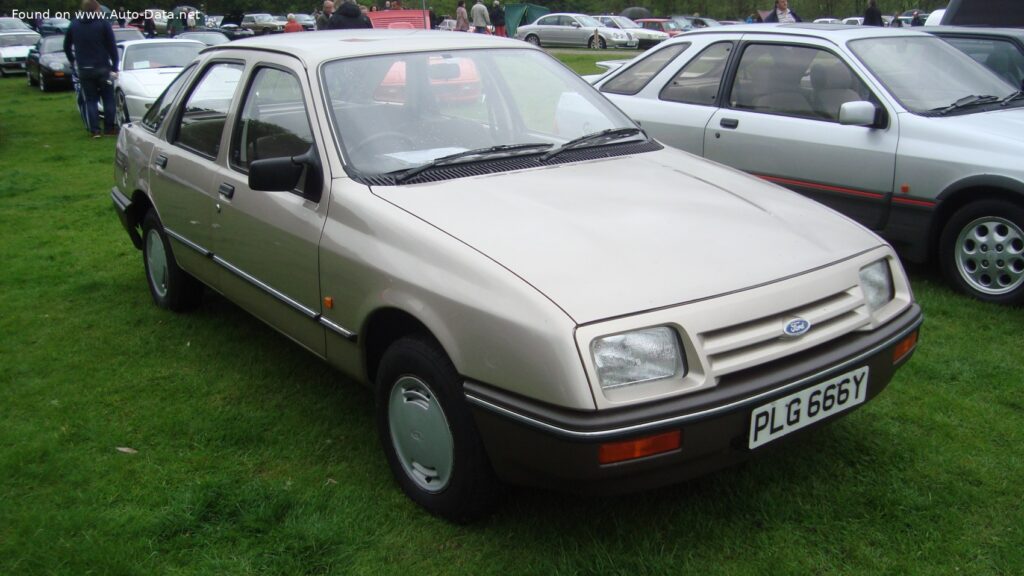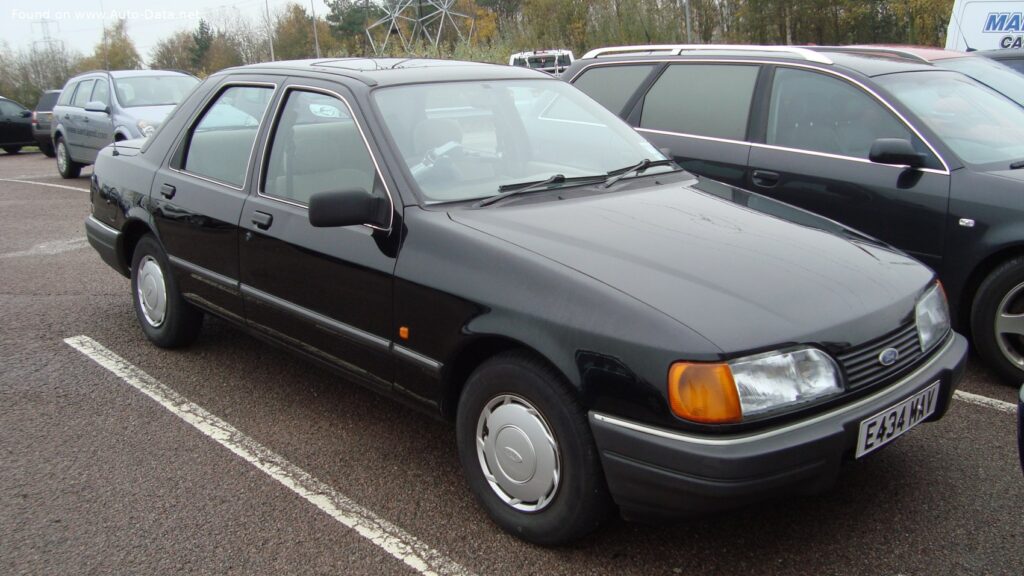
The Ford Sierra Sedan II 1.8, produced between 1987 and 1988, represents a significant refinement of the Sierra line, a vehicle that played a crucial role in Ford of Europe’s mid-size offerings. Replacing the aging Taunus and Cortina, the Sierra was a thoroughly modern design for its time, emphasizing aerodynamics and space efficiency. The Sedan II variant, specifically the 1.8-liter model producing 90 horsepower, aimed to provide a balance of affordability, practicality, and reasonable performance for the European family car market. While never officially sold in the United States, the Sierra’s engineering and design philosophies influenced Ford’s global product development, and it remains a fondly remembered vehicle among enthusiasts.
The Ford Sierra Sedan II 1.8: A European Family Sedan
The Sierra was a pivotal model for Ford Europe, representing a departure from the more boxy designs of its predecessors. Introduced in 1982, it was a clean-sheet design, prioritizing aerodynamic efficiency to improve fuel economy – a growing concern in the late 1970s and early 1980s. The Sedan II, launched in 1987, incorporated several updates and refinements over the original Sierra, including subtle styling changes and improvements to the interior. The 1.8-liter engine option was positioned as a mainstream choice, offering a good compromise between performance and fuel consumption for typical family use. The Sierra competed directly with vehicles like the Opel Ascona, Volkswagen Passat, and Peugeot 505 in the European market.
Engine & Performance
The heart of the Sierra Sedan II 1.8 is a naturally aspirated 1.8-liter inline-four cylinder engine, designated as the R2A or RED engine code. This engine produced 90 horsepower, providing adequate, though not exceptional, performance for the vehicle’s weight and intended purpose. The engine’s design focused on reliability and fuel efficiency rather than outright power. It featured a single overhead camshaft and a two-barrel carburetor, typical for engines of this era. Power was delivered to the rear wheels via a five-speed manual transmission, the standard configuration for this model. The rear-wheel-drive layout was a traditional feature of European sedans at the time, offering a balanced driving experience. While acceleration figures weren’t particularly impressive by modern standards, the Sierra 1.8 offered sufficient power for comfortable cruising and everyday driving. The engine’s relatively simple design made it relatively easy to maintain and repair, contributing to the Sierra’s reputation for durability.
Design & Features
The Ford Sierra Sedan II boasted a sleek, aerodynamic profile for its time. The four-door sedan body style provided practical access and ample space for passengers and luggage. The interior was designed with functionality in mind, offering comfortable seating for five occupants. While not lavishly equipped by today’s standards, the Sierra Sedan II 1.8 included features considered standard for a mid-range family car in the late 1980s. These included a basic instrument cluster, cloth upholstery, and a heating and ventilation system. Safety features were relatively limited compared to modern vehicles, consisting primarily of seatbelts and a robust chassis structure. The Sierra’s design emphasized practicality and affordability, making it a popular choice for families and commuters. The car’s relatively lightweight construction contributed to its fuel efficiency and handling characteristics. The exterior styling was characterized by clean lines and a minimalist aesthetic, reflecting the design trends of the era.
Technical Specifications
| Brand | Ford |
| Model | Sierra |
| Generation | Sierra Sedan II |
| Type (Engine) | 1.8 (90 Hp) |
| Start of production | 1987 |
| End of production | 1988 |
| Powertrain Architecture | Internal Combustion engine |
| Body type | Sedan |
| Seats | 5 |
| Doors | 4 |
| Fuel Type | Petrol (Gasoline) |
| Power | 90 Hp |
| Engine Model/Code | R2A, RED |
| Engine aspiration | Naturally aspirated engine |
| Engine oil capacity | 3.8 l / 4.02 US qt | 3.34 UK qt |
| Coolant capacity | 8 l / 8.45 US qt | 7.04 UK qt |
| Fuel tank capacity | 60 l / 15.85 US gal | 13.2 UK gal |
| Length | 4467 mm / 175.87 in. |
| Width | 1698 mm / 66.85 in. |
| Height | 1407 mm / 55.39 in. |
| Wheelbase | 2608 mm / 102.68 in. |
| Front track | 1452 mm / 57.17 in. |
| Rear track | 1468 mm / 57.8 in. |
| Minimum turning circle | 10 m / 32.81 ft. |
| Drivetrain Architecture | Rear wheel drive. Internal Combustion engine (ICE) |
| Drive wheel | Rear wheel drive |
| Number of gears and type of gearbox | 5 gears, manual transmission |
| Front brakes | Ventilated discs |
| Rear brakes | Drum |
| Steering type | Steering rack and pinion |
The Ford Sierra Sedan II 1.8, while not a performance icon, represents a significant chapter in Ford’s European history. Its blend of practicality, affordability, and relatively modern design made it a popular choice for families in the late 1980s. The Sierra’s influence extended beyond Europe, contributing to the development of Ford’s global product strategy and paving the way for future generations of family sedans.