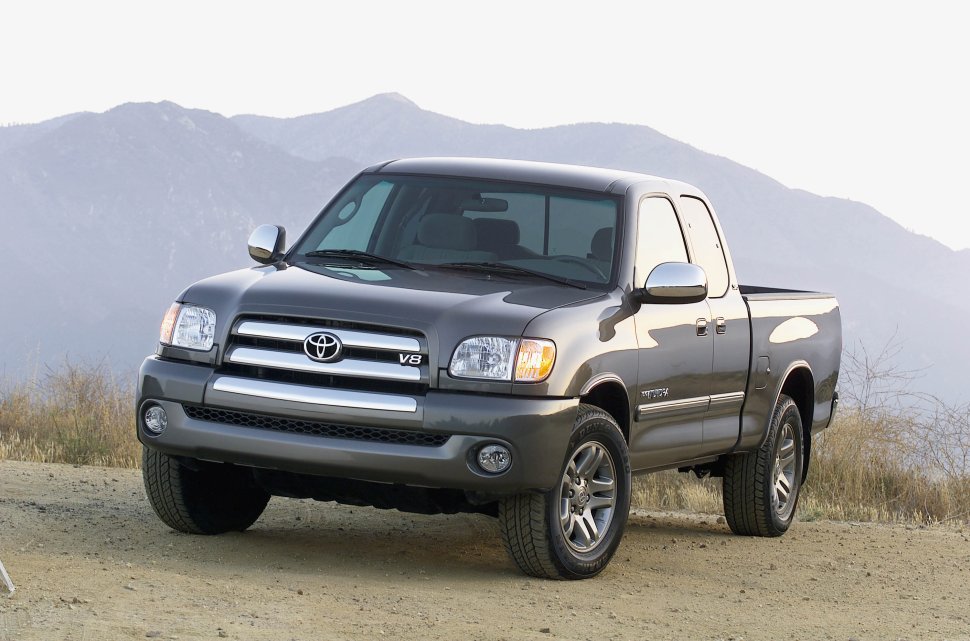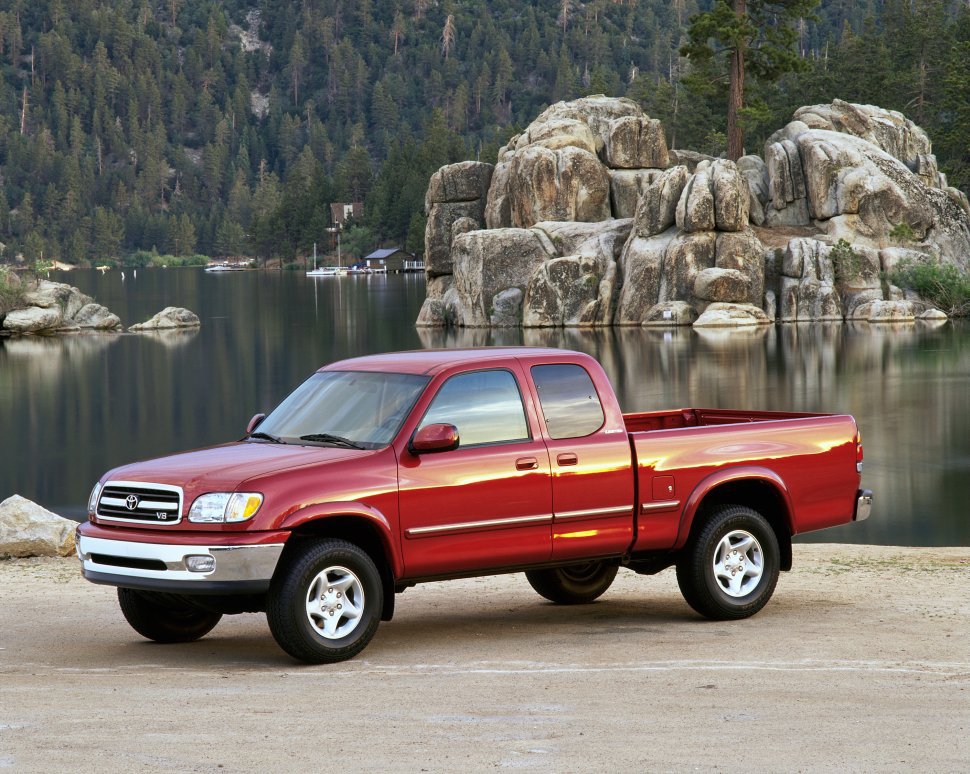
The Toyota Tundra, launched in North America in 1999, represented Toyota’s entry into the full-size pickup truck market. Designed specifically to appeal to American truck buyers, the first-generation Tundra (designated Tundra I, produced from 1999-2006) aimed to offer a blend of Japanese reliability, comfortable features, and capable performance. This article focuses on the early models of the Tundra I, specifically those equipped with the 3.4-liter V6 engine and four-wheel drive, produced between 1999 and 2002. These trucks were positioned as a more compact alternative to the dominant domestic full-size pickups, offering a different driving experience and a focus on refinement.
Toyota Tundra I 3.4 V6: An Overview
The initial Tundra models were available in various configurations, including regular cab, extended cab (Access Cab), and bed lengths. The 3.4-liter V6 engine was the base engine option, providing a balance of power and fuel efficiency for everyday use. The four-wheel-drive system, a key feature for many buyers, enhanced the Tundra’s capability in various weather conditions and off-road scenarios. The Tundra I sought to establish Toyota as a serious contender in the highly competitive North American truck market, and it laid the foundation for the Tundra’s continued success in subsequent generations.
Engine & Performance
The heart of the early Tundra I models was the 5VZ-FE 3.4-liter inline-six cylinder engine. This naturally aspirated engine produced 190 horsepower at 4800 rpm and 298 Nm (219.79 lb.-ft.) of torque at 3600 rpm. The engine featured a double overhead camshaft (DOHC) valvetrain with four valves per cylinder and multi-port fuel injection. While not the most powerful engine in its class, the 5VZ-FE was known for its durability and smooth operation. The engine’s longitudinal front-engine layout contributed to a balanced weight distribution. Power was delivered to all four wheels through a four-speed automatic transmission. The weight-to-power ratio of 10.4 kg/Hp (95.8 Hp/tonne) and weight-to-torque ratio of 6.7 kg/Nm (150.2 Nm/tonne) indicated a reasonably efficient powertrain for its time. Fuel economy was rated at approximately 15.6 l/100 km (15.1 US mpg, 18.1 UK mpg, 6.4 km/l) combined, reflecting the demands of a full-size truck with a four-wheel-drive system.
Design & Features
The Toyota Tundra I was offered as a traditional pick-up truck with a separate body-on-frame construction. It featured a four-door cabin with seating for five passengers. The exterior design was conservative, aiming to blend in with the established aesthetic of American trucks. The truck’s dimensions – a length of 5525 mm (217.52 in.), a width of 1910 mm (75.2 in.), and a height ranging from 1820-1830 mm (71.65 – 72.05 in.) – positioned it as a mid-size offering within the full-size segment. A key feature was its relatively generous wheelbase of 3260 mm (128.35 in.), contributing to a comfortable ride. Ground clearance was a substantial 290 mm (11.42 in.), enhancing off-road capability.
Safety features for the time included an Anti-lock Braking System (ABS). Interior features focused on practicality and comfort, with options for air conditioning, power windows and locks, and a basic audio system. The Tundra’s interior was generally considered more refined than some of its domestic competitors, with a focus on build quality and ergonomics. The truck’s maximum load capacity was 738 kg (1627.01 lbs), and it could tow a braked trailer weighing up to 2245 kg (4949.38 lbs).
Technical Specifications
| Brand | Toyota |
| Model | Tundra |
| Generation | Tundra I |
| Type (Engine) | 3.4 V6 (190 Hp) 4×4 Automatic |
| Start of production | May, 1999 |
| End of production | 2002 |
| Powertrain Architecture | Internal Combustion engine |
| Body type | Pick-up |
| Seats | 5 |
| Doors | 4 |
| Fuel consumption (economy) – urban | 16.8 l/100 km (14 US mpg, 16.8 UK mpg, 6 km/l) |
| Fuel consumption (economy) – extra urban | 14.7 l/100 km (16 US mpg, 19.2 UK mpg, 6.8 km/l) |
| Fuel consumption (economy) – combined | 15.6 l/100 km (15.1 US mpg, 18.1 UK mpg, 6.4 km/l) |
| Fuel Type | Petrol (Gasoline) |
| Weight-to-power ratio | 10.4 kg/Hp (95.8 Hp/tonne) |
| Weight-to-torque ratio | 6.7 kg/Nm (150.2 Nm/tonne) |
| Power | 190 Hp @ 4800 rpm |
| Power per litre | 56.2 Hp/l |
| Torque | 298 Nm @ 3600 rpm (219.79 lb.-ft. @ 3600 rpm) |
| Engine layout | Front, Longitudinal |
| Engine Model/Code | 5VZ-FE |
| Engine displacement | 3378 cm3 (206.14 cu. in.) |
| Number of cylinders | 6 |
| Engine configuration | Inline |
| Cylinder Bore | 93.4 mm (3.68 in.) |
| Piston Stroke | 82 mm (3.23 in.) |
| Compression ratio | 9.6:1 |
| Number of valves per cylinder | 4 |
| Fuel injection system | Multi-port manifold injection |
| Engine aspiration | Naturally aspirated engine |
| Valvetrain | DOHC |
| Engine oil capacity | 5.2 l (5.49 US qt | 4.58 UK qt) |
| Coolant | 9.9 l (10.46 US qt | 8.71 UK qt) |
| Kerb Weight | 1984 kg (4373.97 lbs.) |
| Max. weight | 2722 kg (6000.98 lbs.) |
| Max load | 738 kg (1627.01 lbs.) |
| Fuel tank capacity | 100 l (26.42 US gal | 22 UK gal) |
| Permitted trailer load with brakes (12%) | 2245 kg (4949.38 lbs.) |
| Length | 5525 mm (217.52 in.) |
| Width | 1910 mm (75.2 in.) |
| Height | 1820-1830 mm (71.65 – 72.05 in.) |
| Wheelbase | 3260 mm (128.35 in.) |
| Front track | 1675 mm (65.94 in.) |
| Rear (Back) track | 1648 mm (64.88 in.) |
| Ride height (ground clearance) | 290 mm (11.42 in.) |
| Minimum turning circle (turning diameter) | 13.5 m (44.29 ft.) |
| Approach angle | 28° |
| Departure angle | 23° |
| Drive wheel | All wheel drive (4×4) |
| Number of gears and type of gearbox | 4 gears, automatic transmission |
| Front suspension | Double wishbone |
| Front brakes | Ventilated discs |
| Rear brakes | Drum |
| Assisting systems | ABS (Anti-lock braking system) |
| Tires size | 245/70 R16; 265/70 R16 |
| Wheel rims size | 7.0J x 16 |
The Toyota Tundra I with the 3.4-liter V6 engine and four-wheel drive offered a compelling package for buyers seeking a reliable and capable full-size pickup truck. While it may not have been the most powerful or feature-rich option available, its blend of durability, comfort, and practicality helped establish Toyota as a significant player in the North American truck market.