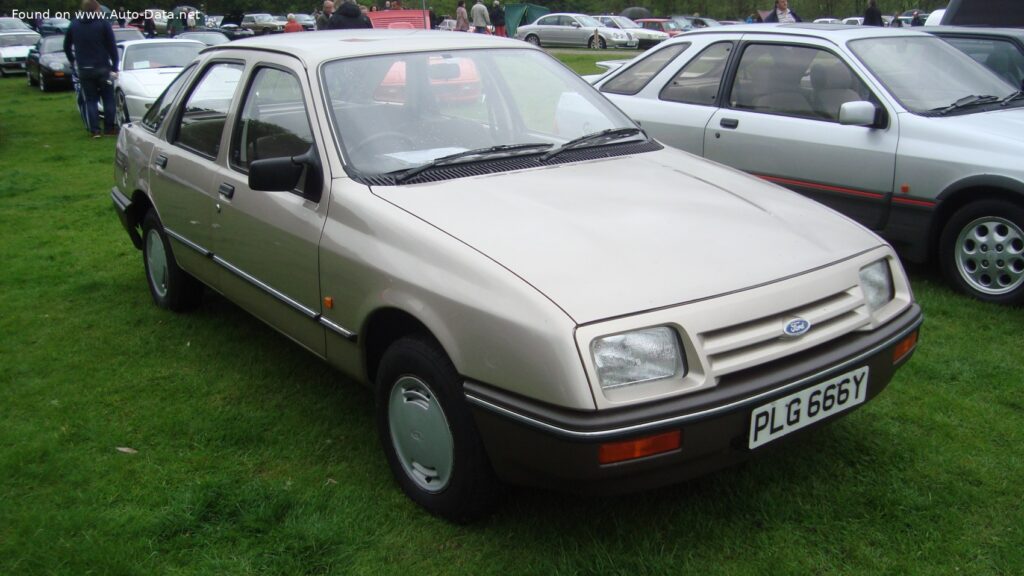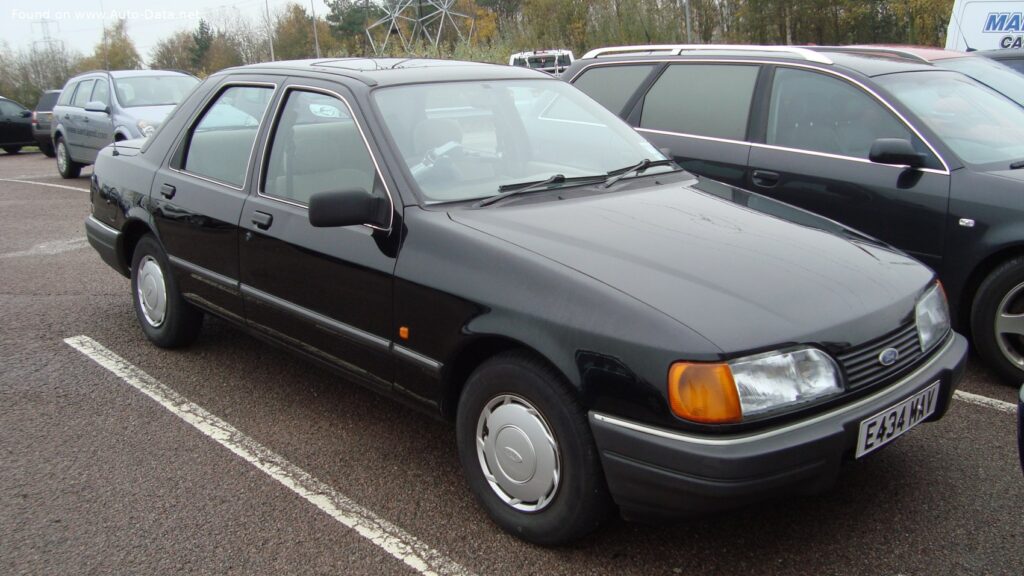
The Ford Sierra Sedan II 2.0 i 16V, produced from 1987 to 1993, represents a significant evolution in Ford of Europe’s mid-size family car lineup. The Sierra, intended as a modern replacement for the aging Cortina and Taunus models, was a departure from traditional Ford designs, embracing a more aerodynamic and contemporary aesthetic. The Sedan II iteration, particularly the 2.0 i 16V variant, offered a blend of performance and practicality aimed at the European driver seeking a comfortable and relatively sporty saloon. While never officially sold in the United States, the Sierra was a crucial model for Ford in Europe, competing with vehicles like the Opel/Vauxhall Vectra, Peugeot 405, and Fiat Tempra. This model marked a shift towards more sophisticated engine technology and a greater emphasis on driving dynamics within the Ford range.
The Ford Sierra Sedan II 2.0 i 16V: A European Family Car
The Sierra project, internally codenamed “Project Sigma,” was a comprehensive redesign. The first-generation Sierra, launched in 1982, was initially met with mixed reactions due to its radical styling, a stark contrast to the boxy designs prevalent at the time. However, its aerodynamic efficiency was a major advantage. The Sedan II, introduced with various updates throughout its production run, refined the original design and addressed some of the early criticisms. The 2.0 i 16V model specifically targeted drivers who desired a more engaging driving experience without sacrificing the practicality expected of a family saloon. It represented a step up in performance compared to the lower-spec Sierra models, thanks to its multi-valve engine and improved fuel injection system.
Engine & Performance
The heart of the Sierra Sedan II 2.0 i 16V is its 2.0-liter, naturally aspirated inline-four cylinder engine. This engine, a key feature of this variant, produced 116 horsepower. The “16V” designation refers to the engine’s four valves per cylinder configuration – a significant advancement over the traditional two valves per cylinder setup. This design allowed for improved airflow into and out of the combustion chambers, resulting in increased power output and a broader, more usable powerband. The engine utilized Bosch fuel injection, contributing to efficient fuel delivery and smooth operation.
Power was delivered to the rear wheels via a five-speed manual transmission, although a three-speed automatic transmission was also available as an option. The rear-wheel-drive layout, while becoming less common in the era, provided a balanced driving experience and contributed to the Sierra’s relatively sporty handling characteristics. Performance figures for the 2.0 i 16V were respectable for its time, with a 0-60 mph (0-97 km/h) time estimated around 9.5 to 10.5 seconds, and a top speed of approximately 120-125 mph (193-201 km/h). While not a sports car, the 2.0 i 16V offered a noticeable performance upgrade over the base Sierra models, making it a more enjoyable vehicle to drive on both city streets and open highways. The engine’s torque output, while not exceptionally high, was sufficient for comfortable cruising and overtaking maneuvers.
Design & Features
The Sierra Sedan II retained the aerodynamic silhouette of the original Sierra, but with subtle refinements to the bodywork. The four-door saloon body style offered practical access to the rear seats and a reasonably sized trunk. The exterior design, while initially controversial, was undeniably modern for its time, featuring clean lines and a relatively low-slung profile. Interior appointments were functional and comfortable, reflecting the car’s role as a family vehicle. The dashboard layout was straightforward, with clearly labeled controls and a focus on usability.
Safety features, while not as comprehensive as those found in modern vehicles, were improving during the Sierra’s production run. Later models incorporated features such as seatbelt pretensioners and side impact protection. Standard equipment on the 2.0 i 16V typically included power steering, central locking, and electric windows. Optional extras could include a sunroof, alloy wheels, and upgraded audio systems. The Sierra’s suspension system, featuring independent front suspension and a live rear axle, provided a comfortable ride while maintaining reasonable handling capabilities. The steering was precise and responsive, contributing to the car’s overall driving enjoyment. The Sierra’s build quality was generally considered to be good, although some examples suffered from rust issues, particularly in regions with harsh winters and salted roads.
Technical Specifications
| Brand | Ford |
| Model | Sierra |
| Generation | Sierra Sedan II |
| Type (Engine) | 2.0 i 16V (116 Hp) |
| Start of production | 1987 |
| End of production | 1993 |
| Powertrain Architecture | Internal Combustion engine |
| Body type | Sedan |
| Fuel Type | Petrol (Gasoline) |
| Power | 116 Hp |
| Engine aspiration | Naturally aspirated engine |
The Ford Sierra Sedan II 2.0 i 16V ultimately paved the way for the Mondeo, which replaced the Sierra in 1993. The Sierra’s legacy lies in its innovative design, its contribution to Ford’s engineering advancements, and its popularity as a reliable and practical family car throughout Europe. While it never reached American shores, the Sierra remains a fondly remembered vehicle for those who experienced its blend of performance, comfort, and affordability. It represents a pivotal moment in Ford’s history, marking a transition towards more modern and sophisticated vehicle designs.