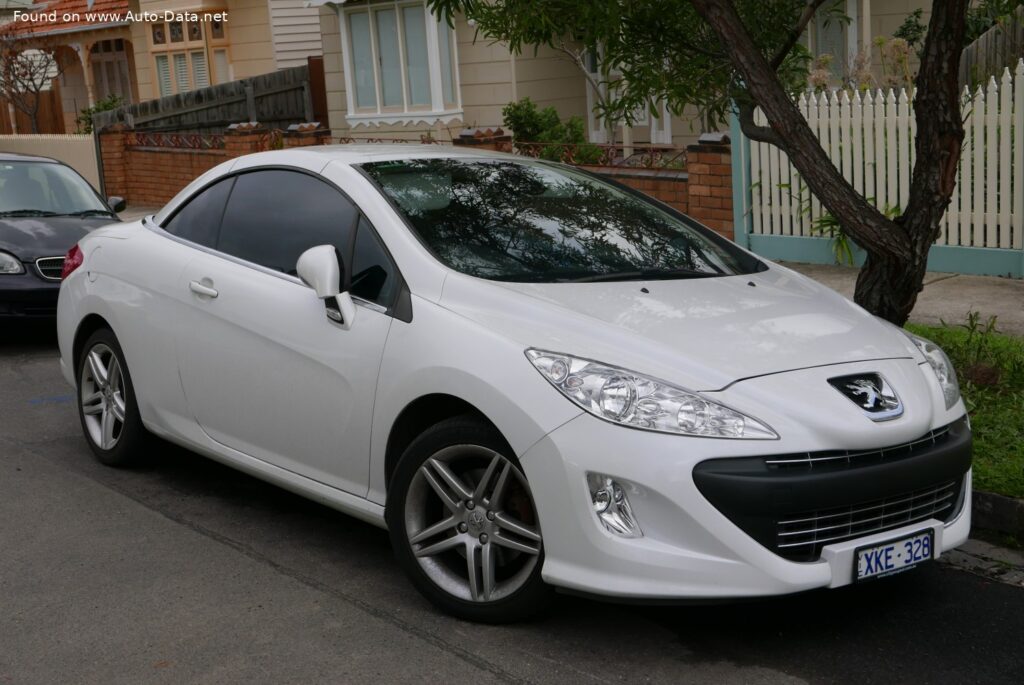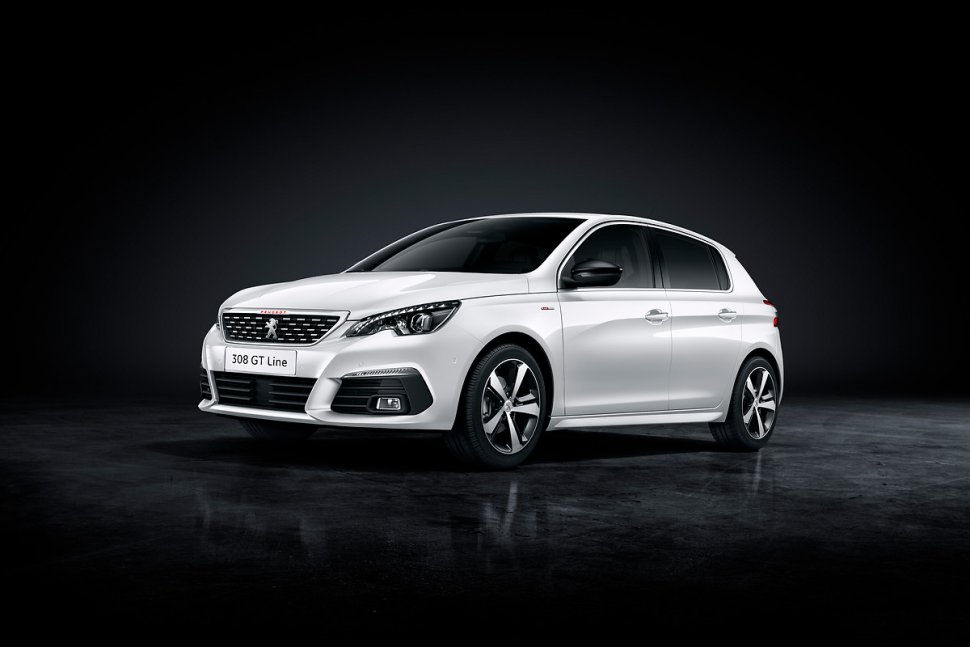
The Peugeot 308 II (Phase II), produced from 2017 to 2018, represents a mid-cycle refresh of the second-generation 308 compact hatchback. This model, particularly the 1.2 PureTech 130 horsepower variant, was a key offering in Peugeot’s European lineup, designed to compete with vehicles like the Volkswagen Golf, Ford Focus, and Opel Astra. While not officially sold in the United States, the 308 II offered a blend of fuel efficiency, modern styling, and technology aimed at the European consumer seeking a practical and comfortable daily driver. The Phase II update brought styling revisions, interior enhancements, and updated technology features to maintain the 308’s competitiveness in a crowded segment.
Peugeot 308 II (Phase II): A Refined Compact Hatchback
The 308 II, launched in 2013, was a significant departure for Peugeot, moving towards a more premium feel and improved driving dynamics. The Phase II update, introduced in 2017, further refined this approach. The 1.2 PureTech engine, a three-cylinder turbocharged gasoline unit, became a cornerstone of the 308 range, offering a balance of performance and economy. This engine was particularly popular in Europe due to its ability to meet stringent emissions standards while providing adequate power for everyday driving. The 308 II Phase II aimed to deliver a more sophisticated and enjoyable driving experience compared to its predecessor, with a focus on comfort and technology.
Engine & Performance
The heart of the 2017 Peugeot 308 II Phase II 1.2 PureTech (130 Hp) is the HNW EB2DTS engine – a 1.2-liter inline three-cylinder gasoline engine equipped with direct fuel injection and a turbocharger with an intercooler. This powertrain generates 130 horsepower at 5500 rpm and 230 Nm (169.64 lb.-ft.) of torque at 1750 rpm. The engine’s specific output is 108.4 horsepower per liter, showcasing its efficiency. Power is delivered to the front wheels via a six-speed manual transmission. Acceleration from 0 to 100 km/h (0-62 mph) takes between 9.6 and 10.3 seconds, while 0-60 mph is achieved in approximately 9.1 seconds. The vehicle boasts a maximum speed of 201-207 km/h (124.9-128.62 mph). The engine’s turbocharging and direct injection contribute to its responsiveness and fuel efficiency.
Design & Features
The Peugeot 308 II Phase II is a five-door hatchback, offering seating for five passengers. The exterior design features a revised front grille, headlights, and bumper, giving the car a more modern and assertive appearance. The interior received updates as well, including improved materials and a redesigned infotainment system. Key features include ABS (Anti-lock Braking System), electric power steering, and a range of available safety technologies. Trunk space is a practical 420 liters (14.83 cu. ft.) with the rear seats up, expanding to 1228 liters (43.37 cu. ft.) when folded down. The vehicle’s dimensions are 4253 mm (167.44 in.) in length, 1804 mm (71.02 in.) in width, and 1457 mm (57.36 in.) in height. The 308 II Phase II prioritized a comfortable and refined driving experience, with a focus on interior quality and user-friendly technology.
Technical Specifications
| Brand | Peugeot |
| Model | 308 |
| Generation | 308 II (Phase II, 2017) |
| Type (Engine) | 1.2 PureTech (130 Hp) |
| Start of production | 2017 |
| End of production | 2018 |
| Powertrain Architecture | Internal Combustion engine |
| Body type | Hatchback |
| Seats | 5 |
| Doors | 5 |
| Fuel consumption (urban) | 5.7-5.8 l/100 km (41.3 – 40.6 US mpg) |
| Fuel consumption (extra urban) | 3.8-4.0 l/100 km (61.9 – 58.8 US mpg) |
| Fuel consumption (combined) | 4.5-4.6 l/100 km (52.3 – 51.1 US mpg) |
| CO2 emissions | 104-107 g/km |
| Fuel Type | Petrol (Gasoline) |
| Acceleration 0 – 100 km/h | 9.6-10.3 sec |
| Acceleration 0 – 62 mph | 9.6-10.3 sec |
| Acceleration 0 – 60 mph | 9.1 sec |
| Maximum speed | 201-207 km/h (124.9 – 128.62 mph) |
| Emission standard | Euro 6 |
| Weight-to-power ratio | 8.4 kg/Hp |
| Weight-to-torque ratio | 4.7 kg/Nm |
| Power | 130 Hp @ 5500 rpm |
| Torque | 230 Nm @ 1750 rpm (169.64 lb.-ft. @ 1750 rpm) |
| Engine layout | Front, Transverse |
| Engine Model/Code | HNW EB2DTS |
| Engine displacement | 1199 cm3 (73.17 cu. in.) |
| Number of cylinders | 3 |
| Engine configuration | Inline |
| Number of valves per cylinder | 4 |
| Fuel injection system | Direct injection |
| Engine aspiration | Turbocharger, Intercooler |
| Engine oil capacity | 3.5 l (3.7 US qt | 3.08 UK qt) |
| Kerb Weight | 1090-1323 kg (2403.04 – 2916.72 lbs.) |
| Max. weight | 1750 kg (3858.09 lbs.) |
| Max load | 427-660 kg (941.37 – 1455.05 lbs.) |
| Trunk (boot) space – minimum | 420 l (14.83 cu. ft.) |
| Trunk (boot) space – maximum | 1228 l (43.37 cu. ft.) |
| Fuel tank capacity | 52.5 l (13.87 US gal | 11.55 UK gal) |
| Max. roof load | 80 kg (176.37 lbs.) |
| Permitted trailer load with brakes (12%) | 1300 kg (2866.01 lbs.) |
| Permitted trailer load without brakes | 580 kg (1278.68 lbs.) |
| Permitted towbar download | 75 kg (165.35 lbs.) |
| Length | 4253 mm (167.44 in.) |
| Width | 1804 mm (71.02 in.) |
| Width including mirrors | 2043 mm (80.43 in.) |
| Height | 1457 mm (57.36 in.) |
| Wheelbase | 2620 mm (103.15 in.) |
| Front track | 1559 mm (61.38 in.) |
| Rear (Back) track | 1553 mm (61.14 in.) |
| Number of gears and type of gearbox | 6 gears, manual transmission |
| Front suspension | Independent type McPherson |
| Rear suspension | Semi-independent, coil spring, Elastic beam |
| Front brakes | Ventilated discs |
| Rear brakes | Disc |
| Tires size | 205/55 R16 88H; 225/45 R17 88H; 225/40 R18 88H |