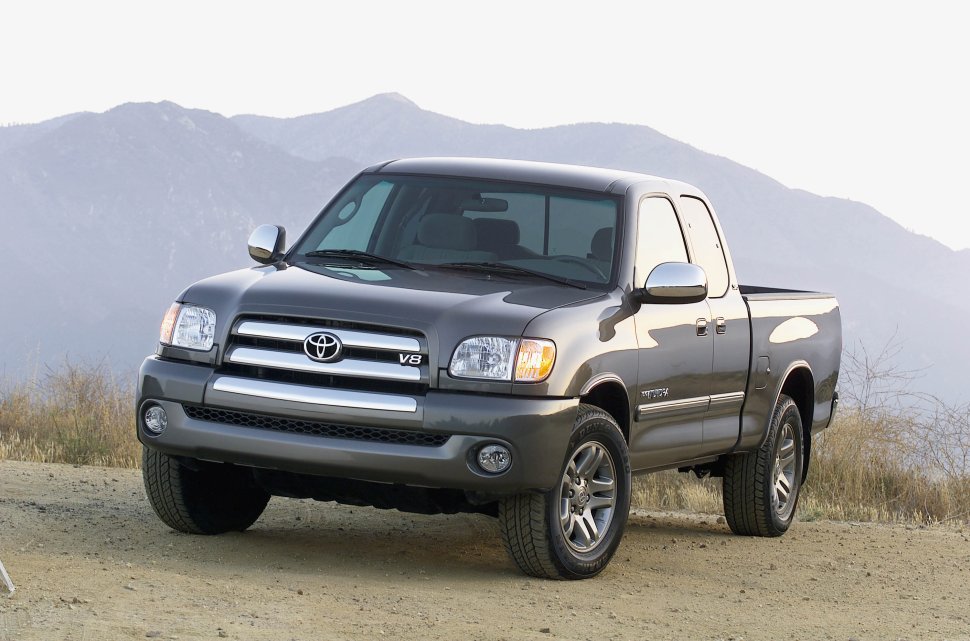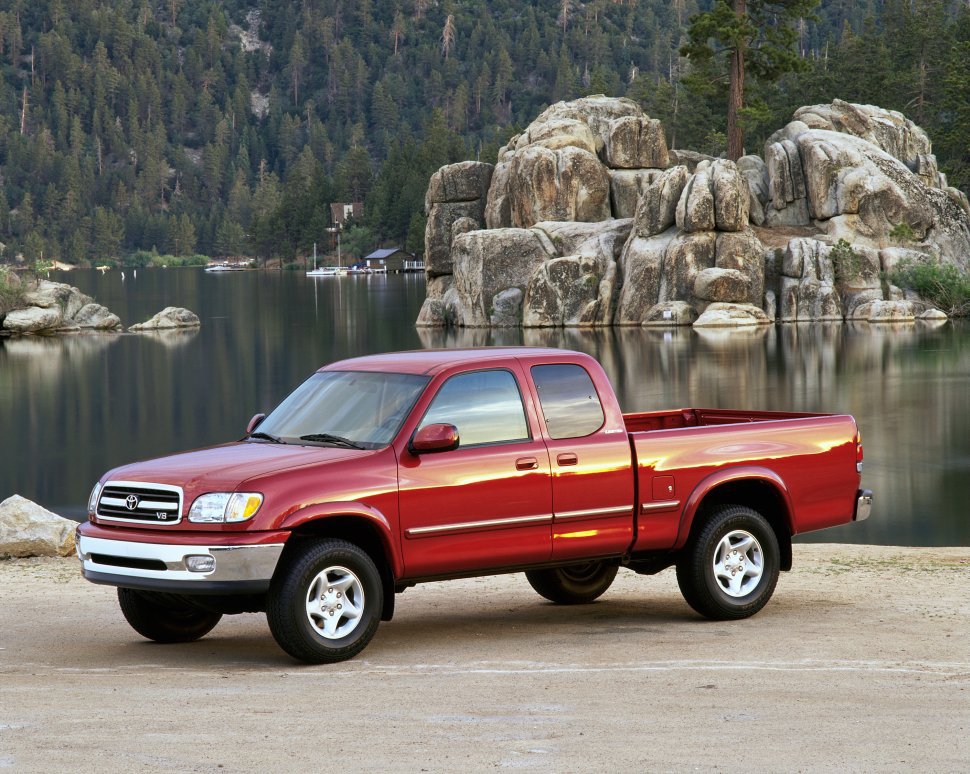
The Toyota Tundra I 3.4i, produced from 1999 to 2002, marked Toyota’s initial foray into the full-size pickup truck market in North America. Designed to compete with established American manufacturers like Ford, Chevrolet, and Dodge, the Tundra I represented a significant investment by Toyota to capture a share of this lucrative segment. This first-generation Tundra aimed to offer a blend of Japanese reliability, build quality, and a more refined driving experience compared to its domestic rivals. While not immediately a market leader, the Tundra I laid the groundwork for the Tundra’s eventual success and reputation as a dependable and capable full-size truck.
Toyota Tundra I 3.4i: A New Contender
The Tundra I was a crucial model for Toyota, signifying its commitment to offering a complete range of vehicles in the US market. Prior to the Tundra, Toyota’s truck offerings were smaller, based on the Hilux platform and better suited for light-duty tasks. The Tundra was specifically engineered for North American needs and preferences, including larger dimensions, more powerful engines, and increased towing capacity. It was available in a variety of configurations, including regular cab, extended cab (Access Cab), and various bed lengths, catering to a wide range of customer requirements.
Engine & Performance
The 3.4i designation refers to the truck’s engine: a 3.4-liter (3378 cm3 or 206.14 cu. in.) V6 gasoline engine, internally known as the 5VZ-FE. This naturally aspirated engine produced 190 horsepower at 4800 rpm and 298 Nm (219.79 lb.-ft.) of torque at 3600 rpm. The engine featured a double overhead camshaft (DOHC) valvetrain with four valves per cylinder and multi-port fuel injection. While not the most powerful engine in its class, the 5VZ-FE was known for its durability and smooth operation. The engine’s power-to-weight ratio was 9.8 kg/Hp, or 102.5 Hp/tonne, and the torque-to-weight ratio was 6.2 kg/Nm, or 160.7 Nm/tonne. The Tundra I 3.4i was offered with a 5-speed manual transmission as standard, providing drivers with direct control over the powertrain. Fuel economy was typical for a full-size truck of the era, averaging 16 US mpg combined (14.7 l/100 km or 19.2 UK mpg).
Design & Features
The Toyota Tundra I was a conventional full-size pickup truck in terms of its body-on-frame construction. It featured a double-wishbone front suspension and a solid rear axle, providing a comfortable ride and adequate load-carrying capacity. The truck was available in both 2-wheel drive (RWD) and 4-wheel drive configurations. Styling was conservative, aiming for a rugged and functional appearance rather than flashy aesthetics. The interior offered seating for up to five passengers, depending on the cab configuration. Safety features for the time included standard anti-lock brakes (ABS), and airbags. The Tundra I’s dimensions were substantial, with a length of 5525 mm (217.52 in.), a width of 1910 mm (75.2 in.), and a height ranging from 1825 to 1835 mm (71.85 – 72.24 in.). Ground clearance was a respectable 264 mm (10.39 in.), enhancing its off-road capability. The truck’s 100-liter (26.42 US gal) fuel tank provided a reasonable driving range.
Technical Specifications
| Brand | Toyota |
| Model | Tundra |
| Generation | Tundra I |
| Type (Engine) | 3.4i (190 Hp) |
| Start of production | May, 1999 |
| End of production | 2002 |
| Powertrain Architecture | Internal Combustion engine |
| Body type | Pick-up |
| Seats | 5 |
| Doors | 4 |
| Fuel consumption (urban) | 15.6 l/100 km (15.1 US mpg, 18.1 UK mpg) |
| Fuel consumption (extra urban) | 13 l/100 km (18.1 US mpg, 21.7 UK mpg) |
| Fuel consumption (combined) | 14.7 l/100 km (16 US mpg, 19.2 UK mpg) |
| Fuel Type | Petrol (Gasoline) |
| Weight-to-power ratio | 9.8 kg/Hp |
| Weight-to-torque ratio | 6.2 kg/Nm |
| Power | 190 Hp @ 4800 rpm |
| Torque | 298 Nm @ 3600 rpm (219.79 lb.-ft. @ 3600 rpm) |
| Engine layout | Front, Longitudinal |
| Engine Model/Code | 5VZ-FE |
| Engine displacement | 3378 cm3 (206.14 cu. in.) |
| Number of cylinders | 6 |
| Engine configuration | V-engine |
| Cylinder Bore | 93.4 mm (3.68 in.) |
| Piston Stroke | 82 mm (3.23 in.) |
| Compression ratio | 9.6:1 |
| Number of valves per cylinder | 4 |
| Fuel injection system | Multi-port manifold injection |
| Engine aspiration | Naturally aspirated |
| Valvetrain | DOHC |
| Engine oil capacity | 5.2 l (5.49 US qt | 4.58 UK qt) |
| Coolant capacity | 9.9 l (10.46 US qt | 8.71 UK qt) |
| Kerb Weight | 1854 kg (4087.37 lbs.) |
| Max. weight | 2585 kg (5698.95 lbs.) |
| Max load | 731 kg (1611.58 lbs.) |
| Fuel tank capacity | 100 l (26.42 US gal | 22 UK gal) |
| Permitted trailer load with brakes (12%) | 2245 kg (4949.38 lbs.) |
| Length | 5525 mm (217.52 in.) |
| Width | 1910 mm (75.2 in.) |
| Height | 1825-1835 mm (71.85 – 72.24 in.) |
| Wheelbase | 3260 mm (128.35 in.) |
| Front track | 1675 mm (65.94 in.) |
| Rear track | 1648 mm (64.88 in.) |
| Ride height (ground clearance) | 264 mm (10.39 in.) |
| Minimum turning circle | 13.5 m (44.29 ft.) |
| Approach angle | 27° |
| Departure angle | 23° |
| Drivetrain | Rear wheel drive |
| Number of gears | 5 |
| Gearbox type | Manual transmission |
| Front suspension | Double wishbone |
| Front brakes | Ventilated discs |
| Rear brakes | Drum |
| Tires size | 245/70 R16; 265/70 R16 |
| Wheel rims size | 7.0J x 16 |
The Toyota Tundra I 3.4i, while not a revolutionary vehicle, was a significant step for Toyota in the North American truck market. It established the Tundra nameplate and demonstrated Toyota’s ability to build a competitive full-size pickup. The Tundra I’s focus on reliability and build quality, combined with a comfortable ride, helped it gain a foothold in a market traditionally dominated by American manufacturers, paving the way for the more successful generations that followed.