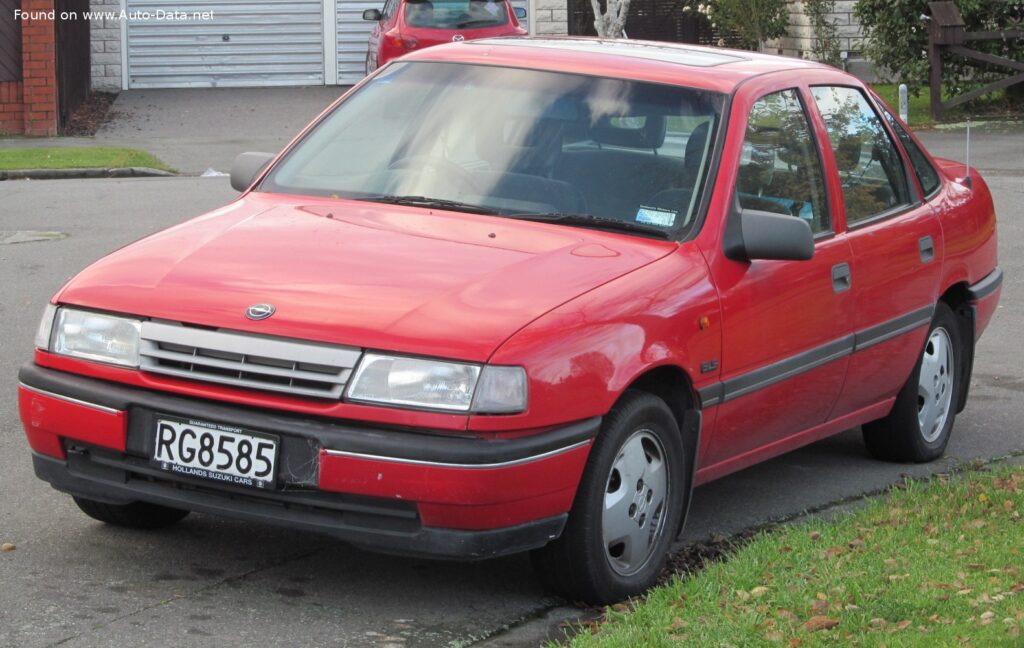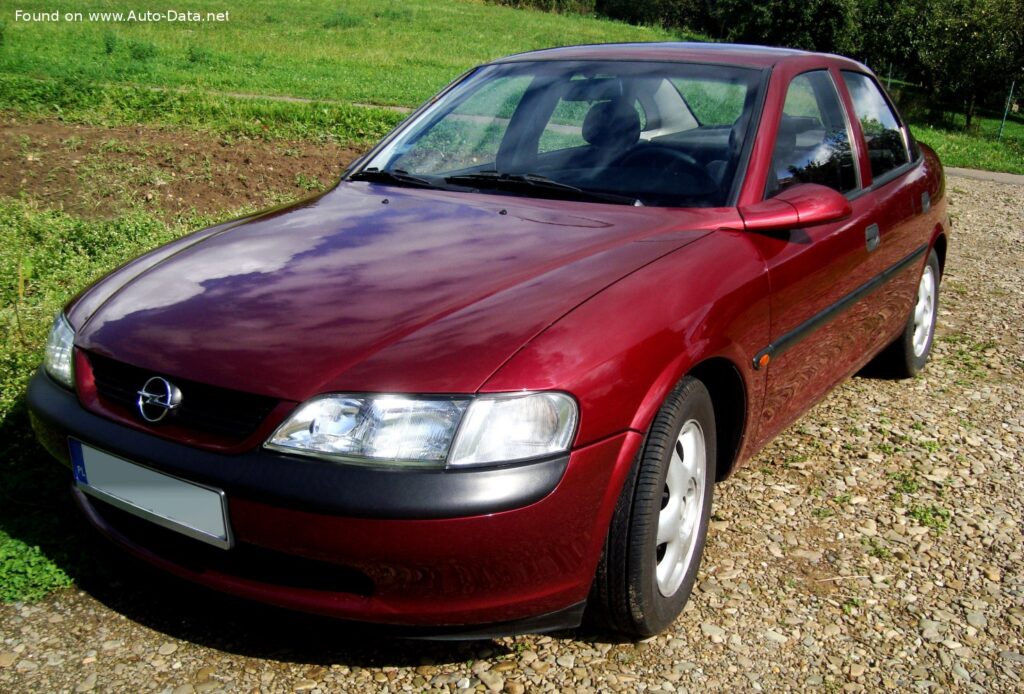
The Opel Vectra B 2.0 DTI 16V (101 Hp) represents a significant iteration in Opel’s mid-size family car lineage. Produced between 1997 and 1998, this variant of the Vectra B, a sedan body style, was primarily aimed at the European market as a practical and fuel-efficient option. While not officially sold in the United States, the Vectra B held a prominent position in Europe’s competitive D-segment, rivaling models like the Ford Mondeo and Volkswagen Passat. The 2.0 DTI 16V model specifically focused on delivering a balance of performance and economy through its direct injection turbocharged diesel engine.
Opel Vectra B: A European Family Sedan
The Vectra B, launched in 1995, was a crucial model for Opel (a subsidiary of General Motors) as it sought to modernize its image and compete more effectively in the increasingly demanding European car market. The B-series represented a substantial leap forward in terms of design, technology, and build quality compared to its predecessor, the Vectra A. The 2.0 DTI 16V trim level, introduced later in the production run, catered to buyers prioritizing fuel efficiency and torque, making it a popular choice for long-distance drivers and fleet operators.
Engine & Performance
The heart of the Vectra B 2.0 DTI 16V is its 1,995 cc (121.74 cu. in.) inline-four cylinder diesel engine, designated the X20DTH. This engine utilizes direct fuel injection and a turbocharger to produce 101 horsepower (Hp) at 4,300 rpm and 205 Nm (151.2 lb.-ft.) of torque at 1,600 rpm. The direct injection system contributes to improved fuel economy and reduced emissions. The engine’s configuration – a double overhead camshaft (DOHC) valvetrain with four valves per cylinder – optimizes breathing and contributes to its relatively high power output for a diesel engine of its era. Performance figures include a 0-100 km/h (0-62 mph) acceleration time of 13 seconds and a maximum speed of 195 km/h (121.17 mph). The weight-to-power ratio of 13 kg/Hp and weight-to-torque ratio of 6.4 kg/Nm demonstrate a reasonable balance between engine output and vehicle mass.
Design & Features
The Opel Vectra B 2.0 DTI 16V is a four-door sedan designed to accommodate five passengers. Its exterior styling, typical of the mid-1990s, features a relatively conservative but aerodynamic profile, with a drag coefficient of 0.30. The vehicle’s dimensions – 4,495 mm (176.97 in.) in length, 1,707 mm (67.2 in.) in width, and 1,425 mm (56.1 in.) in height – place it squarely within the mid-size sedan category. Inside, the Vectra B offered a functional and reasonably comfortable interior, although materials and trim levels were generally focused on practicality rather than luxury. Safety features for the time included an Anti-lock Braking System (ABS), which was becoming increasingly common on European vehicles. The suspension utilizes coil springs on both the front and rear axles, providing a comfortable ride. The vehicle is equipped with ventilated disc brakes on the front and disc brakes on the rear, offering adequate stopping power. Power steering, utilizing a worm-reduction unit and hydraulic assistance, provides ease of maneuverability.
Technical Specifications
| Brand | Opel |
| Model | Vectra |
| Generation | Vectra B |
| Type (Engine) | 2.0 DTI 16V (101 Hp) |
| Start of production | 1997 |
| End of production | November, 1998 |
| Powertrain Architecture | Internal Combustion engine |
| Body type | Sedan |
| Seats | 5 |
| Doors | 4 |
| Fuel consumption (urban) | 8 l/100 km (29.4 US mpg, 35.3 UK mpg, 12.5 km/l) |
| Fuel consumption (extra urban) | 4.7 l/100 km (50 US mpg, 60.1 UK mpg, 21.3 km/l) |
| Fuel consumption (combined) | 5.9 l/100 km (39.9 US mpg, 47.9 UK mpg, 16.9 km/l) |
| CO2 emissions | 156 g/km |
| Fuel Type | Diesel |
| Acceleration 0 – 100 km/h | 13 sec |
| Acceleration 0 – 62 mph | 13 sec |
| Acceleration 0 – 60 mph | 12.4 sec |
| Maximum speed | 195 km/h (121.17 mph) |
| Weight-to-power ratio | 13 kg/Hp |
| Weight-to-torque ratio | 6.4 kg/Nm |
| Power | 101 Hp @ 4300 rpm |
| Torque | 205 Nm @ 1600 rpm (151.2 lb.-ft. @ 1600 rpm) |
| Engine layout | Front, Transverse |
| Engine Model/Code | X20DTH |
| Engine displacement | 1995 cm3 (121.74 cu. in.) |
| Number of cylinders | 4 |
| Engine configuration | Inline |
| Cylinder Bore | 84 mm (3.31 in.) |
| Piston Stroke | 90 mm (3.54 in.) |
| Compression ratio | 18.5:1 |
| Number of valves per cylinder | 4 |
| Fuel injection system | Direct injection |
| Engine aspiration | Turbocharger |
| Valvetrain | DOHC |
| Engine oil capacity | 5.5 l (5.81 US qt | 4.84 UK qt) |
| Coolant | 7.2 l (7.61 US qt | 6.34 UK qt) |
| Kerb Weight | 1312 kg (2892.46 lbs.) |
| Max. weight | 1775 kg (3913.21 lbs.) |
| Max load | 463 kg (1020.74 lbs.) |
| Fuel tank capacity | 60 l (15.85 US gal | 13.2 UK gal) |
| Length | 4495 mm (176.97 in.) |
| Width | 1707 mm (67.2 in.) |
| Width including mirrors | 1841 mm (72.48 in.) |
| Height | 1425 mm (56.1 in.) |
| Wheelbase | 2637 mm (103.82 in.) |
| Front track | 1484 mm (58.43 in.) |
| Rear track | 1487 mm (58.54 in.) |
| Ride height (ground clearance) | 140 mm (5.51 in.) |
| Drag coefficient (Cd) | 0.30 |
| Drivetrain Architecture | ICE, Front wheel drive |
| Drive wheel | Front wheel drive |
| Number of gears | 5 |
| Gearbox type | Manual transmission |
| Front suspension | Coil spring |
| Rear suspension | Coil spring |
| Front brakes | Ventilated discs |
| Rear brakes | Disc |
| Assisting systems | ABS |
| Steering type | Worm-reduction unit |
| Power steering | Hydraulic |
| Tires size | 205/55 R15 |
| Wheel rims size | 15 |
The Opel Vectra B 2.0 DTI 16V, while not a performance icon, offered a compelling package of fuel efficiency, practicality, and reasonable comfort for European drivers in the late 1990s. Its direct injection diesel engine represented a step towards cleaner and more efficient automotive technology, and its solid engineering ensured its place as a reliable and popular family car.