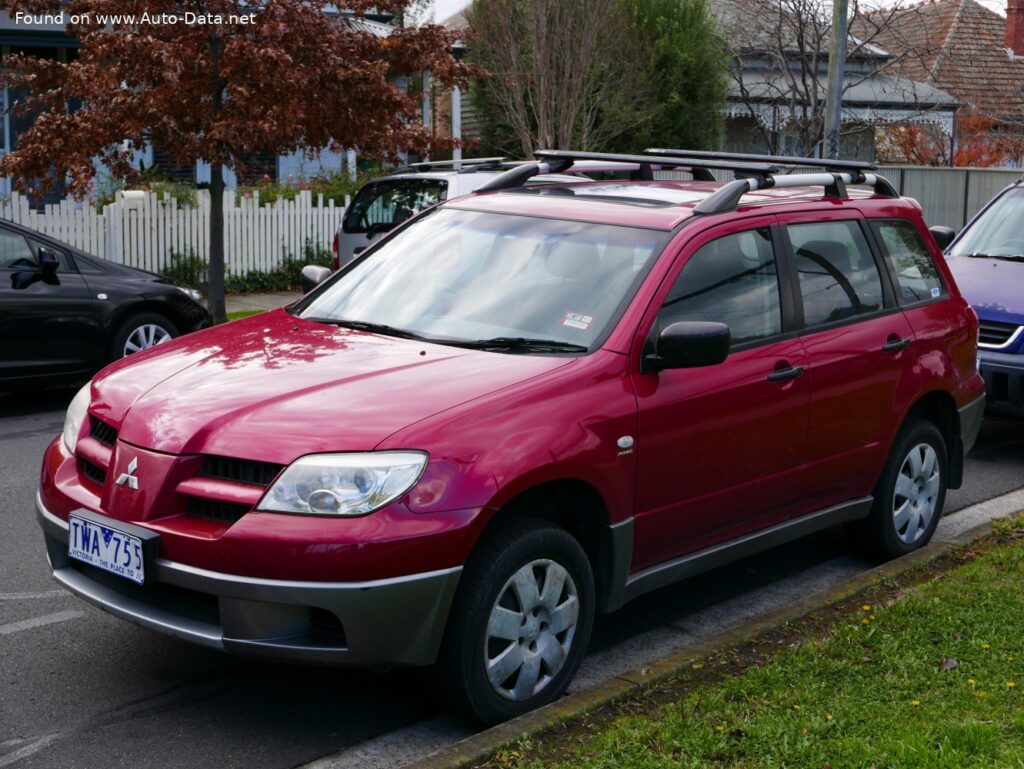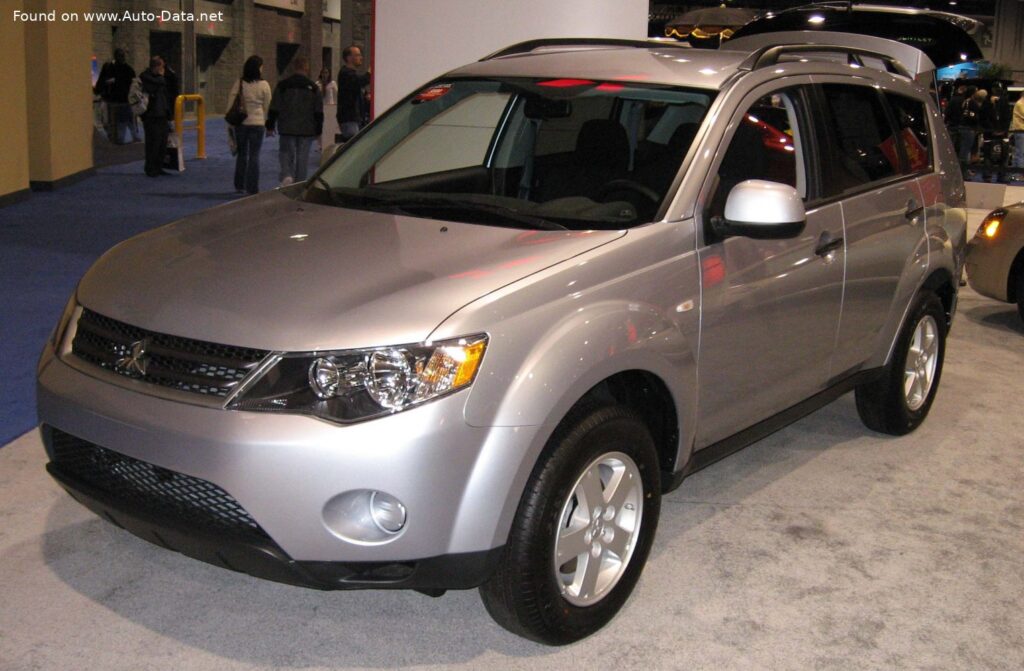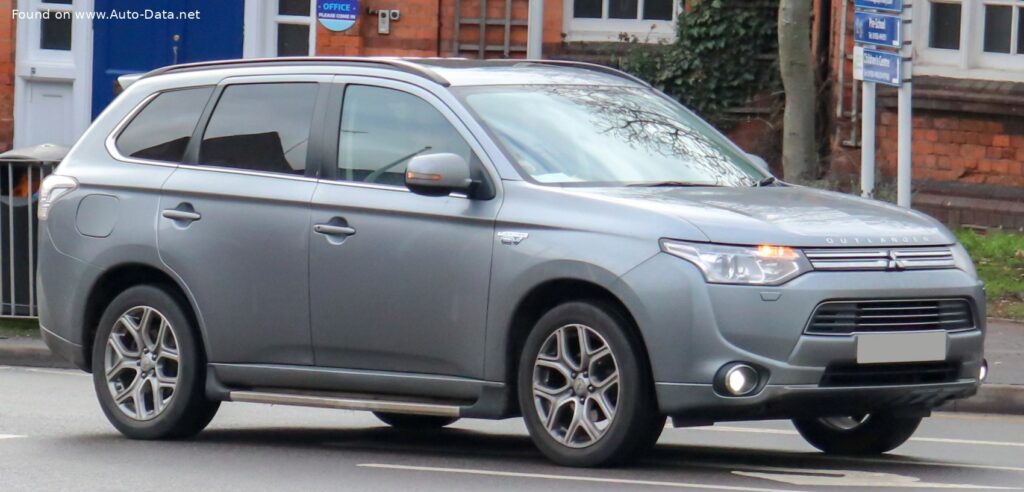
The Mitsubishi Outlander III 2.0 MIVEC (200 Hp) Plug-in Hybrid 4WD, produced from 2013 to 2015, represents a significant step in Mitsubishi’s commitment to hybrid technology. This model, primarily aimed at the European and Asian markets, was not widely sold in the United States. It distinguished itself as one of the first plug-in hybrid SUVs, offering a blend of gasoline engine efficiency and electric vehicle range. The Outlander III, in this configuration, occupied the compact SUV/Crossover segment, targeting buyers seeking fuel economy, practicality, and all-wheel-drive capability.
Mitsubishi Outlander III: A Pioneering Plug-in Hybrid
The Outlander III generation, launched in 2012, saw Mitsubishi refine its SUV offering with a focus on improved fuel efficiency and technology. The 2.0 MIVEC Plug-in Hybrid 4WD variant was a key component of this strategy. It was designed to appeal to environmentally conscious consumers while maintaining the versatility expected of an SUV. The vehicle’s plug-in hybrid system allowed for short-distance all-electric driving, reducing emissions and fuel consumption, particularly in urban environments. Its all-wheel-drive system provided enhanced traction and stability in various weather conditions, a crucial feature for many European drivers.
Engine & Performance
The powertrain of the Mitsubishi Outlander III 2.0 MIVEC Plug-in Hybrid 4WD is a sophisticated combination of a 2.0-liter inline-four cylinder gasoline engine and two electric motors. The gasoline engine, designated 4B11, produces 121 horsepower at 4500 rpm and 190 Nm (140.14 lb.-ft.) of torque at 4500 rpm. This engine utilizes Mitsubishi’s MIVEC (Mitsubishi Innovative Valve timing and lift Electronic Control) technology for optimized performance and efficiency. The two electric motors, one powering the front wheels (82 Hp, 137 Nm) and the other powering the rear wheels (82 Hp, 195 Nm), contribute a combined 164 horsepower and 332 Nm (244.87 lb.-ft.) of torque. The total system output is rated at 200 horsepower. The vehicle’s drivetrain allows for operation in various modes, including pure electric, series hybrid (engine charges the battery while the electric motors drive the wheels), and parallel hybrid (engine and electric motors work together). Acceleration from 0 to 100 km/h (0-62 mph) takes 11 seconds, with a 0-60 mph time of 10.5 seconds, and the vehicle has a maximum speed of 170 km/h (105.63 mph).
Design & Features
The Mitsubishi Outlander III is a five-door SUV/Crossover with seating for five passengers. Its exterior design is characterized by Mitsubishi’s signature styling cues, including a bold front grille and sculpted body lines. The vehicle’s dimensions are 4655 mm (183.27 in.) in length, 1800 mm (70.87 in.) in width, and 1680 mm (66.14 in.) in height. The interior offers a practical and comfortable cabin with a focus on functionality. Key features include a spacious trunk with a minimum capacity of 463 liters (16.35 cu. ft.), and a fuel tank capacity of 45 liters (11.89 US gal). The plug-in hybrid system necessitated the placement of the battery pack beneath the floor, slightly reducing cargo space compared to non-hybrid versions. Safety features, typical for vehicles of this era, included ABS (Anti-lock Braking System) and a comprehensive airbag system. The vehicle’s suspension utilizes an independent McPherson strut setup at the front and an independent multi-link setup at the rear, providing a balance between ride comfort and handling.
Technical Specifications
| Brand | Mitsubishi |
| Model | Outlander |
| Generation | Outlander III |
| Type (Engine) | 2.0 MIVEC (200 Hp) Plug-in Hybrid 4WD |
| Start of production | 2013 |
| End of production | 2015 |
| Powertrain Architecture | PHEV (Plug-in Hybrid Electric Vehicle) |
| Body type | SUV, Crossover |
| Seats | 5 |
| Doors | 5 |
| Fuel consumption (combined) | 1.9 l/100 km (123.8 US mpg, 148.7 UK mpg, 52.6 km/l) |
| CO2 emissions | 44 g/km |
| Fuel Type | Petrol / electricity |
| Acceleration 0 – 100 km/h | 11 sec |
| Acceleration 0 – 62 mph | 11 sec |
| Acceleration 0 – 60 mph | 10.5 sec |
| Maximum speed | 170 km/h (105.63 mph) |
| Emission standard | Euro 5b |
| Weight-to-power ratio | 9.1 kg/Hp |
| Weight-to-torque ratio | 5.5 kg/Nm |
| Gross battery capacity | 12 kWh |
| Battery voltage | 300 V |
| Battery technology | Lithium-ion (Li-Ion) |
| Battery location | Below the floor |
| All-electric range | 52 km (32.31 mi) |
| Average Energy consumption | 13.4 kWh/100 km (21.57 kWh/100 mi, 156 MPGe, 7.5 km/kWh, 4.6 mi/kWh) |
| Max speed (electric) | 120 km/h (74.56 mph) |
| Electric motor power (x2) | 82 Hp |
| Electric motor Torque (x2) | 137 Nm (101.05 lb.-ft.) / 195 Nm (143.82 lb.-ft.) |
| System power | 200 Hp |
| System torque | 332 Nm (244.87 lb.-ft.) |
| Engine Power | 121 Hp @ 4500 rpm |
| Engine Torque | 190 Nm @ 4500 rpm (140.14 lb.-ft. @ 4500 rpm) |
| Engine displacement | 1998 cm3 (121.93 cu. in.) |
| Number of cylinders | 4 |
| Kerb Weight | 1810 kg (3990.37 lbs.) |
| Max. weight | 2310 kg (5092.68 lbs.) |
| Trunk (boot) space – minimum | 463 l (16.35 cu. ft.) |
| Fuel tank capacity | 45 l (11.89 US gal | 9.9 UK gal) |
| Length | 4655 mm (183.27 in.) |
| Width | 1800 mm (70.87 in.) |
| Height | 1680 mm (66.14 in.) |
| Wheelbase | 2670 mm (105.12 in.) |
The Mitsubishi Outlander III 2.0 MIVEC Plug-in Hybrid 4WD was a forward-thinking vehicle that helped pave the way for the wider adoption of plug-in hybrid technology in the SUV segment. While not a major seller in the US market, it established Mitsubishi as a leader in electric and hybrid vehicle innovation, particularly in Europe and Asia.