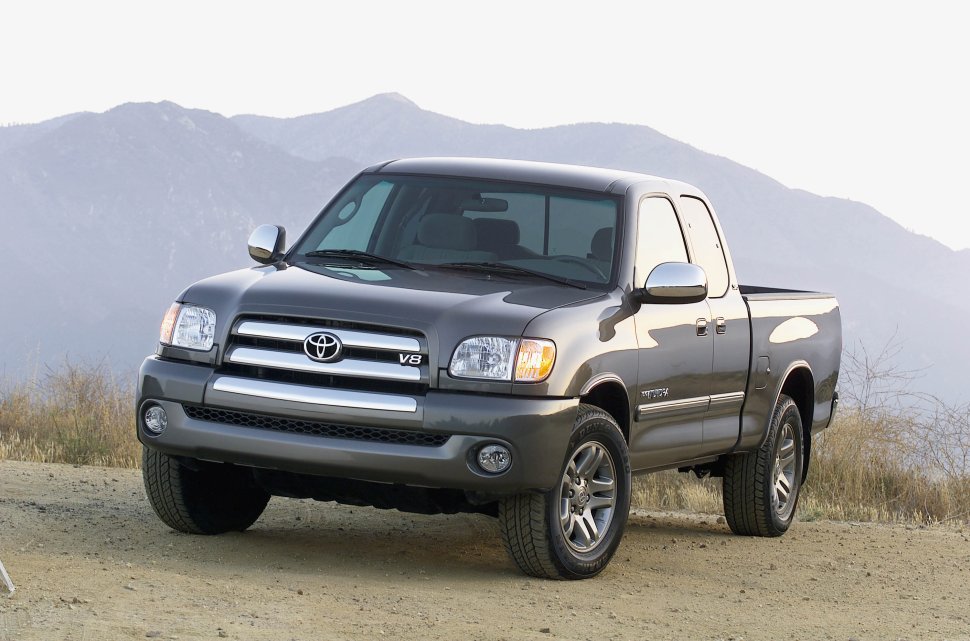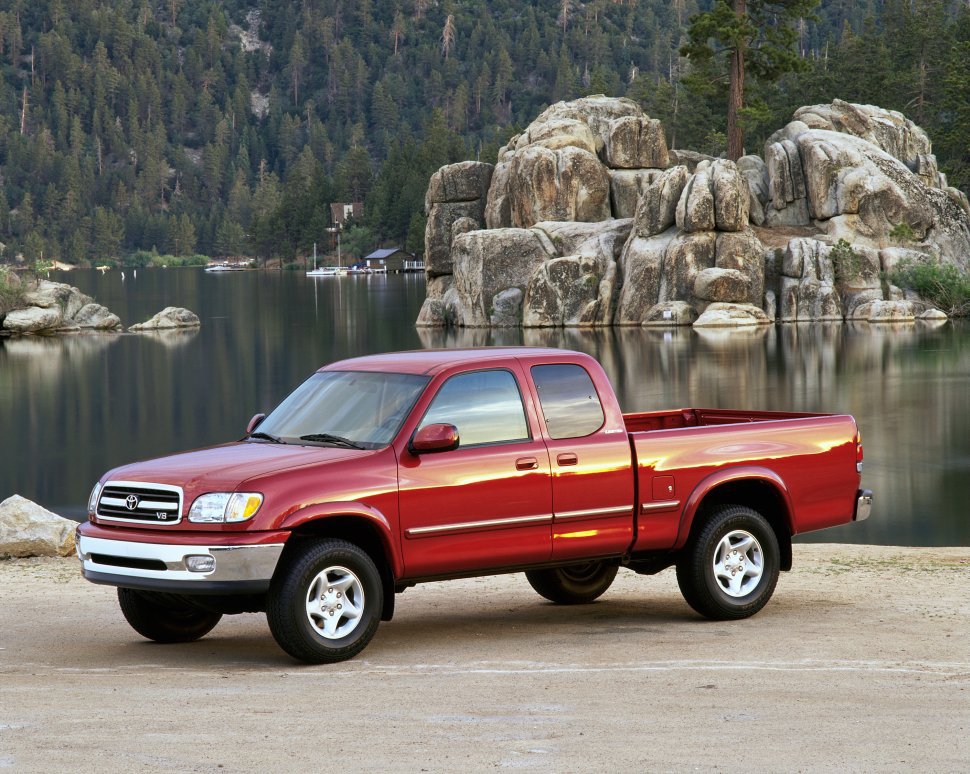
The Toyota Tundra I 4.7i V8, produced from 1999 to 2002, marked Toyota’s initial foray into the full-size pickup truck market in North America. Designed to compete with established American manufacturers like Ford, Chevrolet, and Dodge, the Tundra I aimed to offer a blend of Japanese reliability, build quality, and a more refined driving experience. This first-generation Tundra was a significant step for Toyota, demonstrating their commitment to offering a comprehensive range of vehicles to American consumers. It established a foothold in a segment previously dominated by domestic brands, paving the way for the Tundra’s continued success and evolution.
Toyota Tundra I 4.7i V8: An Overview
The Tundra I represented a substantial investment for Toyota, involving significant engineering and design tailored specifically for the North American market. It was offered in a variety of configurations, including regular cab, extended cab (Access Cab), and various bed lengths, catering to a wide range of customer needs. The 4.7i V8 model, equipped with the 2UZ-FE engine, was a key component of the Tundra lineup, providing a balance of power and capability for both work and recreational use. The truck was positioned as a robust and dependable alternative to the traditional American full-size pickups.
Engine & Performance
The heart of the Tundra I 4.7i V8 is the 2UZ-FE 4.7-liter V8 engine. This naturally aspirated powerplant produces 245 horsepower at 4800 rpm and 427 Nm (314.94 lb.-ft.) of torque at 3400 rpm. The engine features a robust cast-iron block and aluminum cylinder heads, contributing to its durability and longevity. Power is delivered to the rear wheels via a four-speed automatic transmission. The engine’s longitudinal front-engine layout optimizes weight distribution for improved handling and stability. The power-to-weight ratio of 7.9 kg/Hp and torque-to-weight ratio of 4.5 kg/Nm provide adequate performance for towing and hauling. Fuel economy figures are rated at 15.6 l/100 km (15.1 US mpg, 18.1 UK mpg) combined, 18 l/100 km (13.1 US mpg, 15.7 UK mpg) in urban settings, and 13.8 l/100 km (17 US mpg, 20.5 UK mpg) on the highway.
Design & Features
The Toyota Tundra I adopted a conventional pickup truck design, featuring a body-on-frame construction for enhanced strength and durability. It’s a four-door pickup truck with seating for five passengers. The exterior styling was intentionally conservative, aiming to appeal to a broad range of buyers. Available configurations included regular cab and extended cab (Access Cab) models, with various bed lengths to suit different needs. Interior features focused on practicality and comfort, with durable materials and a functional layout. While not boasting the advanced technology found in later models, the Tundra I offered essential features such as air conditioning, power windows and locks, and an AM/FM radio. Safety features were relatively basic for the time, including front disc brakes and rear drum brakes. The truck’s relatively high ground clearance (264 mm / 10.39 in) and approach/departure angles (26°/23°) provided reasonable off-road capability. The Tundra I’s design prioritized functionality and reliability over flashy aesthetics, aligning with Toyota’s reputation for building dependable vehicles.
Technical Specifications
| Brand | Toyota |
| Model | Tundra |
| Generation | Tundra I |
| Type (Engine) | 4.7i V8 (245 Hp) Automatic |
| Start of production | May, 1999 |
| End of production | 2002 |
| Powertrain Architecture | Internal Combustion engine |
| Body type | Pick-up |
| Seats | 5 |
| Doors | 4 |
| Fuel consumption (economy) – urban | 18 l/100 km (13.1 US mpg, 15.7 UK mpg) |
| Fuel consumption (economy) – extra urban | 13.8 l/100 km (17 US mpg, 20.5 UK mpg) |
| Fuel consumption (economy) – combined | 15.6 l/100 km (15.1 US mpg, 18.1 UK mpg) |
| Fuel Type | Petrol (Gasoline) |
| Weight-to-power ratio | 7.9 kg/Hp |
| Weight-to-torque ratio | 4.5 kg/Nm |
| Power | 245 Hp @ 4800 rpm |
| Torque | 427 Nm @ 3400 rpm (314.94 lb.-ft. @ 3400 rpm) |
| Engine layout | Front, Longitudinal |
| Engine Model/Code | 2UZ-FE |
| Engine displacement | 4664 cm3 (284.61 cu. in.) |
| Number of cylinders | 8 |
| Engine configuration | V-engine |
| Cylinder Bore | 94 mm (3.7 in.) |
| Piston Stroke | 84 mm (3.31 in.) |
| Compression ratio | 9.6:1 |
| Number of valves per cylinder | 4 |
| Fuel injection system | Multi-port manifold injection |
| Engine aspiration | Naturally aspirated engine |
| Valvetrain | DOHC |
| Engine oil capacity | 6.1 l (6.45 US qt | 5.37 UK qt) |
| Coolant capacity | 11.6 l (12.26 US qt | 10.21 UK qt) |
| Kerb Weight | 1940 kg (4276.97 lbs.) |
| Max. weight | 2812 kg (6199.4 lbs.) |
| Max load | 872 kg (1922.43 lbs.) |
| Fuel tank capacity | 100 l (26.42 US gal | 22 UK gal) |
| Permitted trailer load with brakes (12%) | 3266 kg (7200.3 lbs.) |
| Length | 5525 mm (217.52 in.) |
| Width | 1910 mm (75.2 in.) |
| Height | 1825-1835 mm (71.85 – 72.24 in.) |
| Wheelbase | 3260 mm (128.35 in.) |
| Front track | 1675 mm (65.94 in.) |
| Rear (Back) track | 1648 mm (64.88 in.) |
| Ride height (ground clearance) | 264 mm (10.39 in.) |
| Minimum turning circle (turning diameter) | 13.5 m (44.29 ft.) |
| Drivetrain Architecture | Rear wheel drive |
| Number of gears and type of gearbox | 4 gears, automatic transmission |
| Front suspension | Double wishbone |
| Front brakes | Ventilated discs |
| Rear brakes | Drum |
| Tires size | 245/70 R16; 265/70 R16 |
| Wheel rims size | 7.0J x 16 |
The Toyota Tundra I 4.7i V8, while not a revolutionary vehicle, was a crucial step for Toyota in establishing itself as a serious competitor in the North American full-size pickup truck market. Its blend of reliability, capability, and a relatively comfortable ride resonated with buyers seeking an alternative to the traditional domestic offerings. The Tundra I laid the foundation for the continued success of the Tundra nameplate and solidified Toyota’s position as a major player in the automotive industry.