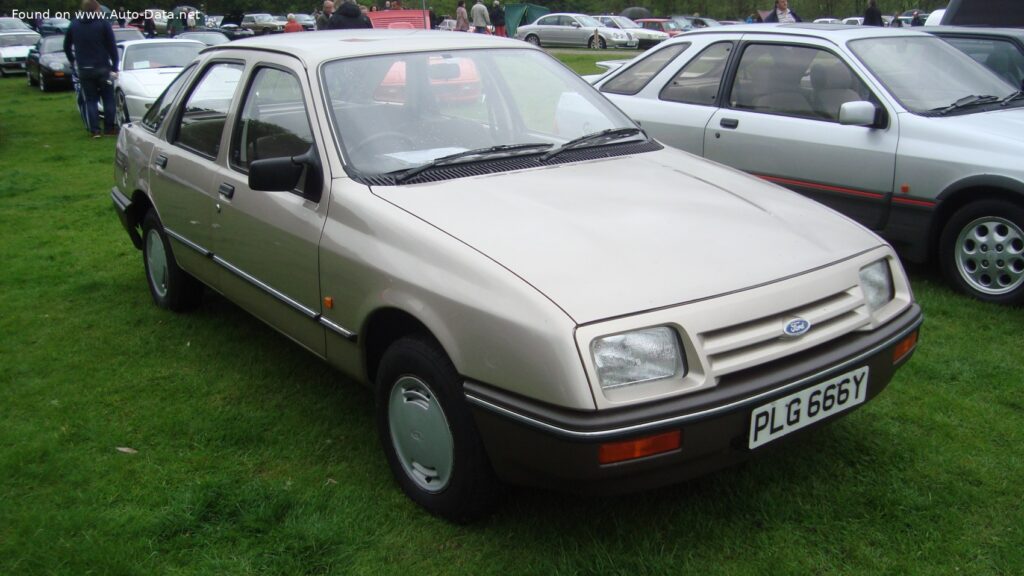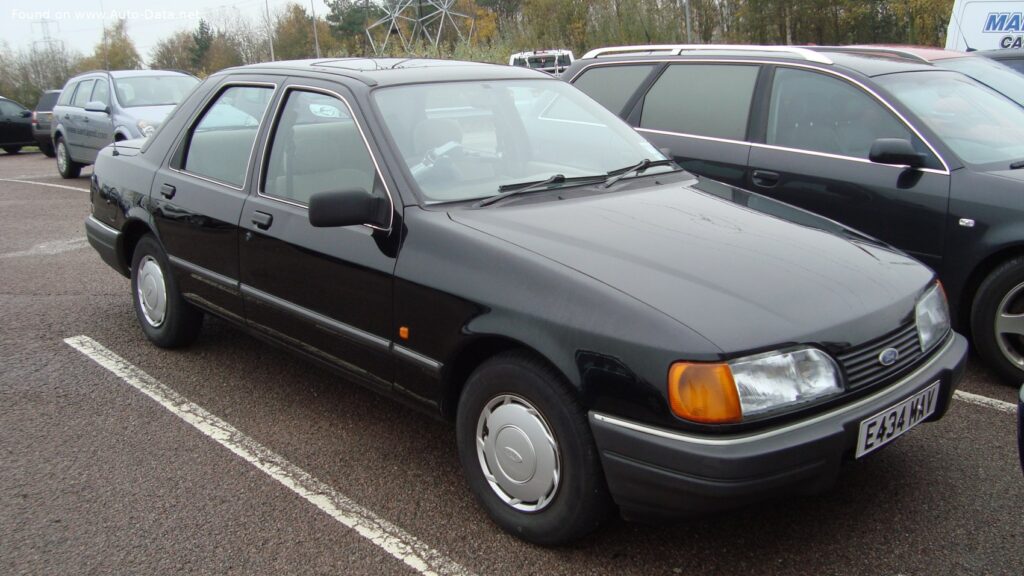
The Ford Sierra Sedan II 2.0i CAT Automatic, produced between 1987 and 1993, represents a significant evolution in Ford of Europe’s mid-size offering. The Sierra, intended as a modern replacement for the aging Taunus and Cortina, was a departure from traditional Ford designs, embracing a more aerodynamic and contemporary aesthetic. While not officially sold in the United States, the Sierra was a hugely popular vehicle in Europe, competing with models like the Opel/Vauxhall Vectra, Peugeot 405, and Fiat Tempra. The “Sedan II” designation denotes a facelifted version of the original Sierra, incorporating refinements to styling, interior appointments, and mechanical components. The 2.0i CAT Automatic variant, equipped with a catalytic converter (“CAT”) and a four-speed automatic transmission, was positioned as a comfortable and efficient option for family transportation.
The Ford Sierra Sedan II: A European Success Story
The Ford Sierra was a pivotal model for Ford of Europe, marking a shift towards more modern engineering and design principles. Launched in 1982, it was the first Ford to be designed with significant aerodynamic input, resulting in a drag coefficient lower than many of its contemporaries. This focus on aerodynamics contributed to improved fuel efficiency and reduced noise levels. The Sierra underwent a substantial redesign in 1986, resulting in the “Sedan II” or “Series 2” model. This facelift addressed some of the criticisms leveled at the original Sierra’s somewhat angular styling, softening the lines and improving the overall appearance. The Sedan II also benefited from mechanical upgrades, including improved engine management systems and refinements to the suspension. The 2.0i CAT Automatic model, with its 101 horsepower engine and convenient automatic transmission, appealed to buyers seeking a blend of performance and ease of use.
Engine & Performance
The heart of the Ford Sierra Sedan II 2.0i CAT Automatic is its 2.0-liter, naturally aspirated inline-four cylinder engine, designated the N4B. This engine produces 101 horsepower, providing adequate performance for everyday driving. The “CAT” designation indicates the presence of a catalytic converter, a crucial component in reducing harmful emissions and meeting increasingly stringent European environmental regulations. The four-speed automatic transmission delivers smooth and effortless gear changes, enhancing the driving experience, particularly in urban environments. While not a performance-oriented model, the 2.0i offered a reasonable level of acceleration and cruising ability. The rear-wheel-drive configuration, a traditional layout for Ford sedans of this era, provided balanced handling characteristics. The engine’s relatively simple design contributed to its reliability and ease of maintenance. Fuel economy, while not exceptional by modern standards, was competitive for its time, thanks in part to the aerodynamic efficiency of the Sierra’s body shape and the catalytic converter’s contribution to more complete combustion.
Design & Features
The Ford Sierra Sedan II is a four-door, five-seater sedan. Its design, while initially controversial, was a deliberate departure from the boxy aesthetics of previous Ford models. The streamlined silhouette, with its sloping roofline and integrated bumpers, gave the Sierra a more modern and sophisticated appearance. The Sedan II facelift further refined the design, with a revised front grille, updated headlights, and smoother body panels. The interior of the 2.0i CAT Automatic was typically equipped with comfortable cloth upholstery, a well-appointed dashboard, and a range of convenience features. Safety features, while limited by the standards of today, included seatbelts and a robust chassis structure. The Sierra’s spacious interior provided ample room for passengers and luggage. The car’s relatively large windows offered good visibility, enhancing driver awareness. The hydraulic power steering made maneuvering easy, even in tight spaces. The 60-liter (15.85 US gallon) fuel tank provided a reasonable driving range between fill-ups.
Technical Specifications
| Brand | Ford |
| Model | Sierra |
| Generation | Sierra Sedan II |
| Type (Engine) | 2.0i (101 Hp) CAT Automatic |
| Start of production | 1987 |
| End of production | 1993 |
| Powertrain Architecture | Internal Combustion engine |
| Body type | Sedan |
| Seats | 5 |
| Doors | 4 |
| Fuel Type | Petrol (Gasoline) |
| Power | 101 Hp |
| Engine Model/Code | N4B |
| Engine aspiration | Naturally aspirated engine |
| Engine oil capacity | 3.75 l (3.96 US qt | 3.3 UK qt) |
| Coolant capacity | 8 l (8.45 US qt | 7.04 UK qt) |
| Fuel tank capacity | 60 l (15.85 US gal | 13.2 UK gal) |
| Length | 4467 mm (175.87 in.) |
| Width | 1698 mm (66.85 in.) |
| Height | 1407 mm (55.39 in.) |
| Wheelbase | 2608 mm (102.68 in.) |
| Front track | 1452 mm (57.17 in.) |
| Rear track | 1468 mm (57.8 in.) |
| Minimum turning circle | 10 m (32.81 ft.) |
| Drivetrain Architecture | Rear wheel drive |
| Number of gears and type of gearbox | 4 gears, automatic transmission |
| Front brakes | Ventilated discs |
| Rear brakes | Drum |
| Steering type | Steering rack and pinion |
| Power steering | Hydraulic Steering |
The Ford Sierra Sedan II 2.0i CAT Automatic, while not a groundbreaking vehicle in terms of technological innovation, represented a well-rounded and practical choice for European motorists in the late 1980s and early 1990s. Its blend of comfort, efficiency, and reliability, combined with its distinctive styling, contributed to its enduring popularity. The Sierra ultimately paved the way for the Ford Mondeo, which continued the tradition of providing a competitive and well-engineered mid-size sedan for European buyers.