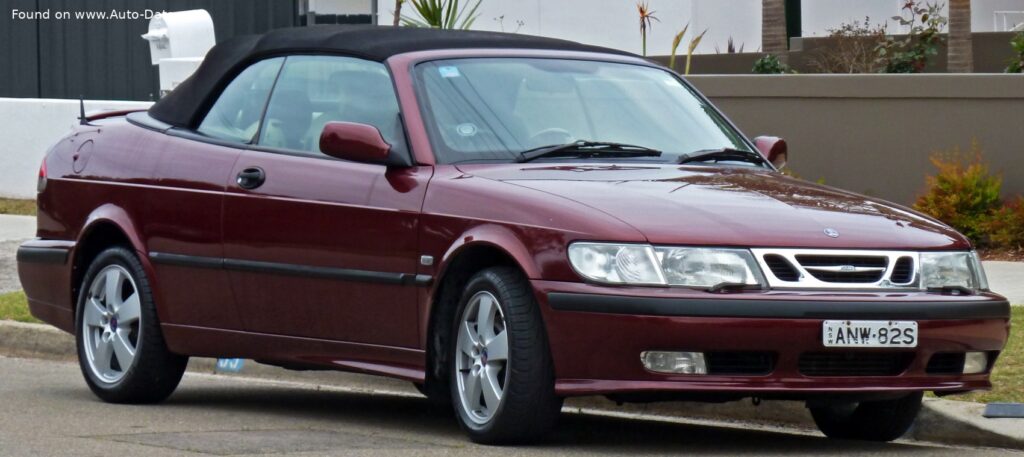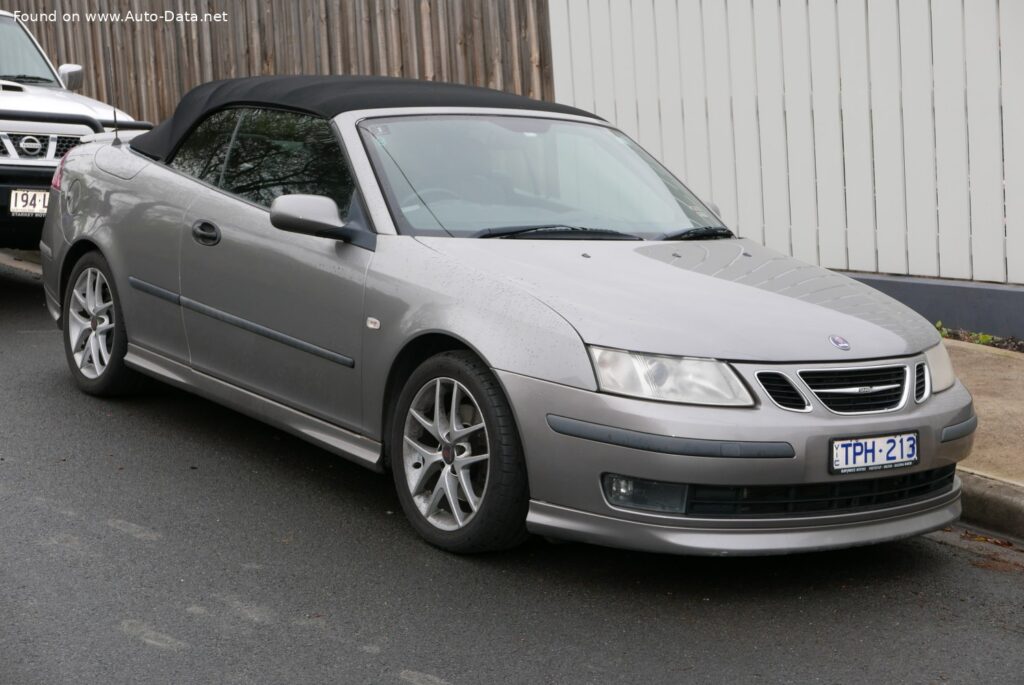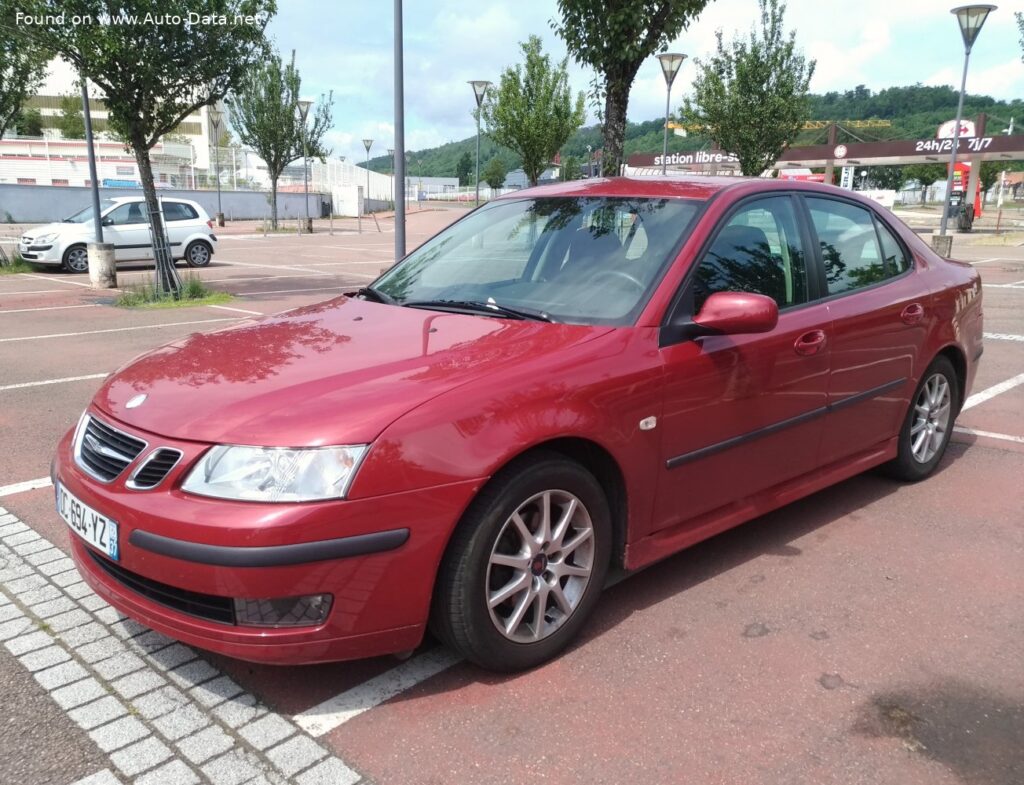
The Saab 9-3 Sedan II 2.0t (175 Hp) Automatic, produced between 2002 and 2007, represents a significant evolution in Saab’s compact executive car lineage. This generation of the 9-3, while not officially sold in the United States during its production run, was a key model for Saab in the European market, competing with vehicles like the Audi A4, BMW 3 Series, and Mercedes-Benz C-Class. It built upon the foundation laid by the original 9-3, offering a blend of Scandinavian design, innovative safety features, and a turbocharged engine that delivered a spirited driving experience. The 9-3 Sedan II aimed to balance practicality, comfort, and performance, appealing to buyers seeking a distinctive alternative to mainstream German offerings.
Saab 9-3 Sedan II: An Overview
The 9-3 Sedan II was part of a broader effort by Saab to modernize its lineup and strengthen its brand identity. Following General Motors’ acquisition of a significant stake in Saab in the late 1990s, the 9-3 benefited from GM’s engineering resources and platform sharing, while still retaining the unique Saab characteristics that its loyal customer base valued. The second-generation 9-3 sedan offered a more refined interior, improved ride quality, and enhanced safety features compared to its predecessor. The 2.0t variant, equipped with a 175 horsepower turbocharged engine and an automatic transmission, was a popular choice for buyers prioritizing a balance of performance and convenience.
Engine & Performance
The heart of the Saab 9-3 Sedan II 2.0t is its 1.998-liter (121.93 cubic inches) inline-four cylinder engine, designated the B207L. This engine utilizes a turbocharger and intercooler to boost power output to 175 horsepower at 5500 rpm and 265 Nm (195.45 lb.-ft.) of torque at 2500 rpm. This configuration provides a responsive and engaging driving experience, with ample torque available for everyday driving and overtaking maneuvers. The engine features multi-port fuel injection and a double overhead camshaft (DOHC) valvetrain with four valves per cylinder. The engine’s power-to-liter ratio is a respectable 87.6 hp/l. Paired with a five-speed automatic transmission, the 9-3 2.0t could accelerate from 0 to 100 km/h (0-62 mph) in 9.7 seconds, and 0 to 60 mph in approximately 9.2 seconds. Its maximum speed is rated at 215 km/h (133.59 mph). Fuel economy figures are rated at 9.4 l/100 km (25 US mpg, 30.1 UK mpg) combined, with 13.7 l/100 km (17.2 US mpg, 20.6 UK mpg) in urban driving and 7.1 l/100 km (33.1 US mpg, 39.8 UK mpg) on the extra-urban cycle.
Design & Features
The Saab 9-3 Sedan II boasts a distinctive Scandinavian design aesthetic, characterized by clean lines, a wraparound cabin, and a focus on functionality. The sedan body style offers a practical and spacious interior for five passengers, with a trunk capacity of 425 liters (15.01 cubic feet). Safety was a paramount concern for Saab, and the 9-3 Sedan II incorporates a range of active and passive safety features, including an Anti-lock Braking System (ABS). The vehicle’s suspension utilizes a spring strut setup at the front and coil springs at the rear, providing a comfortable ride and predictable handling. Hydraulic power steering contributes to ease of maneuverability. The 9-3 2.0t rides on 16-inch wheel rims fitted with 215/55 R16 tires. Inside, the cabin is designed with a driver-focused layout, emphasizing ergonomics and ease of use. The interior materials and build quality were improved compared to earlier Saab models, offering a more premium feel.
Technical Specifications
| Brand | Saab |
| Model | 9-3 |
| Generation | 9-3 Sedan II |
| Type (Engine) | 2.0 t (175 Hp) Automatic |
| Start of production | 2002 |
| End of production | 2007 |
| Powertrain Architecture | Internal Combustion engine |
| Body type | Sedan |
| Seats | 5 |
| Doors | 4 |
| Fuel consumption (urban) | 13.7 l/100 km (17.2 US mpg, 20.6 UK mpg) |
| Fuel consumption (extra urban) | 7.1 l/100 km (33.1 US mpg, 39.8 UK mpg) |
| Fuel consumption (combined) | 9.4 l/100 km (25 US mpg, 30.1 UK mpg) |
| Fuel Type | Petrol (Gasoline) |
| Acceleration 0 – 100 km/h | 9.7 sec |
| Acceleration 0 – 62 mph | 9.7 sec |
| Acceleration 0 – 60 mph | 9.2 sec |
| Maximum speed | 215 km/h (133.59 mph) |
| Emission standard | Euro 4 |
| Weight-to-power ratio | 8.6 kg/Hp |
| Weight-to-torque ratio | 5.7 kg/Nm |
| Power | 175 Hp @ 5500 rpm |
| Torque | 265 Nm @ 2500 rpm (195.45 lb.-ft. @ 2500 rpm) |
| Engine layout | Front, Transverse |
| Engine Model/Code | B207L |
| Engine displacement | 1998 cm3 (121.93 cu. in.) |
| Number of cylinders | 4 |
| Engine configuration | Inline |
| Cylinder Bore | 86 mm (3.39 in.) |
| Piston Stroke | 86 mm (3.39 in.) |
| Compression ratio | 9.5:1 |
| Number of valves per cylinder | 4 |
| Fuel injection system | Multi-port manifold injection |
| Engine aspiration | Turbocharger, Intercooler |
| Valvetrain | DOHC |
| Engine oil capacity | 6 l (6.34 US qt | 5.28 UK qt) |
| Coolant | 7.5 l (7.93 US qt | 6.6 UK qt) |
| Kerb Weight | 1510 kg (3328.98 lbs.) |
| Max. weight | 1980 kg (4365.15 lbs.) |
| Max load | 470 kg (1036.17 lbs.) |
| Trunk (boot) space – minimum | 425 l (15.01 cu. ft.) |
| Fuel tank capacity | 62 l (16.38 US gal | 13.64 UK gal) |
| Length | 4635 mm (182.48 in.) |
| Width | 1762 mm (69.37 in.) |
| Height | 1466 mm (57.72 in.) |
| Wheelbase | 2675 mm (105.31 in.) |
| Front track | 1524 mm (60 in.) |
| Rear (Back) track | 1506 mm (59.29 in.) |
| Drivetrain Architecture | Front wheel drive |
| Number of gears and type of gearbox | 5 gears, automatic transmission |
| Front suspension | Spring Strut |
| Rear suspension | Coil spring |
| Front brakes | Ventilated discs |
| Rear brakes | Disc |
| Assisting systems | ABS (Anti-lock braking system) |
| Steering type | Steering rack and pinion |
| Power steering | Hydraulic Steering |
| Tires size | 215/55 R16 |
| Wheel rims size | 16 |
Despite its discontinuation following Saab’s bankruptcy in 2011, the 9-3 Sedan II remains a popular choice among enthusiasts who appreciate its unique character, comfortable ride, and turbocharged performance. It represents a distinctive chapter in Saab’s history, showcasing the brand’s commitment to innovation and its dedication to creating cars that stand out from the crowd.