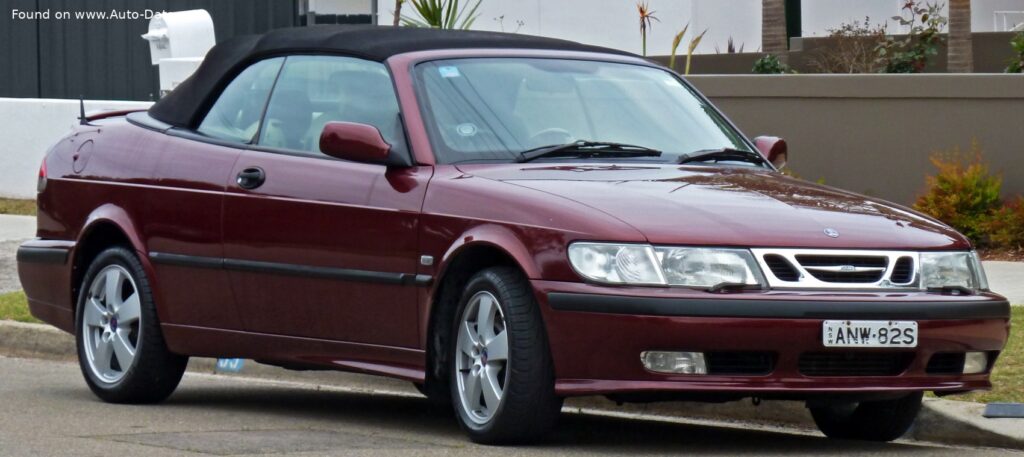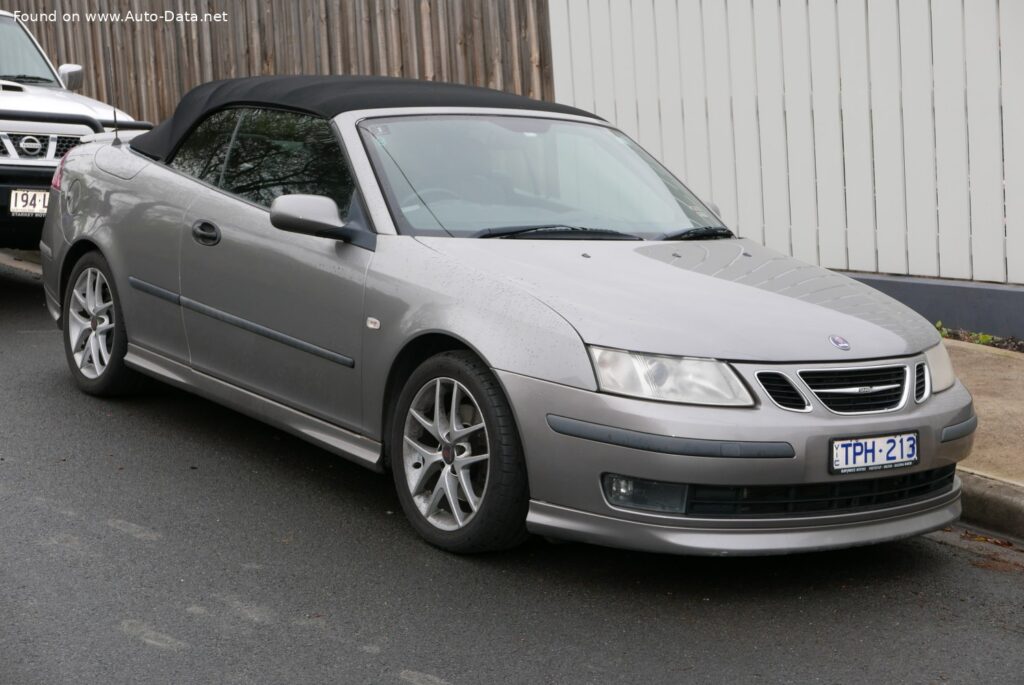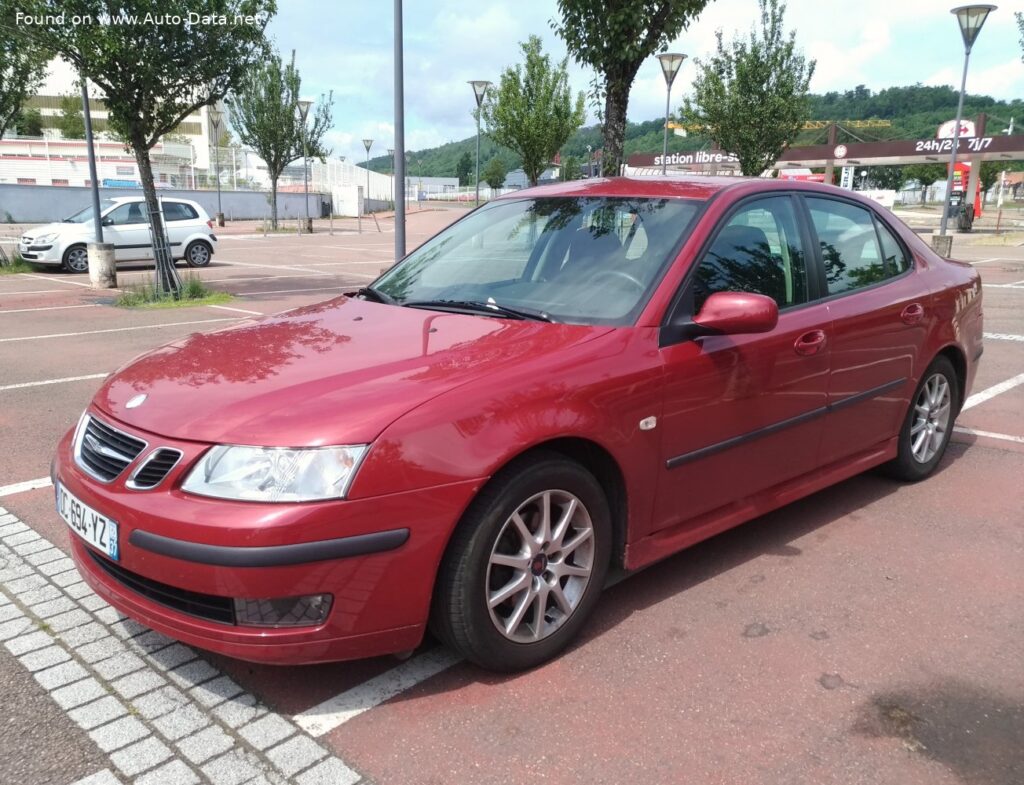
The Saab 9-3 Sedan II 2.0 T (210 Hp), produced between 2002 and 2007, represents a significant evolution in Saab’s compact executive car lineage. This generation, the second iteration of the 9-3 sedan, aimed to blend Scandinavian design principles with a focus on performance and safety. While Saab as a brand ultimately faced challenges, the 9-3 Sedan II offered a distinctive alternative in a market segment dominated by German and Japanese manufacturers. It was primarily sold in Europe, where it competed with models like the Audi A4, BMW 3 Series, and Mercedes-Benz C-Class, offering a unique driving experience and a reputation for innovative features.
Saab 9-3 Sedan II 2.0 T: A Detailed Overview
The 9-3 Sedan II was positioned as a premium compact, offering a balance of practicality, comfort, and sporting characteristics. It built upon the foundation laid by the original 9-3, refining the design and enhancing the driving dynamics. The 2.0 T variant, equipped with a turbocharged 2.0-liter engine, was a popular choice, providing a compelling combination of performance and fuel efficiency. The car’s design reflected Saab’s commitment to aerodynamic efficiency and distinctive styling, setting it apart from its competitors.
Engine & Performance
At the heart of the Saab 9-3 Sedan II 2.0 T lies a 1.998-liter inline-four cylinder engine, designated the B207L. This engine is equipped with a turbocharger and an intercooler, allowing it to produce 210 horsepower at 5500 rpm and 300 Nm (221.27 lb.-ft.) of torque at 2300 rpm. This output translates to a power-to-liter ratio of 105.1 hp/l. The engine utilizes multi-port fuel injection and a double overhead camshaft (DOHC) valvetrain with four valves per cylinder. This configuration contributes to both strong performance and relatively good fuel economy.
Performance figures for the 2.0 T model are respectable. Acceleration from 0 to 100 km/h (0-62 mph) takes 7.5 seconds, while the 0-60 mph sprint is achieved in approximately 7.1 seconds. The car boasts a maximum speed of 235 km/h (146.02 mph). The weight-to-power ratio of 7 kg/hp and a weight-to-torque ratio of 4.9 kg/Nm further highlight the engine’s efficiency. The engine is transversely mounted at the front of the vehicle, driving the front wheels through a five-speed manual transmission.
Design & Features
The Saab 9-3 Sedan II is a four-door, five-seater sedan characterized by its sleek and aerodynamic profile. The exterior design incorporates Saab’s signature styling cues, including a wraparound windshield and a distinctive front grille. The car’s dimensions are as follows: length 4635 mm (182.48 in), width 1762 mm (69.37 in), and height 1466 mm (57.72 in). The wheelbase measures 2675 mm (105.31 in).
Inside, the 9-3 Sedan II offers a comfortable and well-equipped cabin. The interior design prioritizes ergonomics and functionality, with a focus on driver comfort. Safety features were a key consideration, and the car is equipped with an Anti-lock Braking System (ABS) as standard. The trunk offers a minimum capacity of 425 liters (15.01 cu. ft.), providing ample space for luggage and other cargo. The fuel tank has a capacity of 62 liters (16.38 US gal).
Technical Specifications
| Brand | Saab |
| Model | 9-3 |
| Generation | 9-3 Sedan II |
| Type (Engine) | 2.0 T (210 Hp) |
| Start of production | 2002 |
| End of production | 2007 |
| Powertrain Architecture | Internal Combustion engine |
| Body type | Sedan |
| Seats | 5 |
| Doors | 4 |
| Fuel consumption (urban) | 12.8 l/100 km (18.4 US mpg, 22.1 UK mpg) |
| Fuel consumption (extra urban) | 6.8 l/100 km (34.6 US mpg, 41.5 UK mpg) |
| Fuel consumption (combined) | 8.5 l/100 km (27.7 US mpg, 33.2 UK mpg) |
| Fuel Type | Petrol (Gasoline) |
| Acceleration 0 – 100 km/h | 7.5 sec |
| Acceleration 0 – 62 mph | 7.5 sec |
| Acceleration 0 – 60 mph | 7.1 sec |
| Maximum speed | 235 km/h (146.02 mph) |
| Weight-to-power ratio | 7 kg/Hp |
| Weight-to-torque ratio | 4.9 kg/Nm |
| Power | 210 Hp @ 5500 rpm |
| Torque | 300 Nm @ 2300 rpm (221.27 lb.-ft. @ 2300 rpm) |
| Engine layout | Front, Transverse |
| Engine Model/Code | B207L |
| Engine displacement | 1998 cm3 (121.93 cu. in.) |
| Number of cylinders | 4 |
| Engine configuration | Inline |
| Cylinder Bore | 86 mm (3.39 in.) |
| Piston Stroke | 86 mm (3.39 in.) |
| Compression ratio | 9.5:1 |
| Number of valves per cylinder | 4 |
| Fuel injection system | Multi-port manifold injection |
| Engine aspiration | Turbocharger, Intercooler |
| Valvetrain | DOHC |
| Engine oil capacity | 6 l (6.34 US qt | 5.28 UK qt) |
| Coolant | 7.5 l (7.93 US qt | 6.6 UK qt) |
| Kerb Weight | 1460 kg (3218.75 lbs.) |
| Max. weight | 1990 kg (4387.2 lbs.) |
| Max load | 530 kg (1168.45 lbs.) |
| Trunk (boot) space – minimum | 425 l (15.01 cu. ft.) |
| Fuel tank capacity | 62 l (16.38 US gal | 13.64 UK gal) |
| Length | 4635 mm (182.48 in.) |
| Width | 1762 mm (69.37 in.) |
| Height | 1466 mm (57.72 in.) |
| Wheelbase | 2675 mm (105.31 in.) |
| Front track | 1524 mm (60 in.) |
| Rear (Back) track | 1506 mm (59.29 in.) |
| Drivetrain Architecture | Front wheel drive |
| Number of gears and type of gearbox | 5 gears, manual transmission |
| Front suspension | Spring Strut |
| Rear suspension | Coil spring |
| Front brakes | Ventilated discs |
| Rear brakes | Disc |
| Assisting systems | ABS (Anti-lock braking system) |
| Steering type | Steering rack and pinion |
| Power steering | Hydraulic Steering |
| Tires size | 215/55 R15 |
| Wheel rims size | 15 |
The Saab 9-3 Sedan II 2.0 T, despite the eventual fate of the Saab brand, remains a compelling example of Scandinavian automotive engineering. Its blend of performance, safety, and distinctive design continues to appeal to enthusiasts and collectors alike.