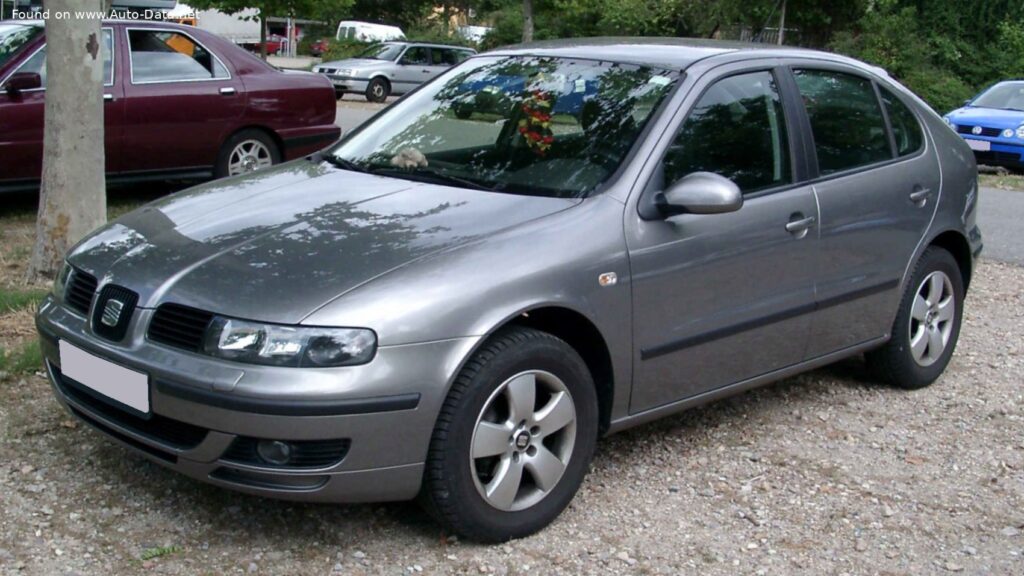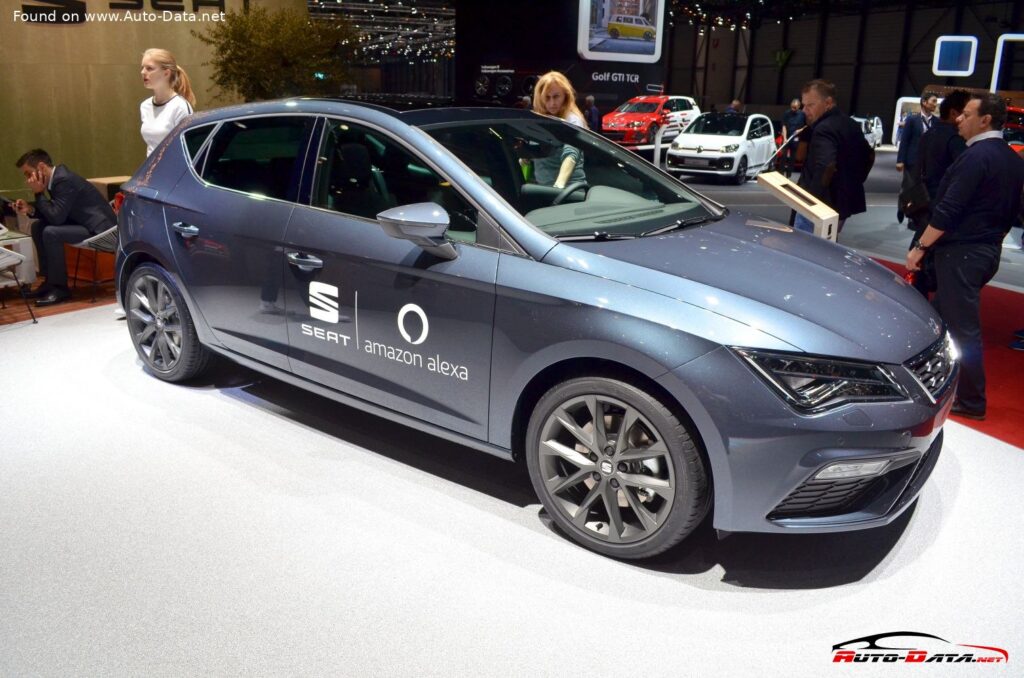
The SEAT Leon III, particularly the facelifted version introduced in 2016, represents a significant evolution in the Spanish automaker’s compact hatchback offering. Positioned within the highly competitive C-segment, the Leon aimed to blend practicality, sporty styling, and efficient performance. The 1.0 EcoTSI (115 Hp) ECOMOTIVE variant, produced from 2018 to 2020, was specifically engineered to maximize fuel economy and minimize emissions, appealing to environmentally conscious buyers. While SEAT is not directly sold in the United States, the Leon is a popular model throughout Europe, often competing with vehicles like the Volkswagen Golf, Ford Focus, and Opel Astra.
SEAT Leon III (Facelift 2016) 1.0 EcoTSI ECOMOTIVE: An Overview
The Leon III, launched in 2012, marked a departure for SEAT, moving towards a more sophisticated and design-focused approach. The 2016 facelift brought updated styling, enhanced technology, and refined engine options. The 1.0 EcoTSI ECOMOTIVE trim level focused on efficiency, utilizing a downsized turbocharged engine and aerodynamic enhancements to achieve impressive fuel consumption figures. This model was a key part of SEAT’s strategy to offer a range of Leon variants catering to diverse customer needs, from performance-oriented models to those prioritizing economy.
Engine & Performance
The heart of the Leon 1.0 EcoTSI ECOMOTIVE is a 999 cc inline three-cylinder gasoline engine. Despite its small displacement, this engine produces 115 horsepower at 5000-5500 rpm and 200 Nm (147.51 lb.-ft.) of torque between 2000-3500 rpm. This output is achieved through the use of direct fuel injection and a turbocharger with an intercooler. The engine’s power-to-liter ratio is a notable 115.1 hp/l, demonstrating its efficiency. Power is delivered to the front wheels via a six-speed manual transmission. Performance figures include a 0-100 km/h (0-62 mph) acceleration time of 9.8 seconds and a top speed of 198 km/h (123.03 mph). The 0-60 mph time is calculated at 9.3 seconds. The engine meets Euro 6 AG emission standards, and incorporates a particulate filter to further reduce emissions.
Design & Features
The SEAT Leon III is a five-door hatchback, offering a practical and versatile body style. The facelifted model features a more aggressive front fascia, redesigned headlights, and updated interior trim. The ECOMOTIVE variant often included subtle aerodynamic enhancements to improve fuel efficiency. Inside, the Leon offers seating for five passengers and a trunk capacity of 380 liters (13.42 cu. ft.). Key features focused on practicality and driver assistance. While specific features varied depending on the trim level and optional extras, standard equipment typically included ABS, power steering, and a range of safety systems. The interior design prioritized a clean and modern aesthetic, with a focus on ergonomics and usability. The vehicle’s kerb weight of 1122 kg (2473.59 lbs) contributes to its relatively nimble handling.
Technical Specifications
| Brand | Seat |
| Model | Leon |
| Generation | Leon III (facelift 2016) |
| Type (Engine) | 1.0 EcoTSI (115 Hp) ECOMOTIVE |
| Start of production | 2018 |
| End of production | 2020 |
| Powertrain Architecture | Internal Combustion engine |
| Body type | Hatchback |
| Seats | 5 |
| Doors | 5 |
| Fuel consumption (urban) | 5.6 l/100 km (42 US mpg, 50.4 UK mpg, 17.9 km/l) |
| Fuel consumption (extra urban) | 4.2 l/100 km (56 US mpg, 67.3 UK mpg, 23.8 km/l) |
| Fuel consumption (combined) | 4.8 l/100 km (49 US mpg, 58.9 UK mpg, 20.8 km/l) |
| CO2 emissions | 108 g/km |
| Fuel Type | Petrol (Gasoline) |
| Acceleration 0 – 100 km/h | 9.8 sec |
| Acceleration 0 – 62 mph | 9.8 sec |
| Acceleration 0 – 60 mph | 9.3 sec |
| Maximum speed | 198 km/h (123.03 mph) |
| Emission standard | Euro 6 AG |
| Weight-to-power ratio | 9.8 kg/Hp, 102.5 Hp/tonne |
| Weight-to-torque ratio | 5.6 kg/Nm, 178.3 Nm/tonne |
| Power | 115 Hp @ 5000-5500 rpm |
| Power per litre | 115.1 Hp/l |
| Torque | 200 Nm @ 2000-3500 rpm (147.51 lb.-ft. @ 2000-3500 rpm) |
| Engine layout | Front, Transverse |
| Engine Model/Code | DKRA, DKRF |
| Engine displacement | 999 cm3 (60.96 cu. in.) |
| Number of cylinders | 3 |
| Engine configuration | Inline |
| Cylinder Bore | 74.5 mm (2.93 in.) |
| Piston Stroke | 76.4 mm (3.01 in.) |
| Compression ratio | 10.5:1 |
| Number of valves per cylinder | 4 |
| Fuel injection system | Direct injection |
| Engine aspiration | Turbocharger, Intercooler |
| Engine oil capacity | 4 l (4.23 US qt | 3.52 UK qt) |
| Coolant | 8 l (8.45 US qt | 7.04 UK qt) |
| Kerb Weight | 1122 kg (2473.59 lbs.) |
| Max. weight | 1720 kg (3791.95 lbs.) |
| Max load | 598 kg (1318.36 lbs.) |
| Trunk (boot) space – minimum | 380 l (13.42 cu. ft.) |
| Fuel tank capacity | 50 l (13.21 US gal | 11 UK gal) |
| Permitted trailer load with brakes (8%) | 1300 kg (2866.01 lbs.) |
| Permitted trailer load with brakes (12%) | 1000 kg (2204.62 lbs.) |
| Permitted trailer load without brakes | 590 kg (1300.73 lbs.) |
| Length | 4282 mm (168.58 in.) |
| Width | 1816 mm (71.5 in.) |
| Width including mirrors | 1975 mm (77.76 in.) |
| Height | 1459 mm (57.44 in.) |
| Wheelbase | 2636 mm (103.78 in.) |
| Front track | 1549 mm (60.98 in.) |
| Rear (Back) track | 1520 mm (59.84 in.) |
| Minimum turning circle (turning diameter) | 10.3 m (33.79 ft.) |
| Drivetrain Architecture | The Internal combustion engine (ICE) drives the front wheels of the vehicle. |
| Drive wheel | Front wheel drive |
| Number of gears and type of gearbox | 6 gears, manual transmission |
| Front suspension | Independent type McPherson |
| Rear suspension | Semi-independent, coil spring |
| Front brakes | Ventilated discs, 276 mm |
| Rear brakes | Disc, 253 mm |
| Assisting systems | ABS (Anti-lock braking system) |
| Steering type | Steering rack and pinion |
| Power steering | Electric Steering |
| Tires size | 195/65 R15 91H; 205/55 R16 91V |
| Wheel rims size | 6J x 15; 6.5J x 16 |