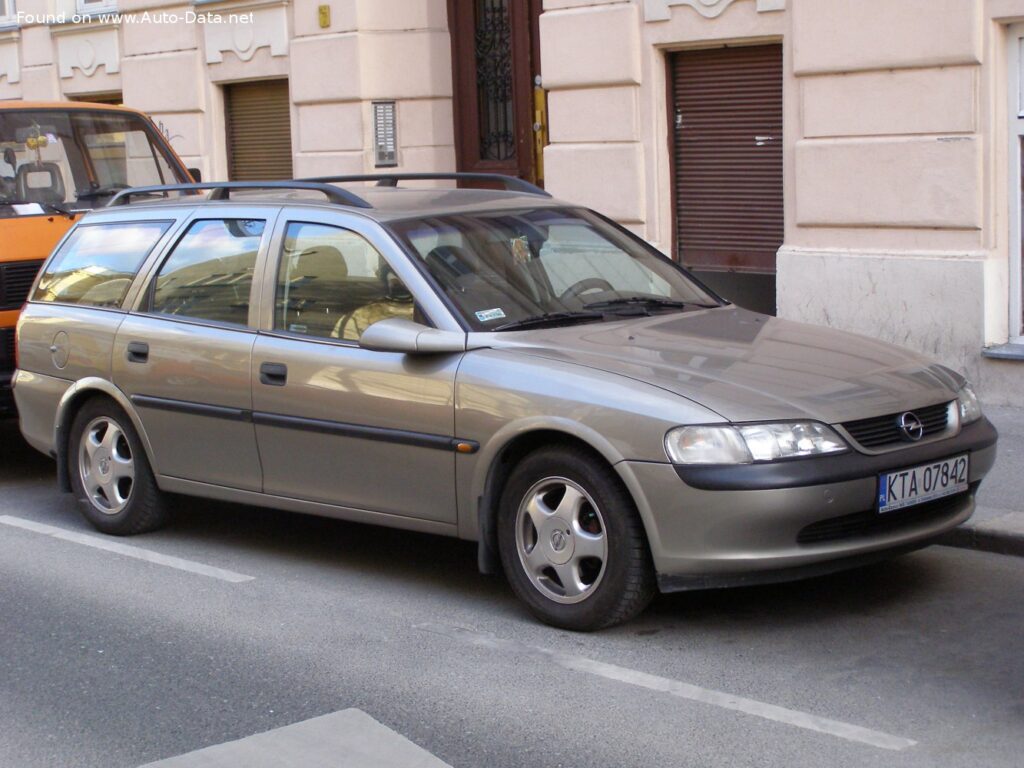
The Opel Vectra B Caravan 2.0 DTI 16V, produced between 1997 and 1998, represents a significant iteration in Opel’s mid-size family car lineage. As a station wagon (estate) variant of the Vectra B, it catered to European buyers seeking a practical and spacious vehicle. While not officially sold in the United States, the Vectra B held a prominent position in the competitive European D-segment, rivaling models like the Ford Mondeo and Volkswagen Passat. This particular version, equipped with a 2.0-liter direct injection turbodiesel engine, focused on fuel efficiency and reasonable performance, aligning with the demands of the European market at the time.
Opel Vectra B Caravan: A Detailed Overview
The Vectra B, launched in 1995, was a crucial model for Opel, aiming to modernize the brand’s image and offer a more refined driving experience. The Caravan body style, essentially the station wagon version, added a layer of practicality, increasing cargo capacity and versatility. The 2.0 DTI 16V variant specifically targeted buyers prioritizing fuel economy and lower running costs, making it a popular choice for long-distance commuters and families.
Engine & Performance
The heart of the Vectra B Caravan 2.0 DTI 16V is its 1995 cc inline-four cylinder diesel engine, designated the X20DTH. This engine utilizes direct injection and a turbocharger to produce 101 horsepower at 4300 rpm and 205 Nm (151.2 lb.-ft.) of torque at 1650 rpm. The common rail diesel injection system was relatively advanced for its time, contributing to improved fuel efficiency and reduced emissions. While not a performance-oriented vehicle, the 2.0 DTI 16V offered adequate power for everyday driving and highway cruising. Acceleration from 0 to 100 km/h (0-62 mph) took approximately 14 seconds, with a top speed of 187 km/h (116.2 mph). The engine’s relatively high compression ratio of 18.5:1 is typical for a diesel engine, maximizing efficiency. The front-wheel-drive configuration, coupled with a five-speed manual transmission, provided a conventional and reliable drivetrain.
Design & Features
The Vectra B Caravan’s design was a departure from its predecessor, adopting a more rounded and aerodynamic profile. The station wagon body style offered a generous 460 liters (16.24 cu. ft.) of trunk space with the rear seats up, expanding to a substantial 1490 liters (52.62 cu. ft.) when folded down. This made it a highly practical vehicle for families and those needing to transport larger items. Safety features for the era included ABS (Anti-lock Braking System), which was becoming increasingly common on European vehicles. The interior was designed with practicality in mind, offering comfortable seating for five passengers. Hydraulic power steering provided ease of maneuverability. The vehicle’s dimensions – 4490 mm (176.77 in.) in length, 1707 mm (67.2 in.) in width, and 1490 mm (58.66 in.) in height – positioned it squarely within the mid-size segment. The drag coefficient of 0.32 contributed to reasonable fuel efficiency at highway speeds.
Technical Specifications
| Brand | Opel |
| Model | Vectra |
| Generation | Vectra B Caravan |
| Type (Engine) | 2.0 DTI 16V (101 Hp) |
| Start of production | 1997 |
| End of production | November, 1998 |
| Powertrain Architecture | Internal Combustion engine |
| Body type | Station wagon (estate) |
| Seats | 5 |
| Doors | 5 |
| Fuel consumption (urban) | 8.1 l/100 km (29 US mpg, 34.9 UK mpg, 12.3 km/l) |
| Fuel consumption (extra urban) | 5 l/100 km (47 US mpg, 56.5 UK mpg, 20 km/l) |
| Fuel consumption (combined) | 6 l/100 km (39.2 US mpg, 47.1 UK mpg, 16.7 km/l) |
| CO2 emissions | 167 g/km |
| Fuel Type | Diesel |
| Acceleration 0 – 100 km/h | 14 sec |
| Acceleration 0 – 62 mph | 14 sec |
| Acceleration 0 – 60 mph | 13.3 sec |
| Maximum speed | 187 km/h (116.2 mph) |
| Weight-to-power ratio | 13.4 kg/Hp, 74.8 Hp/tonne |
| Weight-to-torque ratio | 6.6 kg/Nm, 151.9 Nm/tonne |
| Power | 101 Hp @ 4300 rpm |
| Power per litre | 50.6 Hp/l |
| Torque | 205 Nm @ 1650 rpm (151.2 lb.-ft. @ 1650 rpm) |
| Engine layout | Front, Transverse |
| Engine Model/Code | X20DTH |
| Engine displacement | 1995 cm3 (121.74 cu. in.) |
| Number of cylinders | 4 |
| Engine configuration | Inline |
| Cylinder Bore | 84 mm (3.31 in.) |
| Piston Stroke | 90 mm (3.54 in.) |
| Compression ratio | 18.5:1 |
| Number of valves per cylinder | 4 |
| Fuel injection system | Diesel Commonrail |
| Engine aspiration | Turbocharger |
| Valvetrain | OHC |
| Engine oil capacity | 5.5 l (5.81 US qt | 4.84 UK qt) |
| Coolant | 7.2 l (7.61 US qt | 6.34 UK qt) |
| Kerb Weight | 1350 kg (2976.24 lbs.) |
| Max. weight | 1920 kg (4232.88 lbs.) |
| Max load | 570 kg (1256.63 lbs.) |
| Trunk (boot) space – minimum | 460 l (16.24 cu. ft.) |
| Trunk (boot) space – maximum | 1490 l (52.62 cu. ft.) |
| Fuel tank capacity | 60 l (15.85 US gal | 13.2 UK gal) |
| Length | 4490 mm (176.77 in.) |
| Width | 1707 mm (67.2 in.) |
| Width including mirrors | 1841 mm (72.48 in.) |
| Height | 1490 mm (58.66 in.) |
| Wheelbase | 2637 mm (103.82 in.) |
| Front track | 1484 mm (58.43 in.) |
| Rear (Back) track | 1473 mm (57.99 in.) |
| Ride height (ground clearance) | 160 mm (6.3 in.) |
| Drag coefficient (Cd) | 0.32 |
| Drive wheel | Front wheel drive |
| Number of gears and type of gearbox | 5 gears, manual transmission |
| Front suspension | Coil spring |
| Rear suspension | Coil spring |
| Front brakes | Ventilated discs |
| Rear brakes | Disc |
| Assisting systems | ABS (Anti-lock braking system) |
| Steering type | Steering rack and pinion |
| Power steering | Hydraulic Steering |
| Tires size | 195/65 R15 |
| Wheel rims size | 15 |
The Opel Vectra B Caravan 2.0 DTI 16V, while not a high-performance vehicle, offered a compelling package of practicality, fuel efficiency, and reasonable comfort for European buyers in the late 1990s. Its robust diesel engine and spacious interior made it a popular choice for families and those covering long distances. Though never officially available in the US market, it represents a significant chapter in Opel’s history and the evolution of the modern family car.