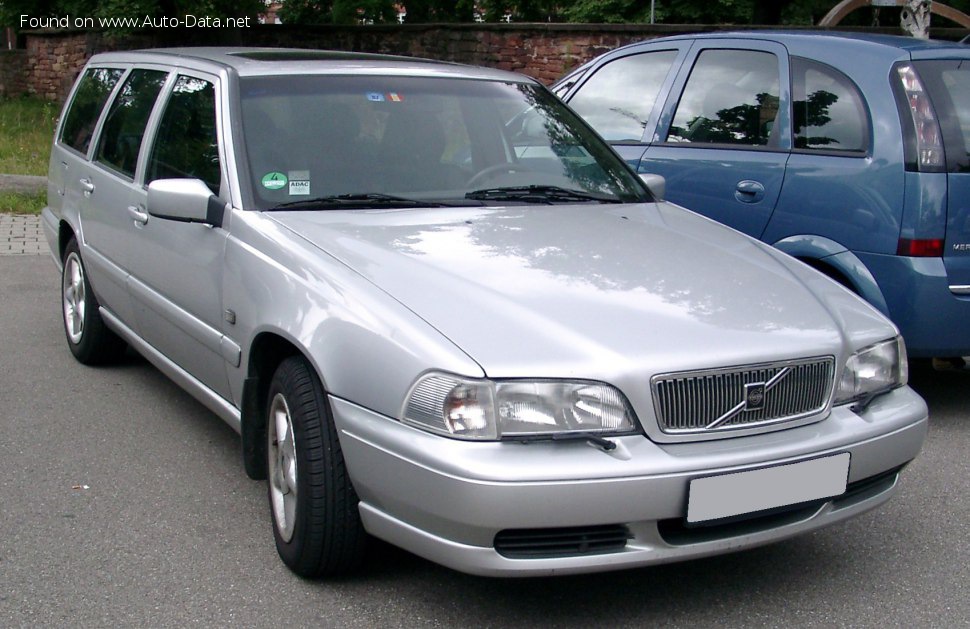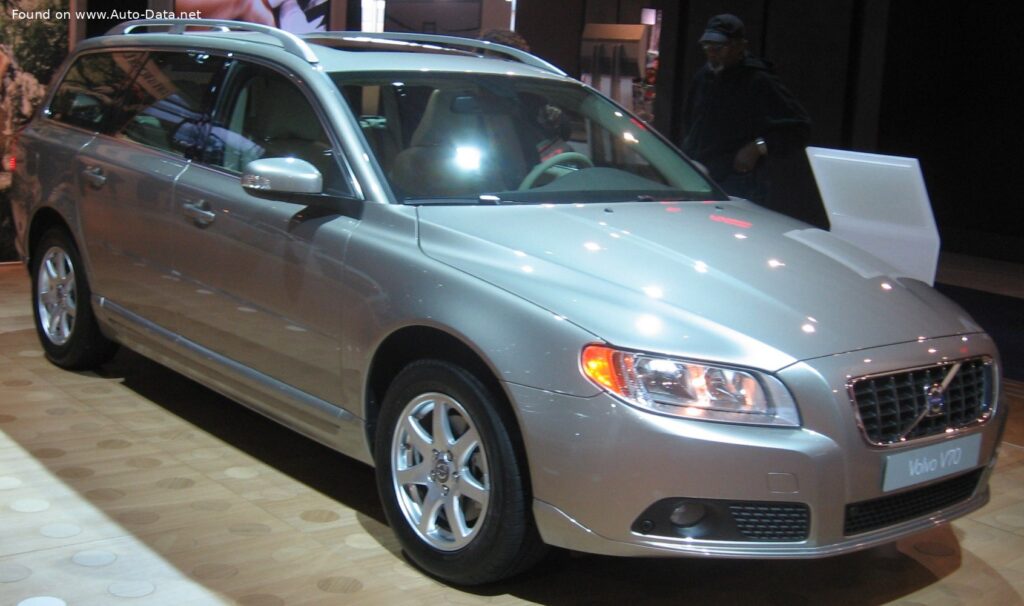
The Volvo V70 III 2.0 T5 Automatic, produced between 2011 and 2013, represents the third generation of Volvo’s popular station wagon, known as the V70. This model continued Volvo’s tradition of building practical, safe, and comfortable vehicles, primarily aimed at the European market where the estate car (station wagon) body style remains highly favored. While not widely sold in the United States, the V70 III offered a compelling blend of performance, space, and Scandinavian design. It served as a more premium alternative to compact SUVs, appealing to buyers needing versatility without sacrificing driving dynamics.
Volvo V70 III 2.0 T5: A Detailed Overview
The V70 III built upon the foundations laid by its predecessors, offering increased refinement and a more modern interior. It shared its platform with the Volvo S80 sedan and the Ford Mondeo, a result of Volvo’s ownership by Ford at the time. The 2.0 T5 variant, equipped with a turbocharged 2.0-liter engine and a six-speed automatic transmission, provided a balance between fuel efficiency and spirited performance. The V70 III was positioned as a family vehicle, prioritizing passenger comfort and cargo capacity alongside Volvo’s renowned safety features.
Engine & Performance
The heart of the V70 III 2.0 T5 is a 1.999-liter (121.99 cubic inches) inline-four cylinder engine, designated the B4204T7. This engine utilizes a turbocharger and intercooler to produce 240 horsepower at 5500 rpm and 320 Newton-meters (236.02 lb.-ft.) of torque between 1800 and 4980 rpm. This configuration delivers a responsive driving experience, with ample power for both highway cruising and overtaking maneuvers. The six-speed automatic transmission provides smooth gear changes, contributing to overall refinement.
Performance figures demonstrate the V70 III 2.0 T5’s capabilities. Acceleration from 0 to 100 km/h (0-62 mph) takes 7.9 seconds, while the 0-60 mph sprint is achieved in approximately 7.5 seconds. The vehicle boasts a maximum speed of 235 km/h (146.02 mph). The weight-to-power ratio of 7.5 kg/Hp and a weight-to-torque ratio of 5.6 kg/Nm further highlight the engine’s efficiency and responsiveness. Fuel consumption is rated at 8.4 liters per 100 kilometers (28 US mpg), with CO2 emissions of 195 g/km.
Design & Features
The Volvo V70 III maintains the classic station wagon profile, characterized by a long roofline and a spacious cargo area. Its exterior design is typically Scandinavian – understated, elegant, and functional. The vehicle’s dimensions are substantial, measuring 4823 mm (189.88 inches) in length, 1907 mm (75.08 inches) in width (without mirrors), and 1547 mm (60.91 inches) in height. A wheelbase of 2816 mm (110.87 inches) contributes to a stable and comfortable ride.
Inside, the V70 III offers a comfortable and well-appointed cabin. The interior is designed with practicality in mind, featuring supportive seats and a user-friendly layout. The trunk (boot) space is a key highlight, offering a minimum capacity of 575 liters (20.31 cubic feet). With the rear seats folded down, cargo capacity expands significantly, making the V70 III ideal for families and those requiring ample space for luggage or equipment. Safety was a paramount concern for Volvo, and the V70 III is equipped with a comprehensive suite of safety features, including ABS (Anti-lock Braking System) and numerous airbags. The vehicle also offers a range of convenience features, such as climate control, a premium audio system, and optional navigation.
Technical Specifications
| Brand | Volvo |
| Model | V70 |
| Generation | V70 III |
| Type (Engine) | 2.0 T5 (240 Hp) Automatic |
| Start of production | 2011 |
| End of production | 2013 |
| Powertrain Architecture | Internal Combustion engine |
| Body type | Station wagon (estate) |
| Seats | 5 |
| Doors | 5 |
| Fuel consumption (combined) | 8.4 l/100 km |
| Fuel consumption (US mpg) | 28 US mpg |
| Fuel consumption (UK mpg) | 33.6 UK mpg |
| CO2 emissions | 195 g/km |
| Fuel Type | Petrol (Gasoline) |
| Acceleration 0 – 100 km/h | 7.9 sec |
| Acceleration 0 – 62 mph | 7.9 sec |
| Acceleration 0 – 60 mph | 7.5 sec |
| Maximum speed | 235 km/h (146.02 mph) |
| Weight-to-power ratio | 7.5 kg/Hp |
| Weight-to-torque ratio | 5.6 kg/Nm |
| Power | 240 Hp @ 5500 rpm |
| Torque | 320 Nm @ 1800-4980 rpm (236.02 lb.-ft. @ 1800-4980 rpm) |
| Maximum engine speed | 6500 rpm |
| Engine layout | Front, Transverse |
| Engine Model/Code | B4204T7 |
| Engine displacement | 1999 cm3 (121.99 cu. in.) |
| Number of cylinders | 4 |
| Engine configuration | Inline |
| Cylinder Bore | 87.5 mm (3.44 in.) |
| Piston Stroke | 83.1 mm (3.27 in.) |
| Compression ratio | 10:1 |
| Number of valves per cylinder | 4 |
| Engine aspiration | Turbocharger, Intercooler |
| Valvetrain | DOHC |
| Engine oil capacity | 5.4 l (5.71 US qt | 4.75 UK qt) |
| Coolant | 10.5 l (11.1 US qt | 9.24 UK qt) |
| Kerb Weight | 1806 kg (3981.55 lbs.) |
| Max. weight | 2410 kg (5313.14 lbs.) |
| Max load | 604 kg (1331.59 lbs.) |
| Trunk (boot) space – minimum | 575 l (20.31 cu. ft.) |
| Fuel tank capacity | 70 l (18.49 US gal | 15.4 UK gal) |
| Max. roof load | 100 kg (220.46 lbs.) |
| Permitted trailer load with brakes (12%) | 1800 kg (3968.32 lbs.) |
| Permitted trailer load without brakes | 750 kg (1653.47 lbs.) |
| Length | 4823 mm (189.88 in.) |
| Width with mirrors folded | 1907 mm (75.08 in.) |
| Width including mirrors | 2106 mm (82.91 in.) |
| Height | 1547 mm (60.91 in.) |
| Wheelbase | 2816 mm (110.87 in.) |
| Front track | 1588 mm (62.52 in.) |
| Rear (Back) track | 1586 mm (62.44 in.) |
| Ride height (ground clearance) | 151 mm (5.94 in.) |
| Drag coefficient (Cd) | 0.31 |
| Minimum turning circle (turning diameter) | 11.7 m (38.39 ft.) |
| Drivetrain Architecture | Front wheel drive |
| Number of gears and type of gearbox | 6 gears, automatic transmission |
| Front suspension | Independent, type McPherson with coil spring and anti-roll bar |
| Rear suspension | Independent coil spring |
| Front brakes | Ventilated discs |
| Rear brakes | Disc |