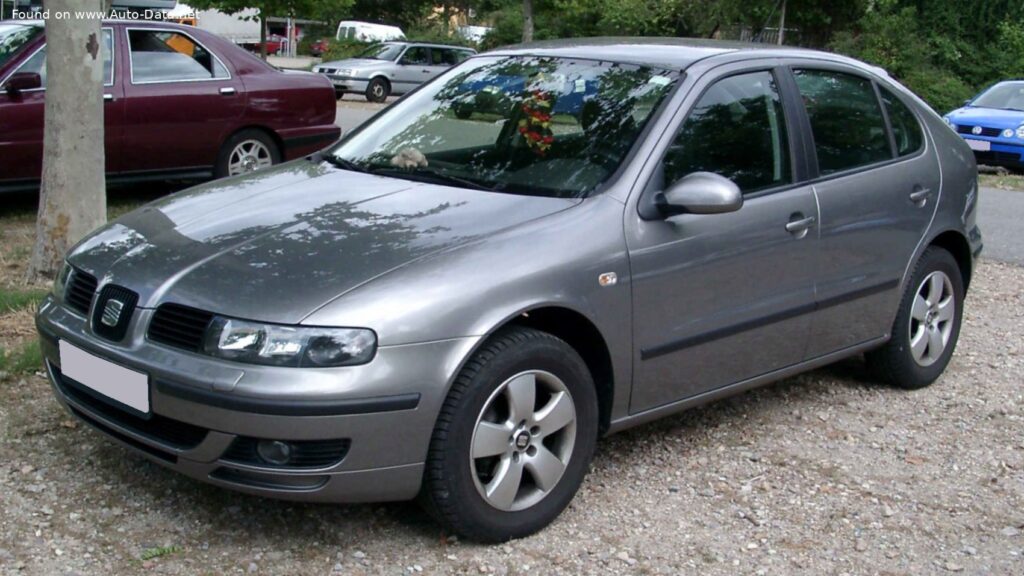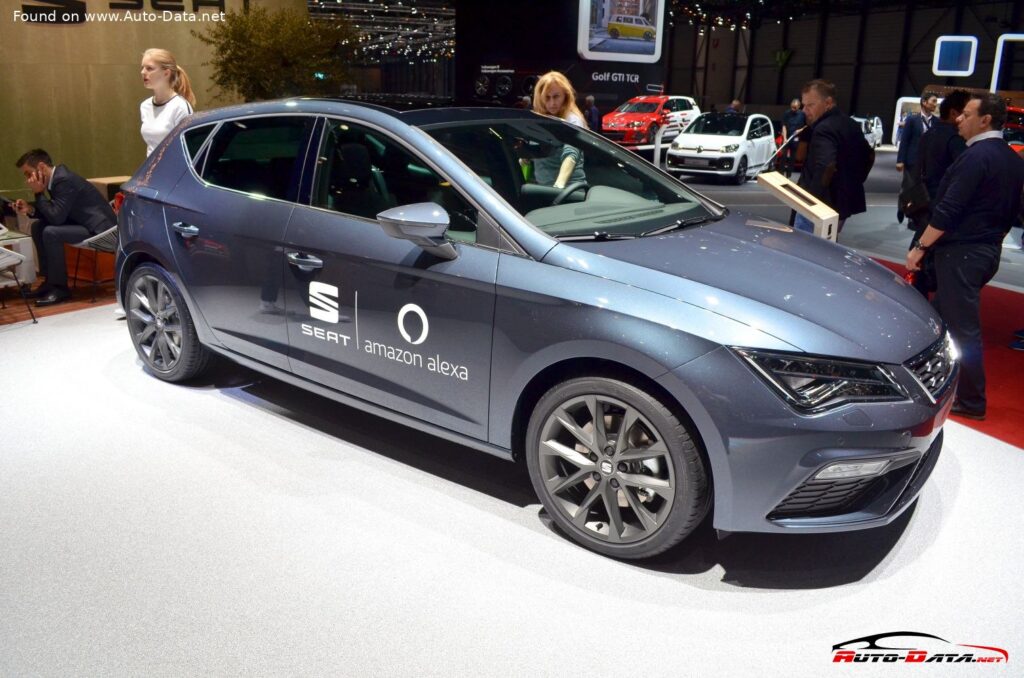
The SEAT Leon III, particularly the facelifted version introduced in 2016, represents a significant evolution in the Spanish automaker’s compact hatchback offering. Positioned within the highly competitive C-segment, the Leon aimed to blend practicality, style, and driving enjoyment. The 1.4 TGI variant, powered by a Compressed Natural Gas (CNG) engine, was a key part of SEAT’s strategy to offer more environmentally conscious options, particularly within the European market where CNG infrastructure is more developed. While not officially sold in the United States, the Leon is a popular choice in Europe, competing with models like the Volkswagen Golf, Ford Focus, and Opel Astra.
SEAT Leon III (Facelift 2016) 1.4 TGI: A Detailed Overview
The Leon III, launched in 2012, was a pivotal model for SEAT, marking a shift towards a more mature and sophisticated design language. The 2016 facelift brought refreshed styling, updated technology, and improved efficiency. The 1.4 TGI model specifically catered to drivers seeking lower running costs and reduced emissions, leveraging the benefits of CNG as an alternative fuel. This model was primarily sold in European markets with established CNG refueling networks.
Engine & Performance
The heart of the Leon 1.4 TGI is a 1.4-liter inline four-cylinder engine producing 110 horsepower (Hp) at 4800-6000 rpm and 200 Newton-meters (147.51 lb.-ft.) of torque between 1500-3500 rpm. This engine utilizes direct fuel injection and is turbocharged, providing a balance of performance and efficiency. The engine is transversely mounted at the front of the vehicle. The power-to-weight ratio stands at 11.7 kg/Hp, or 85.7 Hp/tonne, indicating a reasonably sprightly driving experience. Acceleration from 0 to 100 km/h (0-62 mph) takes 10.9 seconds, while 0-60 mph is achieved in approximately 10.4 seconds. The vehicle boasts a maximum speed of 194 km/h (120.55 mph). The engine’s ability to run on both gasoline and CNG provides flexibility, with the CNG system prioritizing this fuel source when available. Fuel economy is rated at 5.3 liters per 100 kilometers (44.4 US mpg, 53.3 UK mpg, 18.9 km/l) on a combined cycle when running on gasoline, and 5.4 kg/100 km when running on CNG. CO2 emissions are 124 g/km on gasoline and 96 g/km on CNG, highlighting the environmental benefits of the latter.
Design & Features
The SEAT Leon III is a five-door hatchback, offering a practical and versatile body style. The facelifted model features a more aggressive front fascia, with redesigned headlights and a larger grille. Inside, the cabin is well-appointed, with a focus on ergonomics and build quality. The 1.4 TGI variant typically includes features such as air conditioning, a touchscreen infotainment system, and various safety systems. The interior offers seating for five passengers and a trunk (boot) space of 275 liters (9.71 cu. ft.) – a competitive figure for the hatchback segment. Safety features, crucial in modern vehicles, include ABS (Anti-lock Braking System) and a robust chassis designed for stability. The Leon’s design emphasizes a sporty aesthetic, appealing to a younger demographic. The vehicle’s dimensions are 4282 mm (168.58 in.) in length, 1816 mm (71.5 in.) in width, and 1459 mm (57.44 in.) in height, with a wheelbase of 2636 mm (103.78 in.).
Technical Specifications
| Brand | Seat |
| Model | Leon |
| Generation | Leon III (facelift 2016) |
| Type (Engine) | 1.4 TGI (110 Hp) CNG |
| Start of production | 2016 |
| End of production | 2018 |
| Powertrain Architecture | Internal Combustion engine |
| Body type | Hatchback |
| Seats | 5 |
| Doors | 5 |
| Fuel consumption (economy) – combined | 5.3 l/100 km |
| Fuel consumption (economy) – combined (CNG) | 5.4 kg/100 km |
| CO2 emissions | 124 g/km |
| CO2 emissions (CNG) | 96 g/km |
| Fuel Type | Petrol / CNG |
| Acceleration 0 – 100 km/h | 10.9 sec |
| Acceleration 0 – 62 mph | 10.9 sec |
| Acceleration 0 – 60 mph | 10.4 sec |
| Maximum speed | 194 km/h (120.55 mph) |
| Emission standard | Euro 6 |
| Weight-to-power ratio | 11.7 kg/Hp |
| Weight-to-torque ratio | 6.4 kg/Nm |
| Power | 110 Hp @ 4800-6000 rpm |
| Torque | 200 Nm @ 1500-3500 rpm (147.51 lb.-ft. @ 1500-3500 rpm) |
| Engine layout | Front, Transverse |
| Engine Model/Code | CPWA, CZBA |
| Engine displacement | 1395 cm3 (85.13 cu. in.) |
| Number of cylinders | 4 |
| Engine configuration | Inline |
| Cylinder Bore | 74.5 mm (2.93 in.) |
| Piston Stroke | 80 mm (3.15 in.) |
| Compression ratio | 10.5:1 |
| Number of valves per cylinder | 4 |
| Fuel injection system | Direct injection |
| Engine aspiration | Turbocharger |
| Engine oil capacity | 4 l (4.23 US qt | 3.52 UK qt) |
| Coolant | 8 l (8.45 US qt | 7.04 UK qt) |
| Kerb Weight | 1284 kg (2830.74 lbs.) |
| Max. weight | 1840 kg (4056.51 lbs.) |
| Max load | 556 kg (1225.77 lbs.) |
| Trunk (boot) space – minimum | 275 l (9.71 cu. ft.) |
| Fuel tank capacity | 50 l (13.21 US gal | 11 UK gal) |
| Permitted trailer load with brakes (12%) | 1400 kg (3086.47 lbs.) |
| Length | 4282 mm (168.58 in.) |
| Width | 1816 mm (71.5 in.) |
| Height | 1459 mm (57.44 in.) |
| Wheelbase | 2636 mm (103.78 in.) |
| Front track | 1534-1549 mm (60.39 – 60.98 in.) |
| Rear (Back) track | 1508-1520 mm (59.37 – 59.84 in.) |
| Minimum turning circle (turning diameter) | 10.3 m (33.79 ft.) |
| Drivetrain Architecture | The Internal combustion engine (ICE) drives the front wheels of the vehicle. |
| Drive wheel | Front wheel drive |
| Number of gears and type of gearbox | 6 gears, manual transmission |
| Front suspension | Independent, type McPherson with coil spring and anti-roll bar |
| Rear suspension | Semi-independent, coil spring |
| Front brakes | Ventilated discs |
| Rear brakes | Disc |
| Assisting systems | ABS (Anti-lock braking system) |
| Steering type | Steering rack and pinion |
| Power steering | Electric Steering |
| Tires size | 195/65 R15; 205/55 R16; 225/45 R17; 225/40 R18 |
| Wheel rims size | 15; 16; 17; 18 |
The SEAT Leon III 1.4 TGI, while not a high-performance vehicle, offered a compelling package for drivers seeking an economical and environmentally friendly compact hatchback. Its blend of practicality, style, and alternative fuel capability made it a popular choice in European markets.