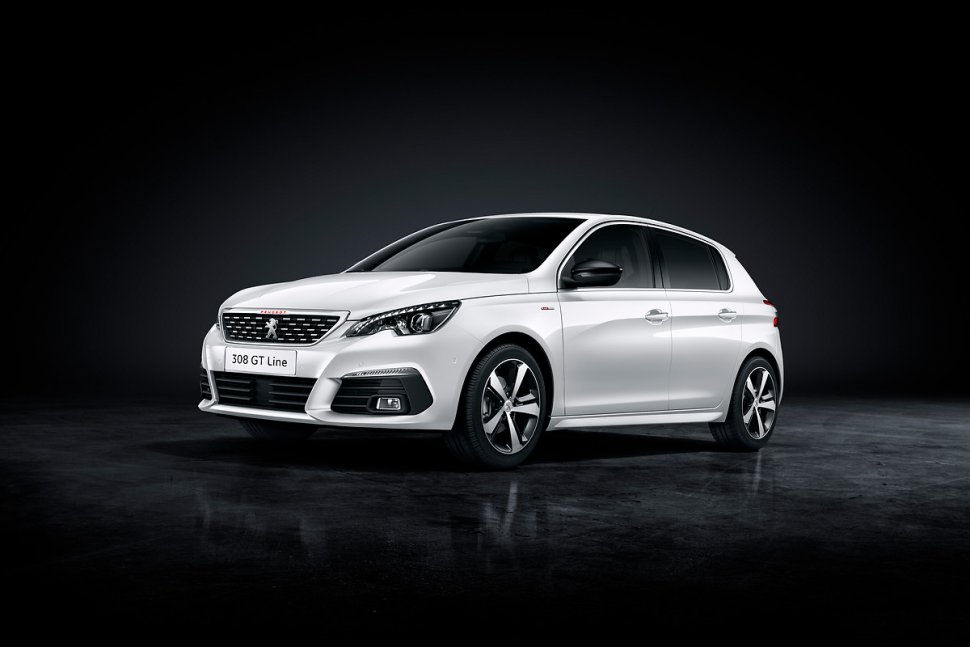
The Peugeot 308 II (Phase II), specifically the GTi 1.6 PureTech variant producing 263 horsepower, represents a significant evolution in Peugeot’s compact hatchback offerings. Introduced in 2018 as part of a mid-life refresh for the second-generation 308, this model aimed to deliver a compelling blend of performance, practicality, and style within the highly competitive European C-segment. While not officially sold in the United States, the 308 consistently ranked as a popular choice in Europe, competing with vehicles like the Volkswagen Golf, Ford Focus, and Opel Astra. The Phase II update brought styling revisions, enhanced technology, and refinements to the powertrain, solidifying the 308’s position as a strong contender in its class.
Peugeot 308 II GTi 1.6 PureTech: A Performance Hatchback
The GTi 1.6 PureTech model is the performance-oriented version of the 308 II. It was designed to appeal to drivers seeking a more engaging and sporty driving experience. The “PureTech” designation refers to Peugeot’s family of direct-injection, turbocharged gasoline engines, known for their efficiency and responsiveness. The Phase II update further refined the GTi, focusing on improving handling characteristics and driver engagement. This model occupied a niche between mainstream compact hatchbacks and more focused performance cars, offering a balance of everyday usability and spirited driving dynamics.
Engine & Performance
At the heart of the 308 GTi 1.6 PureTech lies a 1.6-liter inline-four cylinder engine, turbocharged and direct-injected. This engine produces 263 horsepower at 6,000 rpm and 340 Nm (250.77 lb.-ft.) of torque at 2,100 rpm. The engine’s specific output is impressive, delivering 164.6 horsepower per liter. Power is delivered to the front wheels via a six-speed manual transmission. This configuration allows for a 0-100 km/h (0-62 mph) acceleration time of 6.0 seconds, and a 0-60 mph time of 5.7 seconds. The car boasts a maximum speed of 250 km/h (155.34 mph). The engine’s turbocharging and direct injection contribute to both its performance and relatively good fuel economy. The weight-to-power ratio of 5.3 kg/Hp and weight-to-torque ratio of 4.1 kg/Nm further highlight the car’s performance capabilities.
Design & Features
The Peugeot 308 II Phase II is a five-door hatchback, offering seating for five passengers. Its exterior design features a sporty aesthetic, with subtle but effective styling cues that differentiate it from the standard 308 models. These include a more aggressive front bumper, a rear diffuser, and unique alloy wheels (19-inch in this case). Inside, the GTi model features sport seats, aluminum pedals, and a leather-wrapped steering wheel. The interior is designed with a focus on ergonomics and driver comfort. The trunk offers 470 liters (16.6 cu. ft.) of space with the rear seats up, expanding to 855 liters (30.19 cu. ft.) when folded down. Safety features, typical of modern European vehicles, include multiple airbags, anti-lock brakes, electronic stability control, and various driver-assistance systems. The car’s dimensions are 4253 mm (167.44 in.) in length, 1804 mm (71.02 in.) in width, and 1446 mm (56.93 in.) in height, with a wheelbase of 2617 mm (103.03 in.).
Technical Specifications
| Brand | Peugeot |
| Model | 308 |
| Generation | 308 II (Phase II, 2017) |
| Type (Engine) | GTi 1.6 PureTech (263 Hp) |
| Start of production | 2018 |
| End of production | June, 2019 |
| Powertrain Architecture | Internal Combustion engine |
| Body type | Hatchback |
| Seats | 5 |
| Doors | 5 |
| Fuel consumption (urban) | 8.5 l/100 km (27.7 US mpg, 33.2 UK mpg, 11.8 km/l) |
| Fuel consumption (extra urban) | 5.3 l/100 km (44.4 US mpg, 53.3 UK mpg, 18.9 km/l) |
| Fuel consumption (combined) | 6.5 l/100 km (36.2 US mpg, 43.5 UK mpg, 15.4 km/l) |
| CO2 emissions | 148 g/km |
| Fuel Type | Petrol (Gasoline) |
| Acceleration 0 – 100 km/h | 6 sec |
| Acceleration 0 – 62 mph | 6 sec |
| Acceleration 0 – 60 mph | 5.7 sec |
| Maximum speed | 250 km/h (155.34 mph) |
| Emission standard | Euro 6d-Temp |
| Weight-to-power ratio | 5.3 kg/Hp |
| Weight-to-torque ratio | 4.1 kg/Nm |
| Power | 263 Hp @ 6000 rpm |
| Torque | 340 Nm @ 2100 rpm (250.77 lb.-ft. @ 2100 rpm) |
| Engine layout | Front, Transverse |
| Engine Model/Code | EGX EP6FADTX |
| Engine displacement | 1598 cm3 (97.52 cu. in.) |
| Number of cylinders | 4 |
| Engine configuration | Inline |
| Fuel injection system | Direct injection |
| Engine aspiration | Turbocharger, Intercooler |
| Engine oil capacity | 4.25 l (4.49 US qt | 3.74 UK qt) |
| Kerb Weight | 1390-1419 kg (3064.43 – 3128.36 lbs.) |
| Max. weight | 1790 kg (3946.27 lbs.) |
| Max load | 371-400 kg (817.91 – 881.85 lbs.) |
| Trunk (boot) space – minimum | 470 l (16.6 cu. ft.) |
| Trunk (boot) space – maximum | 855 l (30.19 cu. ft.) |
| Max. roof load | 80 kg (176.37 lbs.) |
| Length | 4253 mm (167.44 in.) |
| Width | 1804 mm (71.02 in.) |
| Height | 1446 mm (56.93 in.) |
| Wheelbase | 2617 mm (103.03 in.) |
| Drivetrain Architecture | Front wheel drive |
| Number of gears and type of gearbox | 6 gears, manual transmission |
| Front brakes | Disc |
| Rear brakes | Disc |
| Tires size | 235/35 R19 |
| Wheel rims size | 19 |
The Peugeot 308 II GTi 1.6 PureTech (Phase II) represents a well-rounded and engaging hatchback. While never officially available in the US market, it showcased Peugeot’s engineering capabilities and commitment to delivering a dynamic driving experience within the competitive European automotive landscape. Its combination of performance, practicality, and style made it a popular choice for drivers seeking a sporty yet versatile vehicle.