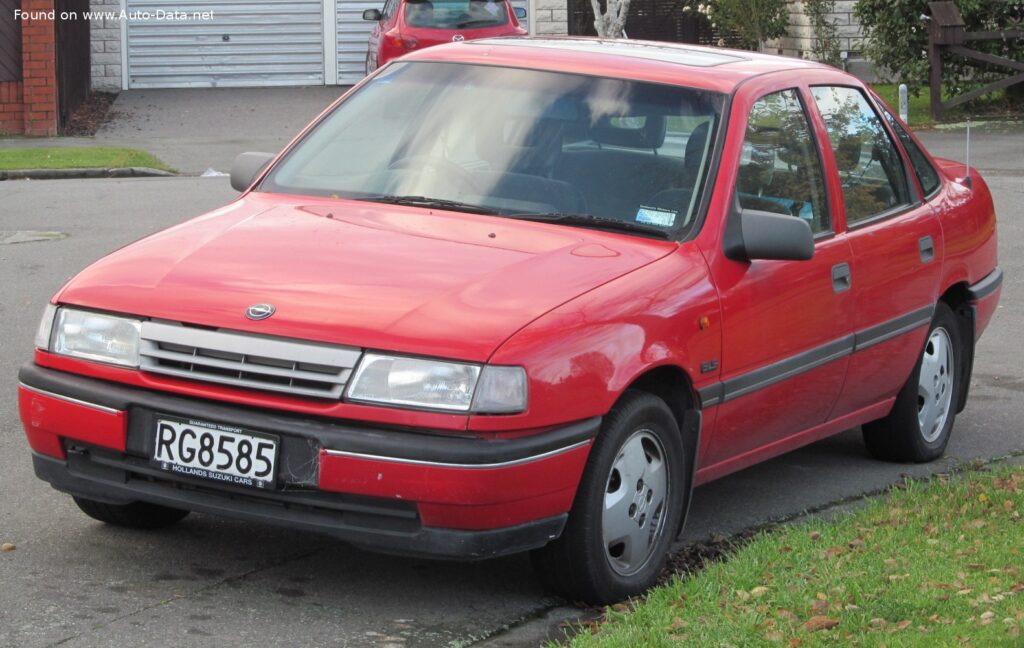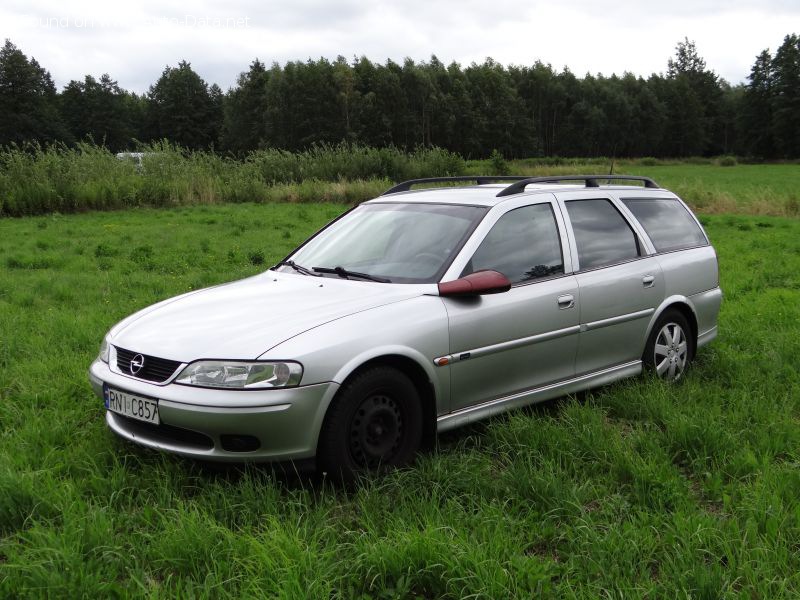
The Opel Vectra B Caravan (facelift 1999) 1.6i represents a significant iteration of Opel’s mid-size family car, the Vectra. Introduced as a facelift to the B generation, which ran from 1995 to 2002, this model focused on refining the existing platform with updated styling, improved safety features, and revised engine options. The Caravan designation signifies the station wagon (estate) body style, popular in Europe for its practicality and increased cargo capacity. While not officially sold in the United States, the Vectra B competed with vehicles like the Ford Mondeo and Volkswagen Passat in the European market, offering a blend of comfort, affordability, and functionality.
Opel Vectra B Caravan: A Detailed Overview
The Vectra B was Opel’s attempt to move upmarket and challenge established players in the D-segment. The facelifted version, released in 1999, brought subtle but noticeable changes to the exterior, including revised headlights, a new grille, and updated bumpers. These alterations aimed to modernize the car’s appearance and enhance its appeal to a broader customer base. The 1.6i variant, powered by a 1.6-liter inline-four engine, was positioned as an entry-level option, prioritizing fuel efficiency and affordability over outright performance.
Engine & Performance
The heart of the Vectra B Caravan 1.6i is the X16SZR engine, a 1.6-liter (1598 cm3 or 97.52 cu. in.) inline-four cylinder petrol engine. This naturally aspirated engine produces 75 horsepower (Hp) at 5200 rpm and 128 Newton-meters (94.41 lb.-ft.) of torque at 2800 rpm. While not a powerhouse, the engine provides adequate performance for everyday driving. Acceleration from 0 to 100 km/h (0-62 mph) takes approximately 17 seconds, and it reaches a maximum speed of 167 km/h (103.77 mph). The engine’s power-to-weight ratio is 59.8 Hp per tonne, and the torque-to-weight ratio is 102 Nm per tonne. Fuel economy is rated at 7.9 liters per 100 kilometers (29.8 US mpg or 35.8 UK mpg) on a combined cycle, with CO2 emissions of 188 g/km. The engine utilizes a multi-port fuel injection system and an overhead camshaft (OHC) valvetrain with 2 valves per cylinder.
Design & Features
The Vectra B Caravan is a five-door station wagon designed to maximize practicality. Its spacious interior comfortably accommodates five passengers, and the large cargo area offers significant versatility. With the rear seats up, the trunk provides 460 liters (16.24 cu. ft.) of space, expanding to a substantial 1490 liters (52.62 cu. ft.) when the rear seats are folded down. The vehicle’s dimensions are 4490 mm (176.77 in.) in length, 1707 mm (67.2 in.) in width, and 1490 mm (58.66 in.) in height. The wheelbase measures 2637 mm (103.82 in.).
Safety features for the 1999 model year included an Anti-lock Braking System (ABS) as standard equipment. The braking system consists of ventilated discs on the front wheels and drum brakes on the rear. Steering is provided by a hydraulic power steering system connected to a rack and pinion mechanism. The vehicle rides on 195/65 R15 tires mounted on 5.5J x 15 steel or alloy wheels. The drag coefficient of 0.32 contributes to reasonable aerodynamic efficiency. The kerb weight of the vehicle is 1255 kg (2766.8 lbs), with a maximum permissible weight of 1850 kg (4078.55 lbs) and a maximum load capacity of 595 kg (1311.75 lbs).
Technical Specifications
| Brand | Opel |
| Model | Vectra |
| Generation | Vectra B Caravan (facelift 1999) |
| Type (Engine) | 1.6i (75 Hp) |
| Start of production | January, 1999 |
| End of production | 2000 |
| Powertrain Architecture | Internal Combustion engine |
| Body type | Station wagon (estate) |
| Seats | 5 |
| Doors | 5 |
| Fuel consumption (urban) | 10.7 l/100 km (22 US mpg, 26.4 UK mpg, 9.3 km/l) |
| Fuel consumption (extra urban) | 6.2 l/100 km (37.9 US mpg, 45.6 UK mpg, 16.1 km/l) |
| Fuel consumption (combined) | 7.9 l/100 km (29.8 US mpg, 35.8 UK mpg, 12.7 km/l) |
| CO2 emissions | 188 g/km |
| Fuel Type | Petrol (Gasoline) |
| Acceleration 0 – 100 km/h | 17 sec |
| Acceleration 0 – 62 mph | 17 sec |
| Acceleration 0 – 60 mph | 16.2 sec |
| Maximum speed | 167 km/h (103.77 mph) |
| Weight-to-power ratio | 16.7 kg/Hp |
| Weight-to-torque ratio | 9.8 kg/Nm |
| Power | 75 Hp @ 5200 rpm |
| Torque | 128 Nm @ 2800 rpm (94.41 lb.-ft. @ 2800 rpm) |
| Engine layout | Front, Transverse |
| Engine Model/Code | X16SZR |
| Engine displacement | 1598 cm3 (97.52 cu. in.) |
| Number of cylinders | 4 |
| Engine configuration | Inline |
| Cylinder Bore | 79 mm (3.11 in.) |
| Piston Stroke | 81.5 mm (3.21 in.) |
| Compression ratio | 9.6:1 |
| Number of valves per cylinder | 2 |
| Fuel injection system | Multi-port manifold injection |
| Engine aspiration | Naturally aspirated |
| Engine oil capacity | 3.25 l (3.43 US qt, 2.86 UK qt) |
| Coolant capacity | 6.4 l (6.76 US qt, 5.63 UK qt) |
| Kerb Weight | 1255 kg (2766.8 lbs) |
| Max. weight | 1850 kg (4078.55 lbs) |
| Max load | 595 kg (1311.75 lbs) |
| Trunk (boot) space – minimum | 460 l (16.24 cu. ft.) |
| Trunk (boot) space – maximum | 1490 l (52.62 cu. ft.) |
| Fuel tank capacity | 60 l (15.85 US gal, 13.2 UK gal) |
| Length | 4490 mm (176.77 in.) |
| Width | 1707 mm (67.2 in.) |
| Width including mirrors | 1841 mm (72.48 in.) |
| Height | 1490 mm (58.66 in.) |
| Wheelbase | 2637 mm (103.82 in.) |
| Front track | 1484 mm (58.43 in.) |
| Rear track | 1473 mm (57.99 in.) |
| Ride height (ground clearance) | 160 mm (6.3 in.) |
| Drag coefficient (Cd) | 0.32 |
| Drive wheel | Front wheel drive |
| Number of gears | 5 gears, manual transmission |
The Opel Vectra B Caravan 1.6i (facelift 1999) offered a practical and affordable option for families in Europe. While not particularly powerful or technologically advanced, it provided a comfortable ride, ample space, and reasonable fuel economy. Its legacy lies in its contribution to Opel’s efforts to establish itself as a competitive force in the mid-size segment.