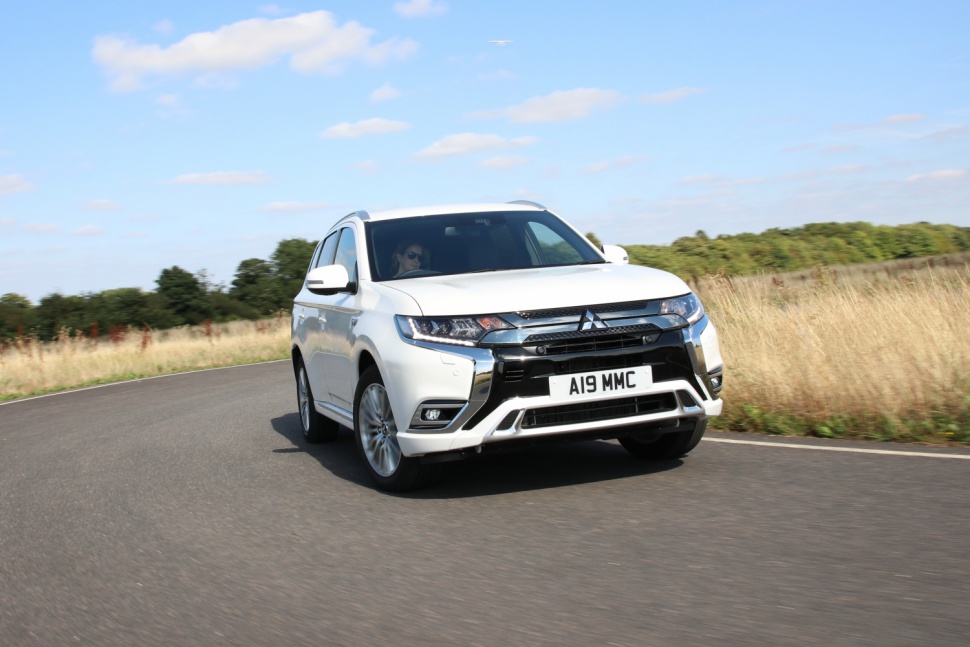
The Mitsubishi Outlander III, particularly the facelifted version introduced in 2018, represents a significant iteration of Mitsubishi’s popular crossover SUV. Positioned as a mid-size SUV, the Outlander competes with vehicles like the Honda CR-V, Toyota RAV4, and Nissan Rogue. The 2018 facelift brought styling updates, improved interior materials, and enhancements to the vehicle’s safety and technology features. This generation of the Outlander was not a major seller in the US market compared to its competitors, but it offered a compelling package, particularly with the available V6 engine and Super All-Wheel Control (S-AWC) system. The model year range for this specific facelift spanned from 2018 to 2021.
Mitsubishi Outlander III (2018-2021) 3.0 MIVEC V6 S-AWC
The Outlander III, launched initially in 2012, received a substantial refresh in 2018. This facelift focused on refining the existing platform rather than a complete overhaul. The changes included a more aggressive front fascia, revised interior trim, and updated technology. The 3.0 MIVEC V6 S-AWC variant represents the top-tier offering in the Outlander III lineup, providing a balance of performance and all-weather capability. While Mitsubishi isn’t a high-volume brand in the US, the Outlander aimed to attract buyers seeking a practical, spacious, and well-equipped SUV with available all-wheel drive.
Engine & Performance
The heart of the 2018-2021 Mitsubishi Outlander III 3.0 MIVEC V6 S-AWC is a 3.0-liter, naturally aspirated V6 engine. This engine produces 224 horsepower at 6,250 rpm and 292 Nm (215.37 lb.-ft.) of torque at 3,750 rpm. The engine features Mitsubishi’s MIVEC (Mitsubishi Innovative Valve timing and lift Electronic Control) technology, which optimizes valve timing for improved efficiency and performance across the rev range. Power is delivered through a six-speed automatic transmission. The S-AWC system is a key component of this model, providing enhanced traction and stability in various driving conditions. It utilizes electronically controlled clutches to distribute torque between the front and rear axles, and also incorporates Active Yaw Control to manage torque distribution between the left and right rear wheels. This results in a more responsive and confident driving experience, particularly on slippery surfaces. The weight-to-power ratio of 7.3 kg/Hp and a weight-to-torque ratio of 5.6 kg/Nm contribute to respectable acceleration and overall drivability.
Design & Features
The Mitsubishi Outlander III is a five-door SUV/Crossover with a seven-passenger seating configuration. The exterior design, updated with the 2018 facelift, features a bolder front grille, redesigned headlights, and revised bumper styling. The overall silhouette remains consistent with the pre-facelift model, offering a practical and family-oriented aesthetic. Inside, the Outlander III offers a spacious cabin with ample headroom and legroom for passengers in all three rows. The interior materials were upgraded in the 2018 facelift, providing a more premium feel. Key features include a touchscreen infotainment system (depending on trim level), available leather upholstery, a rearview camera, and a range of advanced safety technologies. The cargo capacity is a notable strength, offering 292 liters (10.31 cu. ft.) with all seats in place and expanding to 1,792 liters (63.28 cu. ft.) with the rear seats folded down. The Outlander III prioritizes practicality and versatility, making it a suitable choice for families and those who require a flexible cargo area.
Technical Specifications
| Brand | Mitsubishi |
| Model | Outlander |
| Generation | Outlander III (facelift 2018) |
| Type | 3.0 MIVEC V6 (224 Hp) S-AWC Automatic |
| Start of production | 2018 |
| End of production | 2021 |
| Powertrain Architecture | Internal Combustion engine |
| Body type | SUV, Crossover |
| Seats | 7 |
| Doors | 5 |
| Fuel consumption (urban) | 11.8 l/100 km (19.9 US mpg) |
| Fuel consumption (extra urban) | 8.7 l/100 km (27 US mpg) |
| Fuel consumption (combined) | 10.7 l/100 km (22 US mpg) |
| Fuel Type | Petrol (Gasoline) |
| Emission standard | LEV III ULEV70 |
| Weight-to-power ratio | 7.3 kg/Hp |
| Weight-to-torque ratio | 5.6 kg/Nm |
| Power | 224 Hp @ 6250 rpm |
| Torque | 292 Nm @ 3750 rpm (215.37 lb.-ft. @ 3750 rpm) |
| Maximum engine speed | 6500 rpm |
| Engine layout | Front, Transverse |
| Engine Model/Code | 6B31 |
| Engine displacement | 2998 cm3 (182.95 cu. in.) |
| Number of cylinders | 6 |
| Engine configuration | V-engine |
| Cylinder Bore | 87.6 mm (3.45 in.) |
| Piston Stroke | 82.9 mm (3.26 in.) |
| Compression ratio | 10.5:1 |
| Number of valves per cylinder | 4 |
| Fuel injection system | Multi-port manifold injection |
| Engine aspiration | Naturally aspirated engine |
| Valvetrain | SOHC |
| Engine oil capacity | 4 l (4.23 US qt | 3.52 UK qt) |
| Coolant capacity | 9 l (9.51 US qt | 7.92 UK qt) |
| Kerb Weight | 1625 kg (3582.51 lbs.) |
| Max. weight | 2280 kg (5026.54 lbs.) |
| Max load | 655 kg (1444.03 lbs.) |
| Trunk (boot) space – minimum | 292 l (10.31 cu. ft.) |
| Trunk (boot) space – maximum | 1792 l (63.28 cu. ft.) |
| Fuel tank capacity | 60 l (15.85 US gal | 13.2 UK gal) |
| Max. roof load | 50 kg (110.23 lbs.) |
| Permitted trailer load with brakes (12%) | 1588 kg (3500.94 lbs.) |
| Permitted trailer load without brakes | 635 kg (1399.94 lbs.) |
| Permitted towbar download | 159 kg (350.53 lbs.) |
| Length | 4695 mm (184.84 in.) |
| Width | 1810 mm (71.26 in.) |
| Height | 1710 mm (67.32 in.) |
| Wheelbase | 2670 mm (105.12 in.) |
| Front track | 1539 mm (60.59 in.) |
| Rear track | 1539 mm (60.59 in.) |
| Ride height (ground clearance) | 216 mm (8.5 in.) |
| Minimum turning circle | 10.6 m (34.78 ft.) |
| Drivetrain | All wheel drive (4×4) |
| Number of gears | 6 |
| Gearbox type | Automatic transmission |
| Front suspension | Independent, type McPherson with coil spring and anti-roll bar |
| Rear suspension | Independent multi-link spring suspension with stabilizer |
| Front brakes | Ventilated discs, 295 mm |
| Rear brakes | Disc, 302 mm |
| Assisting systems | ABS (Anti-lock braking system) |
| Steering type | Steering rack and pinion |
| Power steering | Electric Steering |
| Tires size | 225/55 R18 |
| Wheel rims size | 7J x 18 |