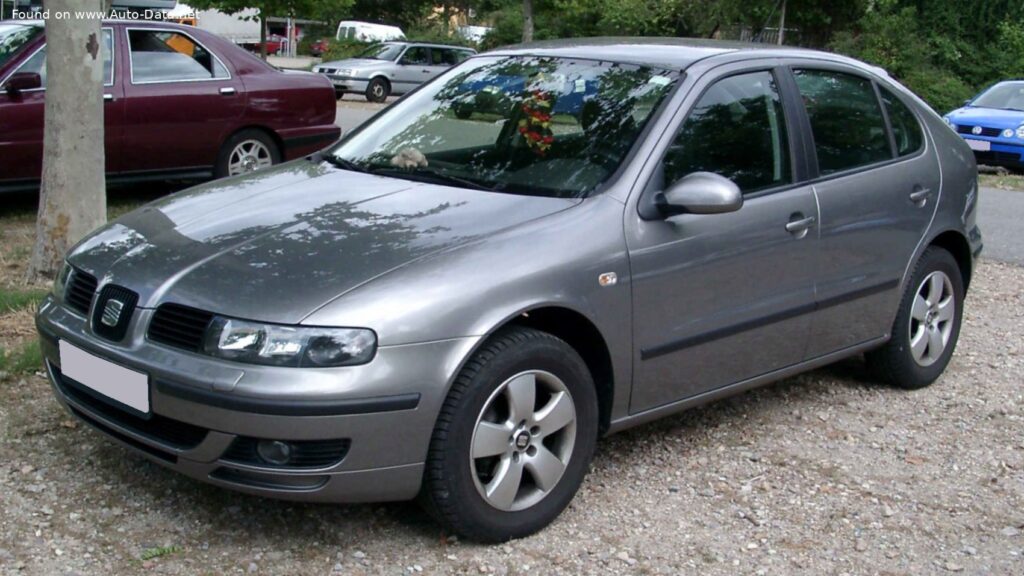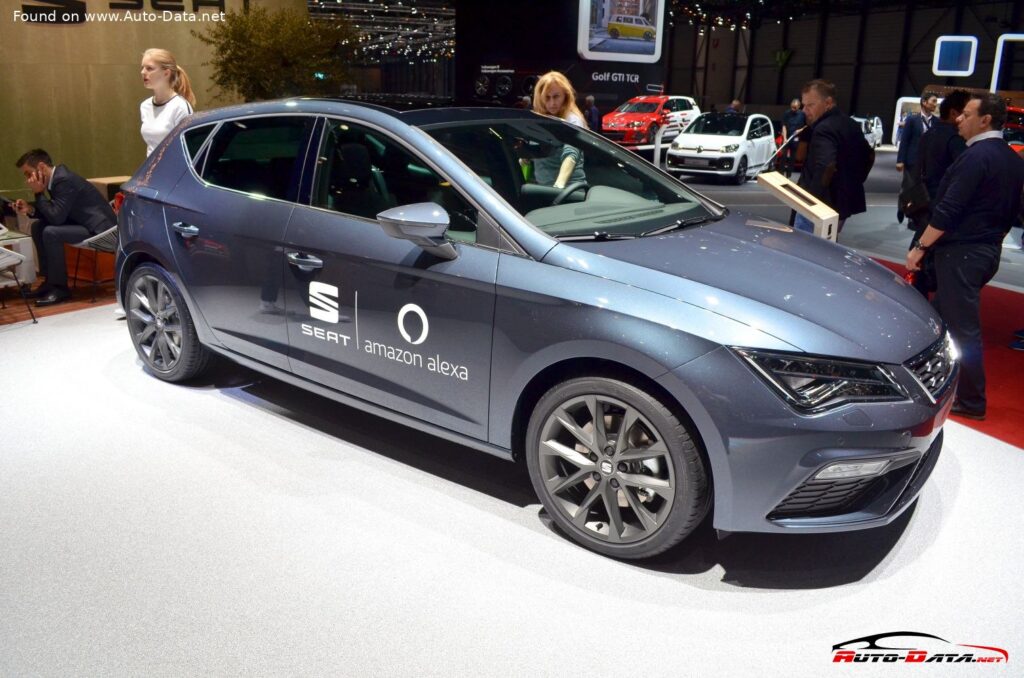
The SEAT Leon III (facelift 2016) 1.5 TGI (130 Hp) is a compact hatchback produced by the Spanish automobile manufacturer SEAT from 2018 to 2020. As part of the third generation of the Leon, this model represents a significant step towards alternative fuel vehicles within the European market. While SEAT vehicles are not officially sold in the United States, the Leon is a popular choice in Europe, competing with models like the Volkswagen Golf, Ford Focus, and Opel Astra. The 1.5 TGI variant specifically stands out due to its bi-fuel capability, running on both gasoline and Compressed Natural Gas (CNG), offering a blend of performance and reduced emissions.
SEAT Leon III (Facelift 2016) 1.5 TGI: An Overview
The facelifted Leon III, introduced in 2016, brought updated styling, enhanced technology, and refined engine options. The 1.5 TGI model, launched in 2018, was a key component of SEAT’s strategy to offer more environmentally friendly vehicles. It caters to markets with established CNG infrastructure, providing a cost-effective and lower-emission alternative to traditional gasoline or diesel engines. The vehicle is a five-door hatchback designed to accommodate five passengers, offering a practical and versatile option for urban and long-distance travel.
Engine & Performance
The heart of the SEAT Leon 1.5 TGI is a 1.5-liter inline four-cylinder turbocharged engine. This engine is designed to run primarily on CNG, with gasoline serving as a backup fuel source when CNG is depleted. The engine produces 130 horsepower at 5000-6000 rpm and 200 Nm (147 lb-ft) of torque between 1400-4000 rpm. The direct injection system and turbocharger work in tandem to deliver a responsive driving experience. Acceleration from 0 to 100 km/h (0-62 mph) takes 10.1 seconds, while 0-60 mph is achieved in approximately 9.6 seconds. The power-to-weight ratio is 9.4 kg/Hp, and the torque-to-weight ratio is 6.1 kg/Nm, contributing to a reasonably agile feel. The engine meets Euro 6 emission standards, demonstrating SEAT’s commitment to reducing environmental impact. Fuel economy is a key benefit, with combined CNG consumption ranging from 3.7 to 3.8 kg/100 km, resulting in CO2 emissions of 98-102 g/km.
Design & Features
The SEAT Leon III (facelift 2016) boasts a modern and sporty design. The hatchback body style provides a practical balance between passenger space and cargo capacity. The exterior features sharp lines, a distinctive front grille, and available LED headlights. Inside, the cabin is well-appointed with a focus on ergonomics and functionality. Standard features typically include air conditioning, a touchscreen infotainment system, and various driver-assistance systems. Safety features are comprehensive, including ABS (Anti-lock Braking System), electronic stability control, and multiple airbags. The Leon’s interior offers 275 liters (9.71 cubic feet) of trunk space, expandable by folding down the rear seats. The vehicle’s dimensions are 4282 mm (168.58 inches) in length, 1816 mm (71.5 inches) in width, and 1459 mm (57.44 inches) in height. The 1.5 TGI model also incorporates a 17.7 kg CNG cylinder, strategically positioned to minimize intrusion into the cargo area.
Technical Specifications
| Brand | Seat |
| Model | Leon |
| Generation | Leon III (facelift 2016) |
| Type (Engine) | 1.5 TGI (130 Hp) |
| Start of production | 2018 |
| End of production | 2020 |
| Powertrain Architecture | Internal Combustion engine |
| Body type | Hatchback |
| Seats | 5 |
| Doors | 5 |
| Fuel consumption (economy) – urban (CNG) | 4.9-5.1 kg/100 km |
| Fuel consumption (economy) – extra urban (CNG) | 2.9-3.1 kg/100 km |
| Fuel consumption (economy) – combined (CNG) | 3.7-3.8 kg/100 km |
| CO2 emissions (CNG) | 98-102 g/km |
| Fuel Type | Petrol / CNG |
| Acceleration 0 – 100 km/h | 10.1 sec |
| Acceleration 0 – 62 mph | 10.1 sec |
| Acceleration 0 – 60 mph | 9.6 sec |
| Emission standard | Euro 6 |
| Weight-to-power ratio | 9.4 kg/Hp |
| Weight-to-torque ratio | 6.1 kg/Nm |
| Power (CNG) | 130 Hp @ 5000-6000 rpm |
| Power per litre (CNG) | 86.8 Hp/l |
| Torque (CNG) | 200 Nm @ 1400-4000 rpm |
| Engine layout | Front, Transverse |
| Engine Model/Code | DHFA |
| Engine displacement | 1498 cm3 / 91.41 cu. in. |
| Number of cylinders | 4 |
| Engine configuration | Inline |
| Cylinder Bore | 74.5 mm / 2.93 in. |
| Piston Stroke | 85.9 mm / 3.38 in. |
| Compression ratio | 12.5:1 |
| Number of valves per cylinder | 4 |
| Fuel injection system | Direct injection |
| Engine aspiration | Turbocharger |
| Engine oil capacity | 4.3 l / 4.54 US qt | 3.78 UK qt |
| Coolant | 8 l / 8.45 US qt | 7.04 UK qt |
| Kerb Weight | 1226 kg / 2702.87 lbs |
| Max. weight | 1810 kg / 3990.37 lbs |
| Max load | 584 kg / 1287.5 lbs |
| Trunk (boot) space – minimum | 275 l / 9.71 cu. ft |
| Fuel tank capacity | 9 l / 2.38 US gal | 1.98 UK gal |
| CNG cylinder capacity | 17.7 kg |
| Max. roof load | 75 kg / 165.35 lbs |
| Permitted trailer load with brakes (12%) | 1400 kg / 3086.47 lbs |
| Permitted trailer load without brakes | 650 kg / 1433 lbs |
| Permitted towbar download | 80 kg / 176.37 lbs |
| Length | 4282 mm / 168.58 in |
| Width | 1816 mm / 71.5 in |
| Width including mirrors | 1975 mm / 77.76 in |
| Height | 1459 mm / 57.44 in |
| Wheelbase | 2636 mm / 103.78 in |
| Front track | 1534-1549 mm / 60.39 – 60.98 in |
| Rear (Back) track | 1504-1520 mm / 59.21 – 59.84 in |
| Front overhang | 861 mm / 33.9 in |
| Rear overhang | 785 mm / 30.91 in |
| Drivetrain Architecture | Front wheel drive |
| Drive wheel | Front wheel drive |
| Number of gears and type of gearbox | 6 gears, manual transmission |
| Front brakes | Ventilated discs |
| Rear brakes | Disc |