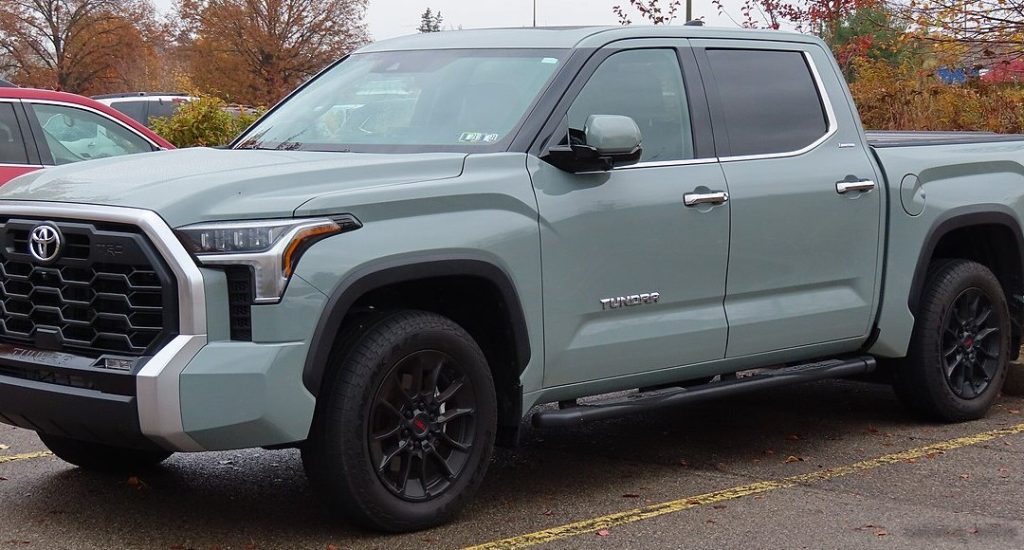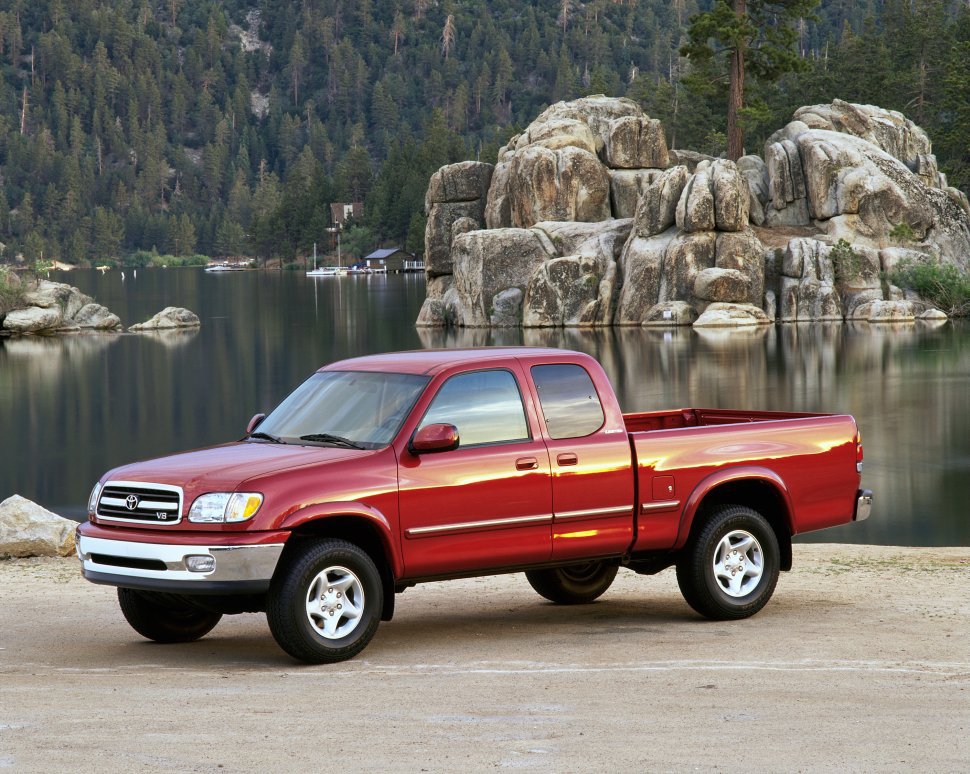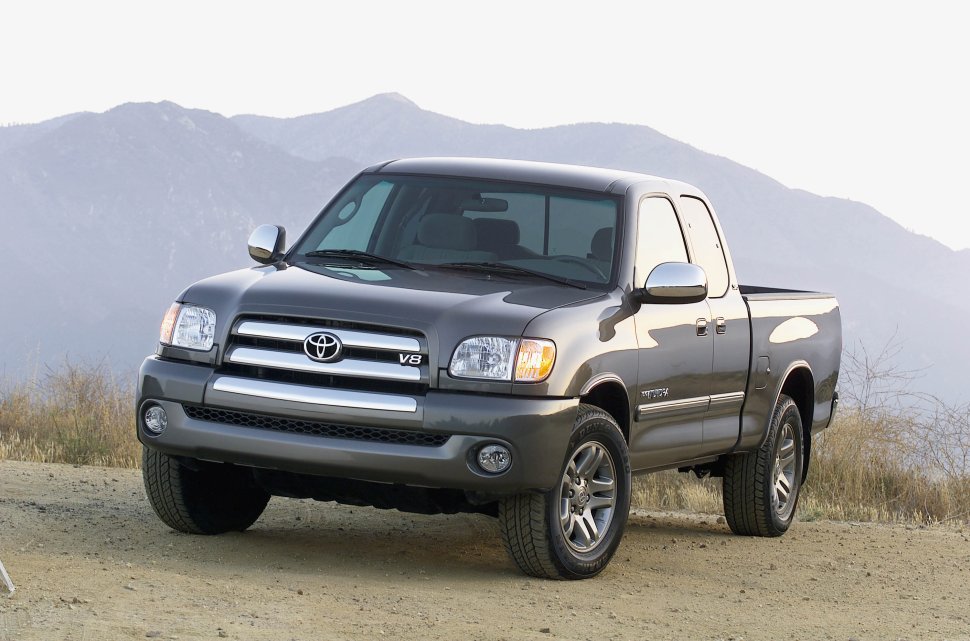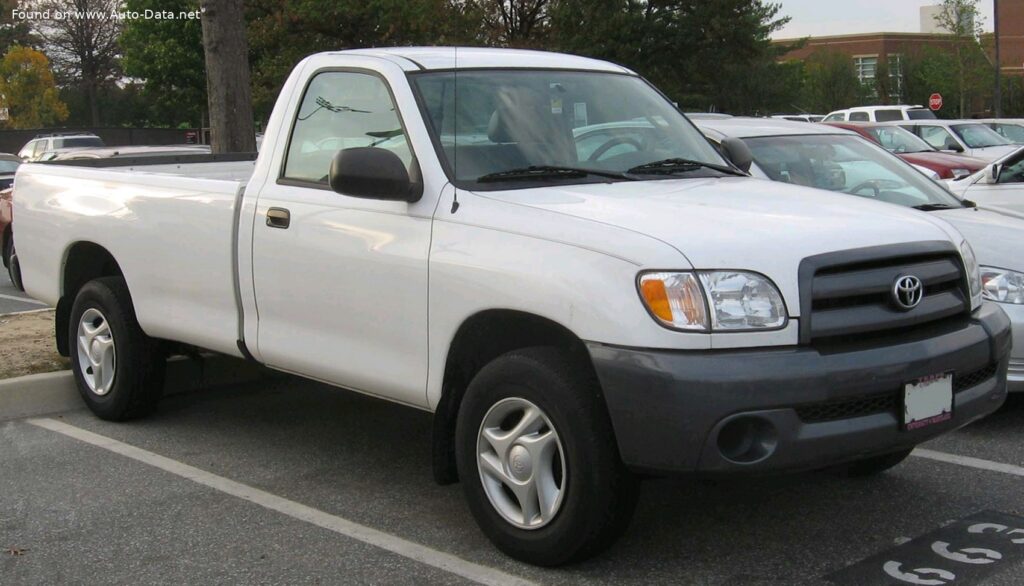
The Toyota Tundra I Regular Cab (facelift 2002) 3.4i 4×4 Automatic represents Toyota’s initial foray into the full-size pickup truck market in North America. Introduced in 1999 and receiving a significant facelift in 2002, the Tundra was designed to challenge established domestic manufacturers like Ford, Chevrolet, and Dodge. This generation Tundra aimed to offer a blend of Japanese reliability, comfortable interiors, and capable performance, appealing to buyers seeking an alternative to traditional American trucks. The 3.4i model, equipped with a 3.4-liter V6 engine, was a key variant, offering a balance of power and fuel efficiency for everyday use and light-duty tasks. It was sold primarily in the United States and Canada, establishing a foothold for Toyota in a highly competitive segment.
Toyota Tundra I: A New Contender
The first-generation Tundra, produced from 1999 to 2006, marked a significant investment by Toyota in understanding and catering to the specific needs of North American truck buyers. The 2002 facelift brought cosmetic updates, including revised front and rear styling, as well as interior enhancements. The Regular Cab configuration, with its two doors and seating for up to four passengers, was aimed at buyers prioritizing functionality and affordability. The 3.4i model, with its 190 horsepower engine and four-wheel drive system, provided a versatile option for both work and recreational use. The Tundra’s arrival forced domestic manufacturers to re-evaluate their offerings, focusing on improving quality and features to maintain market share.
Engine & Performance
The heart of the 2002 Toyota Tundra 3.4i is the 5VZ-FE 3.4-liter V6 engine. This naturally aspirated engine produces 190 horsepower at 4800 rpm and 298 Nm (219.79 lb.-ft.) of torque at 3600 rpm. The engine features a longitudinal front-engine layout, multi-port fuel injection, and a double overhead camshaft (DOHC) valvetrain with four valves per cylinder. The 3.4-liter displacement translates to a power-to-liter ratio of 56.2 hp/l. Power is delivered to all four wheels through a four-speed automatic transmission. The weight-to-power ratio of 9.4 kg/Hp and a weight-to-torque ratio of 6 kg/Nm provide adequate performance for typical pickup truck duties. Fuel economy is rated at 14.7 l/100 km (16 US mpg) in urban driving and 12.3 l/100 km (19.1 US mpg) in extra-urban conditions. The engine requires 5.2 liters (5.49 US qt) of engine oil and 9.9 liters (10.46 US qt) of coolant.
Design & Features
The 2002 Toyota Tundra I Regular Cab is a traditional pick-up truck in terms of body style, featuring a two-door configuration and a separate bed for hauling cargo. The truck’s dimensions are substantial, measuring 5545 mm (218.31 in) in length, 1910 mm (75.2 in) in width, and 1796 mm (70.71 in) in height. The wheelbase is 3259 mm (128.31 in), contributing to a stable ride. The interior, while functional, prioritized durability and ease of use over luxury. Safety features for the time included an Anti-lock Braking System (ABS), a crucial addition for a vehicle of this size and weight. The truck boasts a generous cargo capacity of 2625 liters (92.7 cu. ft.) in the bed and a fuel tank capacity of 100 liters (26.42 US gal). Ground clearance is a respectable 269 mm (10.59 in), enhancing its off-road capability. Approach and departure angles are 26° and 23° respectively.
Technical Specifications
| Brand | Toyota |
| Model | Tundra |
| Generation | Tundra I Regular Cab (facelift 2002) |
| Type (Engine) | 3.4i (190 Hp) 4×4 Automatic |
| Start of production | 2002 |
| End of production | 2004 |
| Powertrain Architecture | Internal Combustion engine |
| Body type | Pick-up |
| Seats | 4 |
| Doors | 2 |
| Fuel consumption (urban) | 14.7 l/100 km (16 US mpg) |
| Fuel consumption (extra urban) | 12.3 l/100 km (19.1 US mpg) |
| Fuel Type | Petrol (Gasoline) |
| Weight-to-power ratio | 9.4 kg/Hp |
| Weight-to-torque ratio | 6 kg/Nm |
| Power | 190 Hp @ 4800 rpm |
| Torque | 298 Nm @ 3600 rpm (219.79 lb.-ft. @ 3600 rpm) |
| Engine layout | Front, Longitudinal |
| Engine Model/Code | 5VZ-FE |
| Engine displacement | 3378 cm3 (206.14 cu. in.) |
| Number of cylinders | 6 |
| Engine configuration | V-engine |
| Cylinder Bore | 93.4 mm (3.68 in.) |
| Piston Stroke | 82 mm (3.23 in.) |
| Compression ratio | 9.6:1 |
| Number of valves per cylinder | 4 |
| Fuel injection system | Multi-port manifold injection |
| Engine aspiration | Naturally aspirated |
| Valvetrain | DOHC |
| Engine oil capacity | 5.2 l (5.49 US qt | 4.58 UK qt) |
| Coolant capacity | 9.9 l (10.46 US qt | 8.71 UK qt) |
| Kerb Weight | 1793 kg (3952.89 lbs.) |
| Max. weight | 2495 kg (5500.53 lbs.) |
| Max load | 702 kg (1547.65 lbs.) |
| Trunk (boot) space – maximum | 2625 l (92.7 cu. ft.) |
| Fuel tank capacity | 100 l (26.42 US gal | 22 UK gal) |
| Permitted trailer load with brakes (12%) | 2268 kg (5000.08 lbs.) |
| Length | 5545 mm (218.31 in.) |
| Width | 1910 mm (75.2 in.) |
| Height | 1796 mm (70.71 in.) |
| Wheelbase | 3259 mm (128.31 in.) |
| Front track | 1681 mm (66.18 in.) |
| Rear (Back) track | 1648 mm (64.88 in.) |
| Ride height (ground clearance) | 269 mm (10.59 in.) |
| Minimum turning circle | 13.6 m (44.62 ft.) |
| Drive wheel | All wheel drive (4×4) |
| Number of gears | 4 |
| Gearbox type | Automatic transmission |
| Front suspension | Double wishbone |
| Rear suspension | Leaf spring |
| Front brakes | Ventilated discs |
| Rear brakes | Drum |
| Assisting systems | ABS (Anti-lock braking system) |
| Steering type | Steering rack and pinion |
| Tires size | 245/70 R16; 265/70 R16; 265/65 R17 |
| Wheel rims size | 7.0J x 16; 7.5J x 17 |
The 2002 Toyota Tundra I Regular Cab 3.4i 4×4 Automatic, while not the most technologically advanced truck on the market, offered a compelling package of reliability, capability, and value. It successfully established Toyota as a serious player in the full-size pickup truck segment, paving the way for future generations of the Tundra that would continue to refine and improve upon its initial formula.