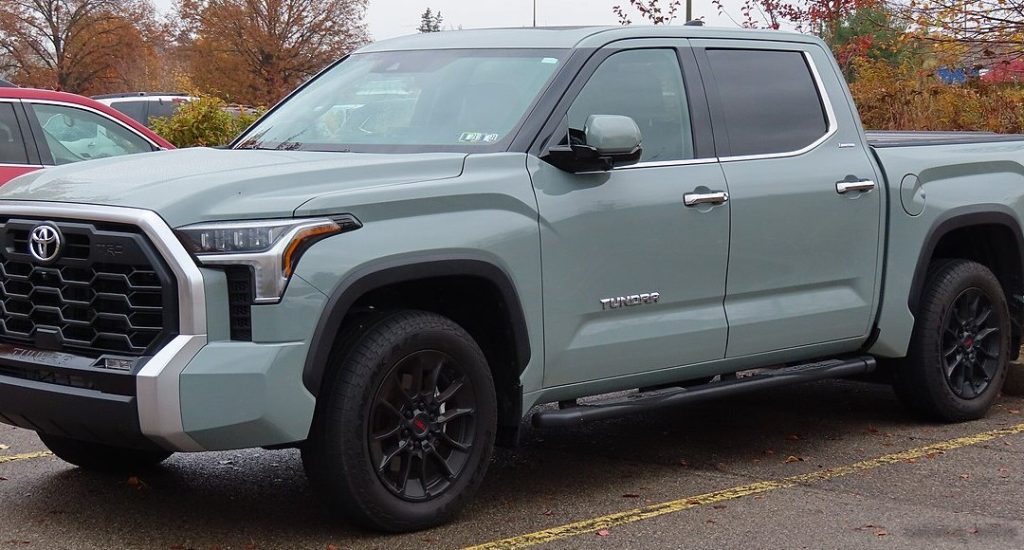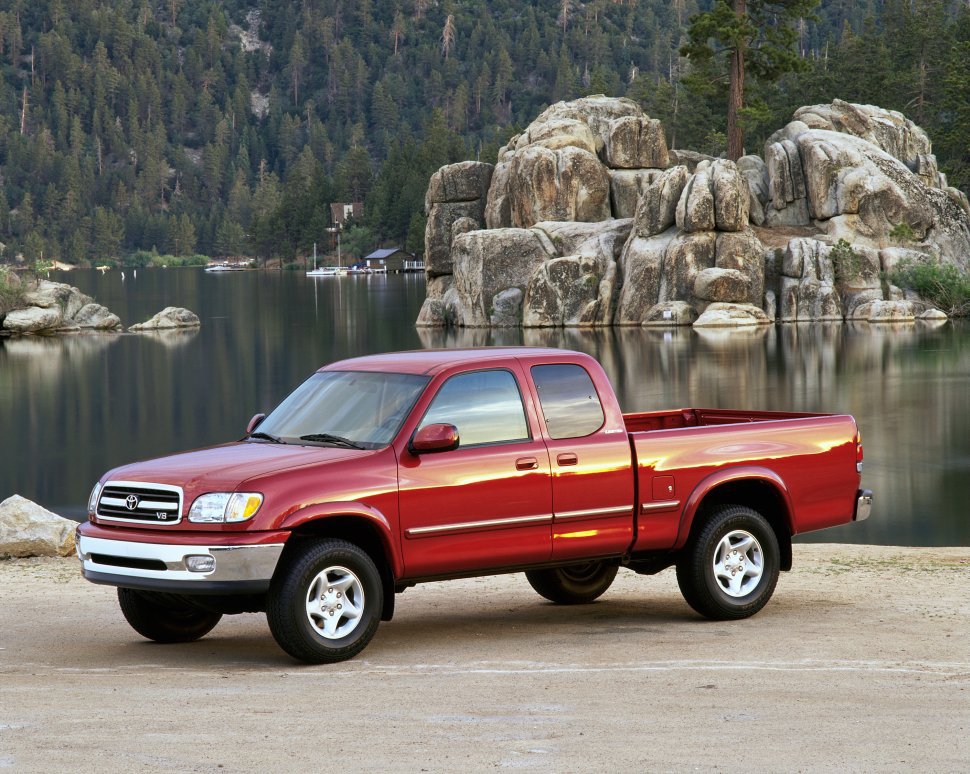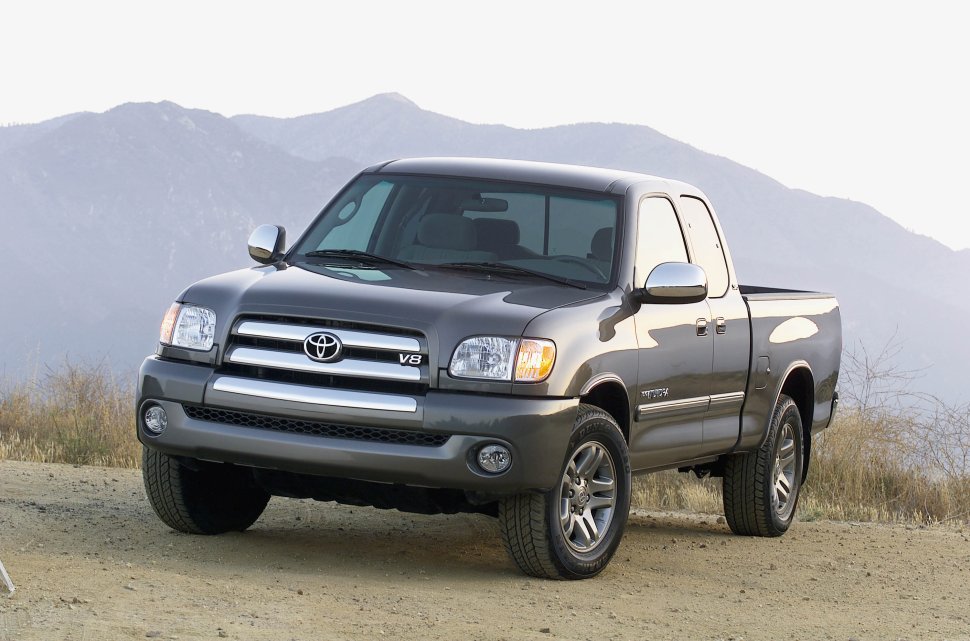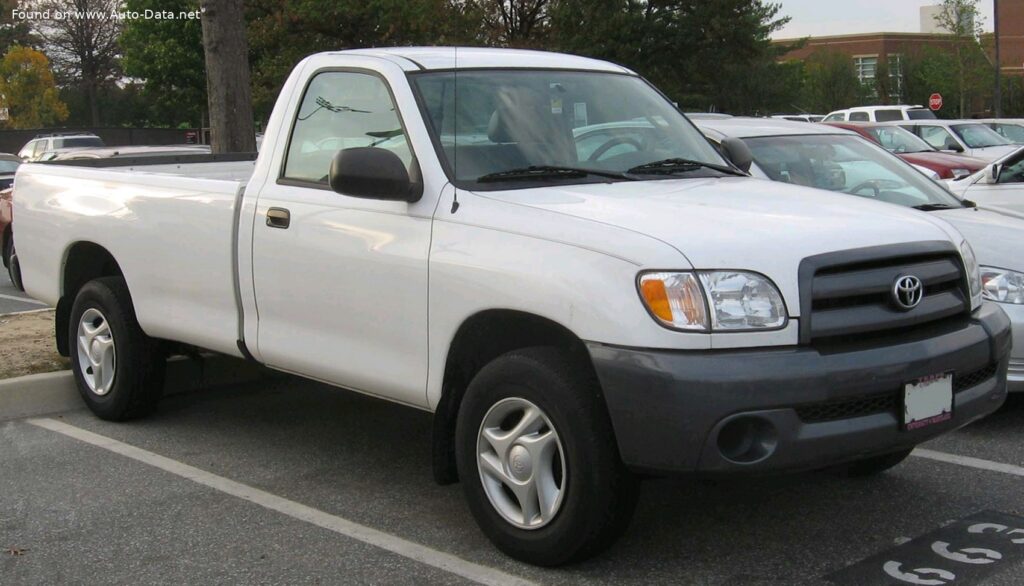
The Toyota Tundra, first introduced in 1999, represented Toyota’s entry into the full-size pickup truck market in North America. Designed specifically to appeal to American truck buyers, the Tundra aimed to offer a blend of reliability, capability, and comfort. The first generation Tundra (UCP/XP30) underwent a significant facelift in 2002, and the models produced from 2005-2006 represent the final iteration of this initial design. The 2005-2006 Toyota Tundra I Regular Cab 4.0i, equipped with a 4.0-liter V6 engine and automatic transmission, was positioned as a work-focused, value-oriented option within the Tundra lineup. It served as a direct competitor to domestic full-size trucks like the Ford F-150, Chevrolet Silverado, and Dodge Ram.
Toyota Tundra I: A Focus on the 2005-2006 4.0i Model
The 2005-2006 Tundra Regular Cab 4.0i was a key offering for Toyota, providing a more affordable entry point into the full-size truck segment. While larger V8 engines were available in other Tundra configurations, the 4.0-liter V6 offered a balance of power and fuel economy suitable for everyday use and lighter-duty tasks. The Regular Cab configuration, with its two doors and seating for four, prioritized practicality and interior space for passengers and cargo. This model was particularly popular with individuals and businesses needing a robust and dependable truck for work purposes.
Engine & Performance
The heart of the 2005-2006 Tundra 4.0i is the 1GR-FE 4.0-liter V6 engine. This naturally aspirated engine produces 236 horsepower at 5200 rpm and 361 Nm (266.26 lb.-ft.) of torque at 4000 rpm. The engine features a cast iron block and aluminum cylinder heads, contributing to its durability. Power is delivered to the rear wheels via a five-speed automatic transmission. While not designed for high-performance acceleration, the 4.0-liter V6 provides adequate power for hauling and towing, with a permitted trailer load of up to 2358 kg (5198.5 lbs) when equipped with brakes. The engine’s longitudinal front-engine layout optimizes weight distribution for improved handling and stability. The engine displacement is 3956 cm3 (241.41 cu. in.), with a bore of 94 mm (3.7 in.) and a stroke of 95 mm (3.74 in.). A compression ratio of 10:1 and a multi-port fuel injection system contribute to efficient combustion.
Design & Features
The 2005-2006 Toyota Tundra I Regular Cab is a classic example of early 21st-century pickup truck design. Its body-on-frame construction provides a robust and durable platform. The Regular Cab configuration features two full doors and a spacious interior for four passengers. The truck bed offers a substantial 2625 liters (92.7 cu. ft.) of cargo space, making it ideal for hauling materials and equipment. Safety features for the time included ABS (Anti-lock Braking System) as standard equipment. The Tundra’s exterior design is characterized by its bold front grille, prominent headlights, and relatively conservative styling. Ride height (ground clearance) is a generous 269 mm (10.59 in.), enhancing its off-road capability. The approach and departure angles of 27° and 23° respectively, further contribute to its ability to navigate challenging terrain. The steering system utilizes a rack and pinion setup for precise control.
Technical Specifications
| Brand | Toyota |
| Model | Tundra |
| Generation | Tundra I Regular Cab (facelift 2002) |
| Type (Engine) | 4.0i (236 Hp) Automatic |
| Start of production | 2005 |
| End of production | 2006 |
| Powertrain Architecture | Internal Combustion engine |
| Body type | Pick-up |
| Seats | 4 |
| Doors | 2 |
| Fuel Type | Petrol (Gasoline) |
| Power | 236 Hp @ 5200 rpm |
| Power per litre | 59.7 Hp/l |
| Torque | 361 Nm @ 4000 rpm / 266.26 lb.-ft. @ 4000 rpm |
| Engine layout | Front, Longitudinal |
| Engine Model/Code | 1GR-FE |
| Engine displacement | 3956 cm3 / 241.41 cu. in. |
| Number of cylinders | 6 |
| Engine configuration | V-engine |
| Cylinder Bore | 94 mm / 3.7 in. |
| Piston Stroke | 95 mm / 3.74 in. |
| Compression ratio | 10:1 |
| Number of valves per cylinder | 4 |
| Fuel injection system | Multi-port manifold injection |
| Engine aspiration | Naturally aspirated engine |
| Engine oil capacity | 4.5 l / 4.76 US qt | 3.96 UK qt |
| Coolant | 10.3 l / 10.88 US qt | 9.06 UK qt |
| Trunk (boot) space – maximum | 2625 l / 92.7 cu. ft. |
| Fuel tank capacity | 100 l / 26.42 US gal | 22 UK gal |
| Permitted trailer load with brakes (12%) | 2358 kg / 5198.5 lbs. |
| Length | 5545 mm / 218.31 in. |
| Width | 1910 mm / 75.2 in. |
| Height | 1796 mm / 70.71 in. |
| Wheelbase | 3259 mm / 128.31 in. |
| Front track | 1681 mm / 66.18 in. |
| Rear (Back) track | 1648 mm / 64.88 in. |
| Ride height (ground clearance) | 269 mm / 10.59 in. |
| Minimum turning circle (turning diameter) | 13.6 m / 44.62 ft. |
| Approach angle | 27° |
| Departure angle | 23° |
| Drivetrain Architecture | Rear wheel drive. Internal Combustion engine (ICE) |
| Drive wheel | Rear wheel drive |
| Number of gears and type of gearbox | 5 gears, automatic transmission |
| Front suspension | Double wishbone |
| Rear suspension | Leaf spring |
| Front brakes | Ventilated discs |
| Rear brakes | Drum |
| Assisting systems | ABS (Anti-lock braking system) |
| Steering type | Steering rack and pinion |
| Tires size | 245/70 R16; 265/70 R16; 265/65 R17 |
| Wheel rims size | 7.0J x 16; 7.5J x 17 |