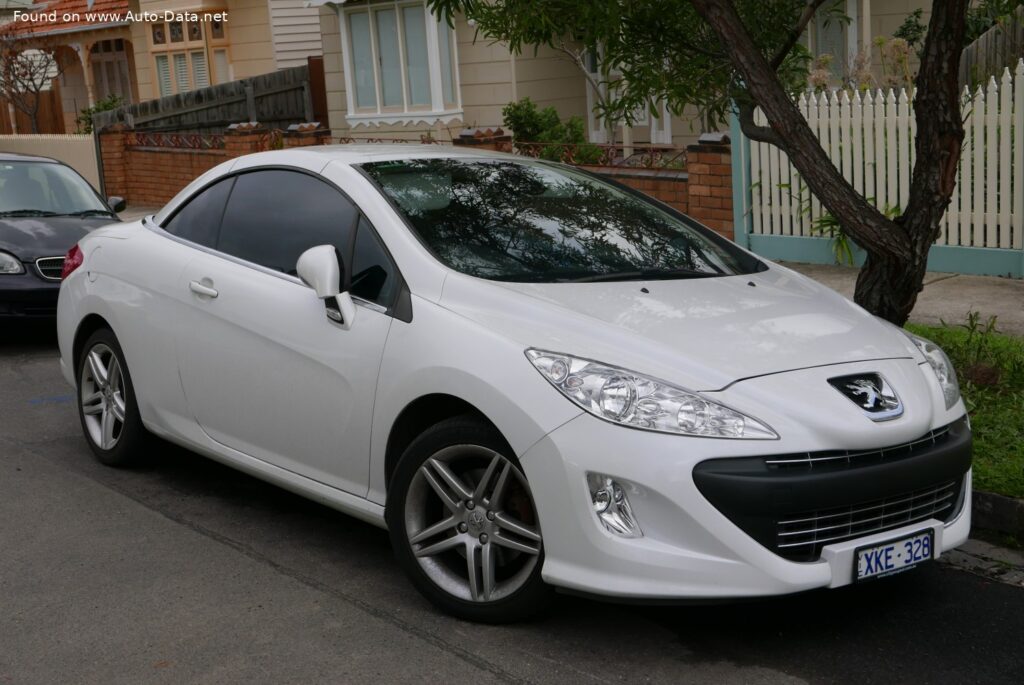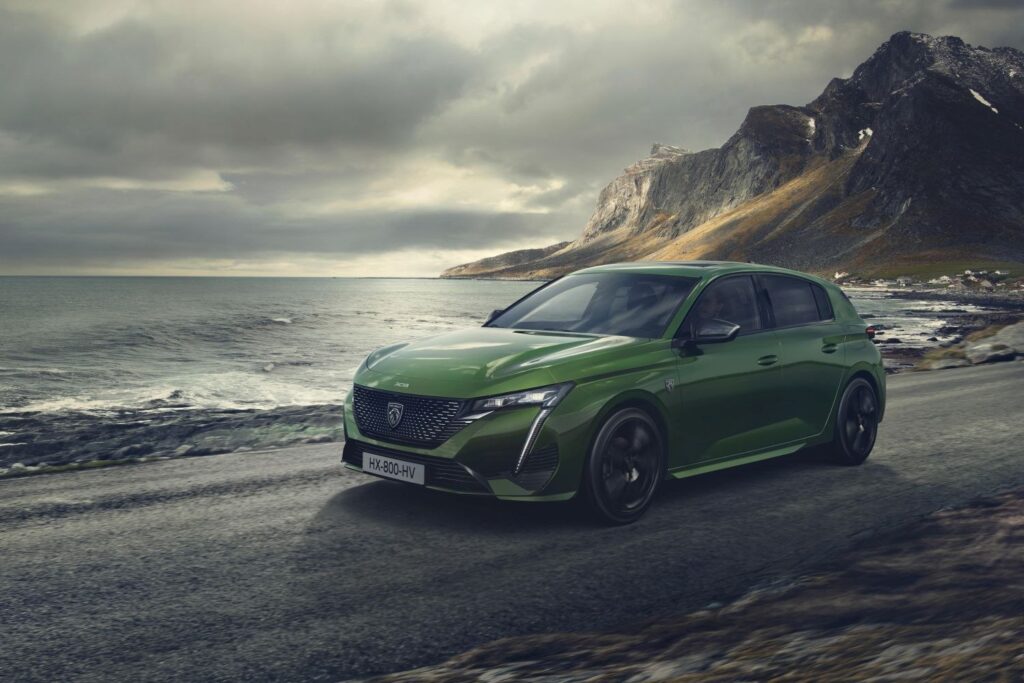
The Peugeot 308 III, launched in 2021 (Phase I), represents the third generation of Peugeot’s popular compact hatchback. Positioned within the highly competitive C-segment, the 308 aims to blend stylish design with efficient powertrain options, catering to a broad European audience. This particular variant, the 1.6 (225 Hp) Plug-in Hybrid e-EAT8, signifies Peugeot’s commitment to electrification and offers a compelling alternative to traditional gasoline or diesel engines. While the 308 series isn’t directly sold in the United States, understanding its specifications provides insight into the evolving landscape of European automotive technology and design.
Peugeot 308 III (Phase I) 1.6 Plug-in Hybrid: An Overview
The third-generation 308 marked a significant departure from its predecessors, featuring a more modern and sophisticated aesthetic, both inside and out. The plug-in hybrid variant, specifically the 1.6-liter 225 horsepower model, combines a gasoline engine with an electric motor and battery pack, allowing for both all-electric driving and extended range when needed. This model was produced from September 2021 to January 2024, representing an initial phase in the 308 III’s lifecycle. It’s designed to meet increasingly stringent European emissions standards and appeal to environmentally conscious consumers.
Engine & Performance
The heart of the Peugeot 308 III 1.6 Plug-in Hybrid is a 1.6-liter, turbocharged inline-four cylinder gasoline engine, designated DGY EP6FADTXHPD. This engine produces 181 horsepower at 6000 rpm and 250 Nm (184.39 lb.-ft.) of torque at 1750 rpm. Paired with a 110 horsepower electric motor delivering 320 Nm (236.02 lb.-ft.) of torque, the combined system output reaches a substantial 225 horsepower and 360 Nm (265.52 lb.-ft.) of torque. Power is delivered to the front wheels via an eight-speed automatic transmission (e-EAT8). This powertrain configuration allows for a 0-100 km/h (0-62 mph) acceleration time of 7.5 seconds and a top speed of 235 km/h (146.02 mph). The vehicle offers a pure electric range of 62-63 km (38.53 – 39.15 miles) thanks to its 12.4 kWh lithium-ion battery pack, located conveniently under the rear seats. Energy consumption in all-electric mode is rated at 15.6-15.9 kWh per 100 km.
Design & Features
The Peugeot 308 III is a five-door hatchback, offering seating for five passengers. Its exterior design is characterized by sharp lines, a prominent grille, and distinctive LED lighting signatures. The interior boasts Peugeot’s i-Cockpit design philosophy, featuring a compact steering wheel and a raised instrument cluster. The plug-in hybrid model incorporates features specific to its powertrain, such as charging ports and driving mode selectors. Safety features are comprehensive, including ABS, and a suite of driver-assistance systems. The hatchback body style provides a practical balance between passenger space and cargo capacity, with a trunk volume ranging from 361 liters (12.75 cu. ft.) with the rear seats up to 1271 liters (44.88 cu. ft.) with them folded down. The vehicle’s aerodynamic efficiency is reflected in its drag coefficient of 0.28, contributing to improved fuel economy and reduced emissions.
Technical Specifications
| Brand | Peugeot |
| Model | 308 |
| Generation | 308 III (Phase I, 2021) |
| Type (Engine) | 1.6 (225 Hp) Plug-in Hybrid e-EAT8 |
| Start of production | September, 2021 |
| End of production | January, 2024 |
| Powertrain Architecture | PHEV (Plug-in Hybrid Electric Vehicle) |
| Body type | Hatchback |
| Seats | 5 |
| Doors | 5 |
| Combined fuel consumption (WLTP) | 1.2 l/100 km (196 US mpg, 235.4 UK mpg, 83.3 km/l) |
| CO2 emissions (WLTP) | 26-28 g/km |
| Fuel consumption (NEDC) – combined | 1.3 l/100 km (180.9 US mpg, 217.3 UK mpg, 76.9 km/l) |
| CO2 emissions (NEDC) | 30 g/km |
| Fuel Type | Petrol / electricity |
| Acceleration 0 – 100 km/h | 7.5 sec |
| Acceleration 0 – 62 mph | 7.5 sec |
| Acceleration 0 – 60 mph | 7.1 sec |
| Maximum speed | 235 km/h (146.02 mph) |
| Emission standard | Euro 6d |
| Weight-to-power ratio | 7.3 kg/Hp, 137.8 Hp/tonne |
| Weight-to-torque ratio | 4.5 kg/Nm, 220.5 Nm/tonne |
| Gross battery capacity | 12.4 kWh |
| Battery technology | Lithium-ion (Li-Ion) |
| Battery location | Under the rear seats |
| All-electric range (WLTP) | 62-63 km (38.53 – 39.15 mi) |
| Average Energy consumption (WLTP) | 15.6-15.9 kWh/100 km (25.11 – 25.59 kWh/100 mi, 134 – 132 MPGe, 6.4 – 6.3 km/kWh, 4 – 3.9 mi/kWh) |
| Max speed (electric) | 135 km/h (83.89 mph) |
| Electric motor power | 110 Hp @ 2500 rpm (160.93 kW) |
| Electric motor Torque | 320 Nm @ 500-2500 rpm (236.02 lb.-ft. @ 500-2500 rpm) |
| Electric motor location | Between the combustion engine and the transmission |
| System power | 225 Hp (165.83 kW) |
| System torque | 360 Nm (265.52 lb.-ft.) |
| Power | 181 Hp @ 6000 rpm (134.57 kW) |
| Torque | 250 Nm @ 1750 rpm (184.39 lb.-ft. @ 1750 rpm) |
| Engine layout | Front, Transverse |
| Engine Model/Code | DGY EP6FADTXHPD |
| Engine displacement | 1598 cm3 (97.52 cu. in.) |
| Number of cylinders | 4 |
| Engine configuration | Inline |
| Cylinder Bore | 77 mm (3.03 in.) |
| Piston Stroke | 85.8 mm (3.38 in.) |
| Number of valves per cylinder | 4 |
| Fuel injection system | Direct injection |
| Engine aspiration | Turbocharger, Intercooler |
| Valvetrain | DOHC |
| Engine oil capacity | 4.25 l (4.49 US qt | 3.74 UK qt) |
| Kerb Weight | 1633 kg (3600.15 lbs.) |
| Max. weight | 2120 kg (4673.8 lbs.) |
| Max load | 487 kg (1073.65 lbs.) |
| Trunk (boot) space – minimum | 361 l (12.75 cu. ft.) |
| Trunk (boot) space – maximum | 1271 l (44.88 cu. ft.) |
| Fuel tank capacity | 40 l (10.57 US gal | 8.8 UK gal) |
| Max. roof load | 85 kg (187.39 lbs.) |
| Permitted trailer load with brakes (12%) | 1500 kg (3306.93 lbs.) |
| Permitted trailer load without brakes | 750 kg (1653.47 lbs.) |
| Permitted towbar download | 70 kg (154.32 lbs.) |
| Length | 4367 mm (171.93 in.) |
| Width | 1852 mm (72.91 in.) |
| Width with mirrors folded | 1859 mm (73.19 in.) |
| Width including mirrors | 2062 mm (81.18 in.) |
| Height | 1441 mm (56.73 in.) |
| Wheelbase | 2675 mm (105.31 in.) |
| Front track | 1559 mm (61.38 in.) |
| Rear (Back) track | 1554 mm (61.18 in.) |
| Front overhang | 904 mm (35.59 in.) |
| Rear overhang | 788 mm (31.02 in.) |
| Ride height (ground clearance) | 140 mm (5.51 in.) |
| Drag coefficient (Cd) | 0.28 |
| Minimum turning circle (turning diameter) | 10.5 m (34.45 ft.) |
| Drivetrain Architecture | The Internal combustion engine (ICE) and electric motor drive the front wheels of the car with the ability to work in full electric or mixed mode. |
| Drive wheel | Front wheel drive |
| Number of gears and type of gearbox | 8 gears, automatic transmission e-EAT |
| Front suspension | Coil spring, Independent type McPherson |
| Rear suspension | Torsion |
| Front brakes | Ventilated discs |
| Rear brakes | Disc |
| Assisting systems | ABS (Anti-lock braking system) |
| Steering type | Steering rack and pinion |
| Power steering | Electric Steering |
| Tires size | 225/40 R18 |